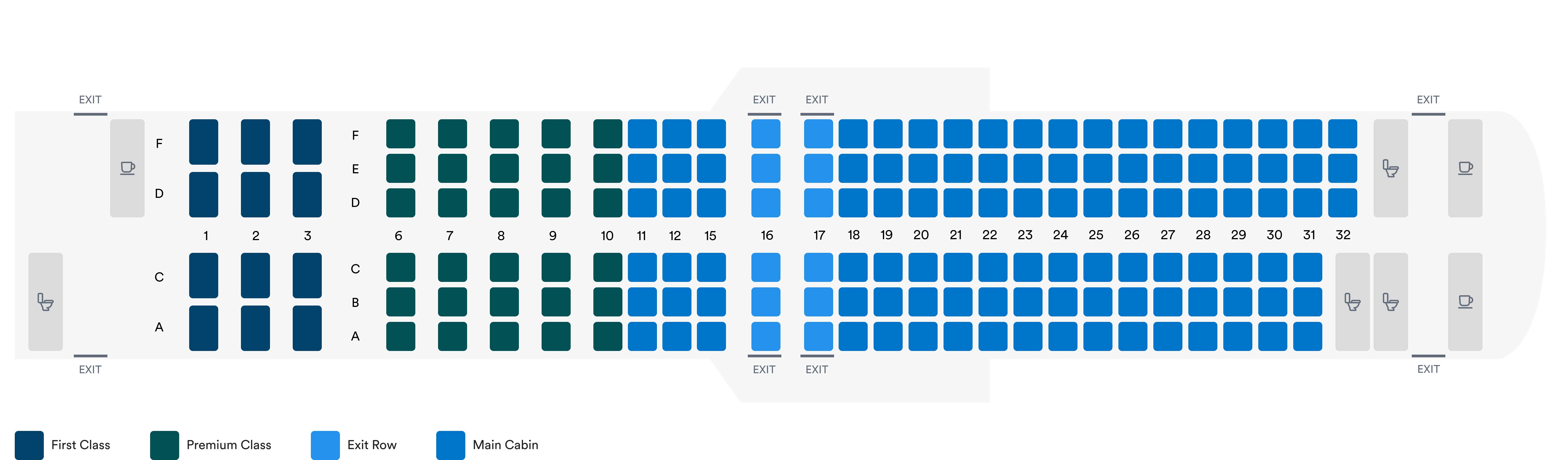
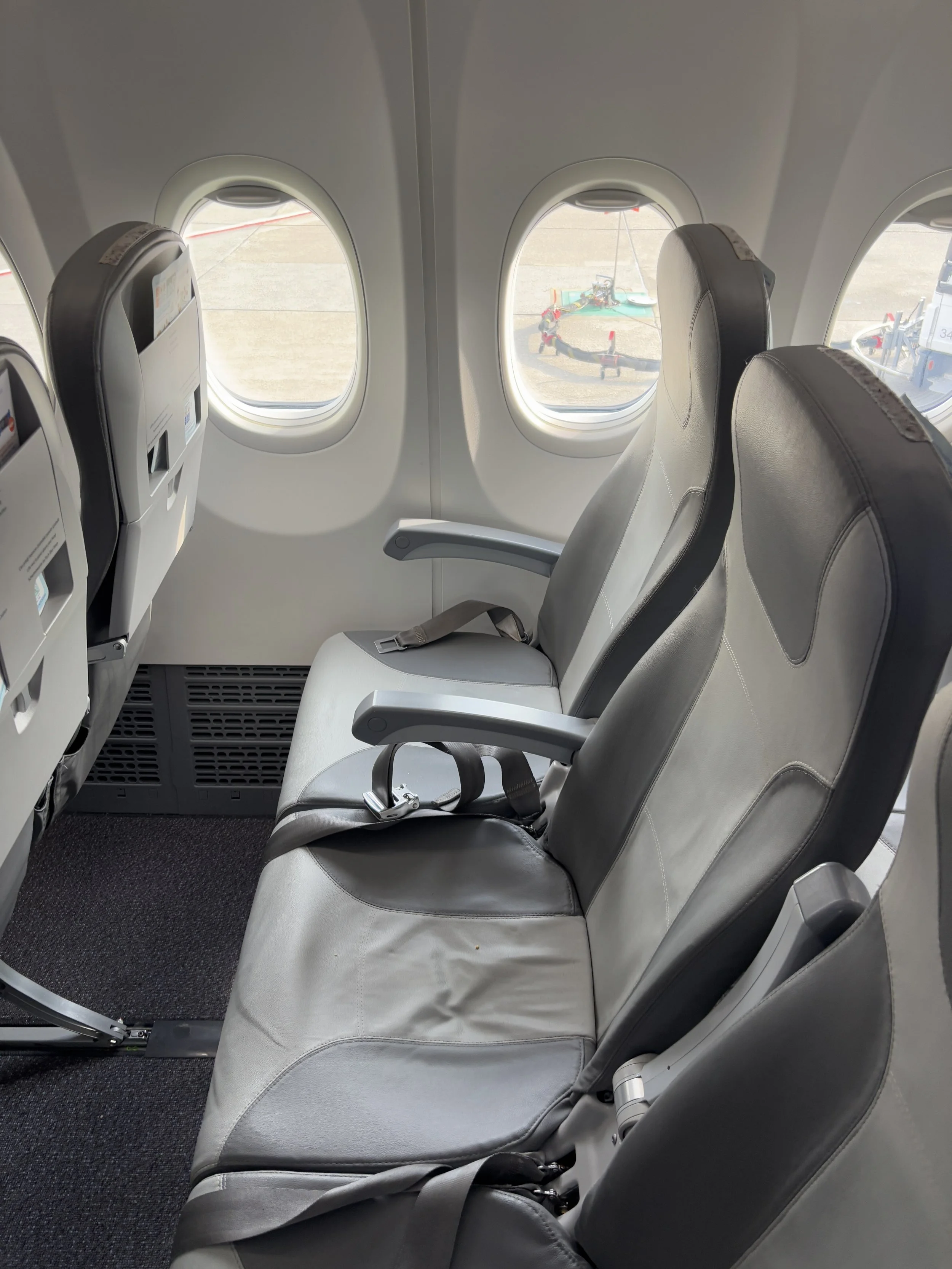
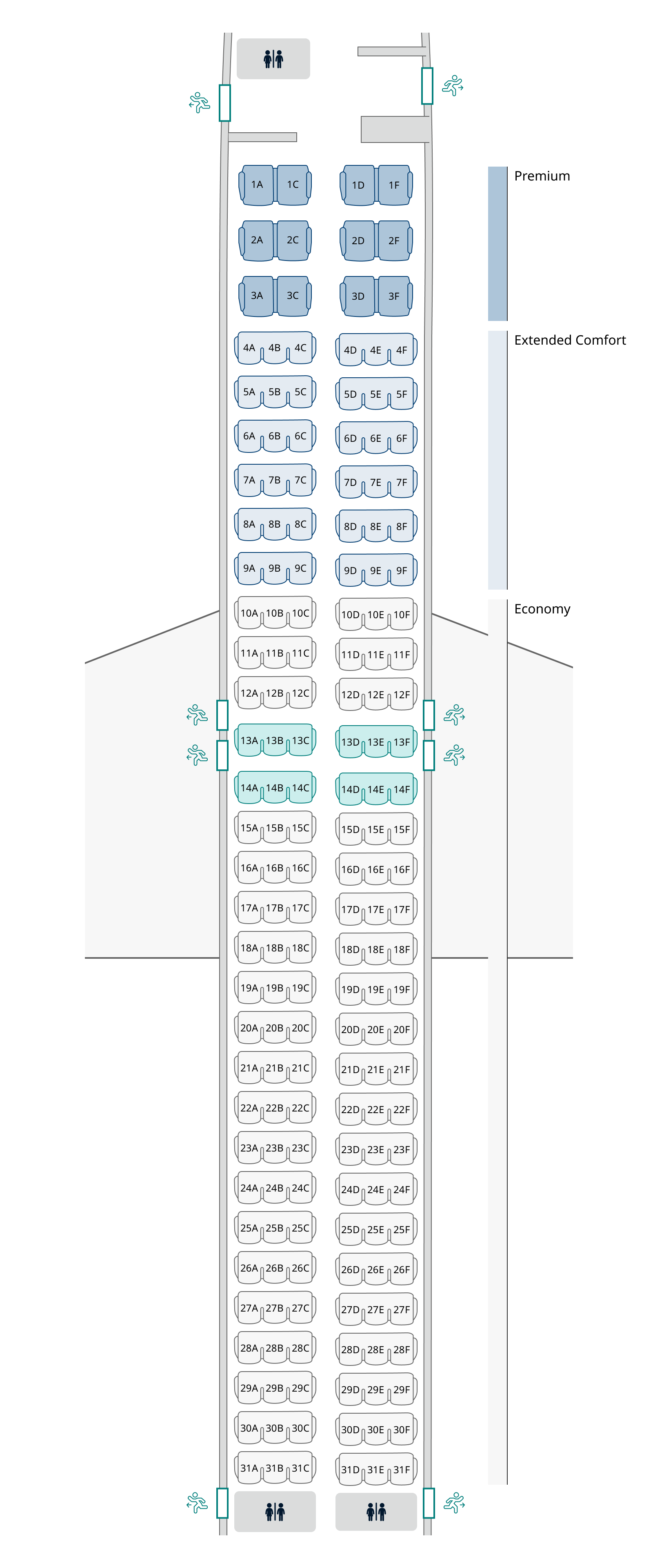
The Boeing 737 MAX 8 seating configuration typically accommodates between 162 and 189 passengers, depending on whether an airline utilizes a two-class or single-class layout. Most major carriers offer a seat pitch of 30 to 32 inches in standard economy, while high-density low-cost versions can reach up to 197 seats with a 28-inch pitch.
The Evolution of the 737 MAX 8 Cabin Design
The Boeing 737 MAX 8 represents the fourth generation of the 737 family, and its interior design—the Boeing Sky Interior—is a significant departure from older "Classic" or "Next Generation" (NG) models. As of 2026, the MAX 8 has become the workhorse of global narrow-body fleets, and its seating arrangements reflect a balance between airline profitability and passenger ergonomics.
The cabin architecture is designed to feel more spacious than it actually is. This is achieved through sculpted sidewalls and redesigned window reveals that draw more light into the cabin. The most notable technical achievement in the MAX 8 cabin is the implementation of Advanced Technology (AT) Winglets and the quieter CFM International LEAP-1B engines. While these are exterior components, they contribute to a significantly lower cabin noise floor, which makes the seating environment feel more comfortable during long-haul narrow-body flights.
Furthermore, the "Space-Bins" installed on the MAX 8 are a standard feature for many airlines. These bins pivot down rather than having a traditional shelf design, allowing them to hold approximately 50% more bags than previous designs. For the passenger, this means less anxiety regarding overhead bin space, even in high-density seating configurations.
Technical Specifications: Seat Pitch, Width, and Materials
When evaluating 737 MAX 8 seating, two metrics are paramount: seat pitch (the distance from one point on a seat to the same point on the seat in front) and seat width.
Understanding Seat Pitch and "Slimline" Engineering
In the 2026 aviation market, most full-service carriers (FSCs) have standardized a 30-inch pitch in the Main Cabin. To maintain knee room at this tighter pitch, manufacturers like Recaro and Safran have developed "slimline" seats. These seats use thinner materials and move the literature pocket to the top of the seatback, effectively adding an inch of "perceived" legroom.
Seat Width Constraints
The 737 fuselage has a constant width of 12 feet 4 inches. Unlike the Airbus A320neo, which has a slightly wider cabin, the 737 MAX 8 is restricted to a seat width of approximately 17.3 to 17.8 inches in a standard six-abreast (3-3) configuration. While this is sufficient for many, it can feel tight for larger passengers, especially on transcontinental routes.
Recline and Cushioning
Modern MAX 8 seats often feature a limited recline—usually between 2 and 3 inches. This "pre-reclined" or "limited-recline" strategy is used by airlines to prevent the passenger in front from intruding too far into the personal space of the person behind them. Cushioning has also evolved; high-density foam is now used to provide support without the bulk of traditional springs and heavy padding, which also helps reduce the aircraft's overall weight and fuel burn.
Comparing Airline-Specific Seating Configurations
The seating experience on a 737 MAX 8 varies drastically depending on the airline's business model. Carriers customize their "LOPA" (Layout of Passenger Accommodations) to suit their route networks.
Full-Service Carrier Layouts (e.g., American Airlines, United Airlines)
These airlines typically use a two-class or three-class configuration. A common setup includes:
- First Class: 16 seats in a 2-2 configuration with a 37-inch pitch.
- Extra Legroom Economy (Economy Plus/MCE): 24–36 seats with a 34-35 inch pitch.
- Standard Economy: 120–132 seats with a 30-inch pitch.
Low-Cost Carrier (LCC) Layouts (e.g., Southwest Airlines)
Southwest utilizes a unique single-class configuration for its MAX 8 fleet. They offer 175 seats with a generous 32-inch pitch across the entire cabin. This is one of the most spacious standard economy configurations in the sky as of 2026, as Southwest prioritizes quick turnarounds and passenger satisfaction over maximum density.
The MAX 8-200 (High-Density Variant)
Airlines like Ryanair and Akasa Air operate the 737-8200, a high-density version of the MAX 8. This variant includes an additional pair of exit doors (the mid-exit doors) to satisfy safety regulations for higher passenger counts.
- Total Capacity: Up to 197 seats.
- Pitch: Generally 28 inches.
- Trade-off: While the seats are tighter, the 8200 variant allows for lower ticket prices due to the increased efficiency per seat.
| Airline Category | Total Seats | Standard Pitch | First Class | Extra Legroom Seats |
|---|---|---|---|---|
| Full-Service (US) | 166-172 | 30" | Yes (16 seats) | 24-54 seats |
| Full-Service (EU/Asia) | 160-178 | 31" | Varies (Euro-Business) | Varies |
| Mid-Tier (Southwest) | 175 | 32" | None | None (Open Seating) |
| Ultra LCC (Ryanair) | 197 | 28" | None | Exit Rows Only |
The Best Seats on the 737 MAX 8
Selecting the right seat can significantly impact your comfort, especially on flights exceeding three hours.
1. The Exit Rows (Usually Rows 16 and 17)
The overwing exit rows are the "holy grail" of economy seating. On the MAX 8, row 17 typically offers the most legroom because the seats in row 16 must be able to recline, or they are sometimes restricted to ensure the exit path is clear. Note: Passengers in row 16 often find their seats do not recline at all to avoid obstructing row 17.
2. The Bulkhead (Row 1 or the first row of Economy)
Bulkhead seats offer the advantage of no one reclining into you. However, you cannot store bags at your feet during takeoff and landing, and the tray tables are often tucked into the armrests, making the seat slightly narrower. On United and American MAX 8s, these are typically reserved for Premier or Elite status members.
3. The "Missing Window" Seat
On many 737 MAX 8 configurations, there is a seat with a missing or misaligned window due to the location of air conditioning risers. This is often found around Row 12 or Row 14. Travelers who enjoy looking out at the Advanced Technology Winglets should double-check their specific airline’s seat map on sites like AeroLOPA or SeatGuru before booking these rows.
The Worst Seats: What to Avoid
1. The Last Row (Row 30+)
The final row of the 737 MAX 8 is widely considered the worst. These seats usually do not recline because they are against the rear pressure bulkhead. Furthermore, the proximity to the rear galleys and lavatories means constant foot traffic, noise, and potential odors.
2. The "Slimline" Lavatory Proximity
A common technical criticism of the MAX 8 interior is the size and placement of the rear lavatories. In many high-density configurations, the rear lavatories are exceptionally narrow to make room for more seats. Seats in the very back (aisle seats specifically) may be bumped by other passengers waiting in the narrow aisle for the restroom.
3. Seats Behind the Exit Row
While the exit row itself is great, the row immediately behind it (usually Row 18) can be frustrating because the passengers in the exit row have so much room they may recline fully without realizing how close they are to you.
The Impact of In-Flight Entertainment (IFE) and Power
As of 2026, seating comfort is no longer just about the cushion; it is about connectivity.
- Standard Power: Most 737 MAX 8 operators have installed USB-A and USB-C ports in every seat back or underneath the seat base.
- IFE Screens vs. BYOD: United Airlines has aggressively retrofitted its MAX fleet with seatback screens (United Next), whereas Southwest and American Airlines largely rely on "Bring Your Own Device" (BYOD) models with tablet holders integrated into the seatback.
- Wi-Fi Infrastructure: The MAX 8 is equipped with ViaSat or SpaceX Starlink satellite hulls, providing high-speed internet that allows for seamless streaming from any seat in the house.
Safety and Certification Standards
Every seating configuration on the 737 MAX 8 must pass rigorous FAA and EASA certification. This includes the "90-second rule," where the manufacturer must prove that a full load of passengers (even 197 in the case of the MAX 8-200) can evacuate the aircraft in under 90 seconds using only half the available exits. The seat materials themselves are fire-retardant and designed to withstand 16G of force in the event of a sudden impact, a standard known as 16G seating.
FAQ: Common Questions About 737 MAX 8 Seating
Does the 737 MAX 8 have more legroom than the 737-800?
Not necessarily. While the cabin feels more modern, the actual legroom (pitch) is determined by the airline, not Boeing. Many airlines have used the transition to the MAX 8 to add one or two more rows of seats compared to their older 737-800s, which can actually result in slightly less legroom if the airline chooses a higher-density configuration.
Are the seats on the MAX 8 narrower than on an Airbus A320?
Yes, technically. The 737 fuselage is about 7 inches narrower than the A320 family. This results in seats that are typically 17.3 inches wide, whereas an Airbus A320 often provides 18-inch wide seats. While 0.7 inches seems small, it is noticeable during long flights.
Which row has the missing window on the 737 MAX 8?
The specific row varies by airline due to different seating pitches, but it is typically located between Rows 10 and 15 on the left side (port side) of the aircraft. This is where the air conditioning ducts run from the belly of the plane up into the ceiling.
Do 737 MAX 8 seats have power outlets?
In 2026, almost all 737 MAX 8 aircraft are equipped with power. Most major carriers provide at least one USB-C port per seat, and many also offer 110V AC "house-style" plugs, usually shared between two seats in economy or dedicated per person in First Class.
Is the middle seat smaller on the MAX 8?
No, the middle seat is the same width as the aisle and window seats. Some airlines actually make the middle seat a fraction of an inch wider (around 18 inches) to compensate for the lack of armrest control and "sandwich" effect, but this is airline-specific and not a Boeing standard.
Summary Recommendation for Travelers
When flying on a 737 MAX 8 in 2026, your best strategy for comfort is to aim for the exit rows (Row 17) or the forward "Extra Legroom" sections. If you are flying with a low-cost carrier like Ryanair, be aware that the MAX 8-200 variant is significantly more crowded than the standard MAX 8 used by airlines like Southwest or United. Always check your specific tail number or flight equipment on a seat-map registry to identify the "windowless" rows and avoid the non-reclining last row.