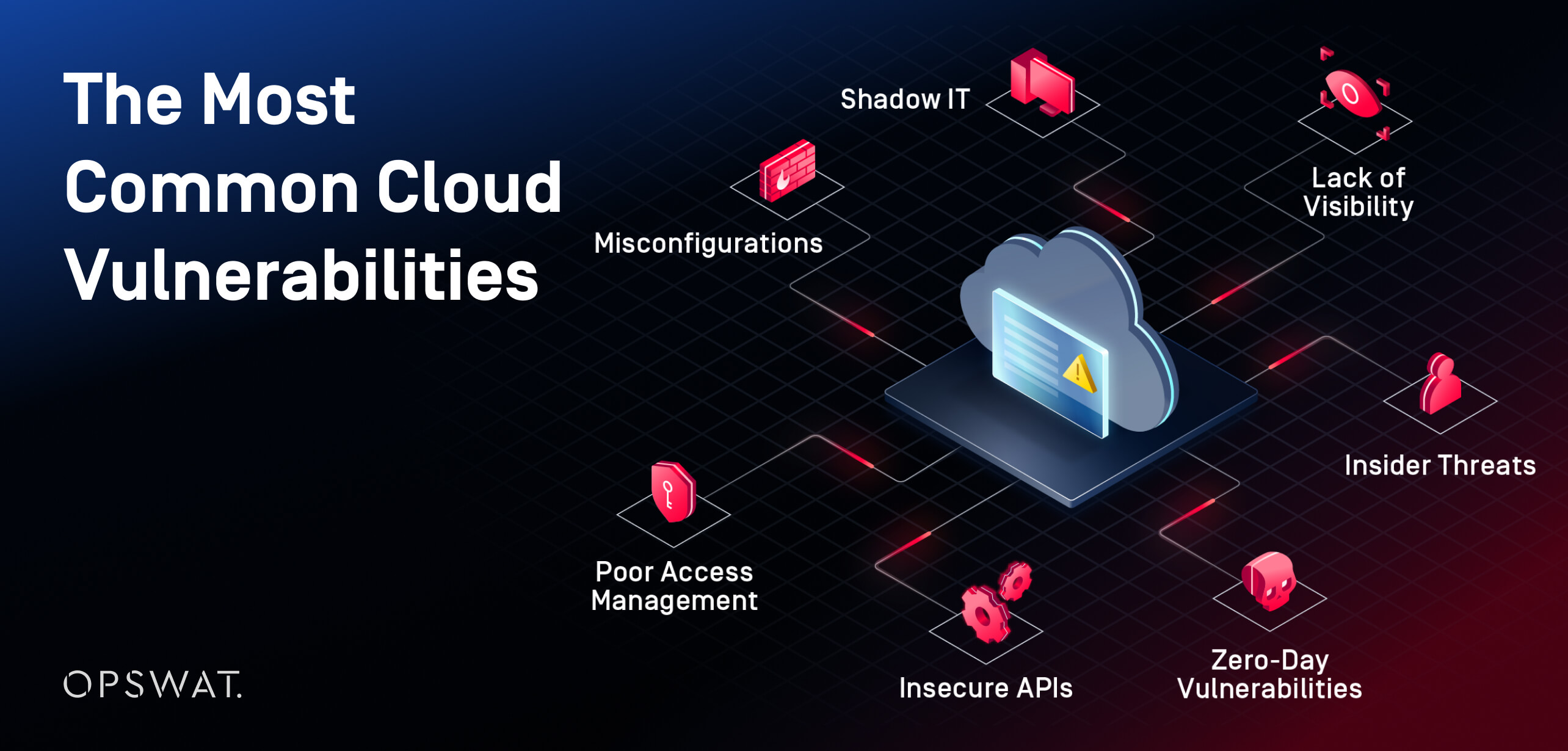
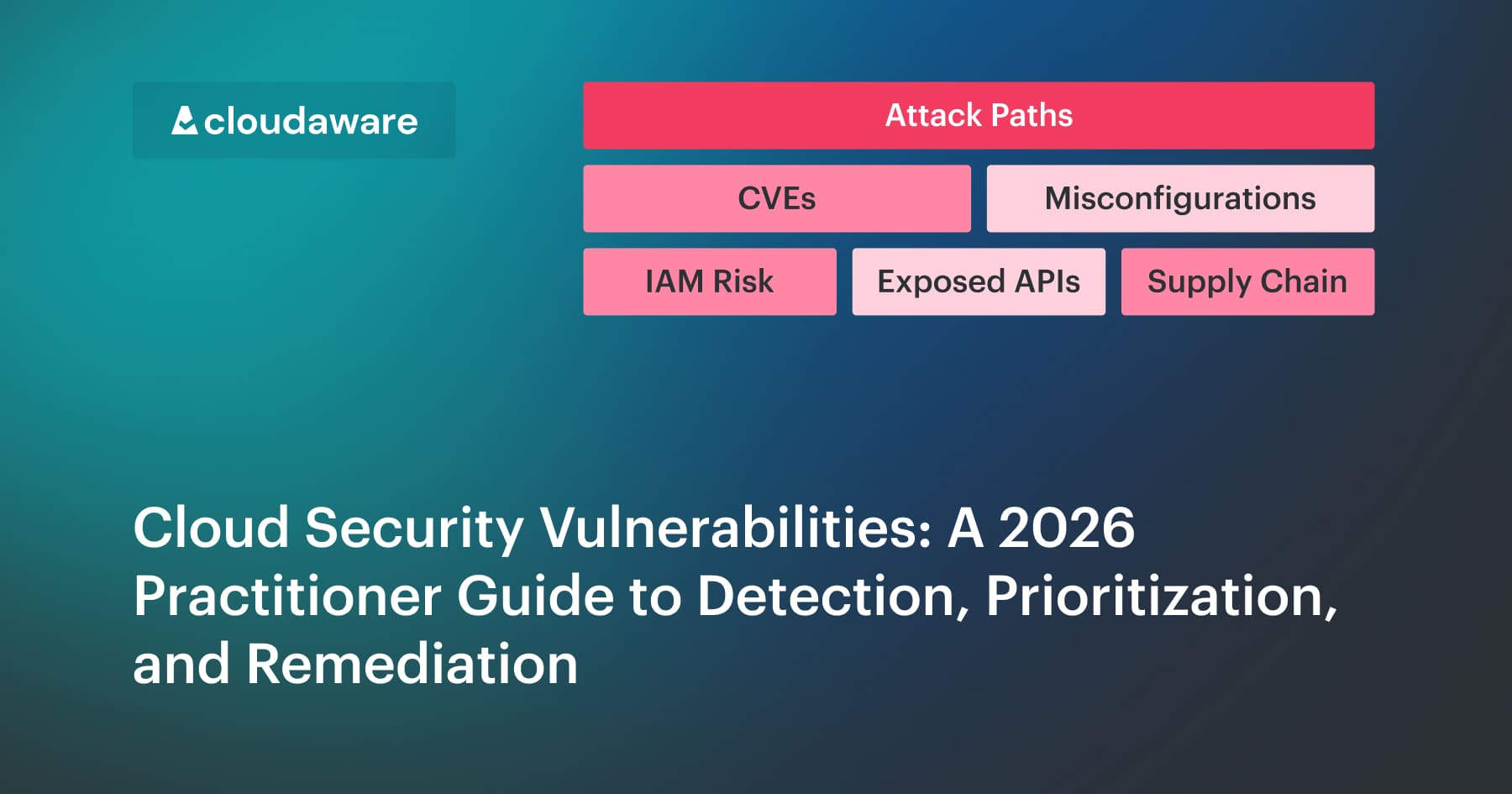
The most critical security vulnerabilities for cloud-based applications in 2026 center on broken access controls, insecure API integrations, and complex supply chain weaknesses. To protect cloud environments, organizations must move beyond perimeter-based defenses toward a Zero Trust Architecture that prioritizes identity-based security, automated configuration auditing, and continuous monitoring of third-party dependencies.
As we navigate the technological landscape of 2026, cloud computing has transitioned from an optional innovation to the foundational infrastructure of the global economy. While cloud service providers (CSPs) like AWS, Azure, and Google Cloud offer robust physical and hypervisor-level security, the responsibility for securing the applications living within the cloud remains firmly with the user. This "Shared Responsibility Model" is where many organizations falter, often assuming that the cloud's inherent scalability equates to inherent security.
The following analysis examines the nine most pressing security vulnerabilities affecting cloud-based applications this year, providing technical depth into why these issues persist and how modern security teams can mitigate them.
1. Broken Identity and Access Management (IAM)
Identity is the new perimeter in 2026. As traditional network boundaries have dissolved, the ways in which users, services, and devices authenticate and authorize their actions have become the primary target for attackers. Broken IAM remains a top vulnerability because cloud environments often involve thousands of "identities," many of which are non-human (service accounts, serverless functions, and automated scripts).
The core issue is often excessive permissions. In a rush to maintain agility, developers may grant "administrative" or "star-level" permissions to services that only require read-only access. This violates the Principle of Least Privilege (PoLP). Furthermore, the rise of "MFA Fatigue" attacks—where attackers bombard a user with push notifications until they accidentally approve one—has proven that traditional multi-factor authentication (MFA) is no longer a silver bullet.
To combat this, organizations are shifting toward Phishing-Resistant MFA (such as FIDO2/WebAuthn) and Just-In-Time (JIT) Access. JIT access ensures that permissions are granted only for the duration of a specific task, automatically revoking them once the task is complete. This significantly reduces the "blast radius" if a credential is compromised.
2. Insecure Application Programming Interfaces (APIs)
In 2026, cloud applications are rarely monolithic; they are ecosystems of microservices communicating via APIs. These interfaces are the "front doors" of the application, and if they are poorly designed or undocumented (often called "Shadow APIs"), they provide a direct path to sensitive data.
Common API vulnerabilities include Broken Object Level Authorization (BOLA) and Mass Assignment. BOLA occurs when an API endpoint does not properly verify if the user requesting a specific resource (like a user ID or an invoice number) has the right to access that specific object. Mass Assignment happens when an API takes input from a user and blindly updates a database record, allowing an attacker to change fields they shouldn't have access to, such as is_admin: true.
Securing APIs requires a shift-left approach where API definitions (like OpenAPI/Swagger) are treated as security contracts. Continuous discovery tools are essential to find undocumented endpoints, and rate limiting must be enforced to prevent automated "scraping" or Denial of Service (DoS) attacks on specific functions.
3. Cloud Infrastructure Misconfiguration
Misconfiguration remains a leading cause of data breaches, even as automated tools have improved. This vulnerability occurs when cloud resources—such as S3 buckets, Elastic Beanstalk environments, or Kubernetes clusters—are deployed with default settings that leave them exposed to the public internet.
The complexity of modern cloud consoles is a contributing factor. A single toggle in a Virtual Private Cloud (VPC) setting can accidentally bypass a firewall. In 2026, the solution lies in Infrastructure as Code (IaC). By defining infrastructure through templates (Terraform, Pulumi, CloudFormation), security teams can run static analysis scans on the code before it is deployed. This "Policy as Code" approach allows organizations to automatically reject any infrastructure changes that do not meet pre-defined security baselines.
4. Software Supply Chain Vulnerabilities
The cloud applications of 2026 are built using an average of 70% to 80% open-source code and third-party libraries. This creates a massive "supply chain" risk. If a popular library is compromised (a "poisoned dependency"), every application using that library becomes vulnerable.
The Software Bill of Materials (SBOM) has become a mandatory standard for high-security environments. An SBOM is a formal, machine-readable inventory of every component and dependency within a software package. By maintaining an updated SBOM, organizations can react instantly when a new zero-day vulnerability (like a modern equivalent of Log4Shell) is announced, knowing exactly which applications are affected. Without this visibility, the time-to-remediation can stretch into weeks, giving attackers an ample window of opportunity.
5. Inadequate Visibility and Monitoring
You cannot secure what you cannot see. In the cloud, the sheer volume of logs generated by ephemeral resources (containers that live for seconds, serverless functions that trigger thousands of times) can lead to "alert fatigue." If a security team is buried in 10,000 low-priority alerts a day, they will likely miss the one alert that indicates an active breach.
Modern cloud security relies on Cloud-Native Application Protection Platforms (CNAPP). These platforms combine Cloud Security Posture Management (CSPM) and Cloud Workload Protection (CWPP) to provide a single view of risk. Instead of looking at isolated events, these systems use AI-driven correlation to identify "attack paths." For example, it might correlate a suspicious login with a subsequent change in a database's outbound traffic, identifying a potential data exfiltration attempt in real-time.
6. Data Exfiltration via Cloud Services
Cloud environments are designed for easy data movement, which is a feature for users but a vulnerability if hijacked by attackers. Data exfiltration in 2026 often involves abusing legitimate cloud services. For instance, an attacker who gains access to a cloud instance might use the CSP's own command-line tools to sync an internal database to their own external storage bucket. Because the traffic stays within the CSP's network, traditional firewalls may not flag it as suspicious.
Preventing this requires DLP (Data Loss Prevention) policies that are integrated directly into the cloud storage layer. Organizations must also implement "Egress Filtering," which restricts the destinations to which a cloud resource can send data. If a web server has no business communicating with an external IP address in a different region, that traffic should be blocked by default.
7. Insecure Serverless Architectures
Serverless computing (Function-as-a-Service) has exploded in popularity, but it introduces unique security challenges. Because the underlying server is managed by the provider, users often forget about the "application-level" serverless risks. Each function has its own IAM role and triggers. If a function is triggered by an unvalidated event—such as a malicious file upload to a storage bucket—it can execute arbitrary code.
Vulnerabilities in serverless apps are often related to Event Data Injection. Just as web apps are vulnerable to SQL injection, serverless functions can be manipulated by malicious data passed through triggers (like SNS, SQS, or HTTP requests). Security in this space requires granular function-level permissions and rigorous input validation for every event source.
8. Insufficient Cloud Architecture Strategy
Many security issues stem from "Lift and Shift" migrations, where organizations move legacy on-premises applications to the cloud without redesigning them. Legacy apps often rely on a "crunchy exterior, soft interior" model, assuming that once someone is inside the network, they are trusted. In the cloud, this is a recipe for disaster.
A lack of cloud-native architecture means missing out on features like auto-scaling for DDoS protection or managed secrets managers. Relying on hardcoded credentials in configuration files (secrets sprawl) is a primary symptom of a poor architecture strategy. In 2026, a secure cloud strategy must include the use of Managed Secrets Vaults where credentials are dynamically rotated and never stored in the application code itself.
9. AI and LLM Integration Security
As of 2026, most cloud applications have integrated Large Language Models (LLMs) or AI components. This has opened a new category of vulnerabilities, most notably Prompt Injection. This occurs when an attacker inputs specially crafted text into an AI-powered feature (like a chatbot) to bypass its safety filters or gain unauthorized access to underlying data.
Furthermore, if an AI model is trained on sensitive cloud data without proper "data sanitization," it may inadvertently leak that data to other users through its responses. Securing AI in the cloud requires "adversarial testing" and strict data-boundary enforcement to ensure the AI only has access to the information the specific user is authorized to see.
Comparison of Cloud Security Challenges and Mitigations
The following table summarizes the primary vulnerabilities, their typical impact on the organization, and the recommended 2026-standard mitigation strategy.
| Vulnerability Category | Primary Impact | Top Mitigation Strategy (2026) |
|---|---|---|
| IAM/Access Control | Unauthorized access, Privilege escalation | Phishing-resistant MFA & Zero Trust |
| API Security | Data exposure, unauthorized actions | Automated API Discovery & BOLA Testing |
| Misconfiguration | Public exposure of private data | Infrastructure as Code (IaC) Scanning |
| Supply Chain | Widespread dependency compromise | SBOM (Software Bill of Materials) |
| Visibility/Monitoring | Slow detection of active breaches | CNAPP & AI-driven Threat Correlation |
| Data Exfiltration | Intellectual property & PII theft | Egress Filtering & Cloud-Native DLP |
| Serverless Risks | Code execution via event injection | Granular IAM Roles per Function |
| Legacy Architecture | Secrets sprawl, lack of scalability | Dynamic Secrets Management & Vaults |
| AI/LLM Security | Prompt injection, data leakage | Adversarial Testing & AI Guardrails |
Frequently Asked Questions
What is the biggest difference in cloud security between 2020 and 2026?
The biggest shift has been the transition from reactive security to automated, proactive security. In 2020, security was often a "checkpoint" at the end of the development cycle. In 2026, security is integrated into the entire lifecycle via "DevSecOps." Policies are written as code, and the use of AI to detect subtle attack patterns has become standard, whereas it was experimental a few years ago.
How does the Shared Responsibility Model apply to SaaS vs. PaaS?
The model shifts based on the service type. In SaaS (Software as a Service), the provider manages almost everything except the data and the users. In PaaS (Platform as a Service), you are responsible for the application and its data, while the provider manages the OS and runtime. In 2026, it is crucial to review your CSP’s specific compliance documents to understand exactly where their responsibility ends and yours begins for each service used.
Is cloud computing more secure than on-premises data centers?
Generally, yes, but only if configured correctly. Cloud providers invest billions in physical and foundational security that most companies could never afford. However, the "public" nature of the cloud means that a single misconfiguration can be scanned and exploited by hackers globally within minutes. The cloud provides better tools for security, but the user's execution of those tools determines the final safety level.
Why is "Secrets Sprawl" such a major issue in cloud apps?
"Secrets" refer to API keys, passwords, and encryption keys. In complex cloud environments, developers often mistakenly check these secrets into version control systems (like GitHub) or embed them in container images. Once a secret is in the code history, it is compromised. Modern tools now scan repositories in real-time to "leak-proof" the development pipeline, but legacy codebases often still contain these hidden vulnerabilities.
What are the "3 9s" of cloud security?
While the term is sometimes used to refer to "99.9% availability," in a security context, it often refers to the three pillars of Cloud Security Maturity: Identity, Visibility, and Automation. These three areas cover the nine vulnerabilities discussed: managing who has access (Identity), knowing what is happening (Visibility), and ensuring security is applied consistently without human error (Automation).
Practical Recommendation: The First Step Toward Security
If your organization is currently managing cloud-based applications, the most immediate and impactful action you can take is to implement a centralized IAM audit.
Start by identifying every non-human identity (service accounts and roles) within your cloud environment. Statistically, over 90% of these identities are over-privileged. By reducing these permissions to the absolute minimum required for the service to function, you eliminate the most common path for lateral movement during a breach. Once IAM is tightened, prioritize the creation of a Software Bill of Materials (SBOM) for your primary applications to ensure you are protected against supply chain shocks.