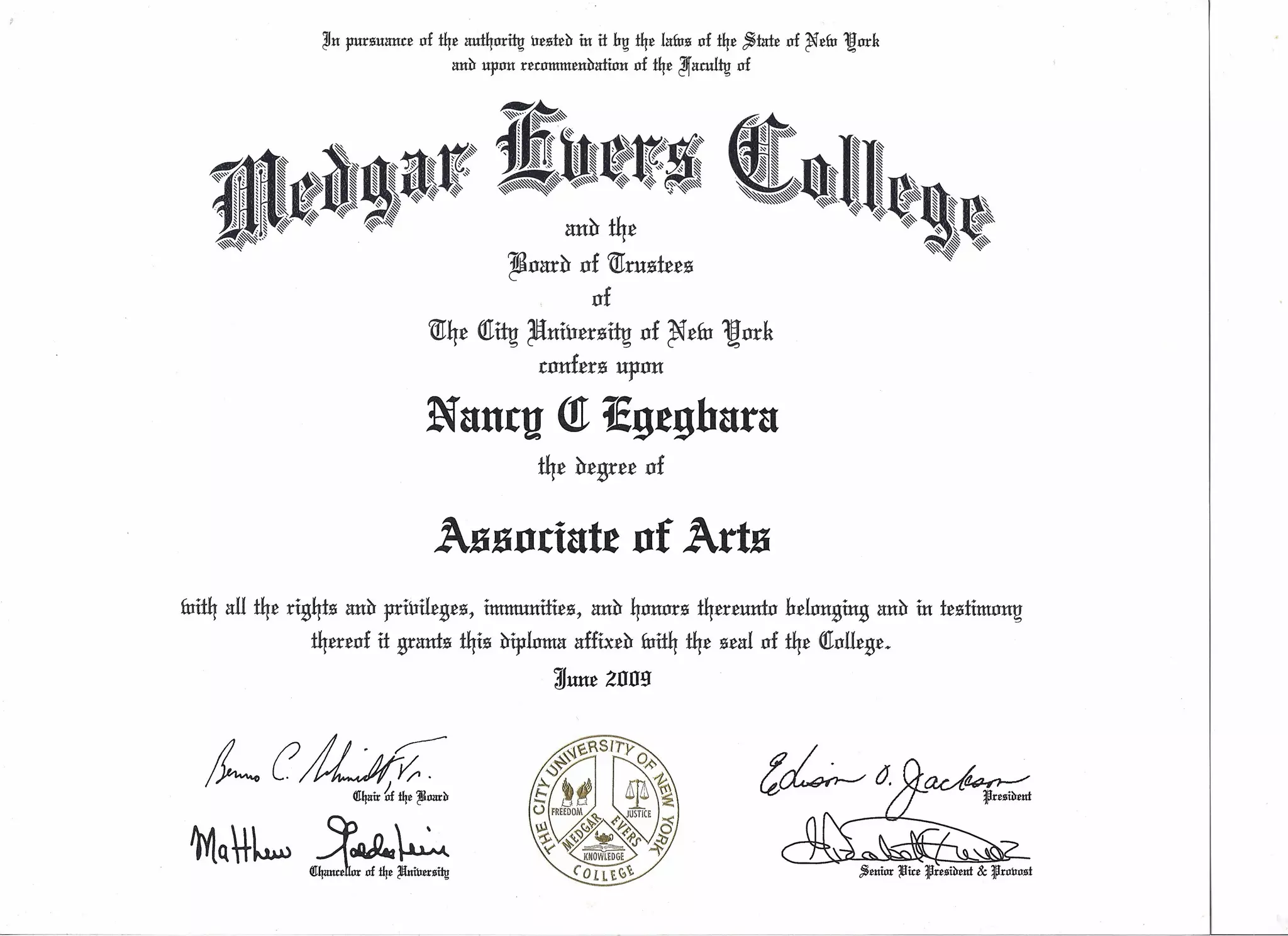
An Associate in Arts (AA) is a foundational two-year undergraduate degree that focuses on a broad liberal arts education, including humanities, social sciences, and fine arts. Designed primarily as a stepping stone to a Bachelor’s degree, it provides the essential general education credits required by four-year universities while offering a cost-effective pathway to higher education and entry-level career opportunities.
In the academic landscape of 2026, the Associate in Arts degree remains one of the most versatile and strategically sound options for students seeking to balance educational quality with financial prudence. Whether your goal is to eventually earn a PhD or to enter the workforce with a versatile skill set, understanding the nuances of the AA degree is critical for long-term success.
What is an Associate in Arts (AA) Degree?
The Associate in Arts is a degree typically awarded by community colleges, junior colleges, and some four-year universities upon the completion of approximately 60 credit hours. Unlike technical degrees that focus on specific vocational skills, the AA is rooted in the liberal arts tradition. It emphasizes critical thinking, communication, and a well-rounded understanding of the world.
Historically, the AA has served as the "transfer degree." In 2026, this function is more robust than ever, with many state education systems implementing "seamless transfer" laws. These regulations ensure that students who complete an AA at a public community college can transfer their credits in full to a public four-year university, entering as juniors.
The Distinction Between AA, AS, and AAS Degrees
It is common for students to confuse the Associate in Arts with other two-year degrees. Choosing the wrong one can lead to difficulties when trying to transfer credits later.
- Associate in Arts (AA): Heavily focused on the humanities, social sciences, and arts. It is designed for students planning to major in fields like English, History, Psychology, or Fine Arts at a university.
- Associate in Science (AS): While also a transfer degree, the AS focuses more on mathematics and natural sciences. It is the preferred path for those moving toward STEM (Science, Technology, Engineering, and Mathematics) majors.
- Associate of Applied Science (AAS): This is a terminal degree, meaning it is designed to lead directly to employment rather than transfer. It focuses on technical skills like nursing, automotive technology, or culinary arts.
Core Curriculum and Credit Requirements
To earn an Associate in Arts in 2026, students must complete a structured curriculum that balances breadth and depth. Most programs require 60 semester credits (or 90 quarter credits). These credits are generally divided into three categories: General Education, Major Prerequisites, and Electives.
General Education Requirements
The bulk of an AA degree—usually 35 to 45 credits—is comprised of General Education (GenEd) requirements. These are designed to ensure every graduate possesses a baseline of cultural and scientific literacy.
- Communications: Usually 6 to 9 credits, including English Composition I and II and Public Speaking. These courses focus on clear writing and effective oral communication.
- Mathematics: 3 to 6 credits. While the AA doesn’t require advanced calculus, students often take College Algebra, Statistics, or Liberal Arts Math to demonstrate quantitative reasoning skills.
- Social and Behavioral Sciences: 9 credits. Students choose from subjects like Psychology, Sociology, Economics, Political Science, or Anthropology. This segment explores human behavior and social structures.
- Humanities and Fine Arts: 9 credits. This includes Literature, Philosophy, Ethics, Art History, or Foreign Languages. These courses foster critical analysis and aesthetic appreciation.
- Natural Sciences: 7 to 8 credits. Typically includes one biological science and one physical science, with at least one course featuring a laboratory component.
Electives and Concentrations
The remaining 15 to 25 credits allow students to customize their degree. If a student knows they want to major in Psychology at a university, they will use these elective credits to take "Introduction to Psychology," "Developmental Psychology," and "Research Methods." In 2026, many colleges offer "Emphasis" or "Concentration" tracks within the AA degree to provide clearer guidance for transfer.
The Strategic Advantage of an AA Degree in 2026
The decision to pursue an Associate in Arts is often driven by two primary factors: financial savings and academic flexibility.
Financial Benefits and Tuition Savings
As of 2026, the cost of higher education continues to be a major concern for households. The average annual tuition at a public four-year university often exceeds $11,000 for in-state residents, while private institutions can cost upwards of $45,000. In contrast, many community colleges offer AA programs for $3,500 to $5,500 per year.
By completing the first two years of a degree at a community college, a student can potentially save $15,000 to $80,000 on their total education costs. Furthermore, students who earn an AA first are often eligible for specific "transfer scholarships" when they move on to their four-year institution, further reducing the financial burden.
The Transfer Pathway (The 2+2 Model)
The "2+2" model—two years at a community college followed by two years at a university—is the most common use case for the Associate in Arts. In 2026, many states have standardized "Articulation Agreements." These are formal contracts between institutions that guarantee:
- Credits will transfer as a block.
- The student will enter with junior status.
- General education requirements are considered "met" in full.
This pathway is particularly beneficial for students who are undecided about their ultimate major. An AA allows them to explore different disciplines at a lower cost before committing to a specific Bachelor’s program.
Comparison of Two-Year Degree Types
| Feature | Associate in Arts (AA) | Associate in Science (AS) | Associate of Applied Science (AAS) |
|---|---|---|---|
| Primary Focus | Liberal Arts, Humanities | Math, Natural Sciences | Vocational, Technical Skills |
| Transferability | High (Designed for transfer) | High (Designed for transfer) | Low (Designed for workforce) |
| Typical Majors | English, Arts, Psychology | Biology, Physics, Pre-Med | Nursing, Welding, HVAC |
| Math Requirement | Low to Moderate | High | Moderate (Applied Math) |
| 2026 Market Value | Versatile for many roles | High for technical roles | Immediate high-demand entry |
Admission Requirements and Enrollment Process
Gaining admission to an Associate in Arts program is generally straightforward, as most community colleges maintain an "open-access" policy. This means that anyone with a high school diploma or GED is eligible for enrollment.
Steps to Enrollment:
- Application: Complete the college's online application. In 2026, most institutions have waived application fees for local residents.
- Transcripts: Submit official high school transcripts or GED scores.
- Financial Aid (FAFSA): Complete the Free Application for Federal Student Aid. This is crucial for accessing Pell Grants, work-study programs, and low-interest loans.
- Placement Testing: While many colleges in 2026 use "multiple measures" (like high school GPA) to place students in classes, some may still require the ACCUPLACER or similar assessments for Math and English.
- Orientation and Advising: Meeting with an academic advisor is essential to ensure the courses you select align with your intended transfer university's requirements.
Career Opportunities with an Associate in Arts
While the AA is primarily a transfer degree, it is not without value in the job market. In 2026, employers increasingly value "soft skills"—critical thinking, emotional intelligence, and communication—which are the hallmarks of a liberal arts education.
Many entry-level administrative, sales, and service roles require "some college" or an associate degree. Holding an AA demonstrates to employers that you have the discipline to complete a multi-year program and possess a foundational level of professional competency.
Potential Job Roles for AA Holders:
- Administrative Coordinator: Managing office operations and communications.
- Social Service Assistant: Helping professionals in psychology or social work with client intake and community outreach.
- Customer Relations Specialist: Managing complex client interactions in corporate environments.
- Paralegal (with certificate): Assisting lawyers with research and document preparation.
- Human Resources Assistant: Aiding in recruitment and employee record-keeping.
According to the U.S. Bureau of Labor Statistics, individuals with an associate degree earn significantly more over their lifetime than those with only a high school diploma, and they face lower rates of unemployment.
The Evolution of the AA in 2026: Online and Hybrid Models
By 2026, the delivery of Associate in Arts programs has shifted significantly toward flexibility. Almost all community colleges now offer the AA entirely online or in a hybrid format. This is particularly beneficial for adult learners or students working full-time.
Online AA programs use asynchronous learning, allowing students to watch lectures and complete assignments on their own schedule. However, it is vital to ensure that any online program you choose is regionally accredited. Accreditation ensures that the credits you earn will be recognized by other universities and by the federal government for financial aid purposes. Organizations such as the Higher Learning Commission provide databases of accredited institutions.
Common Pitfalls to Avoid
Despite the benefits, students can run into trouble if they do not plan carefully.
- Excess Credits: Taking more than the required 60 credits can lead to financial aid issues (the "150% rule," which limits aid for students who take too many credits relative to their degree).
- Non-Transferable Electives: Not all electives are created equal. Taking a "vocationally focused" elective in an AA program might not transfer to a university as a core requirement.
- Ignoring Prerequisites: If you plan to major in a competitive field like Architecture or Engineering at a university, you must take specific prerequisites during your AA years, or you may find yourself behind when you transfer.
Frequently Asked Questions (FAQs)
1. Is an Associate in Arts degree worth it in 2026?
Yes. The AA degree is highly valuable as a cost-saving measure for those pursuing a Bachelor’s degree. It allows students to complete their general education requirements for a fraction of the cost of a four-year university while maintaining the flexibility to change majors or transfer to various institutions.
2. Can I get a good job with only an AA degree?
While many high-paying specialized roles require a Bachelor's or Master's, an AA qualifies you for many "middle-skill" jobs in administration, sales, and community services. It also makes you more competitive for promotions in many industries compared to having only a high school diploma.
3. How long does it actually take to finish?
For a full-time student taking 15 credits per semester, it takes exactly two years (four semesters). However, many students in 2026 attend part-time, which may extend the timeline to three or four years. Accelerated summer terms can also shorten the duration.
4. What is the difference between an AA and a certificate?
A certificate is a short-term program (usually 6 to 12 months) focused on a specific technical skill, like medical coding or web development. An Associate in Arts is a comprehensive degree that includes a wide range of academic subjects and provides a broader educational foundation.
5. Do all universities accept AA transfer credits?
Most public state universities have agreements to accept AA degrees from in-state community colleges. However, private and out-of-state universities evaluate credits on a case-by-case basis. It is always best to check with the admissions office of your "target" university early in your AA program.
Final Recommendation
If you are an aspiring student in 2026 looking to minimize student debt while keeping your academic options open, the Associate in Arts is an excellent choice. To maximize the value of this degree, your next step should be to contact the admissions office of your local community college and request a "Transfer Guide" for the university you eventually wish to attend. By aligning your AA coursework with your future Bachelor’s requirements from day one, you ensure a smooth, efficient, and affordable path to your career goals.