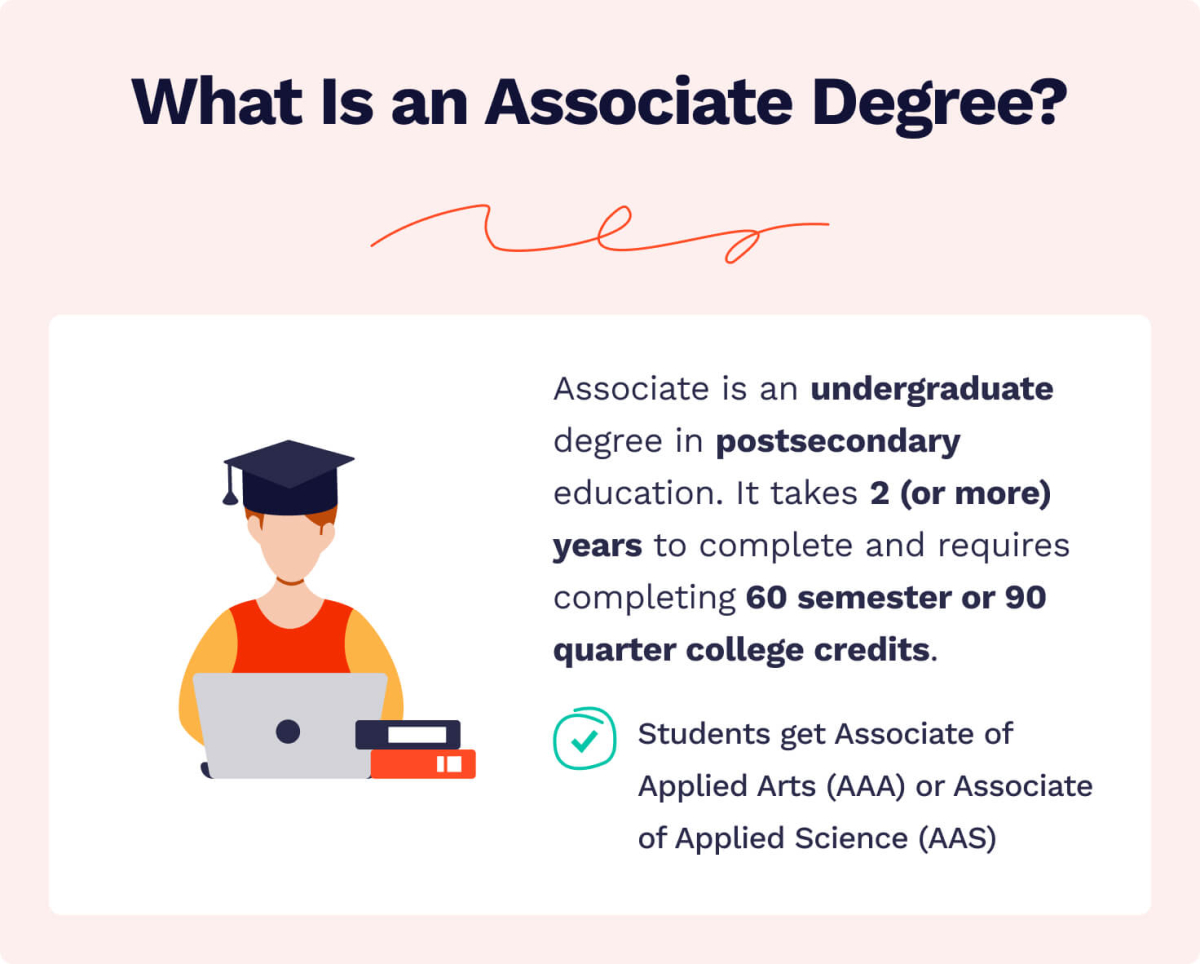
Associate online degree programs are two-year undergraduate academic tracks delivered through digital platforms, typically requiring 60 credit hours for completion. These programs offer a foundational education in specific fields or general studies, allowing students to balance higher education with professional or personal obligations while preparing for entry-level careers or further baccalaureate study.
Associate degrees have long served as a vital bridge in the American higher education system. In 2026, the landscape of these programs has evolved to be more integrated with workforce needs than ever before. Whether you are a high school graduate looking for an affordable start or a working professional seeking a pivot, understanding the nuances of online delivery, accreditation, and credit transferability is essential for making an informed investment in your future.
Defining Associate Online Degree Programs
An associate degree is an undergraduate academic program that sits between a high school diploma and a bachelor's degree. When delivered online, these programs utilize Learning Management Systems (LMS) such as Canvas, Blackboard, or Moodle to provide lectures, assignments, and peer interactions. In 2026, many institutions have moved toward "mobile-first" designs, ensuring that students can complete coursework via tablets and smartphones alongside traditional computers.
Online programs are generally categorized into two formats: asynchronous and synchronous. Asynchronous learning allows you to access materials and complete assignments on your own schedule, provided you meet weekly deadlines. Synchronous learning requires you to log in at specific times for live virtual lectures. Most associate online degree programs favor the asynchronous model to accommodate the scheduling needs of non-traditional students.
The Three Main Types of Associate Degrees
Not all associate degrees are created equal. The type of degree you choose determines your eligibility for transfer to a four-year university and your readiness for specific technical roles.
- Associate of Arts (AA): This degree focuses on liberal arts and general education. It is primarily designed for students who intend to transfer to a university to earn a Bachelor of Arts. The curriculum includes heavy doses of humanities, social sciences, and communication.
- Associate of Science (AS): Similar to the AA, the AS is a transfer-oriented degree but with a concentration on mathematics and the natural sciences. Students pursuing pre-med, engineering, or computer science tracks typically start with an AS.
- Associate of Applied Science (AAS): Unlike the AA or AS, the AAS is a terminal degree focused on vocational and technical skills. It prepares students to enter the workforce immediately upon graduation. While some credits may transfer, the primary goal is mastery of a specific trade, such as nursing, paralegal studies, or automotive technology.
The Importance of Accreditation in 2026
Accreditation is the process by which independent agencies evaluate educational institutions to ensure they meet established standards of quality. In 2026, verifying accreditation is the most critical step in selecting an online program. Without it, your degree may not be recognized by employers, and your credits likely will not transfer to other institutions.
Institutional vs. Programmatic Accreditation
Institutional accreditation applies to the entire college or university. For decades, this was divided into regional and national accreditation. While the U.S. Department of Education has moved toward a more unified federal recognition system, many academic circles still prioritize "institutional" accreditation from recognized bodies like the Higher Learning Commission (HLC) or the Southern Association of Colleges and Schools Commission on Colleges (SACSCOC).
Programmatic accreditation, on the other hand, applies to specific departments or degrees within a school. For example, if you are pursuing an online associate degree in nursing (ADN), you should look for accreditation from the Accreditation Commission for Education in Nursing (ACEN). Similarly, business programs may be accredited by the Accreditation Council for Business Schools and Programs (ACBSP).
Why Accreditation Matters for Financial Aid
The federal government only provides financial aid to students attending accredited institutions. If you plan to use FAFSA (Free Application for Federal Student Aid) funds, Pell Grants, or federal student loans in 2026, you must ensure the online program is listed in the Database of Accredited Postsecondary Institutions and Programs maintained by the U.S. Department of Education.
Costs and Financial Planning for Online Degrees
One of the primary drivers for choosing an associate online degree program is cost-efficiency. Online students often save on commuting, housing, and campus-based fees. However, tuition rates can vary significantly based on the type of institution.
Tuition Structures
- Public Community Colleges: Often the most affordable option, especially for in-state residents. Many states in 2026 have implemented "College Promise" programs that offer tuition-free associate degrees for eligible residents.
- Public Four-Year Universities: Many state universities offer online associate degrees as a "stepping stone." These may be slightly more expensive than community college rates but offer seamless transition into the school’s bachelor’s programs.
- Private Non-Profit Colleges: These institutions often offer specialized online degrees with smaller class sizes. Tuition is generally higher, but institutional scholarships may offset the cost.
- For-Profit Institutions: While convenient, these often have the highest tuition rates and varying reputations regarding credit transferability.
Hidden Costs of Online Learning
While you save on gas and dorm fees, be aware of "technology fees" or "distance learning fees" that some colleges add to each credit hour. Additionally, you will need a reliable high-speed internet connection and a computer that meets the minimum technical specifications for your specific program. Some software-intensive degrees, like graphic design or data analytics, may require specialized hardware or subscription services.
| Feature | Associate of Arts (AA) | Associate of Science (AS) | Associate of Applied Science (AAS) |
|---|---|---|---|
| Primary Goal | Transfer to 4-year BA | Transfer to 4-year BS | Immediate Employment |
| Core Focus | Humanities/Social Sci | Math/Natural Sciences | Technical/Vocational |
| Credit Hours | 60 Credits | 60 Credits | 60-70 Credits |
| Transferability | High | High | Limited/Variable |
| Common Majors | English, History, Psych | Biology, Math, CS | Nursing, Welding, HVAC |
| 2026 Job Outlook | Entry-level admin/Retail | Lab Tech, Junior Dev | Specialized Technician |
The Transfer Process: Moving from Associate to Bachelor’s
A major advantage of associate online degree programs is the "2+2" pathway. This allows a student to complete the first two years of a bachelor’s degree at a lower cost (the associate level) and then transfer those 60 credits to a four-year university for the final two years.
Articulation Agreements
To ensure a smooth transition, look for schools that have articulation agreements. These are formal contracts between community colleges and four-year universities that guarantee certain credits will be accepted. In 2026, many state systems have "common course numbering," making it easier to see exactly how an online English 101 course at a community college matches the English 101 requirement at the state university.
The "Transfer Audit"
Before enrolling, request a preliminary transfer audit if you have prior college credits. Many online programs cater specifically to adult learners and may grant Prior Learning Assessment (PLA) credits for military service, professional certifications, or workplace experience. This can significantly shorten the time required to earn your degree.
Technical Requirements and Learning Success
Success in an online environment requires more than just academic ability; it requires technical literacy and self-discipline. By 2026, the standard for online education has shifted toward highly interactive environments involving video conferencing, collaborative cloud-based documents, and sometimes virtual reality (VR) simulations for science labs.
Essential Hardware and Software
At a minimum, you will need:
- A laptop or desktop with at least 8GB of RAM (16GB preferred for 2026 software).
- A webcam and microphone for synchronous sessions or proctored exams.
- A stable internet connection with at least 25 Mbps download speeds.
- Productivity software such as Microsoft 365 or Google Workspace (often provided free by the institution).
Proctored Exams and Integrity
To maintain academic integrity, many online associate programs use remote proctoring services. These services use your webcam and AI-driven monitoring to ensure that you are following exam rules. Familiarizing yourself with these platforms early in the semester is vital to avoiding technical glitches during finals.
Top Disciplines for Associate Degrees in 2026
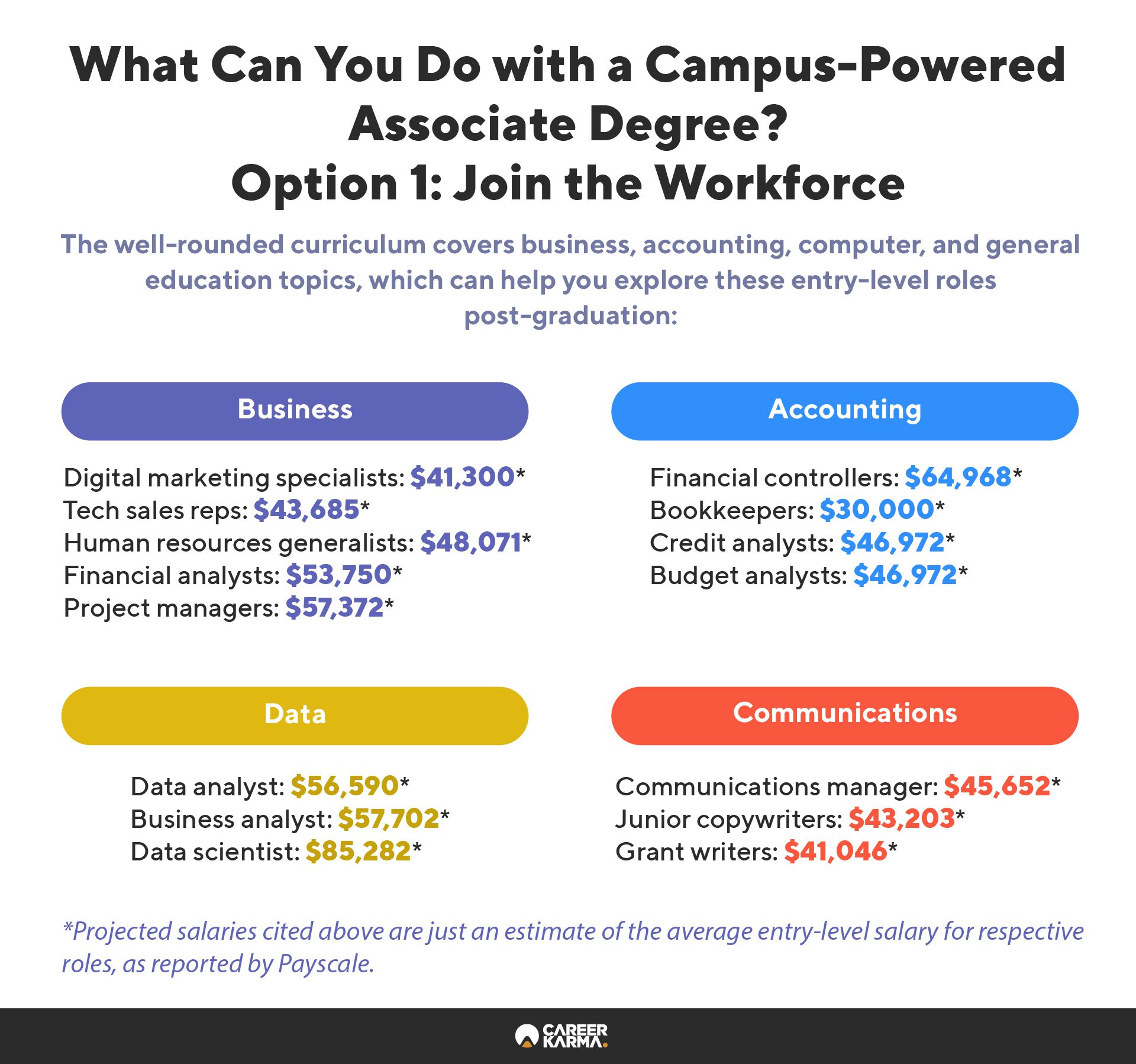
The job market in 2026 prioritizes specific technical skills that can be acquired through a two-year program. The following fields are currently seeing high demand for associate-level graduates:
- Healthcare (Nursing and Radiologic Technology): The Associate of Science in Nursing (ASN) remains one of the most popular paths to becoming a Registered Nurse (RN). Online components often cover the theory and classroom work, while clinical rotations are completed at local hospitals.
- Information Technology and Cybersecurity: With the rise of digital threats, an associate degree in cybersecurity or network administration provides the foundational knowledge needed for entry-level analyst roles and industry certifications like CompTIA Security+.
- Business Administration: An online AA or AS in business covers accounting, marketing, and management basics, serving as a versatile credential for various corporate environments.
- Paralegal Studies: Many law firms hire paralegals with an Associate of Applied Science. This program focuses on legal research, document drafting, and court procedures.
- Digital Media and Design: Associate degrees in web design or digital marketing focus on portfolio building, which is often more important to employers in these fields than a four-year degree.
How to Apply: A Step-by-Step Checklist
Applying for an associate online degree program is generally more straightforward than applying for a four-year university, but it still requires careful preparation.
- Step 1: Research and Shortlist. Identify 3-5 accredited institutions that offer your desired major online.
- Step 2: Check Admission Requirements. Most community colleges have "open enrollment," meaning they accept all students with a high school diploma or GED. However, specific programs (like Nursing) may have competitive entry requirements.
- Step 3: Complete the FAFSA. Submit your financial aid application as early as possible to secure grants and loans for the 2026-2027 academic year.
- Step 4: Order Transcripts. Have your high school and any previous college transcripts sent directly to the admissions office.
- Step 5: Placement Testing. Some schools require online placement tests in math and English to determine if you need developmental courses before starting college-level work.
- Step 6: Orientation. Most online programs offer a virtual orientation to familiarize you with the LMS and student support services like online tutoring and career counseling.
Common Pitfalls to Avoid
While associate online degree programs offer flexibility, they are not "easier" than on-campus programs. Many students struggle with the following:
- Underestimating the Time Commitment: A three-credit course typically requires 9-12 hours of work per week. For a full-time load (12-15 credits), this is equivalent to a full-time job.
- Lack of Interaction: It is easy to feel isolated. Successful online students actively participate in discussion boards and reach out to instructors via email or virtual office hours.
- Ignoring Student Services: Many online students forget they have access to the same resources as on-campus students, including library databases, mental health counseling, and job placement assistance.
- Wait-and-See Procrastination: In an asynchronous environment, it is tempting to wait until Sunday to do all the work. This leads to burnout and lower grades.
Frequently Asked Questions
Can I get an associate degree completely online without ever visiting a campus?
Yes, many institutions offer 100% online associate degrees. However, programs in fields like nursing, welding, or lab sciences usually require "hybrid" formats where the lectures are online, but the clinical or hands-on lab work must be completed in person at an approved local site.
Are online associate degrees respected by employers in 2026?
By 2026, the stigma surrounding online education has largely disappeared, provided the degree is from an accredited, reputable institution. Most diplomas do not specify "online" on the certificate itself; it is the same degree awarded to on-campus students. Employers focus more on your skills, certifications, and the accreditation of the school.
How long does it take to finish an associate degree online?
A traditional associate degree takes two years (four semesters) of full-time study. However, many online programs offer accelerated eight-week terms instead of traditional 16-week semesters, allowing motivated students to finish in 15 to 18 months. Conversely, part-time students may take three to four years.
What is the difference between a certificate and an associate degree?
A certificate program is much shorter (usually 15-30 credits) and focuses strictly on a specific technical skill without general education requirements. An associate degree (60 credits) provides a broader educational foundation, including English, math, and humanities, which makes the degree more versatile and transferable to a bachelor’s program.
Is financial aid available for online associate degrees?
Yes. As long as the school is accredited and recognized by the Department of Education, online students are eligible for the same federal financial aid as traditional students. This includes Pell Grants, Subsidized and Unsubsidized Stafford Loans, and work-study programs (though work-study may require being near a campus).
Final Recommendation for Prospective Students
If you are considering an associate online degree program in 2026, your first action should be to verify the articulation agreements and accreditation status of your target schools. If you plan to transfer to a four-year university later, contact the admissions department of that four-year school now to confirm they will accept the credits from your chosen online associate program. Starting at a community college can save you tens of thousands of dollars, but only if the credits you earn move with you toward your final goal. Focus on programs that offer robust student support services and a curriculum aligned with current 2026 industry certifications to ensure maximum return on your educational investment.