Assessing life insurance needs for a stay-at-home parent requires calculating the market value of the essential services they provide, such as childcare, household management, and transportation. Rather than replacing a salary, this coverage ensures the surviving family can afford to outsource these vital tasks, maintaining stability and financial security for the household.
The common misconception that life insurance is only for the "breadwinner" often leaves families dangerously underinsured. While a stay-at-home parent (SAHP) does not bring home a traditional paycheck, the economic value of their labor is immense. In 2026, with the rising costs of childcare and domestic services, the financial gap created by the loss of a stay-at-home parent can be even more devastating than the loss of a primary income. Without a dedicated policy, the surviving spouse may find themselves unable to maintain their career while simultaneously managing a household alone.
The Economic Value of a Stay-at-Home Parent
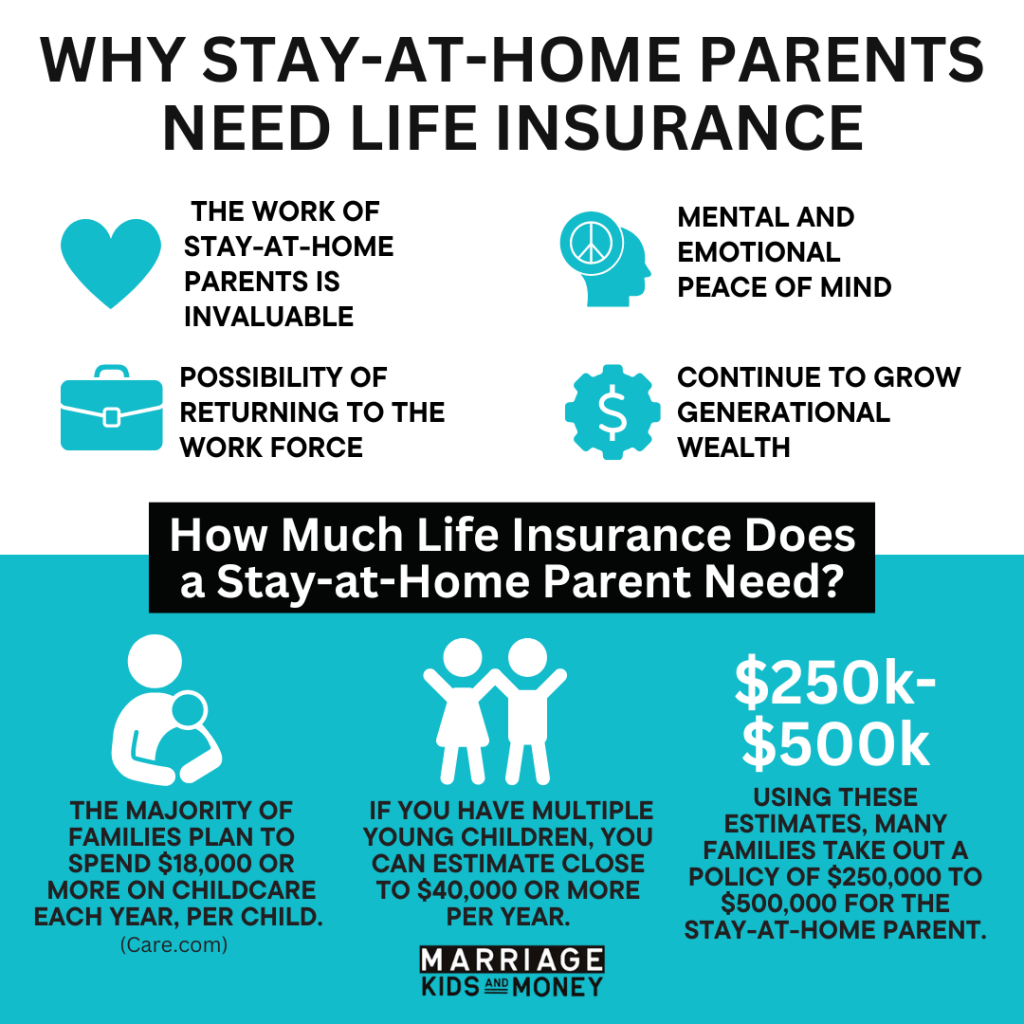
To accurately assess insurance needs, one must first recognize the SAHP as a multi-role professional. They function as a daycare provider, chef, driver, housekeeper, and household manager. If these services had to be purchased on the open market today, the cost would likely exceed the average corporate salary.
When a stay-at-home parent passes away, the remaining parent is often forced to make a difficult choice: significantly reduce their working hours to manage the home or hire professionals to fill the void. Both options carry a heavy financial burden. Life insurance provides the "liquidity" necessary to hire help so that the surviving parent can continue working and the children can maintain their standard of living and routine.
The economic contribution of a SAHP also includes the "opportunity cost" of their absence from the workforce. Many SAHPs plan to return to work once children reach school age. A comprehensive insurance assessment should account for this projected future income, as its loss impacts the family’s long-term retirement savings and wealth accumulation.
Quantifying Replacement Costs in 2026
Calculating the coverage amount requires a granular look at the specific tasks a stay-at-home parent performs. In 2026, the labor market for domestic services remains competitive, and prices for specialized childcare continue to rise.
| Service Category | Estimated Weekly Hours | Market Rate (2026 Est.) | Annual Replacement Cost |
|---|---|---|---|
| Childcare/Nanny | 50+ | $25 - $35/hour | $65,000 - $91,000 |
| Household Manager | 10 | $40/hour | $20,800 |
| Cook/Meal Prep | 15 | $30/hour | $23,400 |
| Driver/Transportation | 10 | $25/hour | $13,000 |
| Cleaning/Maintenance | 5 | $35/hour | $9,100 |
| Total Estimated Need | 90+ | N/A | $131,300 - $157,300 |
The table above illustrates that the annual cost to replace a stay-at-home parent’s labor can easily surpass $130,000. If the youngest child is three years old, the family may need this level of support for at least 15 years. This calculation alone suggests a need for a death benefit of approximately $1.9 million, excluding other factors like debt and education.
The DIME Method: A Structural Approach to Coverage
Financial planners often use the DIME (Debt, Income, Mortgage, Education) method to determine coverage. For a stay-at-home parent, this formula must be adjusted to focus on service replacement rather than income replacement.
Debt
Include all non-mortgage debts such as car loans, credit cards, and student loans. If the stay-at-home parent has personal debt, it should be cleared immediately to reduce the surviving spouse’s monthly overhead.
Income (Replacement of Services)
As detailed in the replacement cost table, estimate the annual cost of domestic services and multiply it by the number of years until the youngest child reaches adulthood. For example, if services cost $100,000 annually and the youngest child is 5, you need $1.3 million just for this category (adjusting for moderate inflation through 2026).
Mortgage
The goal of life insurance is often to allow the family to remain in their home. Paying off the mortgage removes the largest monthly expense, providing the surviving parent with more flexibility in their budget to cover increased childcare costs.
Education
The stay-at-home parent is often the primary driver of the children's educational development. Insurance should cover future college tuition and perhaps private schooling if that is the family's current standard. According to the College Board, the cost of education continues to outpace general inflation, making it a critical component of any 2026 insurance plan.
Choosing Between Term and Permanent Life Insurance
Once the amount is determined, the next step is selecting the policy type. This decision is usually driven by the family's budget and the duration of the "high-need" period.
Term Life Insurance
For most families with a stay-at-home parent, Term Life Insurance is the most practical choice. It provides a high death benefit for a relatively low premium during a specific window—typically 15, 20, or 30 years. This timeframe should ideally align with the years the children are dependent. Once the children are grown and the mortgage is paid, the financial "need" for the SAHP's insurance often diminishes.
Permanent Life Insurance
Whole Life or Universal Life insurance covers the parent for their entire life and includes a cash-value component. This may be appropriate if:
- The family has a child with special needs who will require lifelong care.
- The family is in a high-tax bracket and wants to use the policy as an estate planning or tax-shelter tool.
- The family wants to ensure there are funds for funeral expenses and final debts regardless of when the parent passes.
For more information on the tax implications of permanent life insurance, the IRS website provides guidelines on life insurance proceeds and estate taxes.
Navigating the Underwriting Process for Non-Earners
Insurance companies do not evaluate stay-at-home parents the same way they evaluate income earners. Typically, an insurer limits the amount of coverage a non-earning spouse can buy based on the coverage held by the earning spouse.
Spousal Parity
In 2026, most major insurers allow a stay-at-home parent to carry the same amount of coverage as the working spouse, up to a certain limit (often $1 million or $2 million). If the breadwinner has $1 million in coverage, the stay-at-home parent can usually qualify for $1 million without showing proof of income.
Financial Justification
If the stay-at-home parent requires coverage significantly higher than the working spouse—perhaps due to a large inheritance or a high-cost special needs situation—the insurance company may require "financial justification." This involves a narrative or documentation explaining why the high death benefit is necessary to protect the family’s economic interests.
Medical Underwriting
Like any applicant, the SAHP must undergo medical underwriting. This typically includes a health questionnaire and sometimes a paramedical exam (blood work, blood pressure, etc.). In 2026, many companies offer "accelerated underwriting," which uses data algorithms to approve healthy applicants without a physical exam, a convenient option for busy parents.
Essential Riders and Policy Add-Ons
To maximize the utility of a policy, families should consider specific "riders" or add-ons that provide additional protections.
- Waiver of Premium: This rider ensures that if the stay-at-home parent becomes totally disabled and cannot perform their duties, the insurance company will pay the premiums, keeping the policy in force.
- Child Term Rider: This provides a small death benefit for any children in the household. While the loss of a child is not a "replacement cost" issue, it provides funds for funeral expenses and allows parents to take time off work to grieve.
- Living Benefits (Accelerated Death Benefit): This allows the policyholder to access a portion of the death benefit if they are diagnosed with a terminal or chronic illness. This can be crucial for a SAHP to pay for medical care or home help while they are still living but unable to manage the household.
The Long-Term Impact on Retirement and Social Security
The loss of a stay-at-home parent affects the family’s retirement outlook. SAHPs often rely on spousal Social Security benefits or their partner’s retirement accounts. If the SAHP passes away, the surviving spouse may lose the "spousal" component of Social Security and the ability to contribute to a Spousal IRA.
Insurance coverage should be high enough to allow the surviving spouse to continue maxing out their retirement contributions even while paying for childcare. Furthermore, the Social Security Administration offers survivor benefits for children and the surviving spouse under certain conditions; however, these benefits are rarely enough to cover the full cost of replacing a SAHP’s labor.
Common Mistakes to Avoid
- Underestimating the Cost of Childcare: Many parents assume relatives will help. While relatives may be willing, they may not be able to provide 40-50 hours of free labor every week for a decade.
- Neglecting the "School-Age" Myth: Some believe insurance is unnecessary once kids go to school. However, school-age children still require transportation, help with homework, and supervision during holidays and summers—all of which cost money to outsource.
- Waiting Too Long to Apply: Premiums increase with age. Securing a 30-year term policy while the parent is in their 20s or 30s locks in a low rate for the entire duration of the parenting years.
- Relying Solely on Group Life Insurance: The working spouse may have a small "spouse" policy through their employer (e.g., $50,000). This is almost never enough to cover the long-term replacement costs.
FAQs
Can a stay-at-home parent get life insurance if they have no income?
Yes. Insurance companies recognize the economic value of domestic labor. As long as the household income can support the premiums and the working spouse has sufficient coverage, the stay-at-home parent can qualify for substantial death benefits.
How much life insurance does a stay-at-home parent really need in 2026?
While every family is different, a common benchmark in 2026 is $500,000 to $1,500,000. This range typically covers the cost of childcare, housekeeping, and education for 10-20 years, depending on the number of children and local cost of living.
What happens to the policy if the stay-at-home parent returns to work?
Nothing happens to the policy itself. If you have a term policy, the coverage and premiums remain the same. Returning to work actually increases your "human life value" in the eyes of insurers, which may allow you to apply for even more coverage if your lifestyle or income increases.
Should I get a 20-year or 30-year term?
This depends on the age of your youngest child. You generally want the coverage to last until your youngest child graduates from college or becomes financially independent. For a family with a newborn, a 25- or 30-year term is often the safest choice.
Is the death benefit from a stay-at-home parent’s policy taxable?
In most cases, life insurance death benefits are paid out to the beneficiary tax-free. However, if the death benefit is large enough to push the total estate over federal or state estate tax thresholds, there may be tax implications. Consult the IRS guidelines on estate taxes for the 2026 limits.
Practical Recommendations
To protect your family’s future, begin by auditing your weekly schedule. Document every task the stay-at-home parent performs and research the local cost of hiring a professional to do that job. Once you have an annual "replacement salary" figure, multiply it by the number of years until your youngest child turns 22.
Compare this number against your current savings and any existing small policies. Most families will find a significant gap. Contact an independent insurance broker who can shop multiple carriers to find the best spousal parity rules. Secure a term life policy that covers at least the replacement cost of your labor, your mortgage, and your children’s future education. This is not just an insurance policy; it is a specialized safety net that preserves the family unit during its most vulnerable years.