An asset-based loan is a form of business financing secured by company collateral, such as accounts receivable, inventory, equipment, or real estate, with borrowing limits determined by the appraised value of those assets rather than strict reliance on cash flow or credit scores.
Understanding Asset-Based Lending
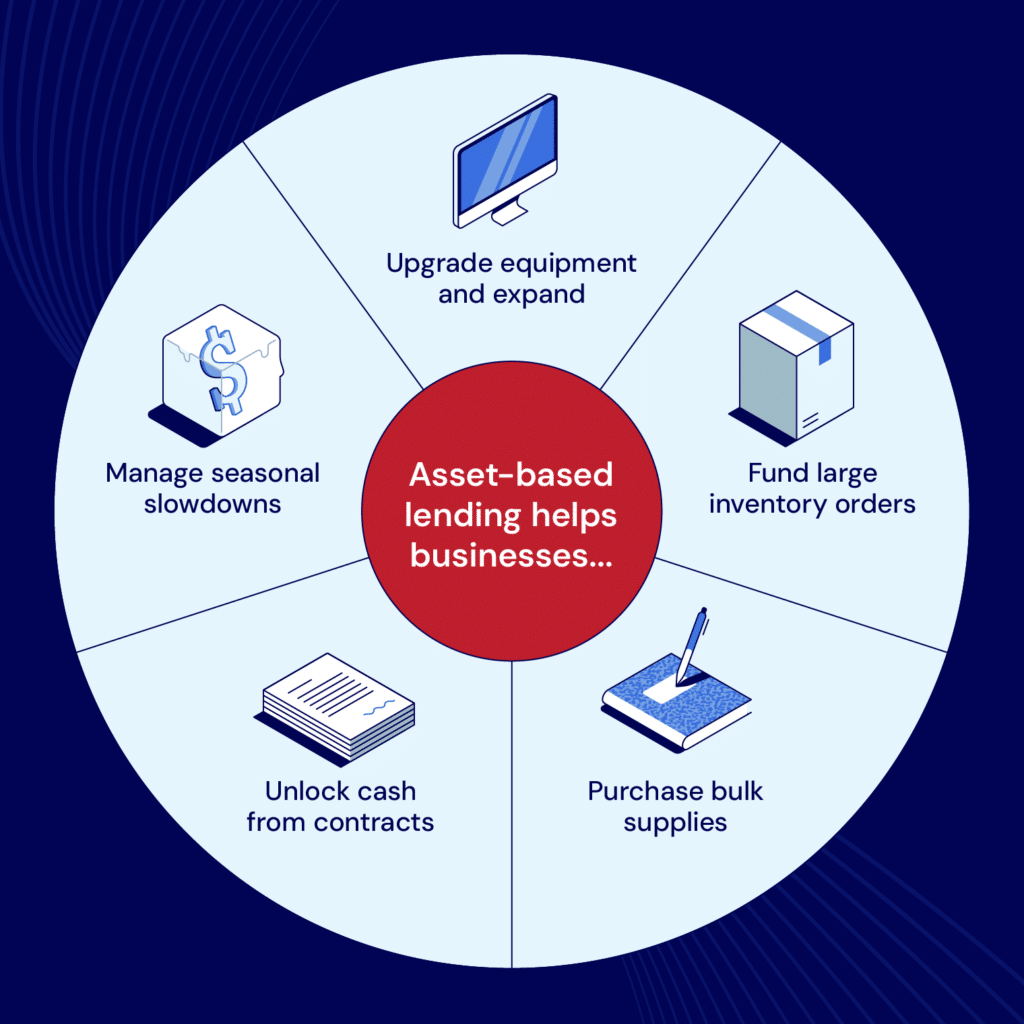
Asset-based lending (ABL) serves as a vital financial lifeline for enterprises that require capital to fuel growth, manage seasonal cash flow fluctuations, or navigate turnaround situations. Unlike traditional commercial loans that heavily weigh historical profitability, debt-service coverage ratios, and pristine credit histories, asset-based lending focuses primarily on the liquidation value of a company’s tangible and liquid holdings. This financing structure provides flexibility for firms that hold significant capital tied up in operations but lack immediate cash reserves to seize new opportunities or meet payroll obligations.
The mechanics of an asset-based loan revolve around a concept known as the borrowing base. Lenders do not lend 100 percent of an asset's appraised value; instead, they apply a discount or "advance rate" to mitigate their risk in the event of default or liquidation. For example, accounts receivable might carry an advance rate of 70 to 80 percent, while inventory might only secure 30 to 50 percent of its stated value due to the complexities of liquidating physical goods. As the underlying asset pool fluctuates in volume and value, the total available credit line adjusts dynamically. This requires borrowers to submit regular reports detailing their inventory levels and aging receivables to maintain accurate credit limits.
Core Components and Eligible Collateral
To qualify for an asset-based loan, a business must possess qualifying assets that can be legally pledged, valued, and monitored. Lenders meticulously evaluate these assets to determine their quality, marketability, and legal standing before extending credit. Understanding what constitutes eligible collateral helps businesses prepare their balance sheets for a successful application.
Accounts Receivable
Accounts receivable represent money owed to a business by its customers for goods or services delivered. In ABL arrangements, receivables are typically the most favored asset class because of their inherent liquidity. Lenders analyze the quality of the receivables through an "aging report," looking closely at invoices that are under 90 days old. Invoices from creditworthy corporate or government entities receive higher advance rates, while disputed invoices, international accounts, or delinquent balances are generally excluded from the borrowing base.
Inventory
Inventory includes raw materials, work-in-progress, and finished goods ready for sale. While inventory can unlock substantial capital, it is viewed as riskier than accounts receivable because it requires a buyer, can become obsolete, or may suffer damage. Lenders prefer finished goods that have a steady, demonstrable market value. Raw materials may also qualify, but specialized or custom-manufactured work-in-progress is frequently discounted heavily or rejected entirely due to the difficulty of repurposing it for another buyer.
Equipment and Machinery
Heavy machinery, manufacturing equipment, vehicle fleets, and technology infrastructure can also serve as collateral. Equipment-backed advances depend heavily on orderly liquidation value (OLV) appraisals conducted by certified professionals. Because equipment depreciates over time and is less liquid than receivables or inventory, lenders often structure these loans with fixed repayment schedules rather than revolving lines of credit, even within a broader ABL facility.
Real Estate
Commercial real estate—such as warehouses, office buildings, manufacturing plants, and distribution centers—provides strong collateral for asset-based loans. Lenders evaluate real estate based on independent appraisals and loan-to-value (LTV) ratios. While real estate offers stability and high asset values, the legal and administrative processes required to appraise and encumber property can lengthen the time required to close the loan compared to receivables or inventory financing.
| Collateral Type | Typical Advance Rate | Liquidity Level | Primary Risk Factor |
|---|---|---|---|
| Accounts Receivable | 70% – 85% | High | Customer default or delayed payment |
| Inventory | 30% – 50% | Moderate | Obsolescence, spoilage, or slow turnover |
| Equipment | 50% – 70% | Low | Depreciation and specialized use |
| Commercial Real Estate | 65% – 80% | Very Low | Market fluctuations and lengthy liquidation |
How the Asset-Based Loan Process Works
Securing an asset-based loan involves a rigorous underwriting and due diligence process. Because the lender's security depends entirely on the accuracy of the collateral valuation, the steps from initial application to ongoing management require transparency and meticulous record-keeping.
1. Application and Financial Assessment
The borrower submits financial statements, tax returns, and comprehensive schedules of the assets they wish to pledge. The lender reviews the company's business model, industry standing, and general financial health to ensure it meets their baseline underwriting criteria.
2. Collateral Auditing and Appraisal
Lenders perform exhaustive field examinations and third-party appraisals. For accounts receivable, auditors verify the validity of customer invoices and collection histories. For inventory and equipment, independent appraisers inspect physical items to establish forced sale and orderly liquidation values.
3. Determining the Borrowing Base
Once the asset values are verified, the lender establishes the borrowing base formula. This mathematical framework defines the maximum amount the company can borrow at any given time based on the agreed-upon advance rates applied to eligible assets.
4. Loan Agreement and Legal Documentation
Legal counsel drafts the loan agreement, security agreement, and Uniform Commercial Code (UCC) filings. These legal documents establish the lender's perfected security interest in the pledged collateral, granting them priority rights to seize and liquidate those assets if the borrower defaults.
5. Ongoing Monitoring and Reporting
Unlike term loans that require minimal oversight after disbursement, ABL facilities demand continuous reporting. Borrowers typically submit weekly or monthly borrowing base certificates, aging reports, and inventory counts. Lenders also conduct periodic field audits to verify that the reported figures match actual physical assets.
Advantages and Disadvantages of Asset-Based Lending
Evaluating whether an asset-based loan suits a specific business requires weighing its operational flexibility against its administrative demands and cost structure.
Advantages
- Capital Access for Struggling or Growing Firms: Companies experiencing rapid growth, temporary losses, or turnaround scenarios can secure capital that traditional banks deny based on cash flow models alone.
- Scalable Credit Limits: As sales increase and accounts receivable or inventory expand, the borrowing base grows naturally, providing automatic capital scaling without requiring a new loan application.
- Preservation of Equity: ABL allows business owners to secure substantial liquidity without diluting their ownership stake through equity financing or venture capital.
- Focus on Tangible Strength: Credit decisions rely on the intrinsic value of the company’s assets rather than subjective projections or historical profit margins.
Disadvantages
- Higher Costs: Interest rates and fee structures—including monitoring fees, field audit fees, and closing costs—often exceed those of conventional commercial loans due to the intensive administrative oversight required.
- Intense Administrative Burden: Preparing frequent borrowing base certificates and hosting regular collateral audits consume internal accounting resources and time.
- Collateral Vulnerability: If business conditions deteriorate and sales plummet, the borrowing base shrinks simultaneously, potentially triggering a cash crunch precisely when the company needs liquidity most.
- Strict Monitoring and Covenants: Lenders maintain tight operational oversight, and breaches of financial or reporting covenants can lead to default proceedings.
Comparison: Asset-Based Loans vs. Traditional Commercial Loans
Choosing between an asset-based loan and a traditional commercial loan depends on a company’s financial profile, asset composition, and capital requirements.
Traditional commercial loans—such as term loans or standard lines of credit—primarily evaluate a borrower’s cash flow, debt-service coverage, and profitability. They are generally less expensive in terms of interest rates and administrative overhead, but they are notoriously difficult to secure for early-stage companies, seasonal businesses, or enterprises undergoing restructuring. Banks offering traditional loans typically require strong, multi-year profit histories and low leverage ratios.
Conversely, asset-based loans prioritize the balance sheet over the income statement. While they carry higher borrowing costs and require rigorous operational transparency, they offer a reliable source of liquidity for asset-rich companies that cannot meet traditional underwriting standards. Businesses with high volumes of accounts receivable or inventory find ABL far more responsive to their operational cycles than fixed-schedule commercial loans.
Frequently Asked Questions
What types of lenders offer asset-based loans?
Asset-based loans are provided by specialized commercial finance companies, commercial banks with dedicated ABL divisions, and private credit funds. Specialized non-bank lenders often provide greater flexibility and faster execution times compared to traditional depository institutions, though sometimes at a higher cost.
Can a startup qualify for an asset-based loan?
Startups rarely qualify for traditional ABL facilities unless they possess significant, high-quality accounts receivable or tangible assets backed by well-established enterprise clients. Because ABL depends on existing collateral value and liquidation recovery, early-stage companies without established revenue streams or inventory typically rely on alternative financing methods like venture debt, angel investment, or equipment leases.
What happens if the value of my collateral drops?
If the appraised value of the pledged assets declines—due to customer defaults on receivables or inventory obsolescence—the borrowing base shrinks. If the outstanding loan balance exceeds the new, lower borrowing base, the lender will issue a margin call requiring the borrower to pay down the excess principal immediately to restore compliance.
Are asset-based loans considered lines of credit or term loans?
They can be structured as either. Most asset-based loans function as revolving lines of credit where borrowers draw, repay, and redraw funds based on the fluctuating borrowing base. However, lenders may also structure specific components, such as machinery or real estate financing, as amortizing term loans within the same overall credit facility.
What is a field examination in asset-based lending?
A field examination is a comprehensive audit conducted by the lender or a third-party accounting firm to verify the existence, quality, and valuation of the collateral. Auditors inspect internal accounting controls, test invoice validity, review inventory management systems, and ensure that no other creditors hold conflicting liens on the assets.
Next Steps for Borrowers
Businesses considering an asset-based loan should begin by conducting a comprehensive internal audit of their balance sheet. Management teams must verify that their accounts receivable aging reports are clean, inventory tracking systems are accurate, and fixed assets are free from existing encumbrances or competing liens. Consulting with a corporate financial advisor or commercial loan broker can help identify specialized lenders whose industry expertise aligns with the company's specific asset profile, ensuring a transparent and efficient underwriting experience.