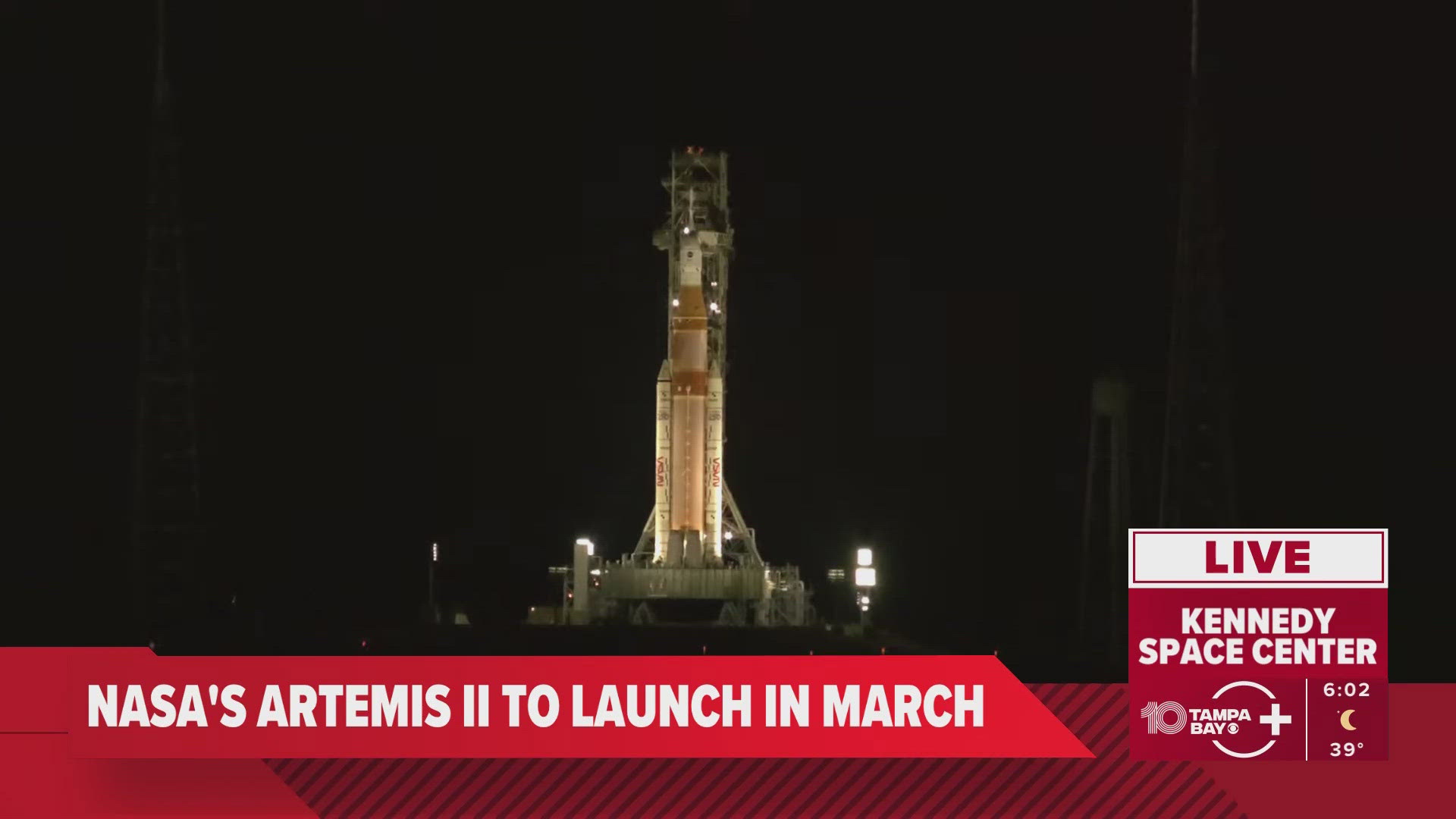
The Artemis 2 mission represents a pivotal moment in human space exploration, marking the first crewed flight of the Space Launch System (SLS) and the Orion spacecraft. Launch windows for this mission are not arbitrary dates; they are strictly determined by the complex interplay of orbital mechanics, the alignment of the Earth and Moon, and the specific physiological and safety requirements of the crewed mission profile.
The launch of the Artemis 2 mission is governed by a set of highly specific orbital parameters necessitated by the goal of sending four astronauts on a lunar flyby. Unlike Earth-orbiting missions that can launch at almost any time, a lunar mission requires the Moon to be in a specific position in its orbit relative to the launch site at Kennedy Space Center. The "timing window" is essentially a function of finding the precise moment when the SLS can inject the Orion spacecraft into a Trans-Lunar Injection (TLI) trajectory that allows for a safe, fuel-efficient, and recoverable return to Earth.
The Science of Lunar Launch Windows
To understand the timing of Artemis 2, one must first recognize that a launch window is a period during which a spacecraft can be launched to achieve a specific mission trajectory. For Artemis 2, these windows are constrained by three primary technical factors: lighting, trajectory, and recovery.
The Lighting Constraint
For any mission carrying a crew, the safety of the launch and the eventual splashdown are paramount. NASA requires daylight conditions for the initial launch phase to ensure that ground-based optical tracking and weather monitoring can identify any anomalies in real-time. Furthermore, the splashdown of the Orion capsule in the Pacific Ocean must occur during daylight hours to facilitate efficient recovery operations by the U.S. Navy. These lighting requirements effectively narrow the possible launch days to those where the Moon’s geometry allows for a mission duration that aligns daylight launch and recovery phases.
Orbital Alignment
The Moon orbits the Earth at an inclination of approximately 5 degrees relative to the ecliptic. Because the Earth is rotating and the launch site at Kennedy Space Center (KSC) is at a fixed latitude, the target trajectory to reach the Moon changes throughout the month. The launch window opens only when the Moon reaches a specific point in its orbit where the trajectory from KSC leads directly to a TLI burn. If the launch is missed, mission planners must wait until the Earth and Moon realign, which typically happens over a cycle of roughly 27.3 days (the sidereal month).
The Return Trajectory
The Artemis 2 mission is not a landing mission; it is a free-return trajectory mission. This means the spacecraft is placed on a path that uses the Moon’s gravity to loop around and return to Earth without requiring a large propulsive maneuver. This trajectory dictates the total mission duration. Because the entry speed into the Earth’s atmosphere depends on the angle of return—which is fixed by the lunar swing-by—the window must account for where in the Pacific Ocean the capsule will land. If the orbital mechanics lead to a landing site that is too far north or south, or occurs during the night, the window is deemed invalid.
Mission Planning and Window Duration
A common misconception is that a launch window is a single, precise moment. In reality, a "window" is often a multi-day period consisting of "launch opportunities." Within a given window, there is usually a "daily launch window," which is the amount of time on a single day during which a launch can occur.
The length of the daily window depends on the capabilities of the SLS rocket to perform an in-plane or out-of-plane maneuver. If the launch occurs slightly off-center of the perfect trajectory, the rocket must use extra fuel to correct its course. Therefore, the daily window is limited by the amount of reserve propellant available in the SLS and the Orion Service Module. If the window is too long, the fuel required for the orbital plane change becomes prohibitive, threatening the safety margins of the crew.
Table: Factors Influencing Launch Window Selection
| Factor | Technical Impact | Constraint Level |
|---|---|---|
| Lunar Position | Determines TLI trajectory requirements | Critical |
| Splashdown Lighting | Ensures safe recovery operations | High |
| Launch Site Weather | Limits launch capability at KSC | Medium |
| Propellant Reserve | Defines the width of the daily window | High |
| Solar Activity | Potential impact on communications/safety | Low |
Navigating Launch Delays and Scrubs
In the event of a "scrub"—a cancellation of the launch attempt—mission control assesses whether a launch can be rescheduled for the following day. Whether or not the mission can proceed on the next day depends on the "window length." Some windows allow for consecutive-day launches, while others require a "hold" that lasts for several weeks until the orbital geometry repeats.
During these holds, the Orion spacecraft and the SLS must be maintained in a flight-ready state. The team must monitor the cryogenic propellants, the health of the onboard batteries, and the status of life support systems. For Artemis 2, which includes a human crew, the health of the life support consumables is a critical factor. Unlike an uncrewed vehicle, the crewed Orion cannot remain in a launch-ready state indefinitely on the pad, as it introduces complexity regarding crew access, egress systems, and the limited shelf-life of certain onboard supplies.
Communication and Range Safety
The launch timing is also synchronized with the Tracking and Data Relay Satellite (TDRS) network and the Deep Space Network (DSN). Maintaining continuous contact with the crew during the critical ascent phase and the TLI burn is mandatory. While the DSN provides global coverage for deep space, the launch phase relies on ground stations and relay satellites that must be in the correct position.
Range Safety is another layer of the launch timing. The U.S. Space Force, which oversees the Eastern Range, must ensure that the flight path does not overfly populated areas or interfere with maritime and air traffic. These range constraints are integrated into the launch window software, ensuring that even if the orbital mechanics allow for a launch, the flight safety parameters are strictly adhered to.
Next Steps for Stakeholders and Observers
For those tracking the Artemis 2 timeline, the most reliable source for window updates is the official NASA Artemis mission page. Because orbital dynamics are subject to subtle shifts and launch preparations can encounter technical challenges, the "timing" of the window is often refined as the date approaches.
- Monitor Official Notifications: NASA releases "Mission Status" briefings that specify the opening and closing times of the launch window.
- Understand the "No-Go" Factors: Familiarize yourself with the weather constraints for Kennedy Space Center, as wind shear and lightning are the most frequent causes of window shifts.
- Track Pre-launch milestones: The arrival of the crew, the completion of the Wet Dress Rehearsal (WDR), and the final countdown sequence are indicators that the mission is entering the terminal window phase.
The Artemis 2 mission is a demonstration of human ingenuity constrained by the cold, hard math of celestial movement. Understanding these windows helps provide context for why a mission might be delayed even when the hardware is ready, as the Earth and the Moon must be perfectly positioned to ensure the safety and success of the crew.
Frequently Asked Questions
Why can’t Artemis 2 launch every day of the month? The Moon orbits the Earth at an inclination relative to the equator. Because the Earth is rotating, the launch site only aligns with the Moon’s orbital plane twice a day, and the specific energy requirements for a lunar trajectory mean these windows are only available during specific days of the lunar month.
How does the crewed nature of Artemis 2 affect the launch window? Crew safety adds strict requirements for daylight landing at the splashdown site. While an uncrewed cargo mission might tolerate a night splashdown, the Artemis 2 mission requires daylight to ensure rapid recovery of the crew from the capsule in the Pacific Ocean.
What happens if the launch is scrubbed? If a launch is scrubbed, mission controllers determine if the launch can occur the following day. This depends on whether the daily window is still open and if the mission's fuel margins permit the slight adjustment in the flight path. If not, the mission will be delayed until the next available lunar window.
Is there a secondary landing site in case of an abort? Yes, mission planning includes extensive abort scenarios. The launch window is calculated to ensure that even in an emergency, the crew has a safe path back to an appropriate recovery zone, which further restricts when the rocket is permitted to leave the pad.
Can the launch window be extended at the last minute? No. The launch window is a hard physical limit determined by orbital mechanics and fuel constraints. While technical procedures can sometimes extend the readiness of the vehicle, the window of opportunity is dictated by the position of the Moon, which cannot be changed.
For the most accurate and up-to-date scheduling, monitor the official NASA launch schedule as the launch period nears. Ensure that your tracking reflects the current mission parameters provided by flight controllers at the Johnson Space Center.