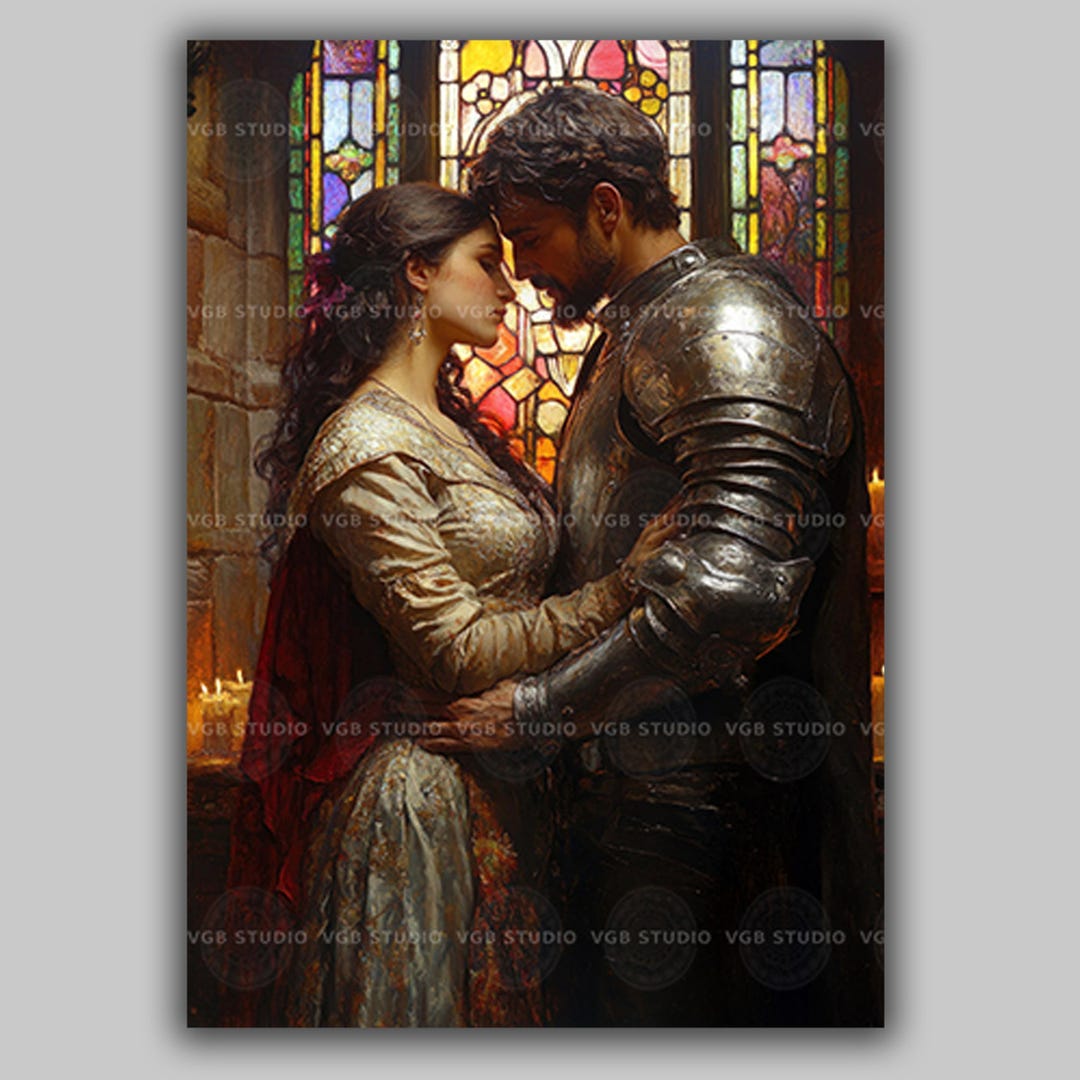
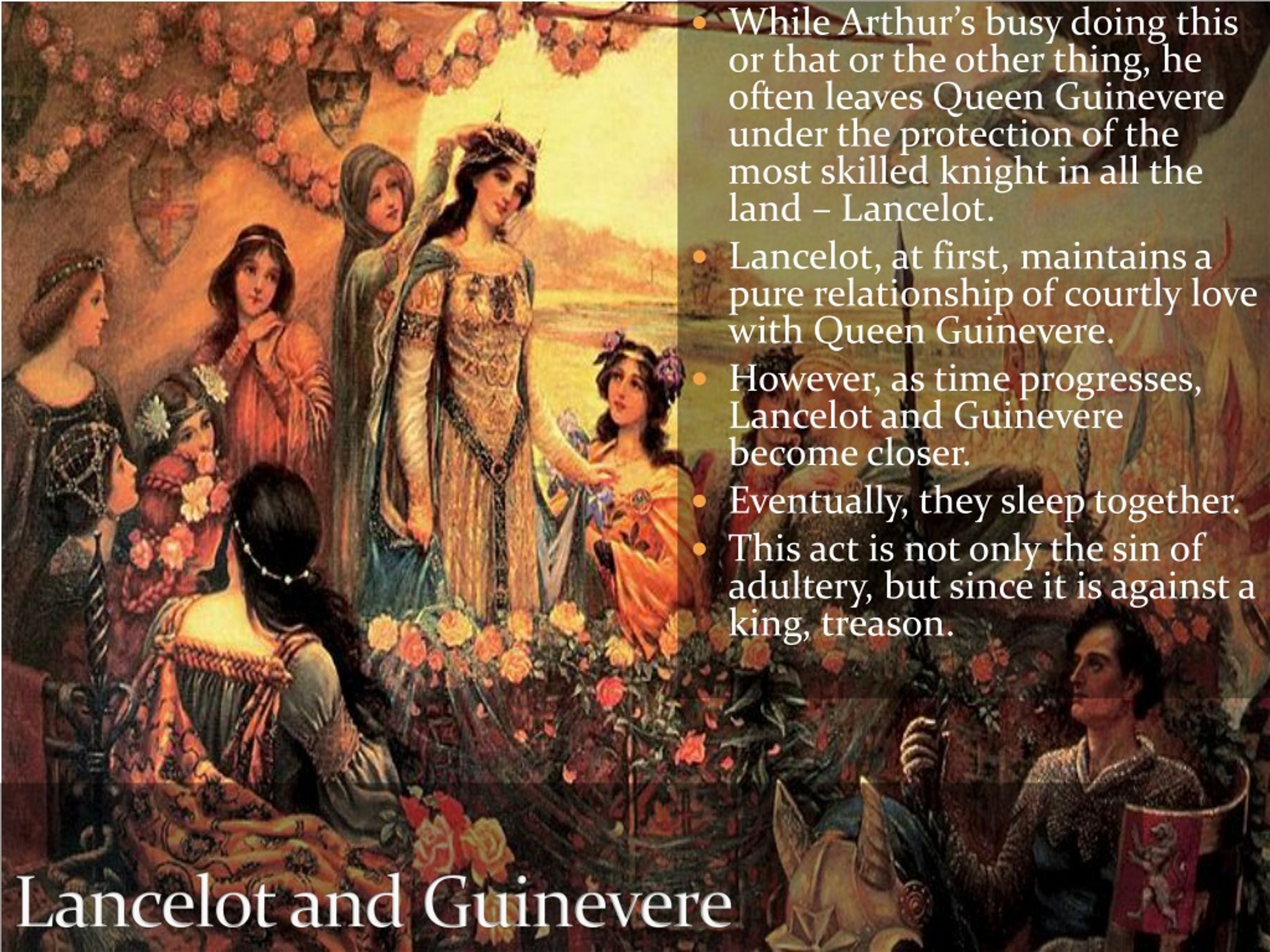
The relationship between King Arthur and Queen Guinevere stands as the emotional and structural anchor of the Matter of Britain. Initially portrayed as a royal union of state, their narrative evolved throughout the Middle Ages to center on the tragic, adulterous love triangle between the King, his Queen, and his greatest knight, Lancelot, which ultimately precipitates the collapse of the Round Table and the fall of Camelot.
The Foundations of the Royal Union
In the earliest Welsh traditions, such as Culhwch and Olwen, Guinevere (or Gwenhwyfar) appears as little more than a royal figurehead, a queen whose identity is largely synonymous with her status as Arthur’s consort. During these formative stages of Arthurian lore, the focus remained on Arthur’s role as a warrior-king defending Britain against supernatural and external threats. Guinevere’s character had not yet been burdened with the weight of moral complexity or romantic drama.
However, as the legend transitioned from oral history to the sophisticated literary landscape of the 12th century, the role of the queen underwent a deliberate expansion. When Geoffrey of Monmouth penned The History of the Kings of Britain (c. 1136), he presented Guinevere as a woman of noble Roman descent, reflecting the desire of medieval authors to align Arthur’s court with the prestige of classical antiquity. In this framework, the marriage functioned as a political alliance, cementing Arthur’s authority and legitimacy in the eyes of his court.
The Transformation of the Narrative: Chretien de Troyes
The critical shift in the portrayal of Arthur and Guinevere occurred with the introduction of the French poet Chretien de Troyes in the late 12th century. Chretien is credited with introducing the figure of Lancelot and, by extension, the courtly love (fin'amor) tradition that would define the Arthurian canon for centuries.
In The Knight of the Cart (Lancelot), the relationship between Guinevere and Arthur is relegated to the background, functioning as a static backdrop for the dynamic, clandestine romance between the Queen and Lancelot. This was a radical literary device for the period. It introduced the central tension of the legend: the conflict between feudal duty—the loyalty owed by a knight to his sovereign—and the overwhelming, often destructive power of romantic desire. Guinevere was no longer merely a queen; she became a representative of the courtly ideal, a figure for whom a knight would endure profound humiliation and peril.
The Role of the Queen in the High Middle Ages
During the 13th and 14th centuries, the character of Guinevere became a vessel for examining the morality of the medieval aristocracy. Authors of the Vulgate Cycle (or the Lancelot-Grail cycle) added layers of theological weight to the narrative. The illicit affair was no longer just a romantic trope; it became a moral failing that tainted the purity of the entire fellowship of the Round Table.
Key Aspects of the Royal Relationship
| Feature | Role in Early Legend | Role in High Medieval Legend |
|---|---|---|
| Primary Status | Royal consort and queen | Tragic figure of desire |
| Focus | Stability and lineage | Personal agency vs. public duty |
| Dynamic | Peripheral to Arthur's wars | Central to the fall of the kingdom |
| Public Image | Distant, regal authority | Controversial, moral complexity |
The interplay between these roles highlights the evolution of the medieval social order. As chivalric literature flourished, the queen became the arbiter of social conduct. A knight's service to his queen was often depicted as a prerequisite for his service to his king, creating an inherent contradiction that medieval writers used to explore the instability of human governance.
The Inevitability of the Fall: Malory’s Influence
Sir Thomas Malory’s Le Morte d'Arthur (1485) serves as the definitive synthesis of these disparate threads. In Malory’s work, the marriage of Arthur and Guinevere is marked by a pervasive sense of tragedy. While Arthur is depicted as loving and trusting, his preoccupation with the state and the preservation of his kingdom leaves him blind to the infidelity occurring within his own halls.
Malory emphasizes the legal and social consequences of the affair. When the secret is eventually revealed, it forces the King into a position where he must choose between his personal affection for his wife and his duty to uphold the laws of the realm. The subsequent war between Arthur and Lancelot, sparked by the Queen’s betrayal, signifies the end of the idealized Age of Chivalry. The legend suggests that the destruction of the Round Table was not merely a military defeat by Mordred, but an internal rot caused by the inability to reconcile personal passion with the requirements of kingship.
Historical and Literary Context of the 13th–15th Century
To understand why Arthur and Guinevere were portrayed in this specific way, one must look at the legal status of women in the Middle Ages. The tension in the texts often mirrors contemporary anxieties about dynastic stability. An heirless queen, or one suspected of infidelity, posed a direct threat to the inheritance of the throne. While Arthurian legend often leaned into the romantic aspects, the underlying subtext regarding property rights, treason, and the sanctity of the marital oath was deeply rooted in the legal consciousness of the medieval audience.
The Problem of Sovereignty
The legend continuously probes the question of where sovereignty lies. If a queen is the representative of the courtly ideal, and that ideal is undermined by her illicit behavior, the authority of the king is fundamentally compromised. By the time of the late Middle Ages, the "fall of Camelot" was interpreted not just as a loss of land, but as a loss of a moral standard that had been set by the King and Queen together.
Frequently Asked Questions
Did Guinevere always cheat on Arthur in the legends?
No. In the earliest Welsh texts, Guinevere is not depicted as an adulterer. The narrative of her affair with Lancelot was a literary invention introduced by French poets, specifically Chretien de Troyes, in the 12th century to explore the concepts of courtly love.
Why is the relationship between Arthur and Guinevere considered a tragedy?
It is a tragedy because it pits the personal desires of the characters against their public responsibilities. The affair between Guinevere and Lancelot creates an impossible conflict for Arthur, forcing him to choose between justice (punishing the betrayal) and mercy (retaining his best knight and his wife), a choice that ultimately destroys the peace of his kingdom.
What is the significance of the "Matter of Britain"?
The "Matter of Britain" refers to the body of medieval literature and legendary material associated with King Arthur and the Knights of the Round Table. It is a collective effort by multiple authors across several centuries to build a coherent, albeit contradictory, history of a mythical unified Britain.
Does the legend reflect real medieval marriage laws?
While the legend is romanticized, it does reflect the period's intense concern with adultery as a form of treason. Under feudal law, a queen’s infidelity was not merely a personal betrayal but a direct threat to the legitimacy of the royal line and the political stability of the kingdom.
Why did the story of Arthur and Guinevere change so much over time?
The legend evolved because each era used the Arthurian court to reflect its own social and moral priorities. Early legends focused on tribal defense, 12th-century poets focused on romance and courtly conduct, and later writers focused on the moral, religious, and political collapse of a society.
Practical Recommendations for Researchers
For those seeking to understand the evolution of the Arthur and Guinevere narrative in 2026, it is recommended to approach the texts in their chronological order rather than their internal, narrative order. Start with the Welsh Triads and Geoffrey of Monmouth’s History to establish the baseline of the characters. Follow this by examining the French Romances of the 12th century to observe the shift toward courtly love. Finally, compare these to Malory’s Le Morte d'Arthur, which provides the most comprehensive, albeit late, synthesis of the cycle.
If researching the legal or social ramifications mentioned in the literature, rely on secondary scholarly analysis concerning the High Middle Ages, as this period provides the most significant context for the moral debates found within the texts. Ensure that any translation used for study is a critical edition, as nuances in language—particularly in the transformation from Old French to Middle English—often dictate the moral interpretation of Guinevere’s actions.