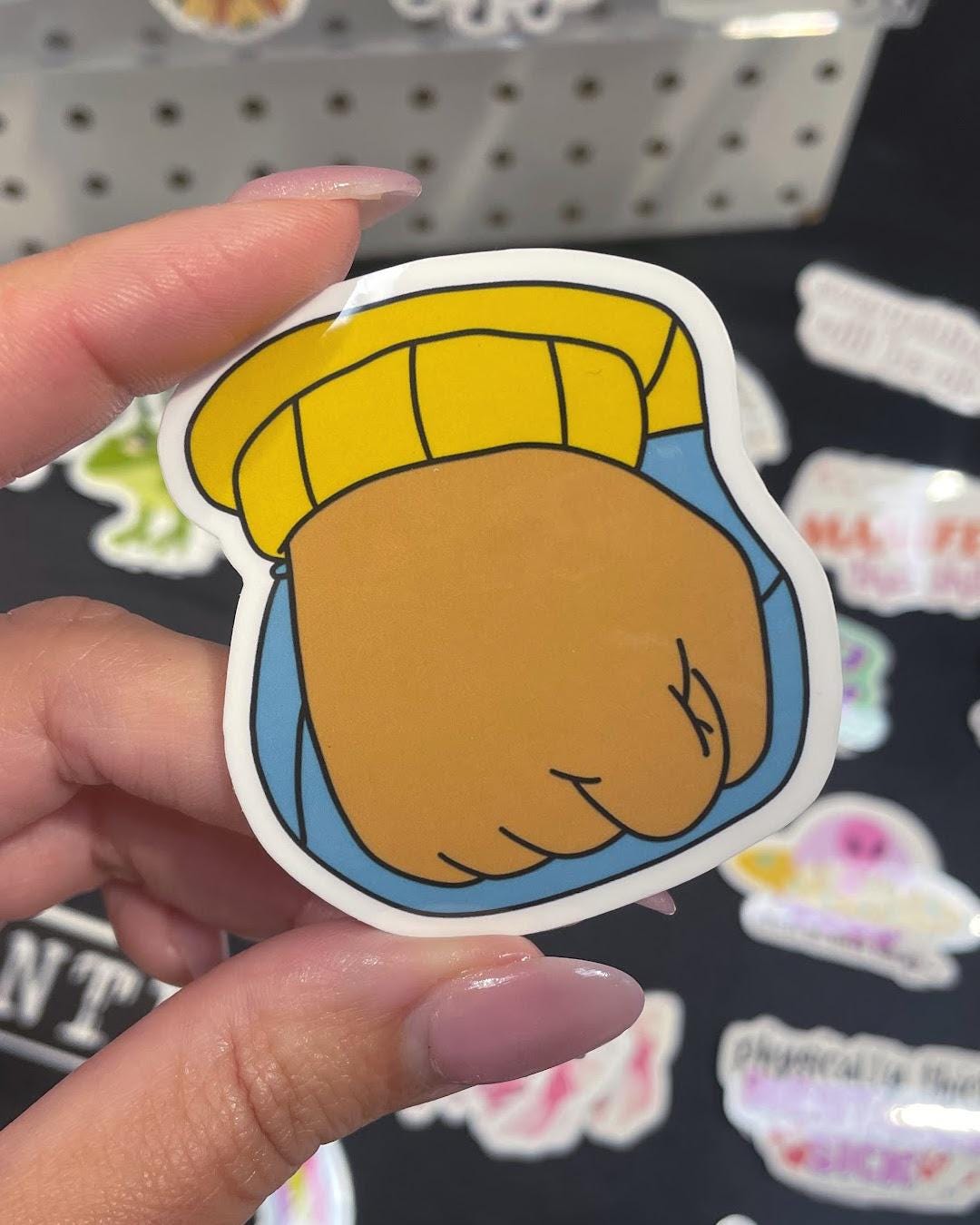
The Arthur balled fist meme is a viral internet image featuring a screenshot of the character Arthur Read from the long-running PBS children’s animated series Arthur. The image depicts Arthur with a tightly clenched fist, a visual expression of suppressed rage, frustration, or a sense of injustice. Since its emergence in 2014, it has become a staple of internet humor, used globally to articulate the feeling of wanting to lash out while maintaining a facade of forced composure.
The Origin of the Balled Fist
The specific image of Arthur with a balled fist originates from the episode titled "Arthur’s Big Hit," which first aired on September 12, 1999, as part of the show's fourth season. In this episode, the plot centers on a conflict between Arthur and his younger sister, D.W. Read. After D.W. ruins a model airplane that Arthur spent significant time building, Arthur experiences a moment of intense anger and strikes his sister.
The scene captured by the meme occurs just before the physical altercation. As Arthur reflects on the destruction of his hard work and the perceived lack of consequences for his sister, he displays a look of intense, quiet fury. This specific frame—the close-up of his yellow hand balled into a fist—was extracted from the episode years later and uploaded to social media platforms, where its potential as a reaction image was immediately recognized.
Anatomy of the Meme: Why It Resonates
The enduring popularity of the Arthur balled fist meme can be attributed to its emotional clarity. Unlike complex or obscure memes that require deep internet literacy to understand, the Arthur fist is universally readable. A closed fist is a primal human signifier of anger, and placing it on a character from a beloved, wholesome childhood show creates a comedic contrast known as incongruity humor.
Psychological Context
When users share the image, they are often performing a psychological maneuver called "relatable projection." By pairing the image with text describing minor, everyday annoyances—such as a slow internet connection, an inconsiderate coworker, or a minor social slight—the user is communicating that they are experiencing a "micro-aggression" of life. It allows for the expression of intense negative emotion in a way that is self-deprecating and lighthearted, effectively diffusing the anger through shared laughter.
The Role of Nostalgia
Arthur, which ran from 1996 to 2022, serves as a significant cultural touchstone for Millennials and older members of Generation Z. For these demographics, seeing a character from their formative years experiencing an adult, relatable emotion creates a bridge between their childhood innocence and their current, often stressful, adult reality. This nostalgia is a primary driver in the longevity of the meme.
Evolution and Variations of the Image
While the original screenshot of the fist is the most iconic, the meme has evolved through various iterations since 2014. These variations allow for nuanced storytelling within the confines of a single image.
- The Contextual Crop: Many users choose to show the original frame of Arthur’s face alongside the fist. His expression—eyes squinted, mouth set in a thin line—adds a layer of "strained restraint" that the fist alone lacks.
- Contextual Re-labeling: Using image-editing software, users often label the fist or the surrounding objects in the background to provide specific context. For instance, the fist might be labeled with the user's name, while a nearby object is labeled with a "to-do list" or a "deadline."
- High-Definition Reproductions: As digital culture has shifted toward higher-quality visual content, creators have occasionally redrawn or "remastered" the scene in higher resolution, ensuring the meme remains legible on modern high-pixel-density mobile screens.
Table: Comparison of Arthur Meme Utility
| Aspect | The Balled Fist | The Full-Body Reaction |
|---|---|---|
| Primary Emotion | Internal, suppressed fury | External, active frustration |
| Common Use Case | Minor daily annoyances | Significant, overt injustice |
| Visual Focus | Kinetic energy of the hand | Full body language and facial expression |
| Ease of Reading | High (symbolic) | Medium (observational) |
The Cultural Shift: From Children’s TV to Internet Icon
The transformation of Arthur Read from a PBS educational figure to a meme icon is a hallmark of "internet remix culture." It highlights how intellectual property can be repurposed by the public to create entirely new meanings. While the creators of Arthur intended the episode "Arthur’s Big Hit" to be a serious lesson on the dangers of violence and the importance of conflict resolution, the internet repurposed the most violent moment of the episode into a vehicle for humor.
This transition illustrates the concept of "meaning-making." The audience is no longer consuming the content as it was intended (an educational narrative about siblings); they are consuming it as a blank slate for their own expressions. This has effectively "resurrected" the show's relevance for an adult audience long after many viewers stopped watching children's programming.
Prerequisites for Effective Use
To use the Arthur balled fist meme effectively in your own digital communications, consider the following parameters:
- The Conflict Scale: The meme works best when the subject of your frustration is relatively minor. If the conflict is overly serious or tragic, the use of a cartoon character may come across as insensitive.
- The Audience: Ensure your audience recognizes the character. While the image is widely known, it is most effective when shared within a peer group that shares a similar appreciation for nostalgic pop culture.
- Textual Clarity: Keep the caption short. The humor relies on the image doing the heavy lifting; a long paragraph of text often diminishes the impact of the visual.
Common Pitfalls and Troubleshooting
While the meme is generally harmless, there are common mistakes that can dilute its effectiveness:
- Over-Explaining: Avoid adding text that describes what the image is already saying. If you use the fist, you do not need to write "I am so angry." The image is the caption.
- Poor Formatting: Ensure the image is not cropped to the point of unrecognizability. The hand must be clearly balled, and the color palette (the distinctive Arthur yellow) should be preserved to maintain its identity.
- Contextual Mismatch: Avoid using the meme to harass or attack individuals. Because of its origin in a show about children, using it in hostile, targeted cyber-bullying can be interpreted as particularly aggressive or inappropriate.
Resolving Ambiguity in Intent
Occasionally, users may confuse the Arthur fist with other "angry" memes. It is important to distinguish this from memes that depict active, chaotic rage (such as the "Table Flip" meme). The Arthur fist is specific to the feeling of holding back—the internal pressure before an explosion. Understanding this distinction ensures that the meme is applied in the correct emotional context.
Frequently Asked Questions
Where can I find a high-quality version of the Arthur fist?
The image is available on most major meme databases and image-hosting sites. Because it is a public-domain screenshot from a broadcast, it is widely circulated; however, it is always best to prioritize versions that haven't been overly compressed by multiple social media re-uploads.
Is it legal to use the Arthur fist for my own projects?
In most casual, non-commercial contexts (like social media posts), this falls under the category of fair use, specifically as parody or transformative commentary. If you are planning to use it for a commercial product or a large-scale project, you would need to consult intellectual property law regarding the character's copyright, which is held by the show's production entities.
Does Arthur show up in other memes?
Yes, the Arthur series has been a goldmine for internet culture. Other popular formats include the "Arthur Library Card" meme, which is often used to express confusion or sarcasm, and various reaction shots of D.W. Read. These form a sub-genre of "Nostalgia Memes" that frequently circulate on platforms like X, Reddit, and Instagram.
Can I make my own version of the Arthur meme?
Absolutely. The meme is highly adaptable. Many users create custom versions by "remixing" the image—for instance, changing the color of the fist to match a specific situation or layering it onto different backgrounds to suggest that Arthur is currently experiencing a specific, modern-day annoyance, such as a crowded train or a malfunctioning smartphone.
Why do people keep using this specific meme instead of newer ones?
The Arthur fist is a classic "all-purpose" reaction. Because it lacks a specific topical anchor (like a dated news event), it remains relevant indefinitely. As long as humans experience the frustration of minor, unavoidable daily annoyances, the visual language of the balled fist will remain a perfect shorthand for those feelings.
Next Steps for Content Creators
If you are a digital creator or someone interested in the cultural history of the internet, consider archiving your own favorite instances of the Arthur balled fist meme. As digital trends move rapidly, the history of these "viral moments" provides a fascinating look into how humor and communication have changed over the last two decades. To start, try identifying the specific scenarios in your own life that best capture the "Arthur energy"—the moments where you are forced to be polite while your hand is balled in frustration—and observe how others in your network react to the sentiment. The longevity of this meme proves that, even in 2026, the simplest expressions of human emotion are the ones that travel the furthest.