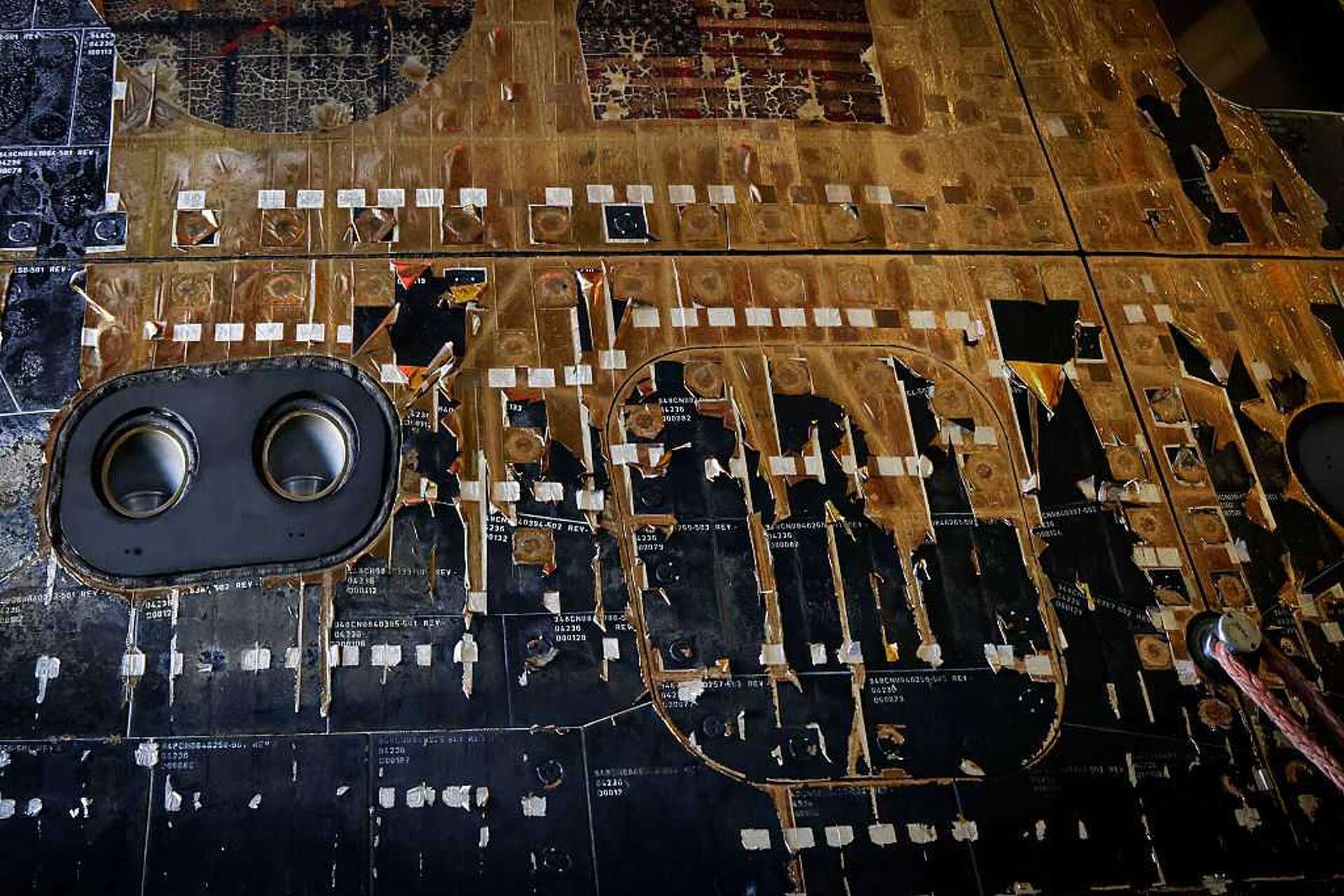
The heat shield anomalies observed on the Orion spacecraft during the Artemis I mission necessitated significant engineering revisions for the Artemis II flight. These changes centered on the removal of material from the Avcoat ablative layer to mitigate unexpected char liberation. While consensus exists on the necessary mechanical modifications, expert opinions diverge regarding the root causes of the char loss and the long-term implications for future crewed deep-space missions.
The Context: Artemis I and the Heat Shield Anomaly
The Orion heat shield is a critical safety component designed to protect the crew module during the extreme thermal environment of atmospheric reentry. Comprising a titanium skeleton and a carbon fiber composite skin covered in Avcoat—an ablative material designed to char and erode in a controlled manner—the shield is engineered to carry away heat as pieces of the material flake off.
During the Artemis I uncrewed test flight in late 2022, telemetry and post-flight inspection revealed that the heat shield experienced more extensive char loss than pre-flight thermal models predicted. Small, glowing pieces of the ablative material were observed separating from the shield during reentry. While the spacecraft functioned within safety margins and landed successfully, the unexpected behavior prompted an exhaustive internal investigation by NASA and its industry partners.
Engineering Changes for Artemis II
Following the completion of the Artemis I data analysis, engineers identified that the specific structural configuration of the Avcoat blocks—and the gaps filled between them—contributed to the unexpected surface erosion. To address this, the design team implemented a series of modifications for the Artemis II mission.
Modification of the Ablative Layer
The primary change involved the removal of specific amounts of Avcoat material from the outermost layer of the heat shield. By altering the geometry and thickness of the ablative blocks, engineers aimed to improve the structural integrity of the char layer during the intense aerodynamic heating phase. The goal was to prevent the localized "cracking" or "liberation" that occurred when the material expanded differently than expected under flight conditions.
Thermal Modeling Upgrades
Engineers overhauled the thermal prediction software used to simulate reentry. By incorporating the empirical data from the Artemis I flight, the team refined their understanding of how high-velocity atmospheric friction interacts with the Avcoat material. This adjustment ensures that future simulations better account for the interplay between surface temperature, material density, and mechanical stresses.
Where Opinions Diverge: The Root Cause Debate
Despite the consensus on the physical changes, a notable divergence exists within the aerospace engineering community regarding the primary driver of the anomalous char loss.
The Material-Property Hypothesis
Some researchers argue that the phenomenon is primarily a result of the material property evolution. As Avcoat is exposed to extreme temperatures, it transitions through phases that may have been underestimated in original laboratory tests. Proponents of this view believe that the material’s ductility—or lack thereof—under specific shear forces is the culprit, suggesting that the chemical formulation itself may behave differently at scale than it does in small-batch testing.
The Aerothermal-Interface Hypothesis
Conversely, a significant segment of the engineering community points to the complex interaction between the spacecraft’s wake and the boundary layer of the atmosphere. This perspective suggests that the heat shield did not fail due to material weakness, but rather due to aerodynamic "tripping" caused by the specific arrangement of the blocks. These experts argue that the flow of ionized gas created unexpected turbulence, which essentially "scoured" the material away faster than the ablator could properly form a protective char layer.
Impact on Future Crewed Missions
The modifications for Artemis II are viewed as a necessary step for ensuring the safety of astronauts traveling to the Moon and beyond. The primary concern is not merely the loss of mass from the shield—which is designed to ablate—but the unpredictability of that loss.
Safety Margins and Redundancy
For a crewed mission, safety is measured in redundant margins. If the heat shield loses material in an uncontrolled, non-uniform manner, it risks exposing the underlying titanium skeleton to temperatures it was not designed to withstand. By stabilizing the ablative process through the design changes made in 2026, NASA aims to restore the confidence that the thermal protection system will perform within predictable, well-defined limits regardless of minor variations in the entry trajectory.
Operational Verification
To verify these changes, the Artemis II mission will utilize enhanced sensing equipment. While Artemis I was equipped with sensors, the instrumentation on the follow-up mission has been optimized to provide high-fidelity video and thermal imagery of the heat shield during the descent. This will allow ground teams to determine in real-time whether the modification to the Avcoat successfully arrested the unexpected char liberation.
Comparison of Heat Shield Performance Indicators
The following table outlines the key performance metrics monitored during reentry and how the engineering approach has shifted between the first and second flight missions.
| Metric | Artemis I (Observation) | Artemis II (Design Target) |
|---|---|---|
| Ablation Rate | Non-uniform, higher than expected | Uniform, consistent with refined models |
| Char Liberation | Observed localized fragmentation | Predicted stable, monolithic char |
| Thermal Protection | Within structural safety limits | Within safety limits + increased margin |
| Material Thickness | Standard original design | Modified, optimized geometry |
Frequently Asked Questions
Did the heat shield damage compromise the success of the Artemis I mission?
No. The heat shield functioned as designed, safely protecting the internal components of the Orion capsule. The "damage" was an anomaly that occurred within the expected ablative performance but exceeded the specific predictions of the pre-flight computer models.
Is the Avcoat material itself being replaced?
No, the fundamental chemistry of the Avcoat material remains the same. The changes are structural and geometric, focusing on how the material is shaped and applied to the shield, rather than replacing the substance itself.
How does NASA verify the heat shield is ready for crewed flight?
NASA employs a combination of "ground testing" in high-enthalpy plasma wind tunnels and sophisticated computer modeling. These are validated by the flight data from the previous mission to ensure that the mathematical models match the physical reality observed in space.
Will the heat shield require further redesigns after Artemis II?
That depends on the data returned by the Artemis II sensors. If the current modifications yield the expected performance, the design may be locked for future missions. If further anomalies occur, engineers will likely revisit the mechanical attachment methods between the Avcoat blocks and the carrier structure.
Next Actions and Conclusion
The work performed on the Artemis II heat shield represents the iterative nature of modern space exploration. By identifying the divergence between physical reality and simulated prediction, NASA has demonstrated the capacity to pivot engineering designs to enhance crew safety.
For observers following the Artemis program, the next key milestone involves the post-landing inspection of the heat shield following the Artemis II mission. The performance of the modified Avcoat layer will provide the definitive answer to the current debates regarding material properties versus aerothermal flow. Stakeholders and industry analysts should monitor official NASA mission briefings and technical post-flight reports for data confirming the effectiveness of these design modifications, as these results will set the technical standard for the sustained human presence on the lunar surface.