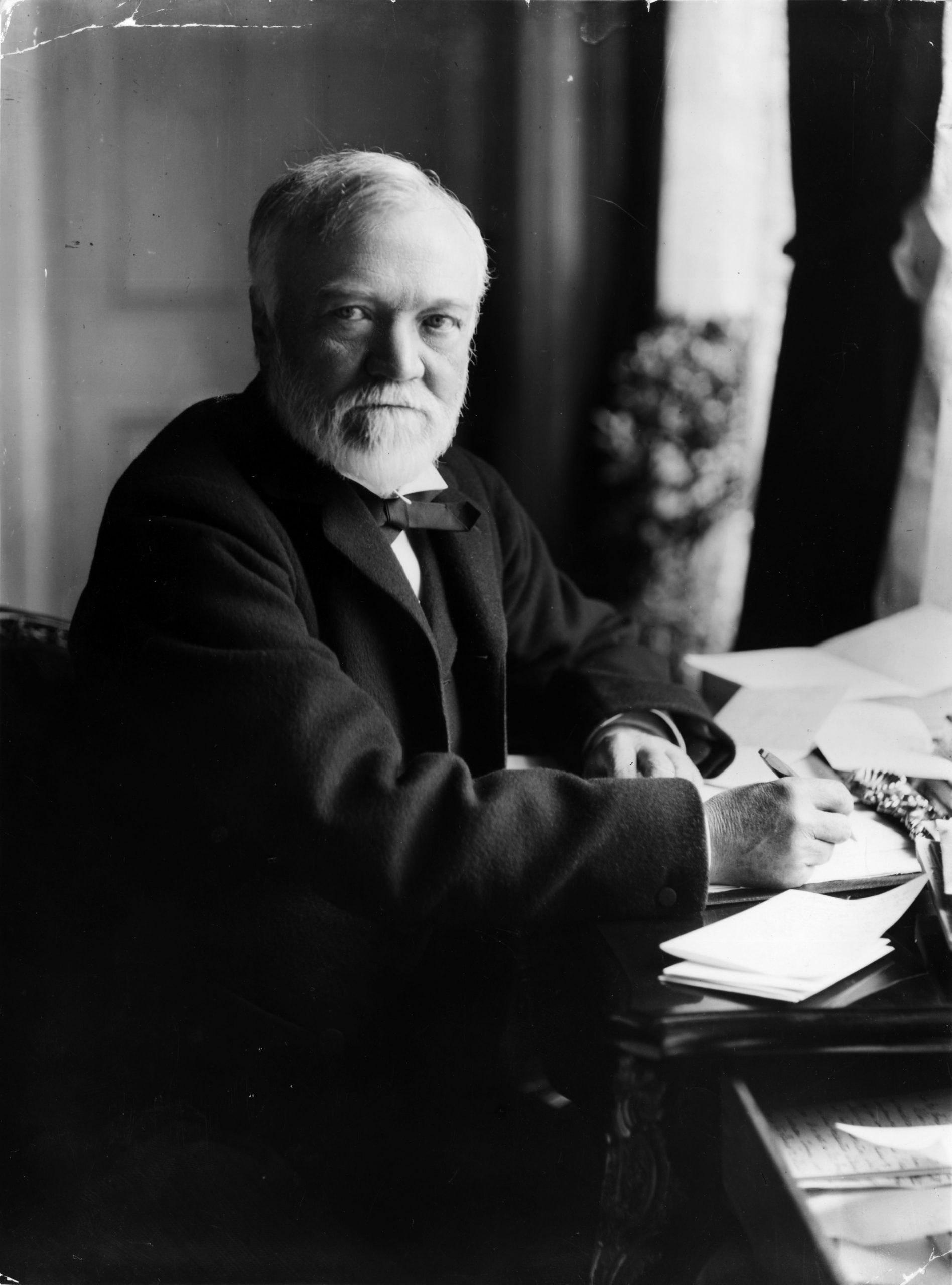
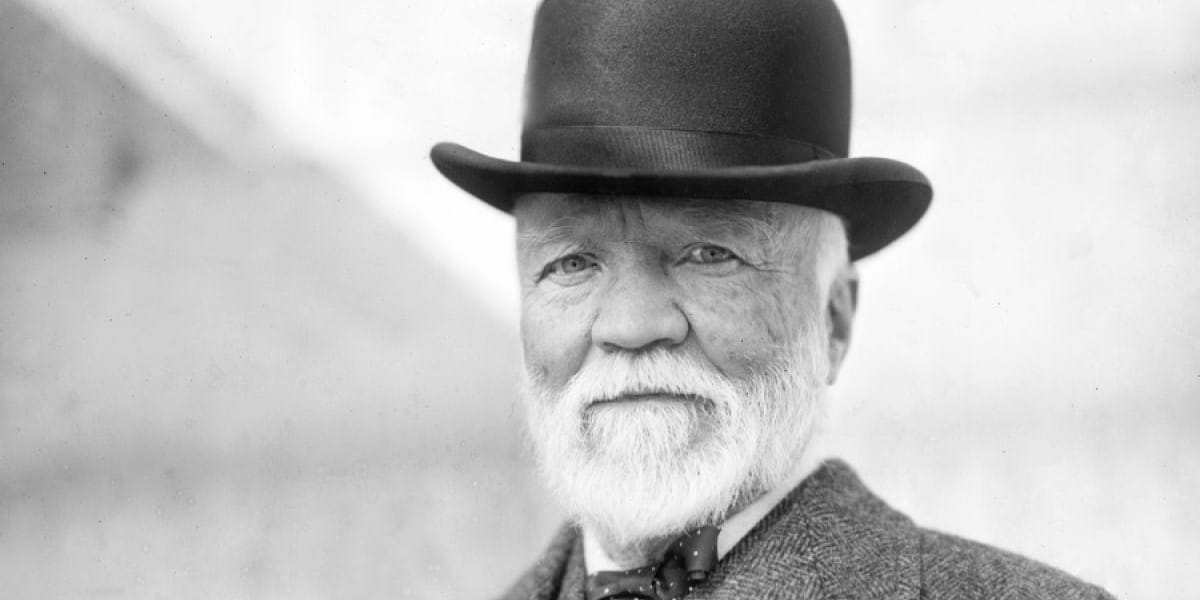
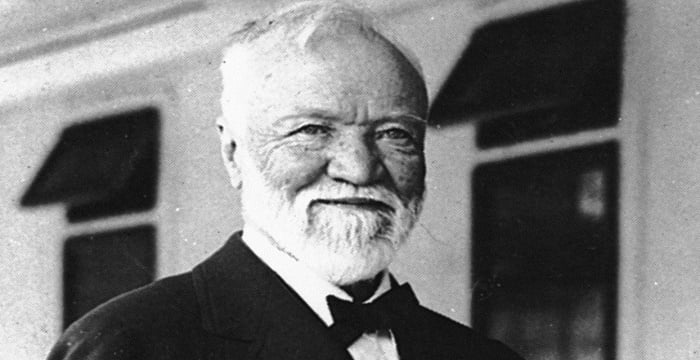
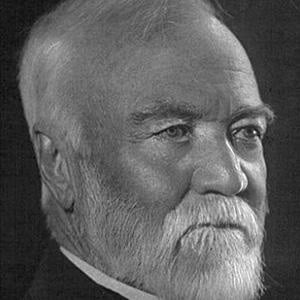
At the time of his death on August 11, 1919, Andrew Carnegie’s personal net worth was approximately $25 million to $30 million. While this remains a substantial sum, it represented only a small fraction of his lifetime earnings, as he had already distributed over $350 million to various philanthropic causes.
Andrew Carnegie remains one of the most polarizing and fascinating figures in American economic history. His journey from a "bobbin boy" in a Scottish cotton mill to the richest man in the world is the quintessential "rags-to-riches" narrative. However, his financial legacy is defined not just by how he accumulated his wealth, but by the systematic and philosophical way he divested himself of it. As we evaluate his financial standing from the perspective of 2026, it is essential to look beyond the nominal figures of 1919 and understand the sheer economic power he wielded at his peak and the sophisticated mechanisms he used to fund his global legacy.
The 1901 Liquidation: Turning Steel into Gold
To understand Carnegie's net worth at the time of his death, one must first look at the pivotal moment in 1901 when he exited the industrial stage. For decades, Carnegie had methodically built the Carnegie Steel Company, utilizing vertical integration to control every aspect of production, from the iron ore mines in the Mesabi Range to the railroads that transported the finished product. By the turn of the century, Carnegie Steel was the most profitable industrial enterprise in the world.
In March 1901, Carnegie sold his company to a syndicate led by J.P. Morgan, which merged it with several other firms to create U.S. Steel, the world's first billion-dollar corporation. The total purchase price for Carnegie Steel was $480 million. Carnegie’s personal share of this transaction was approximately $225.6 million, paid out not in cash, but in 5% gold bonds of the newly formed United States Steel Corporation.
These bonds were housed in a specially constructed vault in Hoboken, New Jersey. The interest alone on these bonds generated roughly $11.2 million annually—an astronomical sum for the era. At this moment, Carnegie was indisputably the wealthiest individual in the world, surpassing even John D. Rockefeller for a brief period. However, unlike many of his Gilded Age peers who sought to build dynasties, Carnegie had a different mandate for his capital, which directly influenced the relatively modest sum remaining in his estate by 1919.
The Gospel of Wealth: A Mandate for Distribution
The primary reason Carnegie’s net worth was "only" $30 million at his death was his strict adherence to his own philosophy, outlined in his 1889 essay, The Gospel of Wealth. In this seminal text, Carnegie argued that the rich had a moral obligation to distribute their wealth for the public good during their lifetimes. He famously stated, "The man who dies thus rich dies disgraced."
Starting in 1901, Carnegie began a massive campaign of "scientific philanthropy." He did not believe in traditional charity, which he felt often encouraged dependency. Instead, he focused on providing the "ladders" upon which the aspiring could climb. This resulted in the funding of:
- Public Libraries: Carnegie funded the construction of 2,509 libraries worldwide, including 1,689 in the United States. He provided the capital for the buildings, provided the local communities agreed to maintain them and provide books.
- The Carnegie Corporation of New York: Established in 1911 with an initial endowment of $125 million, this was the first "great philanthropic foundation" designed to support the advancement of knowledge.
- Education and Research: He founded the Carnegie Institute of Technology (now part of Carnegie Mellon University), the Carnegie Institution for Science, and the Carnegie Foundation for the Advancement of Teaching, which created the first widespread pension system for professors.
- International Peace: He donated $10 million to establish the Carnegie Endowment for International Peace and funded the construction of the Peace Palace in The Hague.
By the time he passed away in 1919, his lifetime giving totaled approximately $350.7 million. If he had reinvested his earnings rather than giving them away, his estate would likely have been worth billions by 1919, potentially rivaling the growth of the Rockefeller fortune.
Calculating the Inflation-Adjusted Net Worth in 2026
When discussing historical wealth, simple inflation calculators often fail to capture the true "economic power" of a fortune. As of 2026, we can look at Carnegie's wealth through two primary lenses: Consumer Price Index (CPI) adjustment and Relative Share of GDP.
The CPI Adjustment (Purchasing Power)
If we take Carnegie’s $350 million in lifetime giving and adjust it for inflation using the CPI, that figure represents roughly $6.2 billion to $7.5 billion in 2026 dollars. His $30 million estate at death would be worth approximately $550 million to $650 million today. While these are significant sums, they do not seem to match the "richest man in the world" title when compared to modern tech moguls whose net worths exceed $200 billion.
The Relative Share of GDP (Economic Power)
A more accurate way to measure Gilded Age wealth is to compare it to the size of the U.S. economy at the time. In 1901, the U.S. GDP was approximately $21 billion. Carnegie’s $480 million sale represented roughly 2.2% of the entire U.S. GDP.
If an individual today held 2.2% of the 2026 U.S. GDP (projected to be over $28 trillion), their net worth would be approximately $616 billion. This calculation places Carnegie in a league far beyond modern billionaires like Elon Musk or Jeff Bezos. It highlights the unprecedented concentration of wealth that existed during the industrial revolution before the implementation of modern antitrust laws and progressive income taxation.
Breakdown of Major Expenditures and Assets
The following table outlines the distribution of Carnegie's wealth from the time of the U.S. Steel sale until his death in 1919.
| Entity / Expenditure | Approximate Amount (1901-1919) | Modern 2026 Equivalent (GDP Share) |
|---|---|---|
| Carnegie Corporation of New York | $125,000,000 | $160,000,000,000 |
| Public Library Construction | $60,000,000 | $77,000,000,000 |
| Carnegie Foundation (Teaching) | $25,000,000 | $32,000,000,000 |
| Carnegie Institute (Pittsburgh) | $25,000,000 | $32,000,000,000 |
| Carnegie Institution for Science | $22,000,000 | $28,000,000,000 |
| Carnegie Hero Funds | $10,000,000 | $12,800,000,000 |
| Endowment for International Peace | $10,000,000 | $12,800,000,000 |
| Estate Value at Death (1919) | $30,000,000 | $38,400,000,000 |
Note: These "Modern Equivalent" figures use the GDP share method to illustrate the relative economic weight of the donations at the time they were made.
The Residual Estate: Assets Held in 1919
When Andrew Carnegie died of bronchial pneumonia at his Shadowbrook estate in Lenox, Massachusetts, his remaining $30 million was composed of several different asset classes. Unlike his earlier years, where his wealth was tied up in industrial machinery and railroads, his final portfolio was designed for stability and the fulfillment of his remaining philanthropic pledges.
Real Estate Holdings
Carnegie’s most significant physical assets included Skibo Castle in Scotland, an 8,000-acre estate that he referred to as his "Heaven on Earth." He spent tens of thousands of pounds renovating the castle, adding a private golf course and a massive heated indoor swimming pool. In New York, he owned a 64-room mansion on 5th Avenue (now the Cooper Hewitt, Smithsonian Design Museum), which was the first private residence in the U.S. to have a structural steel frame and a primitive form of air conditioning.
Bonds and Securities
The bulk of his remaining wealth stayed in the 5% gold bonds from the U.S. Steel sale. These were considered the "gold standard" of corporate debt at the time. He also held significant positions in various railroad companies and municipal bonds.
Bequests and Trusts
His will was a complex document that sought to take care of his wife, Louise Whitfield Carnegie, and their daughter, Margaret. He left his wife the New York mansion, Skibo Castle, and a $5 million trust fund. He also left significant annuities to various friends, distant relatives, and even political figures he admired, such as the widows of Presidents Theodore Roosevelt and Grover Cleveland. The "residue" of his estate—whatever was left after these specific bequests—was directed to the Carnegie Corporation of New York.
Comparison with Gilded Age Contemporaries
To contextualize Carnegie's $30 million at death, it is useful to compare him to his peers. While Carnegie was determined to give his money away, others took different paths:
- John D. Rockefeller: Rockefeller's wealth continued to grow through his holdings in the "Baby Bells" after the breakup of Standard Oil. At his death in 1937, his estate was valued at roughly $26 million, but he had already transferred hundreds of millions to his son, John D. Rockefeller Jr., ensuring the family’s continued financial dominance.
- Cornelius Vanderbilt: When the "Commodore" died in 1877, he left an estate of $100 million—almost all of it to his son, William Henry Vanderbilt. He did very little in the way of philanthropy, famously stating, "What do I care about the law? Hain't I got the power?"
- Henry Ford: Ford’s wealth was largely tied up in the Ford Motor Company. By the time of his death in 1947, the transition of his wealth to the Ford Foundation was a strategic move to avoid massive estate taxes while maintaining family control of the business.
Carnegie was unique in that he had no interest in creating a multi-generational financial dynasty. He believed that inherited wealth "deadened the talents" of the recipient. By divesting so aggressively, he ensured his name would be associated with libraries and concert halls rather than just a massive pile of stagnant capital.
The Final Accounting: Legacy Over Liquidity
The "net worth" of Andrew Carnegie at his death is, in many ways, a misleading metric of his success. In the financial world of 1919, $30 million was a top-tier fortune, but in the context of Carnegie's life, it represented the completion of a mission. He had successfully liquidated the greatest industrial empire in history and redistributed the proceeds to social infrastructure that still exists more than a century later.
The Carnegie Corporation, which received the bulk of his remaining funds, continues to be a major force in global philanthropy. His libraries still stand in thousands of towns across the English-speaking world. In the end, Carnegie’s financial strategy was the ultimate "exit plan"—not just from a company, but from the burden of wealth itself.
Frequently Asked Questions
How much did Andrew Carnegie give away in today's money? While the nominal amount was $350 million, adjusting for the relative share of the economy (GDP) suggests that his giving was equivalent to over $450 billion in 2026 dollars. Using a standard CPI inflation calculator, it is roughly $7 billion.
Who inherited Andrew Carnegie's money? Carnegie did not leave his entire fortune to his family. His wife, Louise, received their homes and a $5 million trust. His daughter, Margaret, received a trust as well, but the majority of his remaining estate was bequeathed to the Carnegie Corporation of New York.
Did Andrew Carnegie die the richest man in the world? No. At the time of his death in 1919, he had given away so much of his fortune that individuals like John D. Rockefeller and Henry Ford had surpassed him in terms of personal net worth. At his peak in 1901, however, he was likely the wealthiest person on earth.
What was the "Gospel of Wealth"? It was an article written by Carnegie in 1889 which argued that extremely wealthy individuals had a responsibility to use their fortune for the benefit of society. He believed that the rich should manage their wealth as "trustees" for the poor.
How did Carnegie make his money? Carnegie made the majority of his fortune in the steel industry. By adopting the Bessemer process and utilizing vertical integration, his Carnegie Steel Company produced steel more efficiently and cheaply than any competitor, eventually selling the firm to J.P. Morgan in 1901.
Is any of the Carnegie family still wealthy today? While the descendants of Andrew Carnegie are comfortable, they do not appear on "richest people" lists. This is a direct result of Carnegie’s decision to give away the bulk of his fortune to foundations rather than passing it down as a family dynasty.
Practical Recommendation for Researchers
If you are researching the financial history of the Gilded Age, it is highly recommended to consult the Carnegie Corporation's digital archives. They maintain detailed records of Carnegie's transition from industrialist to philanthropist, including the original ledgers of his library grants. For a deeper understanding of his industrial rise, the Heinz History Center in Pittsburgh offers the most comprehensive collection of Carnegie Steel's operational records.