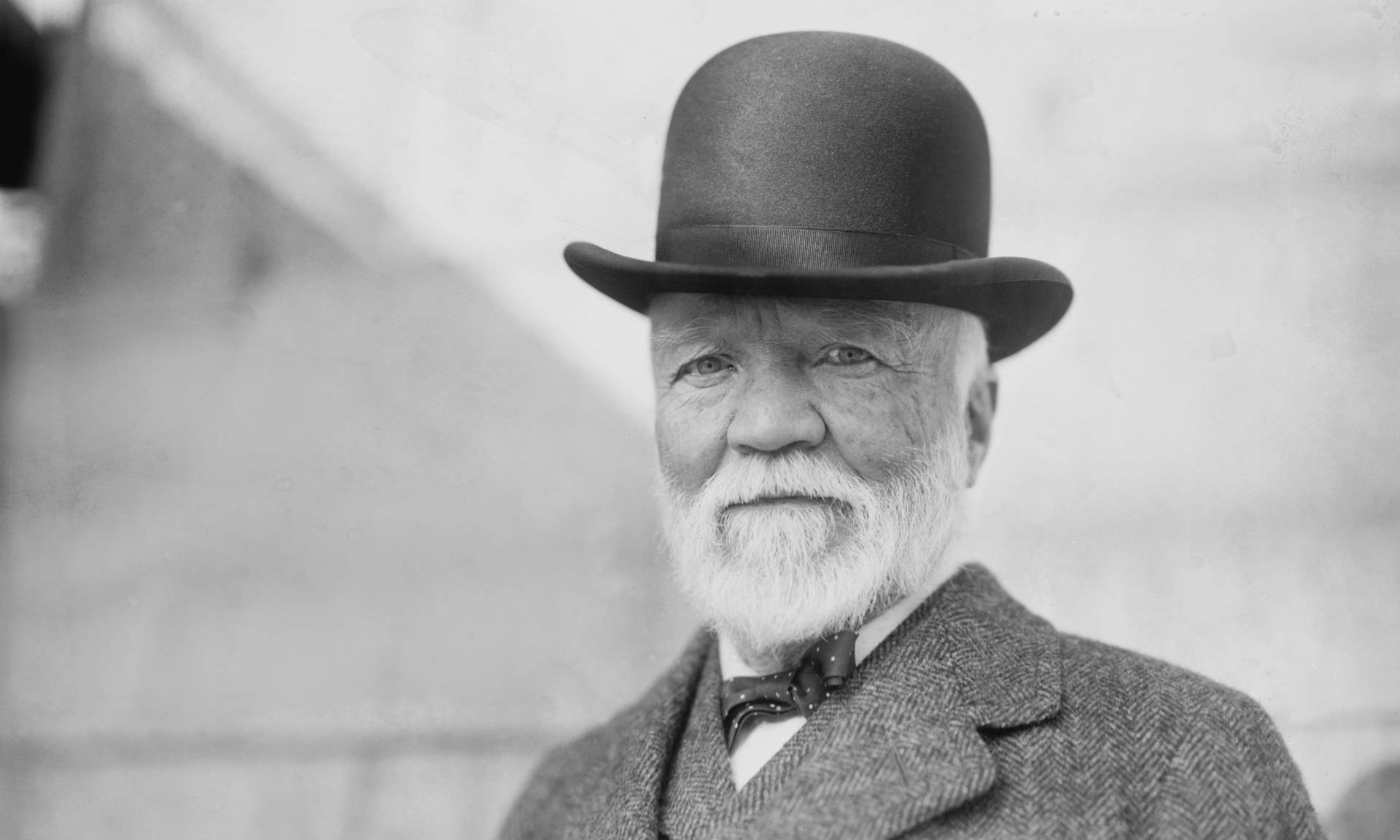
The Andrew Carnegie legacy is defined by the transformation of a ruthless industrialist into the father of modern systematic philanthropy. Grounded in his 1889 "Gospel of Wealth" philosophy, Carnegie distributed approximately $350 million—the equivalent of over $6 billion in 2026—to establish 2,509 libraries, advance scientific research, and promote world peace. His enduring impact remains visible through global institutions like Carnegie Mellon University and the Carnegie Corporation of New York, which continue to fund education and social progress more than a century after his death.
The Foundation of a New Moral Framework: The Gospel of Wealth
To understand the Andrew Carnegie legacy, one must first examine the intellectual framework he constructed to justify his massive fortune. In 1889, Carnegie published "The Gospel of Wealth," an essay that challenged the traditional Victorian views on charity and inheritance. Carnegie argued that the accumulation of great wealth was inevitable in a capitalist society but that the wealthy had a moral obligation to administer that wealth for the public good.
Carnegie proposed three ways to dispose of surplus wealth: leaving it to families, bequeathing it for public purposes after death, or—his preferred method—administering it during one's lifetime. He famously stated, "The man who dies thus rich dies disgraced." This sentiment was revolutionary in an era where the "Robber Barons" were often focused on building dynastic empires.
By choosing to distribute his wealth while alive, Carnegie set a precedent for strategic giving. He did not believe in simple almsgiving or handouts to individuals. Instead, he sought to provide the "ladders upon which the aspiring may rise." This meant funding institutions that provided the tools for self-improvement: libraries, schools, and research centers. As of 2026, this philosophy remains the foundational text for the "Giving Pledge" signed by modern billionaires like Bill Gates and Warren Buffett, cementing Carnegie’s role as the architect of modern billionaire philanthropy.
The Infrastructure of Knowledge: The Carnegie Library System
Perhaps the most tangible aspect of the Andrew Carnegie legacy is the "Carnegie Library." Between 1883 and 1929, Carnegie funded the construction of 2,509 libraries across the English-speaking world, including 1,689 in the United States alone.
Carnegie’s commitment to libraries was deeply personal. As a young immigrant working in a cotton mill, he was granted access to the private library of Colonel James Anderson. This experience convinced him that access to books was the ultimate equalizer in a democratic society. However, his method of giving was not a simple gift; it was a partnership known as the "Carnegie Formula."
The Carnegie Formula for Libraries
To receive a grant, a community had to meet several strict requirements:
- Demonstrate Need: The community had to prove it required a library.
- Provide the Site: The local government had to provide the land for the building.
- Annual Maintenance: The community had to pledge an annual amount—usually 10% of the original grant—to support operation and maintenance.
- Free Service: The library had to be free to all users.
This formula ensured that the community had "skin in the game." It moved libraries from being the playthings of the elite to being essential public utilities supported by tax dollars. In 2026, many of these buildings still serve as the architectural and cultural hearts of their towns, though many have transitioned into museums or community centers while modern digital libraries take their place.
Academic and Scientific Advancements: Empowering the Future
Carnegie’s legacy extends far beyond the local library. He recognized that the industrial age required a new kind of education—one that blended technical skill with scientific inquiry. In 1900, he founded the Carnegie Technical Schools in Pittsburgh, which eventually evolved into Carnegie Mellon University (CMU).
Today, CMU stands as a world leader in computer science, robotics, and artificial intelligence. The university’s success is a direct result of Carnegie’s vision for "useful knowledge." He wanted to train the "sons and daughters of the working class" to lead the industrial and technological revolutions.
Beyond CMU, the Andrew Carnegie legacy includes the Carnegie Institution for Science (founded in 1902). Carnegie realized that the government of his time was not prepared to fund high-stakes, basic scientific research. By providing a $10 million endowment (roughly $350 million in 2026 dollars), he enabled scientists to pursue "exceptional" research without the pressure of immediate commercial application. This institution supported Edwin Hubble’s work in discovering the expanding universe and Barbara McClintock’s Nobel-winning work in genetics.
The Pursuit of Global Peace and the Hero Fund
As Carnegie aged, his focus shifted from the improvement of the individual to the preservation of humanity. In 1910, he established the Carnegie Endowment for International Peace with a $10 million gift. He was a staunch pacifist who believed that international disputes should be settled by arbitration rather than war.
One of his most enduring physical legacies in this arena is the Peace Palace in The Hague, Netherlands. Completed in 1913, it was built with Carnegie's funds to house the Permanent Court of Arbitration. Even in 2026, it remains the seat of the International Court of Justice, the principal judicial organ of the United Nations.
Parallel to his quest for world peace was his recognition of "civilian heroes." In 1904, he established the Carnegie Hero Fund Commission. Appalled by the loss of life in a coal mine disaster, Carnegie wanted to ensure that those who performed acts of selfless bravery—and their families—were not left in financial ruin. The Hero Fund continues to award medals and financial support to individuals across North America who risk their lives to save others.
The Dual Nature of the Legacy: Wealth and Labor
A comprehensive analysis of the Andrew Carnegie legacy requires addressing the source of his wealth. The money that funded thousands of libraries was generated by Carnegie Steel, a company known for its efficiency and its occasionally brutal treatment of workers.
The Homestead Strike of 1892 remains a dark chapter in Carnegie's history. While Carnegie was in Scotland, his partner Henry Clay Frick used Pinkerton guards to break a strike at the Homestead steel mill, leading to a violent clash and multiple deaths. Although Carnegie expressed regret later in life, critics then and now point out the irony of a man building "temples of knowledge" with profits derived from 12-hour workdays and the suppression of unions.
In 2026, historians view this duality as a central theme of the Gilded Age. Carnegie’s legacy is a study in contradictions: a man who squeezed every penny of profit from his laborers, only to return that profit to the public in a way that fundamentally reshaped society.
Institutional Longevity: The Carnegie Corporation of New York
To ensure his philanthropic work would continue after his death, Carnegie established the Carnegie Corporation of New York in 1911 with an endowment of $135 million. It was the first "grant-making foundation" of its kind, designed to be perpetual and flexible.
The Corporation has been instrumental in some of the most significant social developments of the last century:
- The GI Bill: The foundation funded the early research that led to the creation of the GI Bill after WWII.
- Children’s Television Workshop: It provided the seed money for the creation of Sesame Street.
- A Nation at Risk: It funded the seminal report on the state of American education in the 1980s.
As we navigate 2026, the Carnegie Corporation remains a powerhouse in educational reform and democratic strengthening, proving that a well-structured legacy can adapt to challenges Carnegie himself could never have imagined.
Comparison of Carnegie’s Major Foundations and Impacts
| Institution | Founded | Primary Focus in 2026 | Estimated Original Grant (USD) |
|---|---|---|---|
| Carnegie Corporation of NY | 1911 | Education, Democracy, International Peace | $135 Million |
| Carnegie Libraries | 1883-1929 | Public Literacy & Community Centers | $56 Million (Global) |
| Carnegie Mellon University | 1900 | AI, Robotics, Fine Arts, STEM | $2 Million (Initial) |
| Carnegie Endowment for International Peace | 1910 | Global Policy & Diplomacy Research | $10 Million |
| Carnegie Institution for Science | 1902 | Basic Scientific Discovery | $10 Million |
| Carnegie Hero Fund | 1904 | Recognition of Civilian Bravery | $5 Million |
Common Questions Regarding the Carnegie Legacy
How many Carnegie libraries are still standing?
Of the original 2,509 libraries funded globally, it is estimated that approximately 70-80% are still standing in some capacity in 2026. While many still function as public libraries, others have been repurposed into museums, law offices, or arts centers. Their distinctive "Carnegie" architecture—often featuring grand staircases and classical columns—remains a recognizable feature of urban landscapes.
Why did Carnegie give away so much of his money?
Carnegie believed that wealth was a public trust. His upbringing in a poor weaver's family in Scotland gave him a unique perspective on the struggles of the working class. Influenced by Social Darwinism and his own moral convictions, he believed that while the "fittest" accumulated wealth, they had a duty to use that wealth to provide opportunities for others to improve themselves.
Did Carnegie actually write his own books?
Yes, Carnegie was a prolific writer. Unlike many of his contemporary industrialists, he took great pride in his literary output. "The Gospel of Wealth," "Triumphant Democracy," and his autobiography were written with a clear, persuasive voice that reflected his Scottish roots and his belief in the American dream.
Is the Carnegie family still involved in the foundations?
While the foundations bear the Carnegie name, they are governed by independent boards of trustees. Carnegie intentionally designed them this way to ensure they remained focused on their missions rather than family interests. In 2026, the Carnegie Corporation and other entities are managed by professional philanthropic experts and scholars.
What is the "Carnegie Unit" in education?
Part of Carnegie's legacy in education is the "Carnegie Unit" or "Credit Hour." The Carnegie Foundation for the Advancement of Teaching (founded in 1905) developed this standard to measure the amount of time students spend in the classroom. This system allowed for a standardized way to evaluate secondary school education and determined eligibility for professor pensions, a precursor to the modern TIAA.
Moving Forward: Applying the Carnegie Legacy Today
For individuals and organizations looking to honor or emulate the Andrew Carnegie legacy in 2026, the focus should be on systemic impact rather than temporary relief. Carnegie’s genius lay in his ability to identify "bottlenecks" in human progress—such as the lack of access to books or the lack of scientific funding—and create institutions to solve them.
If you are interested in the modern application of these principles:
- Support Local Libraries: Many Carnegie buildings require preservation efforts or modernization to serve the digital needs of 2026.
- Invest in Education: Following the Carnegie Mellon model, focus on "useful knowledge" that addresses current technological shifts like AI and climate science.
- Strategic Philanthropy: If you are in a position to give, consider the "partnership" model. Instead of fully funding a project, provide the seed money that requires local or community buy-in to ensure long-term sustainability.
The Andrew Carnegie legacy is not just a historical footnote; it is a living blueprint for how private wealth can be harnessed for public progress. While his methods were born of the 19th century, his vision of a more educated, peaceful, and scientifically advanced world remains as relevant as ever.