Andrew Carnegie revolutionized the American steel industry by implementing a comprehensive vertical integration strategy, controlling every stage of production from raw material extraction to final transportation. This business model allowed Carnegie Steel to eliminate middleman profits, guarantee resource quality, and achieve unprecedented economies of scale, fundamentally transforming the United States into a global industrial powerhouse.
The Architect of Industrial Efficiency
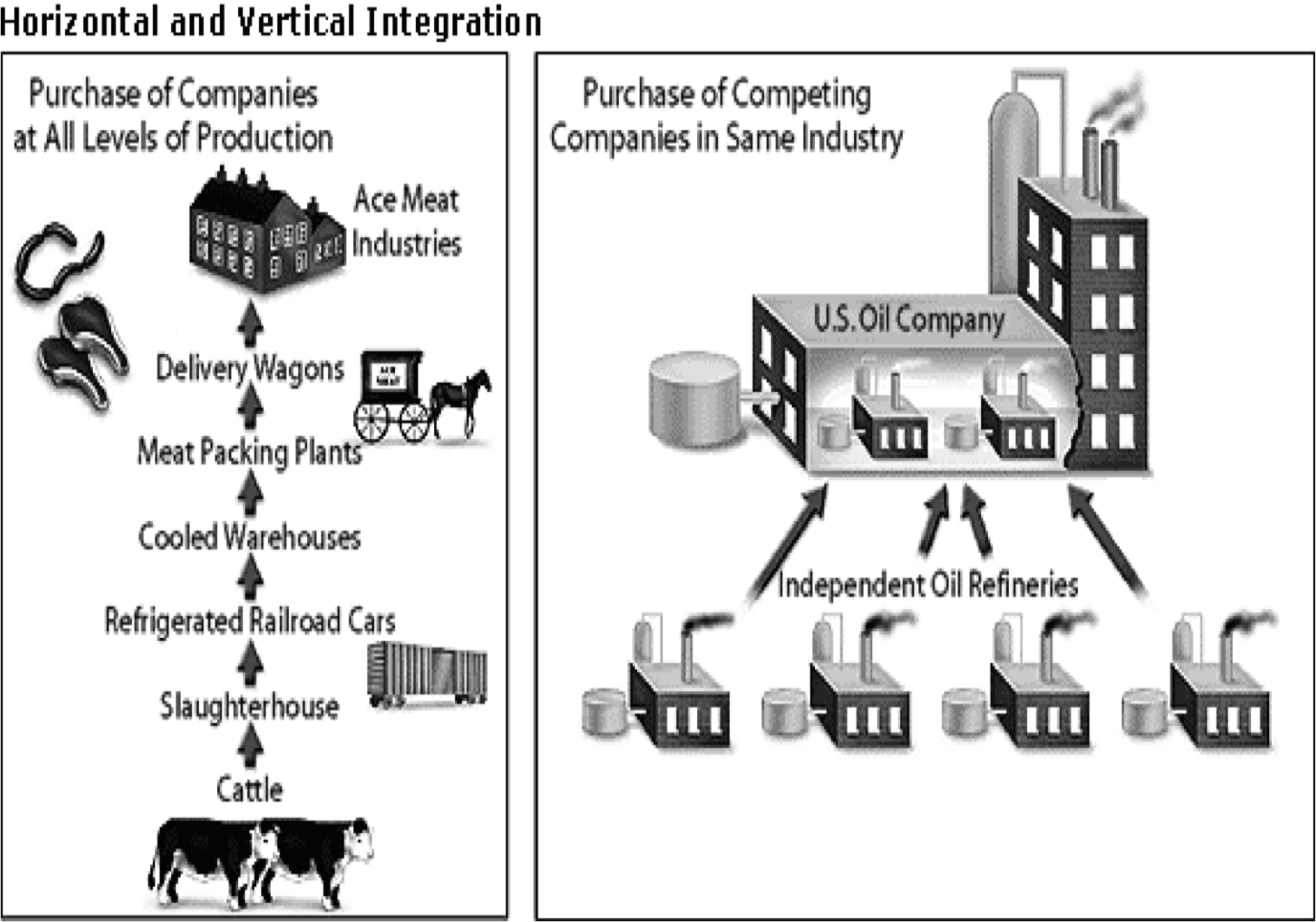
In the landscape of 19th-century American industry, few figures loom as large as Andrew Carnegie. While his contemporary, John D. Rockefeller, sought to dominate the oil industry through horizontal integration—buying out competitors to control a single stage of production—Carnegie took a different path. He realized that the greatest inefficiencies in manufacturing did not lie in the competition itself, but in the external dependencies of the supply chain.
By 2026, the principles Carnegie pioneered have become the blueprint for modern tech giants and manufacturing conglomerates. However, in the late 1800s, his approach was a radical departure from the status quo. Carnegie’s mastery of vertical integration wasn't merely a business tactic; it was a fundamental reimagining of how an industrial empire could be structured to survive market volatility and maximize profit margins.
The Genesis of Carnegie’s Vision
Andrew Carnegie’s journey began not in a boardroom, but as a bobbin boy in a Scottish cotton mill. His rise through the ranks of the Pennsylvania Railroad provided him with a front-row seat to the inefficiencies of the emerging American infrastructure. Under the mentorship of Thomas A. Scott, Carnegie learned the value of insider knowledge and the critical importance of the railroad to every other sector of the economy.
In the 1870s, Carnegie shifted his focus toward steel. At the time, steel was a luxury item, expensive and difficult to produce in large quantities. The introduction of the Bessemer Process, which Carnegie observed in England, changed everything. This process allowed for the mass production of steel by blowing air through molten pig iron to burn off impurities. Carnegie realized that if he could produce steel more cheaply than anyone else, he could supply the rails for the expanding Western frontier and the beams for the rising city skylines.
Understanding Vertical Integration in the Steel Context
To understand Carnegie's success, one must define vertical integration as he applied it. In a traditional manufacturing setup, a steelmaker would buy iron ore from a mining company, coke from a fuel supplier, and pay a railroad company to transport these materials to the mill. Each of these external partners added their own profit margin to the cost.
Carnegie’s goal was to "cut out the middleman." By owning the entire chain, he ensured that every dollar spent stayed within his own ecosystem. This strategy provided three primary advantages:
- Cost Control: Carnegie could produce steel at the cost of production rather than the market price of ingredients.
- Supply Chain Security: He was never at the mercy of a strike at a third-party mine or a price hike from a railroad.
- Quality Assurance: By controlling the mines, he could ensure that only the highest-grade ores reached his furnaces.
The Components of the Carnegie Empire
Carnegie did not achieve vertical integration overnight. It was a calculated series of acquisitions and partnerships that eventually spanned several states and industries.
| Segment of Production | Asset Controlled | Purpose and Impact |
|---|---|---|
| Raw Materials | Iron Ore Mines (Mesabi Range, MN) | Secured the world's richest deposits of iron ore, preventing competitors from accessing cheap raw materials. |
| Fuel Sources | H.C. Frick Coke Company | Provided a steady, internal supply of coke, the essential fuel for blast furnaces. |
| Logistics/Transport | Pittsburgh Steamship Company | A fleet of massive ore carriers that moved raw materials across the Great Lakes. |
| Infrastructure | Bessemer and Lake Erie Railroad | Connected the ports on the Great Lakes directly to the steel mills in Pittsburgh. |
| Manufacturing | Edgar Thomson Steel Works | Specialized in rail production using the most advanced Bessemer technology available. |
| Final Fabrication | Homestead Steel Works | Expanded production into structural steel for bridges and skyscrapers. |
The Role of Henry Clay Frick
The mastery of vertical integration was not a solo effort. A pivotal moment in Carnegie's expansion was his partnership with Henry Clay Frick. Frick owned vast tracts of coal land and dominated the production of coke—a carbon-rich fuel derived from coal that is necessary for smelting iron.
By merging Frick’s coal and coke operations into Carnegie Steel, Carnegie secured the "energy" component of his supply chain. This partnership allowed Carnegie to weather economic depressions that bankrupted his competitors. When the market crashed, Carnegie could keep his prices low because his internal costs were significantly lower than those of companies that still had to buy fuel on the open market.
Economic Impacts and the "Gospel of Wealth"
The result of this integrated system was a staggering drop in the price of steel. When Carnegie entered the industry, steel was priced by the pound; by the time he left, it was priced by the ton. In 1875, a ton of steel cost roughly $160. By the late 1890s, Carnegie’s efficiency had driven that price down to $17 per ton.
This price reduction fueled the American Industrial Revolution. It made the transcontinental railroad financially viable and allowed for the birth of the modern skyscraper. However, the drive for efficiency came with a significant human cost. To maintain his margins, Carnegie and Frick demanded long hours and low wages, leading to the infamous Homestead Strike of 1892. The violent clash between workers and Pinkerton guards remains a dark chapter in the history of American labor, illustrating the tension between industrial efficiency and workers' rights.
The Strategic Exit: Creating U.S. Steel
By 1900, Carnegie Steel was the largest and most profitable industrial enterprise in the world. Carnegie, nearing 65, began to look toward his legacy. In 1901, the financier J.P. Morgan orchestrated a massive buyout. Morgan recognized that Carnegie’s vertical integration was so effective that it threatened to monopolize the entire market, making it impossible for Morgan’s own interests to compete.
Carnegie sold his company for $480 million (roughly $16 billion in 2026 adjusted dollars). This sale led to the formation of United States Steel Corporation, the world's first billion-dollar company. Carnegie spent the remainder of his life practicing the philosophy he outlined in his essay, The Gospel of Wealth, which argued that the rich have a moral obligation to distribute their wealth for the public good.
Modern Relevance of Carnegie’s Model
As we look at the corporate landscape in 2026, Carnegie’s ghost is visible in the operations of the world’s most successful companies. Vertical integration has evolved, but the core motivation—controlling the user experience and reducing external dependencies—remains the same.
- Tesla: Like Carnegie, Tesla integrates vertically by manufacturing its own battery cells and owning its distribution/service network, rather than relying on independent dealerships.
- Apple: By designing its own silicon (M-series chips) and controlling both the hardware and the operating system, Apple mirrors Carnegie’s obsession with controlling the quality and cost of "raw materials."
- SpaceX: To reduce the cost of spaceflight, SpaceX manufactures nearly 70% of its rocket components in-house, avoiding the massive markups typically associated with aerospace contractors.
Common Pitfalls and Limitations of Vertical Integration
While Carnegie made it look easy, vertical integration is not a universal solution for every business. In 2026, market analysts point to several risks that Carnegie himself had to navigate carefully:
- Capital Intensity: Buying mines, railroads, and ships requires massive upfront investment. If the market for the final product (steel) drops, the company is still burdened with the debt and maintenance of those assets.
- Loss of Focus: A company that tries to do everything may find itself mediocre at many things rather than excellent at one. Carnegie avoided this by hiring specialized managers like Frick and Charles Schwab.
- Inflexibility: When a company owns its entire supply chain, it can be slower to adopt new technologies that emerge outside of its ecosystem.
Carnegie’s genius lay in his ability to maintain "technical depth" in every segment he owned. He didn't just own a railroad; he ensured his railroad was the most efficient in the state. He didn't just own a mine; he ensured his mine used the latest extraction techniques.
Frequently Asked Questions
What is the difference between horizontal and vertical integration?
Horizontal integration involves a company acquiring or merging with its direct competitors at the same level of production (e.g., one steel mill buying another). Vertical integration involves a company taking control of different stages of the production and distribution process (e.g., a steel mill buying an iron mine and a shipping company).
Why was Andrew Carnegie able to dominate the steel industry so quickly?
Carnegie combined technological innovation (the Bessemer Process) with a ruthless focus on cost reduction. By owning his supply chain, he could lower prices to a point where competitors could not survive, then buy them out or simply take their market share during economic downturns.
How did the Homestead Strike affect Carnegie’s reputation?
The strike was a PR disaster for Carnegie. Although he was in Scotland at the time and Frick was primarily responsible for the lockout and the hiring of Pinkertons, Carnegie's name was forever associated with the violence. It is often cited as a primary motivator for his later, extreme philanthropy as he sought to repair his public image.
Is vertical integration still relevant in 2026?
Yes, it is more relevant than ever in high-tech and logistics industries. Companies that want to ensure a "closed-loop" quality experience or shield themselves from global supply chain disruptions often turn to Carnegie’s model of owning their critical infrastructure.
What happened to Carnegie Steel after it was sold?
Carnegie Steel became the core of U.S. Steel. Under J.P. Morgan, the company continued to dominate the market for decades. While the American steel industry has faced significant challenges from global competition in recent years, the infrastructure Carnegie built remained the backbone of the U.S. industrial sector for over a century.
Practical Takeaways for Business Leaders
Andrew Carnegie's mastery of vertical integration offers several timeless lessons for those managing organizations in 2026. First, identify your "critical dependencies"—the parts of your supply chain that, if interrupted, would cripple your business. Second, evaluate the "middleman margin" you are paying; if the cost of acquiring a supplier is lower than the long-term premiums you pay them, integration is a viable path. Finally, remember that efficiency should not come at the total expense of human capital. The modern business environment values sustainability and worker welfare as much as it values the bottom line, a lesson that historical tycoons learned through significant social strife.
To follow in Carnegie’s footsteps today, a business must focus on internalizing value. Whether that means building proprietary software instead of licensing it or securing direct contracts with raw material producers, the goal remains the same: total control over the destiny of your product.