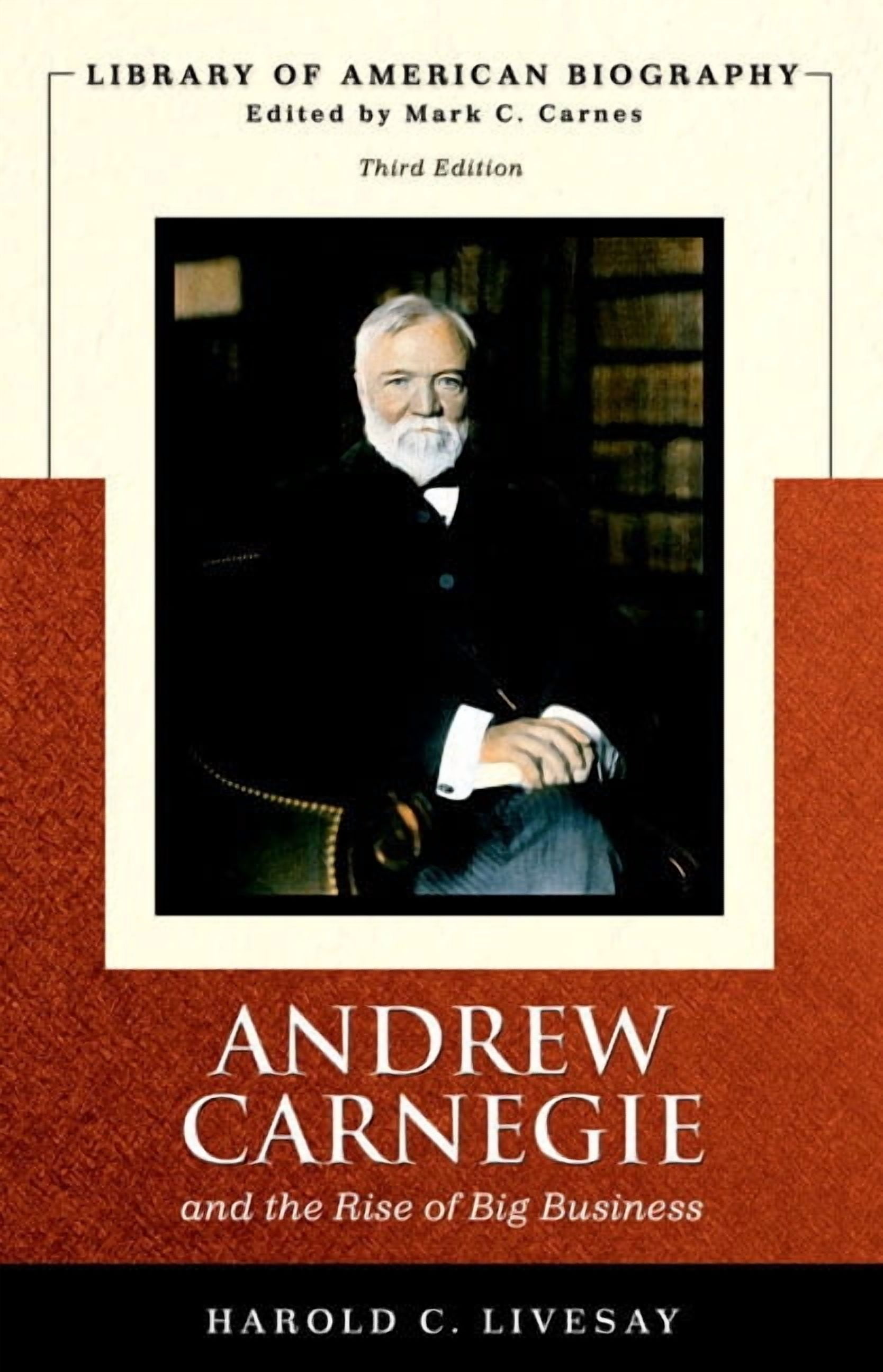
Andrew Carnegie’s rise to wealth resulted from a calculated transition from manual labor to telegraphy, followed by strategic mentorship within the Pennsylvania Railroad and the pioneering application of the Bessemer process to industrialize steel production. By 1901, his focus on vertical integration and cost efficiency made him the world’s wealthiest individual.
The Foundations of Ambition: From Dunfermline to Allegheny
Andrew Carnegie was born in 1835 in Dunfermline, Scotland, into a family of handloom weavers. His early childhood was marked by the encroaching Industrial Revolution, which replaced manual craftsmanship with steam-powered looms, eventually plunging his family into poverty. This systemic shift forced the Carnegies to emigrate to the United States in 1848, settling in Allegheny, Pennsylvania (now part of Pittsburgh).
In the mid-19th century, Allegheny was a burgeoning industrial hub, providing the perfect backdrop for a young immigrant eager to escape the "destitution" of his homeland. Carnegie’s first job at age 13 was as a bobbin boy in a cotton mill, earning just $1.20 per week. Despite the grueling 12-hour shifts, Carnegie sought advancement through literacy and networking. He famously utilized the personal library of Colonel James Anderson, which was open to working boys on Saturdays. This early exposure to literature and history broadened his perspective, instilling a lifelong belief in the power of self-education.
His transition from manual labor to administrative work began when he became a telegraph messenger boy. Carnegie excelled by memorizing the names and faces of Pittsburgh’s business leaders and learning to translate telegraphic clicks by ear—a rare skill at the time. This technical proficiency caught the attention of Thomas A. Scott, a high-ranking official at the Pennsylvania Railroad, who hired Carnegie as his personal secretary and telegrapher in 1853.
The Pennsylvania Railroad: An Industrial Incubator
The decade Carnegie spent at the Pennsylvania Railroad (1853–1865) served as his "university" for management and finance. Under Thomas Scott’s mentorship, Carnegie learned the complexities of the railroad industry, which was the first modern "big business" in America. This era provided him with the three pillars of his future success: capital, networking, and organizational strategy.
The First Investment
In 1855, Scott alerted Carnegie to an opportunity to buy ten shares of the Adams Express Company. Lacking the $500 required, Carnegie’s mother mortgaged their home to secure the funds. The monthly dividend checks Carnegie received from this investment were a revelation; they demonstrated the concept of "passive income" and capital working on his behalf rather than him working for a wage.
Innovation in Infrastructure
While working for the railroad, Carnegie observed the limitations of wooden bridges, which frequently caught fire or collapsed under the weight of modern locomotives. He founded the Keystone Bridge Company in 1865 to replace wood with iron. His insider knowledge of railroad needs allowed him to secure lucrative contracts, proving that horizontal expansion into related industries was a viable path to wealth.
The Bessemer Revolution and the Shift to Steel
By the early 1870s, Carnegie pivoted his focus entirely from iron to steel. While iron was the standard for decades, it was brittle and prone to structural failure. Steel was superior in every way—strength, flexibility, and durability—but was prohibitively expensive to produce in large quantities.
During a trip to England in 1872, Carnegie witnessed the Bessemer process in action. This method, developed by Henry Bessemer, involved blowing air through molten pig iron to remove impurities and carbon, turning it into steel in minutes rather than days. Carnegie recognized that whoever could mass-produce steel at a low cost would control the future of American infrastructure.
In 1872, he began construction on the Edgar Thomson Steel Works in Braddock, Pennsylvania. He named the plant after the president of the Pennsylvania Railroad, a savvy move to ensure his former employer would be his primary customer. By 1875, the plant was operational, marking the beginning of the "Age of Steel."
The Strategy of Vertical Integration
One of Carnegie’s most significant contributions to modern business was the mastery of vertical integration. Unlike his competitors, who bought raw materials from third parties, Carnegie sought to own every stage of the production process. This strategy minimized costs and insulated his operations from market volatility.
- Raw Materials: Carnegie acquired massive tracts of iron ore in the Mesabi Range of Minnesota and coal fields in Pennsylvania.
- Coke Production: He formed a partnership with Henry Clay Frick, whose H.C. Frick & Company controlled the coke (processed coal) necessary for steel smelting.
- Transportation: Carnegie owned the steamships and railroads that moved ore from the mines to his furnaces in Pittsburgh.
By controlling the supply chain, Carnegie Steel could produce a ton of steel for far less than its rivals. Carnegie’s obsession with "the unit cost" was legendary. He famously said, "Watch the costs, and the profits will take care of themselves." He implemented rigorous accounting systems that tracked every penny spent on labor, fuel, and materials, allowing him to undercut competitors during economic downturns and expand his market share.
Key Milestones in Carnegie’s Financial Rise
The following table outlines the progression of Carnegie's income and industrial output, illustrating the exponential growth of his enterprises during the Gilded Age.
| Period | Primary Role/Entity | Financial or Industrial Milestone | Significance |
|---|---|---|---|
| 1848–1850 | Bobbin Boy / Engine Tender | $1.20 - $2.00 per week | Transition from Scotland to US labor market. |
| 1853–1865 | Pennsylvania Railroad | $500 initial investment (Adams Express) | Exposure to high-level corporate management. |
| 1865–1870 | Keystone Bridge Company | Iron bridge dominance | Identifying the need for durable infrastructure. |
| 1875 | Edgar Thomson Works | Introduction of Bessemer Process | Mass production of steel begins in the US. |
| 1892 | Carnegie Steel Company | Consolidation of various assets | Reached $4 million in annual profits by 1894. |
| 1901 | Sale to J.P. Morgan | $480 million sale price ($226 million to Carnegie) | The largest personal commercial transaction in history. |
The Homestead Strike and Labor Dynamics
Carnegie’s rise to wealth was not without significant controversy, particularly regarding his treatment of labor. While he publicly advocated for the rights of workers to unionize in his writings, his business practices were often at odds with these sentiments. His focus on cost-cutting often resulted in wage reductions and increased hours for his employees.
The conflict reached a breaking point in 1892 at the Homestead Steel Works. While Carnegie was away in Scotland, his partner Henry Clay Frick attempted to break the Amalgamated Association of Iron and Steel Workers. The resulting Homestead Strike led to a violent confrontation between workers and Pinkerton guards, resulting in multiple deaths. Although Carnegie was not present, the event tarnished his reputation and highlighted the brutal realities of the wealth accumulation process during the industrial era.
The Final Transaction: U.S. Steel and the $480 Million Deal
By 1900, Carnegie Steel was producing more steel than the entire United Kingdom. However, Carnegie was nearing 65 and wished to dedicate his life to philanthropy. Simultaneously, financier J.P. Morgan was seeking to consolidate the steel industry to eliminate "wasteful competition" and stabilize prices.
In 1901, Carnegie scrawled a price on a piece of paper and had it delivered to Morgan: $480 million. Morgan accepted the offer without hesitation, famously telling Carnegie, "I congratulate you, Mr. Carnegie, on becoming the richest man in the world."
This transaction led to the formation of the United States Steel Corporation, the world's first billion-dollar company. Carnegie’s personal share of the sale was approximately $226 million (held in 5% gold bonds), which in today’s inflation-adjusted terms would represent a fortune exceeding $300 billion.
The Gospel of Wealth and Philanthropic Legacy
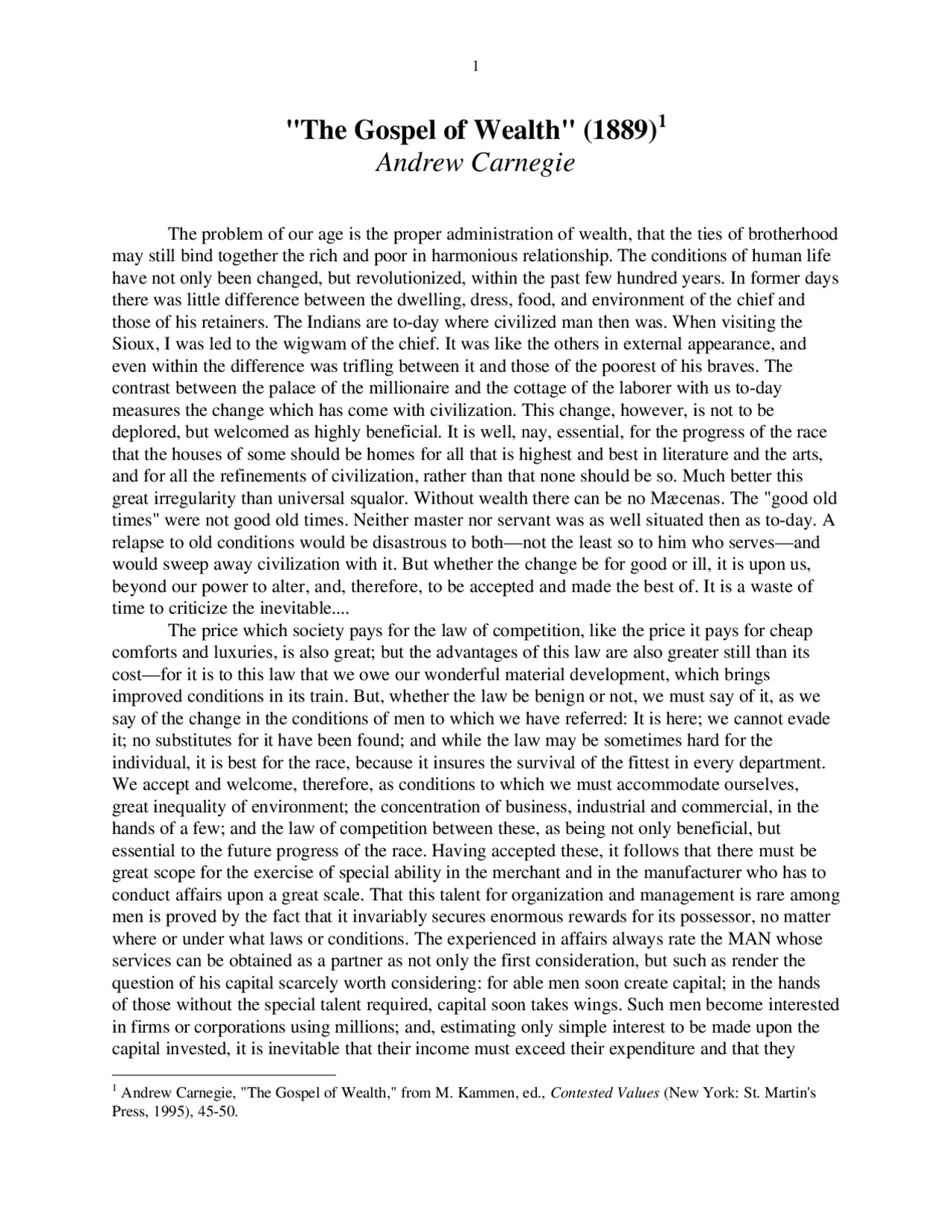
Andrew Carnegie did not believe in the traditional accumulation of generational wealth. In his 1889 essay, The Gospel of Wealth, he argued that the rich had a moral obligation to distribute their wealth for the public good during their lifetime. He famously stated, "The man who dies thus rich dies disgraced."
Following the sale of Carnegie Steel, he spent the remainder of his life until 1919 distributing $350 million (roughly 90% of his fortune). His contributions founded:
- 2,509 Libraries: Established worldwide to provide the same educational opportunities he received as a boy.
- Carnegie Mellon University: Originally the Carnegie Technical Schools.
- Carnegie Hall: A premier cultural venue in New York City.
- The Carnegie Corporation of New York: A grant-making foundation still active in 2026.
According to the Carnegie Corporation of New York, his goal was to provide "ladders upon which the aspiring may rise," rather than providing direct charity to those who would not help themselves.
FAQs About Andrew Carnegie’s Wealth
How much would Andrew Carnegie be worth today?
Adjusted for inflation and relative to the size of the U.S. economy, Carnegie’s peak net worth is often estimated between $310 billion and $370 billion. In 2026 terms, this places him ahead of most modern billionaires, as his wealth represented a significantly larger percentage of the total U.S. GDP at the time.
Was Carnegie a "Robber Baron" or a "Captain of Industry"?
Historical perspectives remain divided. As a "Captain of Industry," he revolutionized the American economy, lowered the cost of infrastructure, and created thousands of jobs. However, critics label him a "Robber Baron" due to his aggressive suppression of wages and his involvement (even if indirect) in the violent Homestead Strike.
What was Carnegie's "Gospel of Wealth"?
It was a philosophy published in the North American Review in 1889. It proposed that the new self-made rich should use their surplus wealth as a trust fund to be administered for the benefit of the community, specifically through institutions that foster self-improvement like libraries and schools. The full text is archived by the Library of Congress.
Did Andrew Carnegie invent the Bessemer process?
No. The process was patented by the British inventor Henry Bessemer in 1856. Carnegie’s genius lay in his early adoption and scaling of the technology in the United States, which allowed him to produce high-quality steel at prices far lower than his competitors.
Why did Carnegie sell his company to J.P. Morgan?
Carnegie was looking to retire and focus on his philanthropic goals. Additionally, he recognized that the next phase of the steel industry required massive consolidation to avoid price wars. Morgan’s desire to create a monopoly provided Carnegie with a lucrative and timely exit strategy.
Summary of Success and Next Actions
Andrew Carnegie’s rise to wealth was a masterclass in identifying technological shifts and applying rigorous management discipline. He didn't just build a company; he built a system that controlled every variable of production. For those studying his life in 2026, his legacy serves as a reminder that wealth on such a scale often comes from a combination of timing, ruthless efficiency, and a transition from earning a wage to owning the means of production.
If you are interested in exploring the physical remnants of his empire, consider visiting the Rivers of Steel National Heritage Area in Pennsylvania or the original Carnegie Library in Dunfermline, Scotland. Understanding the scale of his operations provides a tangible link to the industrial forces that shaped the modern world.