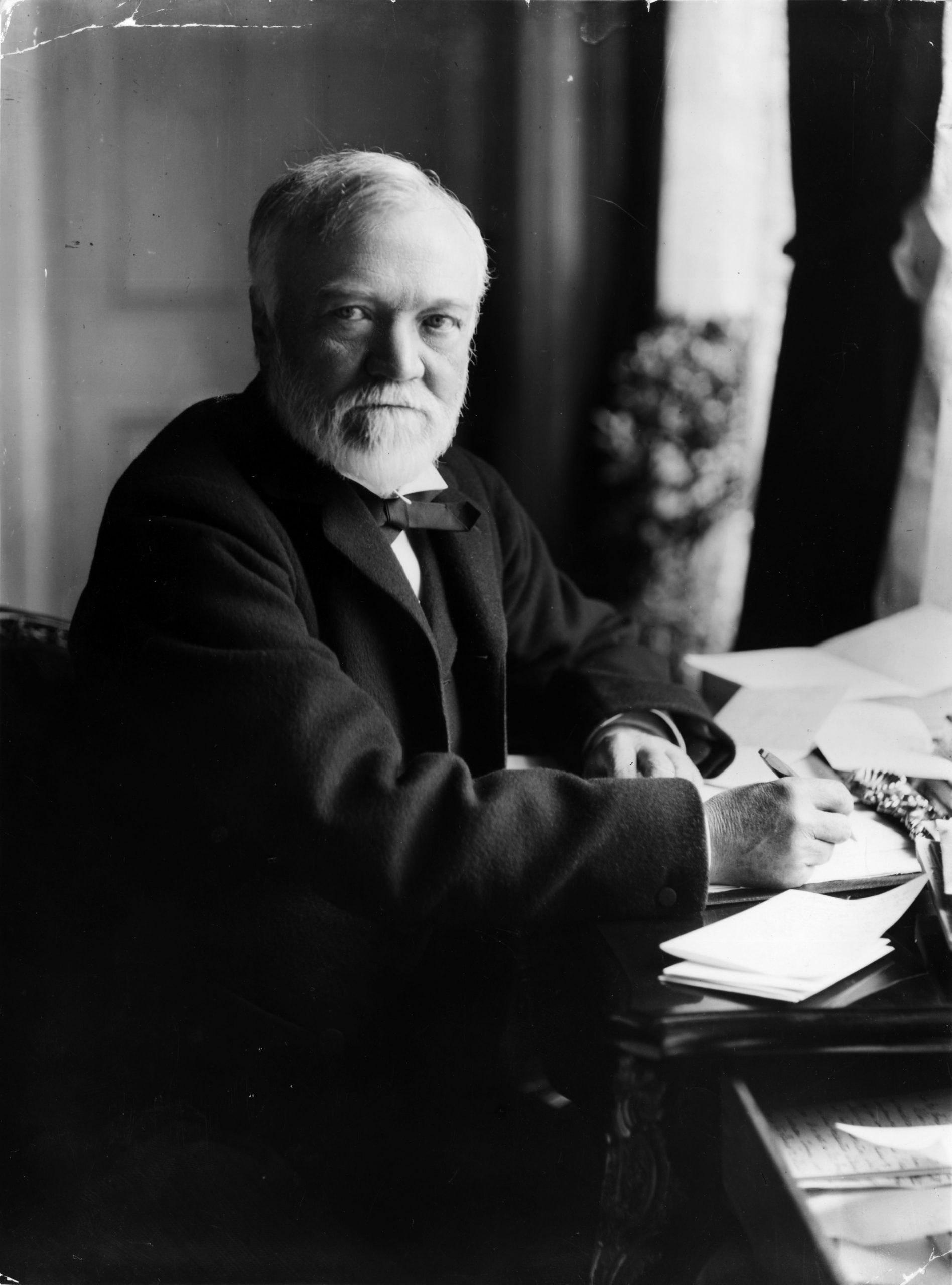
Andrew Carnegie’s highest net worth reached approximately $480 million in 1901 following the sale of Carnegie Steel to J.P. Morgan. When adjusted to 2026 economic standards using the share-of-GDP methodology, his peak fortune is valued at roughly $310 billion to $375 billion, cementing his status as one of history's wealthiest individuals.
The 1901 Sale: The Catalyst for Unprecedented Wealth
To understand Andrew Carnegie's net worth, one must focus on the pivotal transaction of March 1901. For decades, Carnegie had built an industrial empire that dominated the American steel industry. However, by the turn of the century, the landscape of American business was shifting toward massive consolidations. The financier J.P. Morgan sought to create a steel monopoly to stabilize the market and eliminate the cutthroat competition that Carnegie famously championed.
The deal was famously initiated during a dinner where Charles M. Schwab, Carnegie’s right-hand man, outlined the potential for a unified steel giant. When Morgan asked for a price, Carnegie purportedly scribbled a figure on a scrap of paper: $480 million. Morgan accepted the price without negotiation, allegedly telling Carnegie, "I happy to congratulate you on being the richest man in the world."
Of that $480 million, Carnegie’s personal share was approximately $225 million to $250 million. It is important to note that this payment was not made in a lump sum of cash. Instead, Carnegie received 5% gold bonds issued by the newly formed United States Steel Corporation. These bonds were secured by a mortgage on the company's properties, effectively making Carnegie the primary creditor of the world’s first billion-dollar corporation. This financial structure provided him with an annual income of roughly $11.25 million—an astronomical sum at a time when the average American worker earned less than $500 per year.
Calculating Value in 2026: CPI vs. Share of GDP
When explaining historical wealth, modern readers often struggle with the difference between nominal value and purchasing power. If we simply use the Consumer Price Index (CPI) to adjust Carnegie’s $480 million from 1901 to 2026, the figure appears to be around $17 billion to $20 billion. While this is a significant sum, it fails to capture Carnegie's true economic stature.
Economists and historians prefer the "Relative Share of GDP" methodology for comparing Gilded Age titans to modern billionaires. This method measures an individual's wealth as a percentage of the total United States Gross Domestic Product (GDP) at the time. In 1901, the U.S. GDP was approximately $21 billion. Carnegie’s peak company valuation represented more than 2% of the entire national economy.
If an individual today held 2% of the 2026 U.S. GDP, their net worth would exceed $370 billion. This explains why Carnegie consistently ranks higher than contemporary figures like Elon Musk or Jeff Bezos in historical wealth rankings. While modern billionaires may have higher nominal numbers, their wealth represents a smaller fraction of the total economic "pie" compared to the concentrated power held by Carnegie during the height of the industrial revolution.
The Components of Carnegie’s Industrial Empire
Carnegie's net worth was not the result of mere speculation; it was built on a foundation of radical industrial efficiency and vertical integration. He didn't just own steel mills; he owned the entire supply chain required to produce steel.
Vertical Integration and Cost Control
Carnegie understood that to maximize profit, he had to eliminate the "middleman" at every stage of production. This included:
- Iron Ore Mines: Carnegie secured vast deposits in the Mesabi Range of Minnesota.
- Transportation: He purchased a fleet of steamships to carry ore across the Great Lakes and built the Bessemer and Lake Erie Railroad to transport raw materials directly to his furnaces in Pittsburgh.
- Coke Production: Through a partnership with Henry Clay Frick, Carnegie gained control over the coal and coke supplies necessary for the smelting process.
The Bessemer Process
The technical backbone of Carnegie’s wealth was the Bessemer process. By adopting this technology early, Carnegie could mass-produce high-quality steel at a fraction of the cost of his competitors. Between 1875 and 1900, the price of steel rails dropped from $160 per ton to $17 per ton. Carnegie’s ability to drive down costs while maintaining high volume allowed him to capture the majority of the market for railroad tracks and skyscraper skeletons, fueling the rapid expansion of the American landscape.
Comparing Carnegie to Modern Billionaires
As of 2026, the debate over who is the "richest person ever" often pits Andrew Carnegie against John D. Rockefeller and modern tech founders. When analyzing these figures, several key distinctions emerge regarding the nature of their wealth.
| Feature | Andrew Carnegie (Peak) | Modern Billionaires (2026 Era) |
|---|---|---|
| Nominal Peak Worth | $480 Million (1901) | $250 - $350 Billion+ |
| Adjustment (GDP Share) | ~$370 Billion | ~$250 - $350 Billion |
| Asset Liquidity | High (Gold Bonds/Debt) | Variable (Stock Equity) |
| Source of Wealth | Manufacturing/Heavy Industry | Software/Energy/Technology |
| Economic Context | Industrial Revolution | Digital/AI Transformation |
Unlike many modern billionaires whose wealth is tied to the volatile stock prices of the companies they lead, Carnegie’s post-1901 wealth was exceptionally stable. His gold bonds were a form of fixed income that paid out regardless of market fluctuations, provided U.S. Steel remained solvent. This made his "highest net worth" more of a realized, liquid fortune than the "paper wealth" often attributed to contemporary tech moguls.
The "Gospel of Wealth" and the Liquidation of a Fortune
Andrew Carnegie is unique among the ultra-wealthy because he spent the final two decades of his life actively trying to get rid of his money. In his 1889 essay, The Gospel of Wealth, Carnegie argued that "the man who dies thus rich dies disgraced." He believed that the wealthy had a moral obligation to use their surplus funds for the "improvement of mankind."
Upon the sale of Carnegie Steel, he embarked on a philanthropic campaign of unprecedented scale. By the time of his death in 1919, Carnegie had given away approximately $350 million—which was nearly 90% of his total fortune.
Major Philanthropic Initiatives:
- Public Libraries: He funded the construction of 2,509 libraries worldwide, believing that access to information was the key to self-improvement.
- Education: He founded the Carnegie Institute of Technology (now Carnegie Mellon University) and the Carnegie Trust for the Universities of Scotland.
- Scientific Research: He established the Carnegie Institution for Science in Washington, D.C., to support fundamental research.
- Global Peace: He funded the construction of the Peace Palace in The Hague, which now houses the International Court of Justice.
By 1919, his remaining net worth had dwindled to about $22 million, much of which was left to his wife and daughter or bequeathed to remaining charitable trusts. When explaining his "highest" net worth, it is vital to distinguish between the peak he hit in 1901 and the modest (relatively speaking) estate he left behind.
Common Misconceptions About Carnegie’s Finances
Several myths persist regarding Carnegie’s wealth that require clarification for a comprehensive understanding of his financial history.
Myth 1: He was the richest person in history. While Carnegie was the richest man in the world for a brief period following the 1901 sale, he was eventually surpassed by John D. Rockefeller. As the oil industry boomed and Standard Oil was broken up into smaller, highly profitable entities, Rockefeller’s net worth (adjusted for GDP share) is generally estimated to have reached closer to $400 billion or $418 billion, slightly edging out Carnegie.
Myth 2: His wealth was built solely on low wages. While Carnegie was often a ruthless employer—most notably during the 1892 Homestead Strike—his wealth was primarily driven by technological innovation and economies of scale. He was obsessed with the "unit cost" of steel. His ability to produce steel cheaper than anyone else in the world was a greater contributor to his net worth than wage suppression alone.
Myth 3: The $480 million was his personal bank balance. As noted earlier, the $480 million was the valuation of the Carnegie Steel Company. His personal take-home was roughly half that. However, even at $225 million, his personal liquid wealth was vastly superior to almost any other private citizen in history at that point in time.
Institutional Legacy and the Carnegie Corporation
The remnants of Carnegie's highest net worth still exist today in the form of the Carnegie Corporation of New York. Established in 1911 with an endowment of $135 million, it was the first "great philanthropic foundation" in the United States.
As of 2026, the foundation continues to manage billions of dollars in assets, proving that Carnegie's wealth was so vast that even after a century of aggressive grant-making, the original principal (invested and grown over time) continues to influence global education, international peace, and democratic institutions. This institutional longevity is a testament to the sheer scale of the capital he amassed during the industrial boom.
Frequently Asked Questions
What was Andrew Carnegie's net worth in today's money?
In 2026 dollars, Carnegie's peak net worth is estimated at $310 billion to $375 billion when using the share-of-GDP calculation. If using simple inflation (CPI), it is approximately $20 billion. Most historians agree the GDP-share method is more accurate for reflecting his true economic power.
How did Andrew Carnegie get so rich?
Carnegie accumulated his wealth through the steel industry. He utilized the Bessemer process to mass-produce steel and employed vertical integration, owning everything from the iron ore mines to the railroads. This allowed him to undercut all competitors and dominate the global market.
Who bought Carnegie Steel and for how much?
J.P. Morgan bought Carnegie Steel in 1901 for $480 million. This acquisition led to the creation of U.S. Steel, which became the first corporation in history with a market capitalization exceeding $1 billion.
Did Andrew Carnegie die a billionaire?
No. Carnegie intentionally gave away about 90% of his fortune before his death in 1919. He followed his own philosophy, "The Gospel of Wealth," which dictated that the wealthy should distribute their riches for the public good during their lifetime. He died with an estate worth roughly $22 million.
Was Carnegie richer than Elon Musk?
When adjusted for the size of the economy (GDP share), Carnegie was significantly wealthier than Elon Musk. While Musk has reached higher nominal figures (over $300 billion in current dollars), Carnegie's fortune represented a much larger percentage of the United States' total economic output in 1901.
Final Practical Takeaway
For researchers or investors analyzing historical wealth, the most important lesson from Andrew Carnegie’s net worth is the distinction between nominal currency and economic influence. Carnegie’s $480 million sale represents the peak of industrial-age capital concentration. To truly understand his wealth in 2026, one must look past the raw numbers and recognize that he owned a literal percentage of the American industrial foundation. If you are comparing historical figures, always use the "Relative Share of GDP" metric to gain an accurate picture of their financial standing.