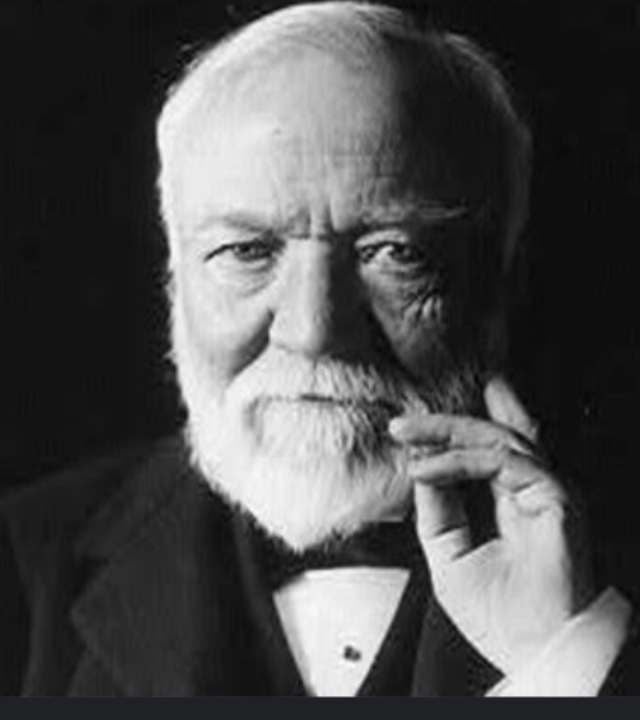
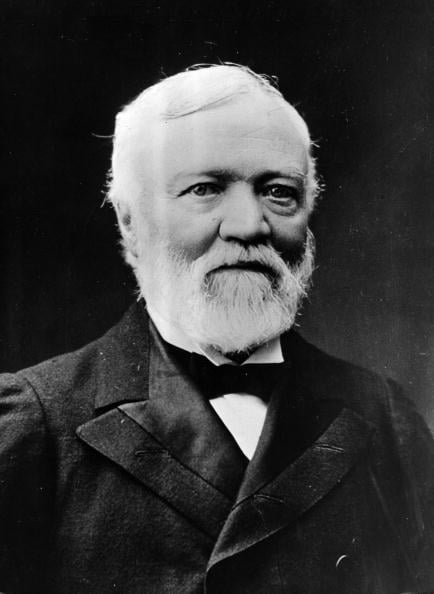
At the peak of his career in 1901, Andrew Carnegie's net worth was approximately $380 million, following the sale of Carnegie Steel to J.P. Morgan. In his era, this fortune represented a massive share of the United States' total economic output, equivalent to over $370 billion in 2026 when adjusted for relative GDP share.
The scale of Andrew Carnegie’s wealth remains a subject of intense fascination for historians and economists alike. To understand "Andrew Carnegie's net worth in his era," one must look beyond simple currency conversion and delve into the structural economics of the Gilded Age. Carnegie did not just possess money; he controlled the foundational infrastructure of a developing superpower. His wealth was built on the transition from iron to steel, a shift that facilitated the vertical expansion of American cities and the horizontal expansion of the transcontinental railroad.
The Foundation of Carnegie’s Fortune: The Steel Transition
Andrew Carnegie’s path to becoming the richest man in the world began not with steel, but with a series of shrewd investments in the railroad and oil industries. However, the true explosion of his net worth occurred when he realized that steel was the future of industrial civilization. Before the 1870s, steel was a luxury item produced in small quantities. Carnegie adopted the Bessemer process, which allowed for the mass production of steel at a fraction of the previous cost.
By the 1890s, Carnegie Steel Company was the largest and most profitable industrial enterprise in the world. Carnegie’s strategy was rooted in vertical integration. He did not merely own the steel mills; he owned the iron ore mines in the Mesabi Range, the ships that transported the ore across the Great Lakes, and the railroads that delivered the finished product to consumers. This allowed him to cut out middleman costs and maintain a profit margin that his competitors could not match. By the turn of the century, Carnegie’s mills were producing more steel than the entire United Kingdom.
The 1901 Sale: The Pivot Point of Wealth
The most definitive moment for Andrew Carnegie’s net worth occurred in 1901. At the age of 66, Carnegie decided to retire and devote his life to philanthropy. He sold the Carnegie Steel Company to a syndicate organized by J.P. Morgan for $480 million. To put this in perspective, the total federal budget of the United States in 1901 was roughly $517 million. A single business transaction was nearly equivalent to the annual operating costs of the entire U.S. government.
Carnegie’s personal share of the sale was approximately $225 million to $250 million, paid out in 5% gold bonds. These bonds were housed in a specially built vault in New Jersey, which Carnegie reportedly never visited. This liquidation of assets transformed Carnegie from an industrialist with "paper wealth" tied up in factories and mines into a man with the largest liquid fortune the world had ever seen. While John D. Rockefeller eventually surpassed him in total net worth as the value of Standard Oil soared, Carnegie held the title of the wealthiest individual for a brief, significant window following this sale.
Adjusting for 2026: The Challenge of Economic Equivalence
When discussing Andrew Carnegie's net worth in his era, the most common mistake is using a simple Consumer Price Index (CPI) inflation calculator. A CPI adjustment would suggest that $310 million in 1901 is worth roughly $11 billion to $13 billion in 2026. However, this fails to capture the true economic power Carnegie wielded.
Economists prefer the "Relative Share of GDP" or "Economic Power" metric to compare historical fortunes. In 1901, the U.S. GDP was approximately $21 billion. Carnegie’s peak wealth represented roughly 1.5% to 1.9% of the total national economy. If an individual today held 1.5% of the 2026 U.S. GDP (estimated at over $25 trillion), their net worth would exceed $375 billion. This is why Carnegie is consistently ranked alongside Rockefeller as one of the two wealthiest Americans to ever live, far outpacing the relative wealth of modern billionaires when compared to the size of the economy they inhabited.
Comparing Historical and Modern Wealth Metrics
| Metric | Carnegie (1901) | Modern Equivalent (2026 Estimate) |
|---|---|---|
| Nominal Net Worth | $380 Million | ~$12.5 Billion (CPI Adjusted) |
| Share of U.S. GDP | ~1.5% - 1.9% | $375 Billion - $475 Billion |
| Industry Dominance | ~25% of U.S. Steel | N/A (Highly Fragmented Today) |
| Liquidity | Mostly 5% Gold Bonds | Diversified Stock/Cash |
| Primary Asset | Carnegie Steel Company | Modern Tech/Energy Conglomerates |
The Gospel of Wealth and Net Worth Redistribution
Carnegie’s net worth is inseparable from his philosophy of "The Gospel of Wealth." He famously stated that "The man who dies thus rich dies disgraced." Consequently, his net worth began a steady decline after 1901 as he systematically gave it away.
By the time of his death in 1919, Carnegie had distributed approximately $350 million (over 90% of his fortune). His "net worth" at the end was a mere fraction of his peak, consisting mostly of his personal estates and a small remaining trust. His philanthropic spending was strategic, focusing on:
- Public Libraries: Funding the construction of over 2,500 libraries worldwide.
- Education: Establishing the Carnegie Institute of Technology (now Carnegie Mellon University).
- Peace and Research: Founding the Carnegie Endowment for International Peace and the Carnegie Institution for Science.
This massive redistribution is why many modern cultural and educational institutions bear his name. Unlike modern billionaires whose net worth often fluctuates with stock market volatility, Carnegie’s wealth was converted into tangible, permanent public goods.
Carnegie vs. Rockefeller: Who Was Truly Wealthier?
The debate over the wealthiest American often pits Carnegie against John D. Rockefeller. In their era, Rockefeller’s net worth was more resilient because it was tied to the burgeoning oil industry, which grew exponentially with the rise of the automobile. While Carnegie’s peak was around $380 million, Rockefeller’s peak net worth was estimated at $900 million to $1.2 billion in early 20th-century dollars.
However, Carnegie’s wealth was more concentrated and "liquid" earlier. When Carnegie sold his company in 1901, he was briefly wealthier than Rockefeller. It was only after the Supreme Court-ordered dissolution of Standard Oil in 1911—which actually increased the value of Rockefeller's individual shares in the "Baby Standards"—that Rockefeller moved into an untouchable lead. Regardless, Carnegie’s wealth in his era was so vast that he could fund the creation of an entire national library system without exhausting his principal for over a decade.
Structural Advantages of the Gilded Age
To understand how Carnegie amassed such a net worth, we must consider the lack of modern financial constraints. During his era, there was no federal income tax (which was not permanently established until the 16th Amendment in 1913). Furthermore, there were no capital gains taxes or corporate taxes of the scale seen in 2026.
This environment allowed for the "compounding of the principal" at a rate that is mathematically impossible today. Every dollar earned by Carnegie Steel could be reinvested into more mills, more ships, or more bonds. This "tax-free" accumulation period was the primary engine that allowed Carnegie's net worth to reach such heights relative to the national economy.
The Working Class Context
A critical part of analyzing Andrew Carnegie's net worth in his era is comparing it to the average American's income. In the late 1800s, the average steelworker in a Carnegie plant earned approximately $400 to $500 per year.
- Comparison: Carnegie’s personal share of the steel company sale ($250 million) was equal to the combined annual wages of roughly 500,000 workers.
- Living Standards: While Carnegie lived in a 64-room mansion in New York City and a castle in Scotland (Skibo Castle), many of his employees lived in company-owned housing in Homestead, Pennsylvania, with few rights and long working hours.
This disparity eventually led to the Homestead Strike of 1892, a violent labor conflict that remains a stain on Carnegie’s legacy. It highlights the "cost" of his net worth—wealth that was extracted through extreme efficiency and the suppression of labor costs.
Frequently Asked Questions
How much would Andrew Carnegie be worth in today's money?
Using a standard inflation adjustment, his peak wealth of $380 million would be roughly $12.5 billion in 2026. However, using the "Relative Share of GDP" method, which is a better measure of his actual economic influence, his wealth would be worth more than $370 billion, making him wealthier than almost any billionaire in the modern era.
Was Andrew Carnegie the richest man ever?
While he is often ranked in the top three of American history (alongside John D. Rockefeller and Cornelius Vanderbilt), he is generally not considered the richest person in global history. Figures such as Mansa Musa of Mali or Augustus Caesar are often cited as having even greater relative wealth, though Carnegie remains a contender for the title of the wealthiest "self-made" industrialist.
How did Andrew Carnegie make his money?
The bulk of Carnegie's net worth came from Carnegie Steel. He utilized the Bessemer process to mass-produce steel, vertically integrated his supply chain to control costs, and eventually sold his entire operation to J.P. Morgan in 1901 for $480 million.
How much did Andrew Carnegie give to charity?
Carnegie gave away approximately $350 million, which was roughly 90% of his total fortune. His contributions founded over 2,500 libraries, several universities, and numerous foundations for peace and science that still exist today.
What was Carnegie’s net worth compared to the U.S. government?
In 1901, the sale price of Carnegie Steel ($480 million) was nearly equivalent to the entire annual budget of the United States federal government. This illustrates the unprecedented concentration of private wealth during the Gilded Age.
Recommended Next Actions
For those interested in the economic mechanics of the Gilded Age, exploring the official archives of the Carnegie Corporation of New York provides deep insights into how his wealth was managed and distributed. To understand the labor side of his net worth, a visit to the Bost Building in Homestead, part of the Rivers of Steel National Heritage Area, offers a necessary counter-perspective on the human cost of industrial wealth.
If you are researching Carnegie for academic purposes, the Library of Congress holds extensive records of his correspondence with J.P. Morgan and other financiers of the era, documenting the literal creation of his massive net worth.