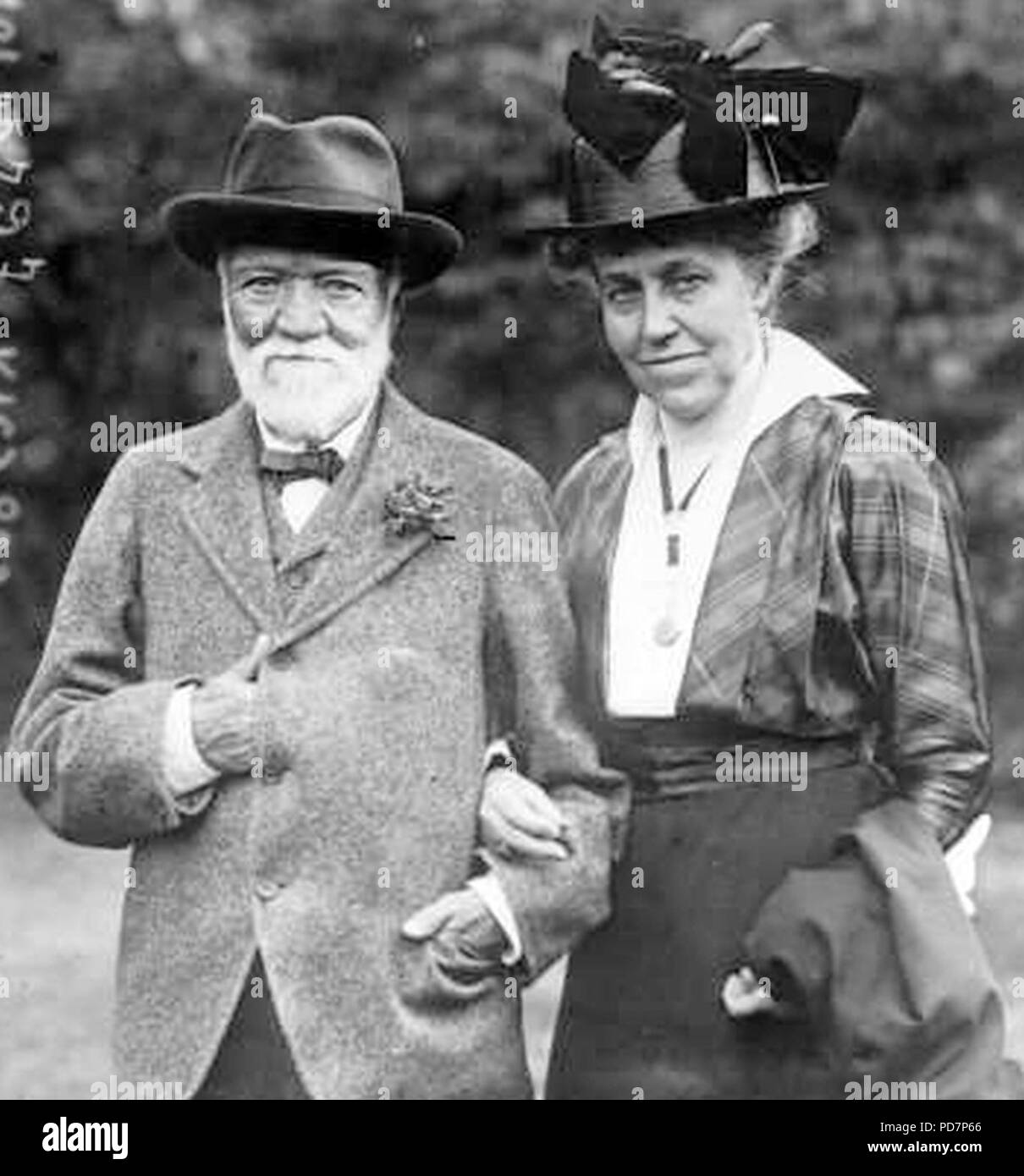
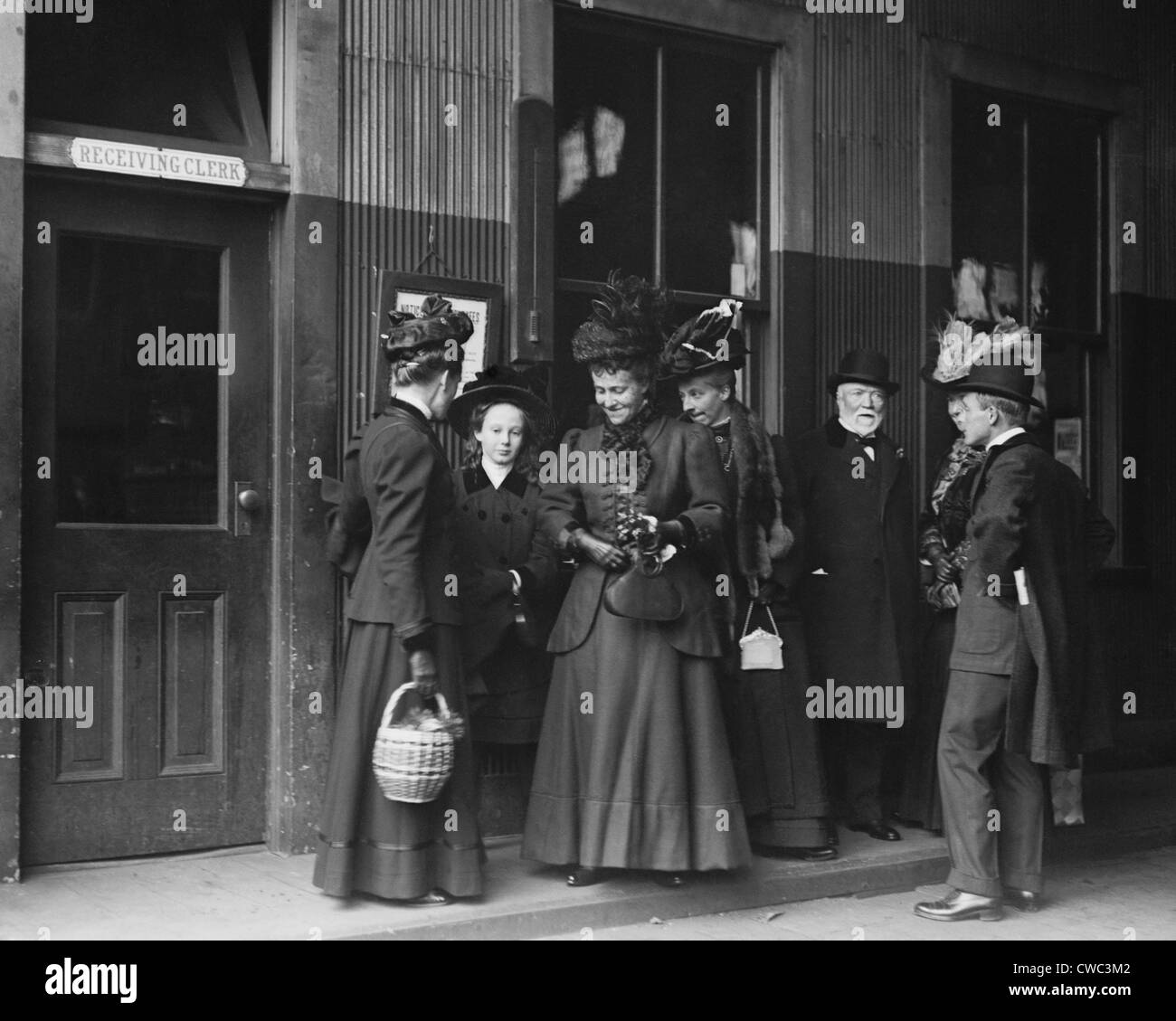
Andrew Carnegie was married to Louise Whitfield from 1887 until his death in 1919. Their union was a transformative partnership that combined Carnegie’s industrial wealth with Whitfield’s quiet influence and shared commitment to social causes. Together, they navigated the complexities of the Gilded Age, eventually dedicating their fortune to global philanthropy.
The Early Life and Background of Louise Whitfield
Louise Whitfield was born on March 7, 1857, in New York City, into a family that embodied the upper-middle-class values of the mid-19th century. Her father, John Lyon Whitfield, was a successful merchant in the NYC textile trade, providing a stable and cultured environment for Louise. Unlike many of the "nouveau riche" families of the era, the Whitfields maintained a focus on traditional education, religious devotion, and civic responsibility.
Louise grew up in a brownstone in Gramercy Park, an area known even then for its exclusivity and social significance. Her education was typical for a woman of her standing, focusing on literature, music, and the arts, but she also possessed a keen intellect and a practical approach to household management. These traits proved essential when she eventually assumed the responsibility of managing the domestic and social affairs of one of the world's wealthiest men.
Her path crossed with Andrew Carnegie’s through their mutual social circles in New York. Despite the significant age gap—Carnegie was 21 years her senior—the two found common ground in their intellectual pursuits and their shared views on the responsibilities of the wealthy. However, their relationship would face a decade of delays before they could officially wed.
The Long Engagement and the Influence of Margaret Carnegie
The central obstacle to the marriage of Andrew Carnegie and Louise Whitfield was Andrew’s mother, Margaret Morrison Carnegie. Andrew was famously devoted to his mother, a woman who had survived the hardships of their migration from Scotland to Pennsylvania and had been his primary confidante during his rise to power. Margaret was intensely possessive of her son, and Andrew, in turn, made a promise never to marry as long as she was alive.
Louise Whitfield and Andrew Carnegie met in 1880, but they did not marry until 1887. During these seven years, their relationship was maintained largely through correspondence and discreet visits. This period of "waiting" tested Louise's patience and loyalty. While Andrew was expanding his steel empire and consolidating his wealth, Louise remained at her family home, often facing the social awkwardness of a long, unfulfilled courtship.
Margaret Carnegie died in November 1886. Only after her passing did Andrew feel free to fulfill his commitment to Louise. This dynamic suggests a complex psychological landscape for the couple; Louise was not merely a trophy wife but a partner who understood the deep-seated familial obligations that governed Carnegie’s life. Their eventual wedding on April 22, 1887, was a private affair held at the Whitfield home, followed by a honeymoon in the United Kingdom, where Andrew introduced Louise to his Scottish roots.
The Marriage and the Pre-Nuptial Agreement
In 2026, as historians look back at the legal foundations of Gilded Age marriages, the pre-nuptial agreement between Andrew Carnegie and Louise Whitfield stands out as a landmark document. Unlike modern pre-nups designed to protect personal wealth in the event of divorce, the Carnegie-Whitfield agreement was a philosophical statement.
Andrew Carnegie was already a multi-millionaire by 1887 and had begun articulating his "Gospel of Wealth"—the idea that the rich had a moral obligation to distribute their wealth for the public good. Louise was fully supportive of this vision. In their marriage contract, she voluntarily waived her legal rights to the vast majority of his fortune, agreeing that the bulk of his wealth should be dedicated to philanthropic causes.
This agreement ensured that their marriage was built on a shared mission rather than financial gain. Louise was provided for with a comfortable annual income and the ownership of their primary residences, but she did not seek to inherit the Carnegie steel empire for her own use. This selfless stance by Louise enabled Andrew to focus his later years entirely on the establishment of libraries, foundations, and educational institutions without the friction of familial inheritance disputes.
Life at Skibo Castle and 2 East 91st Street
The Carnegies' life together was split between two primary residences that reflected their dual identities as American industrialists and Scottish expatriates. In New York, they eventually built a massive mansion at 2 East 91st Street, completed in 1902. This home, which now houses the Cooper Hewitt, Smithsonian Design Museum, was one of the first private residences in the United States to feature a structural steel frame and a residential elevator.
The New York mansion was the center of their social and philanthropic planning. However, their true refuge was Skibo Castle in the Scottish Highlands. Andrew purchased the estate in 1898, and it became the couple’s summer home. At Skibo, Louise acted as the "Lady of the Manor," managing an estate that spanned over 20,000 acres.
Life at Skibo was a blend of Highland tradition and modern luxury. The Carnegies hosted world leaders, intellectuals, and artists, including Booker T. Washington and various British Prime Ministers. Louise was instrumental in creating an atmosphere of intellectual rigor and relaxed hospitality, ensuring that Skibo was a place where global ideas could be discussed away from the pressures of New York and London.
The Birth of Margaret Carnegie and Family Dynamics
For ten years, the Carnegies had no children. This changed in 1897 with the birth of their only child, a daughter whom they named Margaret, after Andrew’s mother. The birth of Margaret transformed the couple’s life, providing Andrew with a "heir" to his personal legacy, if not his industrial one.
Margaret’s upbringing was shielded from the excesses typical of the era’s wealthy elite. Louise insisted on a degree of modesty and a focus on character development. While Margaret grew up in palaces, she was taught the same values of stewardship and service that her parents championed.
| Key Milestone | Date | Significance |
|---|---|---|
| Birth of Louise Whitfield | March 7, 1857 | Born into a cultured NYC merchant family. |
| First Meeting | 1880 | Introduced through social circles in New York. |
| Death of Margaret Carnegie | November 1886 | Removed the primary obstacle to their marriage. |
| Marriage Ceremony | April 22, 1887 | A private ceremony at the Whitfield home. |
| Birth of Margaret Carnegie Miller | March 30, 1897 | The couple's only child and primary heir. |
| Purchase of Skibo Castle | 1898 | Establishment of their primary Scottish estate. |
| Death of Andrew Carnegie | August 11, 1919 | Louise assumes the role of primary legacy guardian. |
| Death of Louise Whitfield Carnegie | June 24, 1946 | Ended nearly 60 years of Carnegie family philanthropy. |
Louise’s Role in Carnegie’s Philanthropy
While Andrew Carnegie is the name associated with the 2,500+ libraries and the various Carnegie foundations, Louise was a silent partner in these endeavors. She was often the final reader of his speeches and essays, offering a more grounded and diplomatic perspective than Andrew’s sometimes abrasive industrialist tone.
One of her most significant contributions was her management of the family’s personal giving. While the Carnegie Corporation of New York handled the large-scale institutional grants, Louise oversaw hundreds of smaller, individual requests for help. She maintained a meticulous filing system of people in need, from struggling artists to widowed teachers.
Furthermore, she was a staunch supporter of the Carnegie Endowment for International Peace. In the lead-up to World War I, she and Andrew worked tirelessly to promote arbitration as a means of settling international disputes. The outbreak of the war in 1914 was a personal blow to both, but Louise helped Andrew maintain his resolve to continue funding peace initiatives even in the face of global conflict.
Widowhood and the Continuation of the Legacy
After Andrew Carnegie died in 1919, Louise Whitfield Carnegie lived for another 27 years. During this period, she became the guardian of the Carnegie name. She did not retreat from the world but instead took an active role on the boards of several Carnegie institutions.
She remained in their New York mansion and continued to spend summers at Skibo Castle until the outbreak of World War II made transatlantic travel impossible. During the 1920s and 30s, she focused on ensuring that the foundations Andrew established remained true to his original "Gospel of Wealth." She was particularly involved in the Carnegie Hall board and worked to ensure the venue remained a premier global destination for the arts.
Louise also managed the family's transition through the Great Depression. Despite the economic downturn, she maintained the family’s commitment to charity, though on a more private scale. Her dignity and resilience during her widowhood earned her immense respect in New York society, where she was viewed as a matriarch of American philanthropy.
Historical Impact and 2026 Perspective
As of 2026, the partnership between Andrew Carnegie and Louise Whitfield is studied not just as a marriage of the elite, but as a model for modern strategic philanthropy. The decision to prioritize the public good over dynastic wealth set a precedent followed by figures like Bill Gates and Warren Buffett in the 21st century.
Their daughter, Margaret Carnegie Miller, continued this tradition until her death in 1990, and her descendants remain involved in various charitable works. The Carnegie name continues to be synonymous with the democratization of knowledge, a legacy that was made possible by the emotional and ethical support Louise provided to her husband.
The residences they shared have also transitioned into public assets. The New York mansion serves as a museum of design, and Skibo Castle, while now a private club, remains a preserved piece of Scottish architectural history. These physical structures stand as monuments to a marriage that was as much about public service as it was about personal affection.
Frequently Asked Questions
Did Louise Whitfield come from a wealthy family?
Yes, but her wealth was modest compared to Andrew Carnegie’s. Her father was a successful New York merchant, placing her firmly in the upper-middle class. Her background provided her with the social graces and education necessary to navigate the world of a multi-millionaire, but she did not bring a massive dowry or industrial holdings to the marriage.
How many children did Andrew Carnegie and Louise Whitfield have?
They had only one child, a daughter named Margaret Carnegie Miller, born in 1897. Margaret was the focus of their family life and eventually became a prominent philanthropist in her own right, serving on the boards of various Carnegie foundations for decades.
Why did Andrew Carnegie wait so long to marry Louise?
Andrew had promised his mother, Margaret Carnegie, that he would not marry while she was alive. His mother was a dominant force in his life and remained his primary companion and advisor until her death in 1886. Andrew and Louise remained in a state of courtship for approximately seven years before they were finally able to wed.
What happened to Louise Whitfield after Andrew Carnegie died?
Louise lived as a widow for 27 years, passing away in 1946. During this time, she remained active in New York social and philanthropic circles. she served on the boards of Carnegie foundations and ensured that her husband’s philanthropic goals were met, while also continuing her own private charitable work.
Where did the Carnegies live?
Their two most famous residences were the Carnegie Mansion at 2 East 91st Street in New York City (now the Cooper Hewitt Museum) and Skibo Castle in Sutherland, Scotland. They spent their winters in New York and their summers in Scotland, reflecting Andrew’s dual loyalty to his adopted and native countries.
Practical Recommendations for Researchers
For those interested in exploring the life of Louise Whitfield Carnegie further, the following actions are recommended:
- Visit the Cooper Hewitt Museum: Located in the former Carnegie mansion in New York, the museum offers a glimpse into the domestic life and architectural tastes of the couple.
- Consult the Carnegie Corporation Archives: Most of the personal correspondence between Andrew and Louise is preserved in the archives of the Carnegie Corporation of New York and the Library of Congress.
- Explore Skibo Castle Records: While the castle is now a private club, historical records of the estate’s management under Louise provide insight into her role as the manager of their Scottish holdings.
- Read "Andrew Carnegie" by David Nasaw: This definitive biography provides extensive detail on the relationship between Andrew and Louise, including their long engagement and shared philanthropic vision.