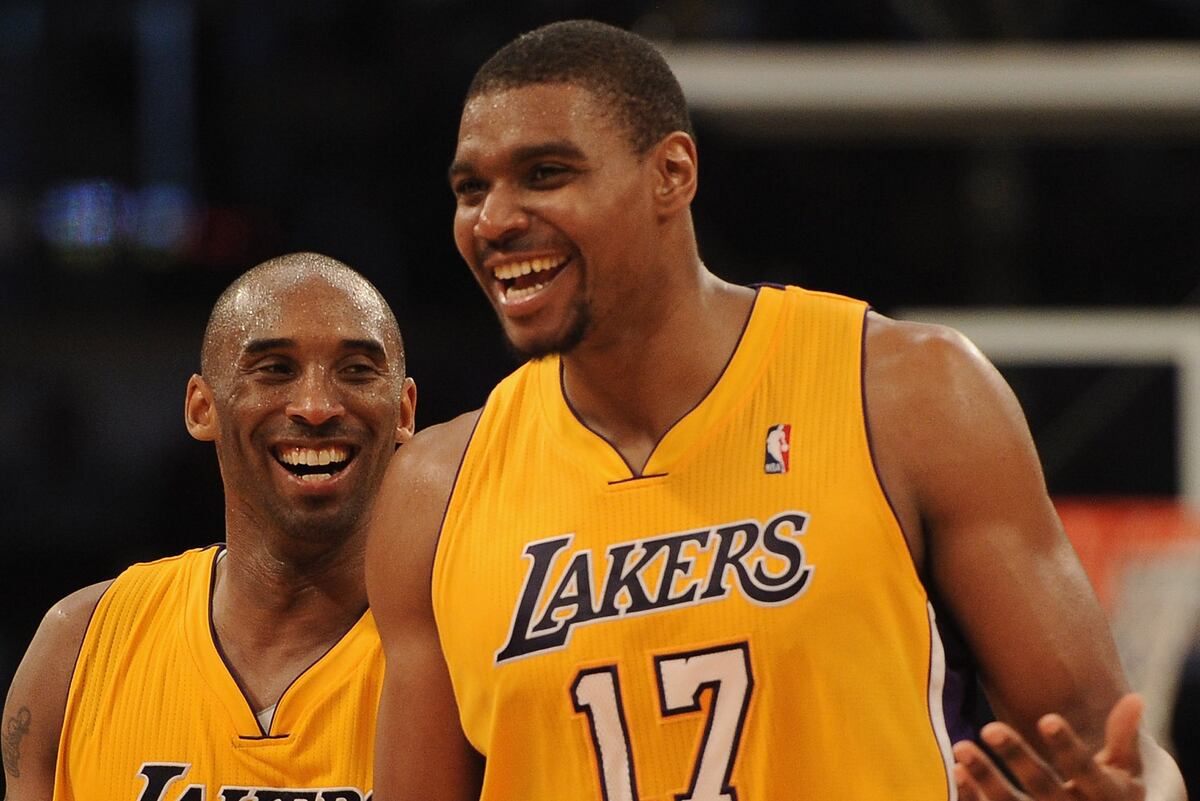
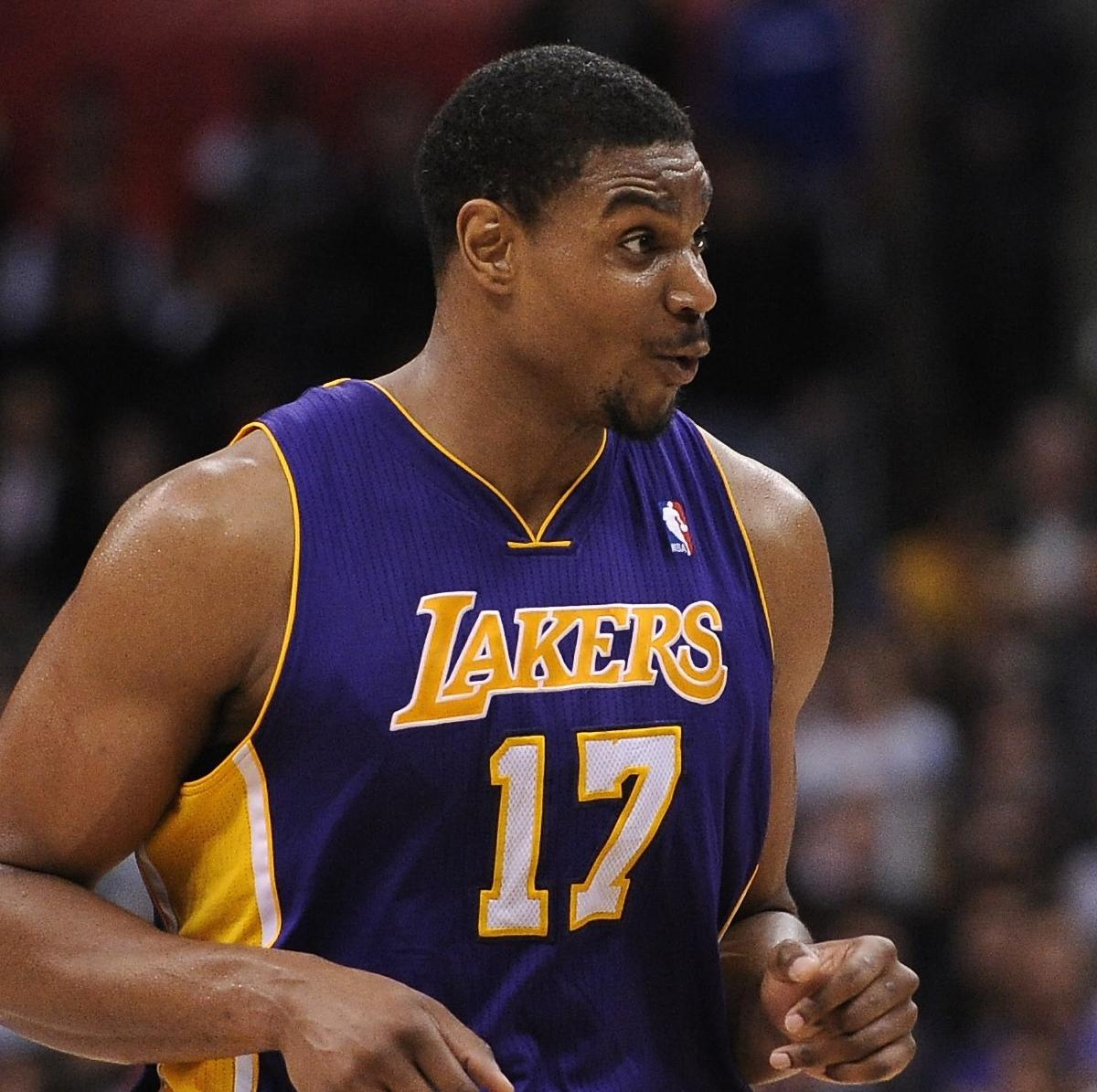
Andrew Bynum finished his NBA career with averages of 11.5 points, 7.7 rebounds, and 1.6 blocks per game across 418 regular-season appearances. A two-time NBA champion and 2012 All-Star, Bynum shot an impressive 55.6% from the field, primarily serving as the interior anchor for the Los Angeles Lakers during their dominant run in the late 2000s.
Andrew Bynum remains one of the most intriguing "what-if" stories in professional basketball history. As of 2026, over a decade since his final NBA game, Bynum’s career is often analyzed through the lens of immense physical potential thwarted by chronic knee issues. Drafted directly out of high school as the youngest player in NBA history, Bynum evolved from a raw developmental project into a dominant All-NBA Second Team center. This article provides an exhaustive analysis of his career statistics, his peak performance levels, and the defensive impact he maintained during his tenure in the league.
The Early Years: Development and Historical Milestones (2005–2007)
When the Los Angeles Lakers selected Andrew Bynum with the 10th overall pick in the 2005 NBA Draft, he was just 17 years, 244 days old. This made him the youngest player ever drafted by an NBA team—a record that stands in 2026 due to subsequent changes in draft eligibility rules.
In his rookie season (2005-06), Bynum's statistics were modest. He played in 46 games, averaging 1.6 points and 1.7 rebounds in limited minutes (7.3 per game). However, the Lakers viewed him as a long-term investment. Under the tutelage of Hall of Famer Kareem Abdul-Jabbar, who was hired as a special assistant coach, Bynum began to master the "Skyhook" and advanced post-positioning.
By his second season (2006-07), his role expanded significantly. He appeared in all 82 games, starting 53 of them. His averages jumped to 7.8 points, 5.9 rebounds, and 1.6 blocks per game. His field goal percentage of 55.8% hinted at the efficiency that would define his prime. It was during this period that Bynum began to show the footwork and soft touch that allowed him to finish over much more experienced defenders.
The Championship Ascent: 2007–2010
The 2007-08 season was Andrew Bynum’s true breakout. Before a knee injury sidelined him in January 2008, he was averaging 13.1 points and 10.2 rebounds per game while shooting a league-leading 63.6% from the field. His chemistry with Kobe Bryant and the newly acquired Pau Gasol (though they played little together that first year due to Bynum's injury) transformed the Lakers into title favorites.
The 2008-2009 Season
Returning from injury, Bynum provided the physical interior presence the Lakers lacked in their 2008 Finals loss to Boston. In the 2008-09 regular season, he averaged 14.3 points and 8.0 rebounds. While he missed a significant portion of the season again due to a torn MCL, he returned for the playoffs. Although his postseason stats (6.3 PPG, 3.7 RPG) were hampered by his recovery, his presence in the paint was a primary factor in the Lakers' 2009 NBA Championship victory over the Orlando Magic.
The 2009-2010 Repeat
The 2009-10 season saw Bynum establish himself as a consistent double-double threat when healthy. He averaged 15.0 points and 8.3 rebounds. Most notably, Bynum played through a torn meniscus during the 2010 NBA Finals against the Boston Celtics. Despite the injury requiring him to have his knee drained of fluid multiple times, he started all seven games, contributing crucial rim protection and rebounding that secured the Lakers' second consecutive title.
The Statistical Peak: The 2011–2012 All-Star Campaign
The 2011-12 season remains the definitive statistical peak of Andrew Bynum’s career. In a lockout-shortened season, Bynum emerged as arguably the second-best center in the NBA, trailing only Dwight Howard.
During this campaign, Bynum started 60 games and averaged:
- Points: 18.7 per game
- Rebounds: 11.8 per game (Career High)
- Blocks: 1.9 per game
- Field Goal Percentage: 55.8%
On April 11, 2012, Bynum recorded a historic 30-rebound game against the San Antonio Spurs, the most by any Laker since Wilt Chamberlain. Shortly after, in the opening game of the 2012 Western Conference Playoffs against the Denver Nuggets, he recorded a triple-double with 10 points, 13 rebounds, and 10 blocks. The 10 blocks tied an NBA playoff record for most in a single game.
His performance earned him a starting spot in the 2012 NBA All-Star Game and a selection to the All-NBA Second Team. At this moment, Bynum was 24 years old and widely considered the future of the center position.
Comprehensive Career Statistics Table
The following table summarizes Andrew Bynum's regular-season production across his nine active seasons in the NBA.
| Season | Team | GP | GS | MPG | FG% | RPG | APG | BPG | PPG |
|---|---|---|---|---|---|---|---|---|---|
| 2005-06 | LAL | 46 | 0 | 7.3 | .402 | 1.7 | 0.2 | 0.5 | 1.6 |
| 2006-07 | LAL | 82 | 53 | 21.9 | .558 | 5.9 | 1.1 | 1.6 | 7.8 |
| 2007-08 | LAL | 35 | 25 | 28.8 | .636 | 10.2 | 1.7 | 2.1 | 13.1 |
| 2008-09 | LAL | 50 | 50 | 28.9 | .560 | 8.0 | 1.4 | 1.8 | 14.3 |
| 2009-10 | LAL | 65 | 65 | 30.4 | .570 | 8.3 | 1.0 | 1.4 | 15.0 |
| 2010-11 | LAL | 54 | 47 | 27.8 | .574 | 9.4 | 1.4 | 2.0 | 11.3 |
| 2011-12 | LAL | 60 | 60 | 35.2 | .558 | 11.8 | 1.4 | 1.9 | 18.7 |
| 2013-14 | CLE | 24 | 19 | 20.0 | .419 | 5.3 | 1.1 | 1.2 | 8.4 |
| 2013-14 | IND | 2 | 0 | 18.0 | .400 | 9.5 | 1.0 | 0.5 | 5.5 |
| Career | 418 | 319 | 24.9 | .556 | 7.7 | 1.2 | 1.6 | 11.5 |
Source: NBA Official Stats
Post-Lakers: Injury Decline and Final Years (2012–2014)
In August 2012, Bynum was the center-piece of a four-team trade that sent Dwight Howard to the Lakers and Bynum to the Philadelphia 76ers. This trade marked the beginning of the end for his career.
The Philadelphia Gap (2012-2013)
Bynum’s tenure in Philadelphia is statistically non-existent. Due to a series of setbacks involving both knees—partially exacerbated by a bowling incident—Bynum did not play a single minute for the 76ers. He underwent season-ending surgery, leaving Philadelphia as a free agent in 2013.
Cleveland and Indiana (2013-2014)
The Cleveland Cavaliers took a low-risk gamble on Bynum for the 2013-14 season. In 24 games, he showed flashes of his former self, including a 20-point, 10-rebound, 5-block performance against the Chicago Bulls. However, inconsistencies in his conditioning and chemistry with the team led to his suspension and eventual trade to the Chicago Bulls, who immediately waived him.
His final NBA stop was with the Indiana Pacers. He played only two games, averaging 5.5 points and 9.5 rebounds in short bursts. Continued knee swelling forced him out of the lineup before the 2014 playoffs, and he never returned to an NBA court.
Defensive Impact and Advanced Metrics
To understand Andrew Bynum's "career stats," one must look beyond the box score. During his peak years (2008–2012), Bynum was one of the most effective rim protectors in the league.
- Block Percentage: Bynum consistently maintained a block percentage (an estimate of the percentage of opponent two-point field goal attempts blocked by the player) above 4.0%. In the 2007-08 season, this peaked at 5.4%.
- Defensive Win Shares: During the Lakers' 2010 championship season, Bynum contributed 2.5 Defensive Win Shares despite missing 17 games.
- Player Efficiency Rating (PER): In his 2011-12 All-Star season, Bynum recorded a PER of 22.9, which ranked among the top 15 in the league, signifying his high level of per-minute productivity.
His defensive presence allowed the Lakers to play a "twin towers" lineup alongside Pau Gasol, forcing opponents to settle for mid-range jumpers rather than challenging the rim. This defensive identity was the cornerstone of the Lakers' back-to-back titles.
Playoff Statistics and Performance
Andrew Bynum's postseason career was defined by his willingness to play through significant pain. His playoff statistics reflect a player who was often at 70-80% physical capacity but remained a tactical necessity.
- Games Played: 74
- Career Playoff Averages: 9.5 PPG, 6.7 RPG, 1.5 BPG
- Postseason FG%: 54.3%
His most statistically significant playoff run occurred in 2012, where he averaged 16.7 points, 11.1 rebounds, and 3.1 blocks over 12 games. This included the aforementioned 10-block game, which highlighted his ceiling as a defensive game-changer.
Frequently Asked Questions
What was Andrew Bynum's career high in scoring?
Andrew Bynum's career-high in a single game was 42 points. He achieved this on January 21, 2009, against the Los Angeles Clippers. He shot 15-of-18 from the field and 12-of-14 from the free-throw line, showcasing a level of offensive dominance that few centers in that era could match.
How many rings did Andrew Bynum win?
Bynum won two NBA Championships with the Los Angeles Lakers, in 2009 and 2010. While his 2009 contribution was limited by his return from injury, his 2010 performance—specifically his defensive rebounding and shot-altering against the Celtics—was vital to the Lakers' Game 7 victory.
Why did Andrew Bynum retire so early?
Bynum effectively retired due to chronic knee degeneration. By the time he was 26, he had undergone multiple surgeries on both knees, including procedures for torn menisci and cartilage issues. The lack of cartilage in his knees made it impossible to maintain the rigorous training and lateral movement required for the NBA.
Did Andrew Bynum ever win Defensive Player of the Year?
No, Bynum never won the Defensive Player of the Year award. However, he was a perennial candidate for All-Defensive honors during his healthy years. His best individual accolades were his 2012 All-Star selection and 2012 All-NBA Second Team selection.
What is Andrew Bynum's record for rebounds?
Bynum's regular-season career high for rebounds is 30, set against the San Antonio Spurs on April 11, 2012. At the time, it was the highest rebounding total by any player in over a decade.
Conclusion and Legacy
The career statistics of Andrew Bynum tell the story of a player who achieved the highest levels of team success while struggling to maintain individual longevity. His career field goal percentage of 55.6% and his average of 1.6 blocks per game underscore his efficiency and defensive utility. For a five-year stretch from 2007 to 2012, Bynum was a foundational piece of a championship dynasty and a player who changed the way opponents approached the paint.
For researchers and fans looking at historical big-man data, Bynum serves as a benchmark for the "traditional" back-to-the-basket center. His ability to anchor a defense while providing high-efficiency scoring remains a blueprint for interior play. To truly appreciate his impact, one should compare his 2011-12 advanced metrics against other elite centers of the 21st century, which reveals a player who, for a brief window, was as effective as any big man in the world.