The American Red Cross emergency preparedness strategy is built upon a three-pillar framework: Get a Kit, Make a Plan, and Be Informed. This systematic approach empowers individuals and communities to mitigate risks, ensure rapid communication during crises, and maintain self-sufficiency for at least 72 hours following a major disaster or local emergency.
As we move through 2026, the complexity of environmental hazards and the necessity for community resilience have never been more apparent. The American Red Cross (ARC), a non-profit organization chartered by the U.S. Congress, continues to refine its "Be Red Cross Ready" initiative. This strategy is not merely a set of checklists but a comprehensive methodology designed to bridge the gap between initial impact and the arrival of professional emergency services. By understanding the technical requirements of kit building, the nuances of communication planning, and the importance of situational awareness, households can significantly reduce their vulnerability.
The Three Pillars of the Red Cross Strategy
The core of the ARC strategy is designed to be accessible yet robust enough to handle everything from house fires to regional hurricanes. Each pillar represents a critical stage in the lifecycle of personal and community safety.
Pillar 1: Get a Kit
The first strategic requirement is the assembly of a survival kit. The Red Cross distinguishes between two types of kits: a portable "go-bag" for immediate evacuations and a stationary "stay-at-home" kit for sheltering in place.
- Water and Food: The technical standard remains one gallon of water per person, per day. For a stay-at-home kit, a two-week supply is recommended; for a go-bag, a three-day supply is the minimum. Food should be non-perishable and high-calorie.
- Medical Supplies: Beyond a standard first aid kit, the strategy emphasizes a one-week supply of critical medications and copies of prescriptions. This is vital for those with chronic conditions who may be separated from their local pharmacy.
- Communication Tools: A battery-powered or hand-crank radio (specifically a NOAA Weather Radio) is essential. In 2026, while cellular networks are robust, they remain vulnerable to congestion and power outages during disasters.
- Documentation: The ARC recommends storing digital and physical copies of birth certificates, deeds, insurance policies, and identification in a waterproof container.
Pillar 2: Make a Plan
A strategy is only as effective as its execution. The Red Cross focuses on "Plan-Making" to eliminate indecision during high-stress events. This involves identifying multiple evacuation routes and establishing "out-of-area" contacts.
The logic behind an out-of-area contact is technical: during a disaster, local phone lines are often overwhelmed, but long-distance circuits may remain open. Furthermore, a family plan must include specific instructions for different scenarios—such as what to do if members are at work or school when a disaster strikes. The ARC strategy also mandates a "Home Fire Escape Plan," which requires identifying two ways out of every room and a designated meeting spot a safe distance from the home.
Pillar 3: Be Informed
The final pillar involves understanding the specific risks associated with one’s geographic location. The ARC strategy utilizes the "Emergency" app and local community alerts to provide real-time data. Being informed also means understanding the difference between a "watch" (conditions are favorable for a hazard) and a "warning" (the hazard is imminent or occurring).
Advanced Organizational Readiness: The Ready Rating Program
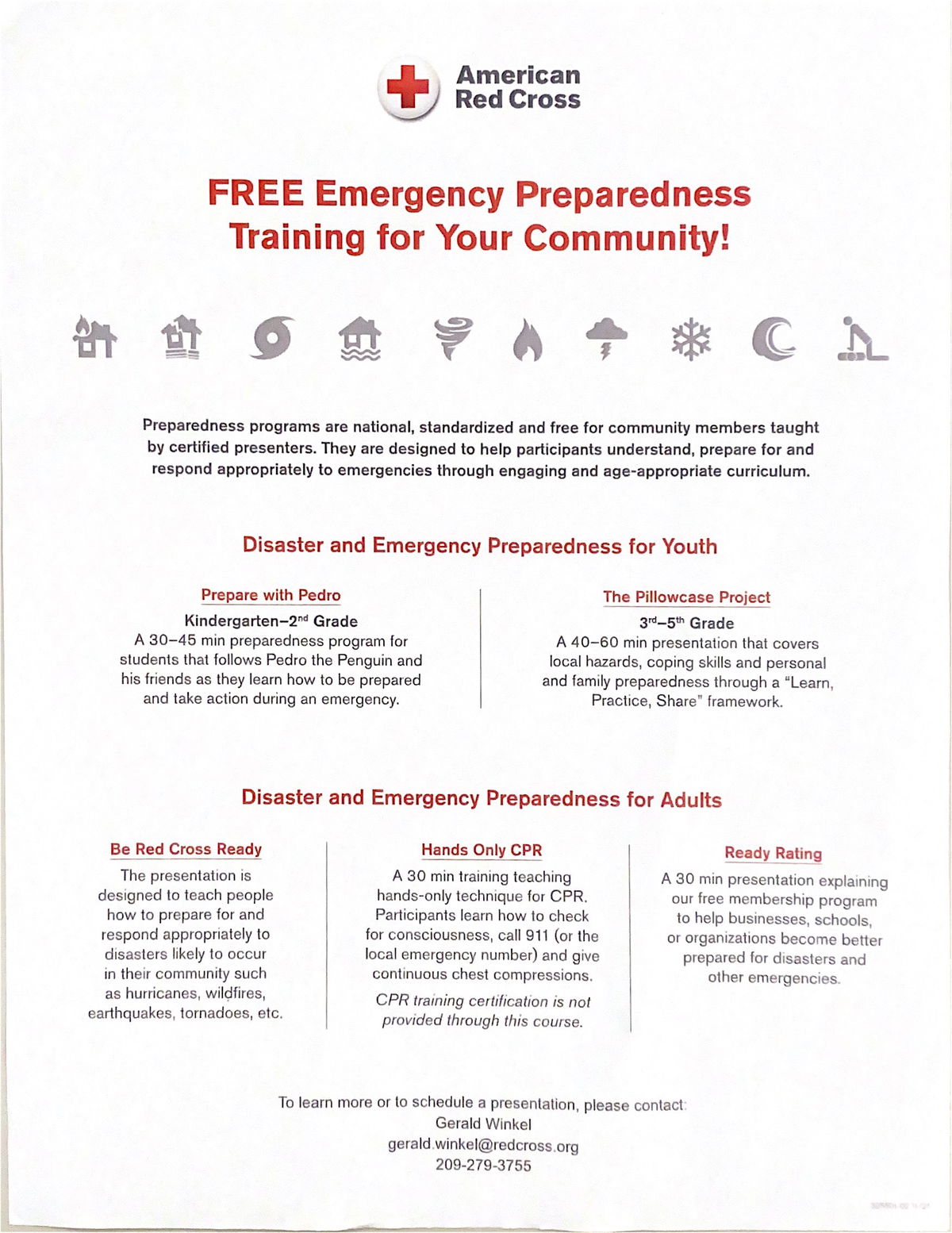
Beyond individual preparedness, the American Red Cross strategy extends to businesses, schools, and healthcare facilities through the Ready Rating program. This is a proprietary, web-based assessment tool that allows organizations to measure their level of preparedness against established standards.
Ready Rating uses a 123-point self-assessment based on the Occupational Safety and Health Administration (OSHA) and Federal Emergency Management Agency (FEMA) guidelines. It evaluates:
- Hazard Vulnerability: Identifying which disasters are most likely to impact operations.
- Resource Management: Assessing the availability of emergency supplies and backup power.
- Training and Drills: Measuring the frequency and effectiveness of staff evacuations and safety exercises.
By participating in Ready Rating, organizations receive a customized report and an action plan to improve their score. This move toward data-driven preparedness allows for a more objective understanding of community-wide resilience.
Technical Specifications for Emergency Kits
To assist in the assembly of these kits, the following table compares the requirements for different lengths of displacement based on current 2026 Red Cross guidelines.
| Category | 3-Day Go-Bag (Evacuation) | 2-Week Home Kit (Shelter-in-Place) |
|---|---|---|
| Water | 3 Gallons per person | 14 Gallons per person |
| Food | Lightweight, high-energy bars/pouches | Canned goods, dry grains, comfort foods |
| Power | Portable power bank, spare batteries | Inverter, solar charger, or generator |
| Sanitation | Wet wipes, hand sanitizer, small trash bags | Plastic buckets, liners, bleach, soap |
| Lighting | LED Flashlight or Headlamp | Lanterns, extra batteries, glow sticks |
| Tools | Multi-tool, manual can opener | Basic tool kit, wrench for utility shut-off |
| First Aid | Basic bandages, antiseptic, 3-day meds | Comprehensive trauma kit, 14-day meds |
The Home Fire Campaign and Sound the Alarm
One of the most active components of the Red Cross strategy is the Home Fire Campaign. Statistics consistently show that home fires are the most frequent disaster handled by the ARC. The strategy focuses on two primary interventions:
- Smoke Alarm Installation: The ARC partners with local fire departments to install free smoke alarms in high-risk neighborhoods.
- Public Education: Teaching residents that they have as little as two minutes to escape a burning home.
This campaign is a shift from reactive relief to proactive prevention. In 2026, the Red Cross continues to integrate "smart" technology into these efforts, encouraging the use of interconnected smoke alarms that alert all rooms simultaneously when smoke is detected in one area.
Digital Integration: The Emergency App Suite
The 2026 digital strategy of the American Red Cross centers on the Emergency: Alerts app. This application consolidates multiple disaster types—hurricanes, tornadoes, wildfires, and floods—into a single interface. Key features include:
- Customizable Alerts: Users can monitor multiple locations, such as their primary residence, a child’s college town, or an elderly parent’s home.
- Step-by-Step Instructions: The app provides offline access to "what to do" guides for dozens of emergencies.
- Shelter Finder: A real-time map showing the nearest open Red Cross shelters.
- "I'm Safe" Feature: A quick-tap function that allows users to notify family members of their status via social media or text.
This digital layer is critical because it ensures that the "Be Informed" pillar is dynamic rather than static. It accounts for the reality that information changes rapidly during an active event.
Specialized Strategies for Vulnerable Populations
The American Red Cross acknowledges that a "one-size-fits-all" strategy is insufficient. Their 2026 guidelines include specific modules for:
Individuals with Disabilities
The strategy emphasizes a "personal support network" of at least three people who can assist during an evacuation. It also highlights the need for specialized kits that include backup batteries for wheelchairs, sensory items for neurodivergent individuals, and a list of specific medical equipment model numbers.
Seniors
For older adults, the focus is on "Life-Sustaining Information." This includes a communication card that lists medical providers, insurance details, and a list of allergies. The ARC also recommends that seniors keep a whistle in their kit to signal for help if they cannot shout.
Pet Owners
Pets are a major factor in why people refuse to evacuate. The ARC strategy mandates that pet owners include a separate kit for animals, including leashes, 72 hours of food, and "proof of vaccinations" which many shelters require before admitting animals.
Training as a Preparedness Mechanism
A significant but often overlooked part of the strategy is the emphasis on certification and training. The Red Cross argues that a community’s first responders are actually the people standing next to the victim when the emergency happens.
In 2026, the ARC continues to offer a range of courses:
- First Aid/CPR/AED: Training individuals to handle cardiac arrest and severe bleeding.
- Babysitting and Childcare: Specialized safety training for younger caregivers.
- Wilderness and Remote First Aid: For those in areas where professional help may be delayed by hours or days.
- Psychological First Aid: A newer strategic focus aimed at helping survivors cope with the immediate emotional trauma of a disaster, which is essential for long-term recovery.
Psychological Readiness and Resilience
The Red Cross has increasingly integrated mental health into its preparedness strategy. The "Stress and Coping" framework teaches individuals how to recognize signs of "compassion fatigue" and "disaster-related stress." By preparing mentally for the reality of a disaster—accepting that there will be loss of power, communication, and routine—individuals are less likely to experience paralyzing panic during the event. This psychological resilience is the "hidden" fourth pillar of modern Red Cross strategy.
Frequently Asked Questions
What is the most important item in a Red Cross emergency kit?
While all items are important, water is the most critical for survival. The human body can only survive about three days without water, whereas it can survive significantly longer without food. The Red Cross specifies one gallon per person per day to account for both drinking and basic hygiene.
How often should I update my emergency plan and kit?
The Red Cross recommends a semi-annual review. A good rule of thumb is to check your kit when you change your clocks for Daylight Saving Time. During this check, you should rotate food and water supplies, check the expiration dates of medications, and ensure that clothing in the kit still fits and is appropriate for the upcoming season.
Does the Red Cross charge for its emergency shelters?
No. All Red Cross disaster services, including sheltering and feeding, are provided free of charge to those in need. This is a core tenet of their humanitarian mission. The organization relies on public donations and volunteers to maintain this service.
Can I stay in a Red Cross shelter with my service animal?
Yes. Under the Americans with Disabilities Act (ADA), service animals are permitted in all Red Cross shelters. The ARC also works with local partners to provide nearby "co-located" shelters for household pets whenever possible, as pets are often not allowed in the main congregate living areas for health and safety reasons.
How does the Red Cross determine where to set up shelters?
The ARC uses a National Shelter System (NSS) database to identify pre-surveyed buildings, such as schools and community centers, that meet specific safety criteria. Decisions are made in coordination with local emergency management agencies based on the projected path of a disaster and the safety of the structure.
Practical Recommendation: Next Actions
To align with the American Red Cross emergency preparedness strategy today, your first action should be to download the Red Cross Emergency App and complete a Home Fire Escape Plan. These two actions take less than 30 minutes and provide the foundation for situational awareness and immediate safety. Once those are established, begin assembling your 72-hour go-bag by prioritizing water and essential medications. Remember that preparedness is a process, not a one-time event; building your supplies incrementally over several months is more effective than not starting at all.