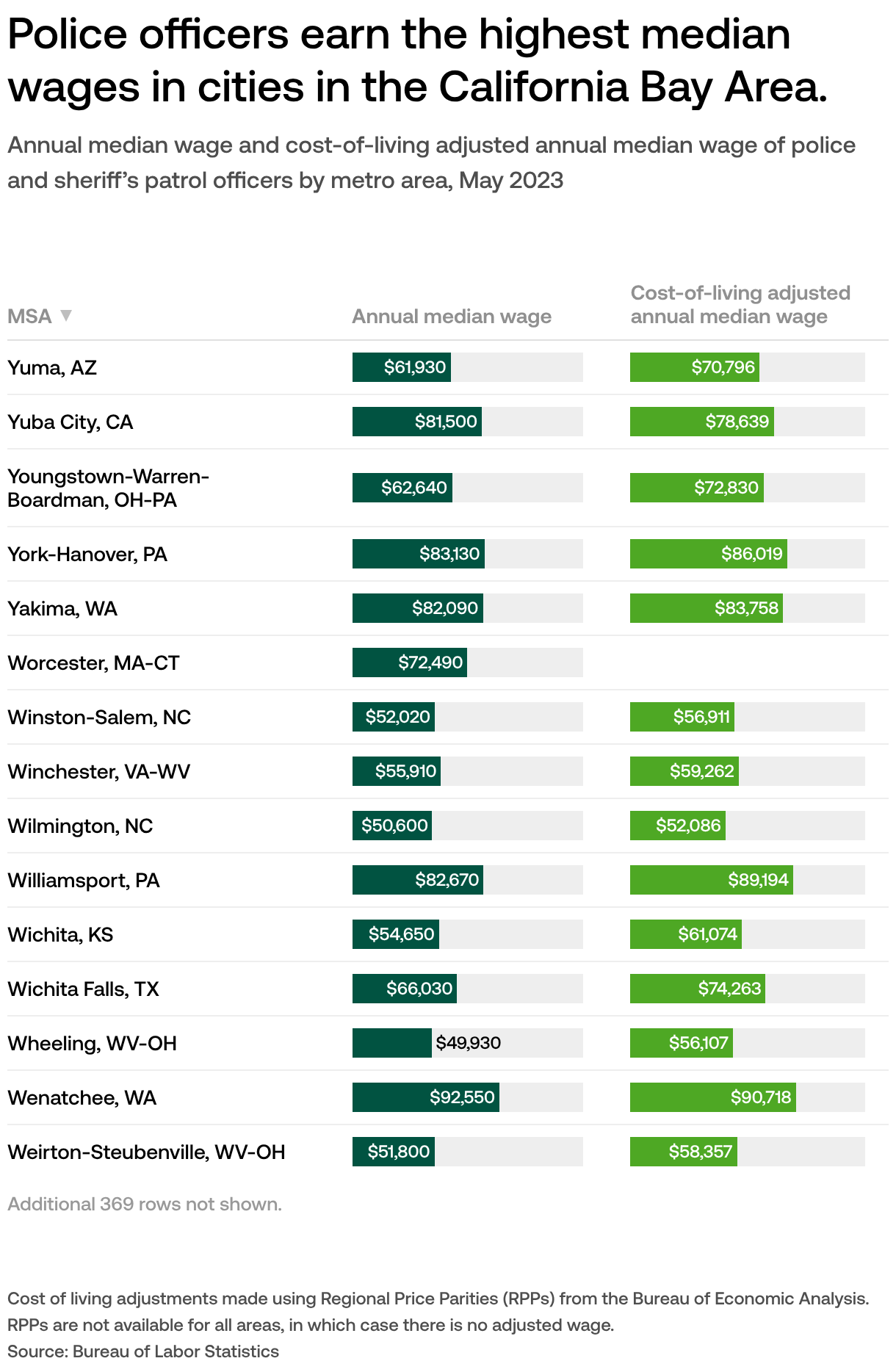
In 2026, the average annual salary for a police officer in the United States ranges between $72,000 and $88,000, though total compensation varies significantly based on geographic location, years of service, and specialized certifications. While entry-level officers in rural areas may start near $55,000, veteran officers in major metropolitan agencies often exceed $120,000 through a combination of base pay, longevity incentives, and overtime.
The State of Law Enforcement Compensation in 2026
The landscape of police compensation has undergone a significant transformation leading into 2026. Following several years of recruitment and retention challenges across the United States, municipal and state governments have aggressively adjusted pay scales to remain competitive. As of 2026, the national median salary for police and sheriff's patrol officers has seen a steady upward trajectory, largely driven by the necessity to attract high-quality candidates in a tight labor market.
Salary in law enforcement is rarely a flat figure. It is a multi-tiered structure that includes base pay, cost-of-living adjustments (COLA), and various stipends. Furthermore, the "total rewards" package—which includes healthcare, defined-benefit pensions, and tuition reimbursement—remains one of the primary draws for the profession. Understanding the American police salary overview requires looking beyond the gross annual figure to the specific regional and structural factors that dictate take-home pay.
Geographic Variation: The Primary Driver of Pay
Geography is the single most influential factor in determining a police officer's salary. This variation is not arbitrary; it is closely tied to the local cost of living, the tax base of the municipality, and the presence of strong collective bargaining units.
High-Compensated Regions
States along the West Coast and the Northeast corridor continue to lead the nation in police pay. California remains the highest-paying state for law enforcement, with many agencies in the San Francisco Bay Area and Greater Los Angeles offering starting salaries that exceed $90,000. However, these figures are inextricably linked to the extreme cost of housing and consumer goods in these regions. In 2026, a police officer in San Jose may earn a high nominal wage, but their purchasing power might be lower than an officer in a mid-sized Midwestern city where the cost of living is 40% lower.
Lower-Compensated Regions
Conversely, states in the Southeast and parts of the rural Midwest typically offer lower base salaries. In states like Mississippi, Arkansas, and Louisiana, entry-level salaries may hover around $48,000 to $55,000. While these numbers appear low on a national scale, the lower burden of state taxes and affordable housing can make these positions financially viable. Many officers in these regions supplement their income through "extra-duty" details—security work for private entities that is sanctioned by the department.
Understanding the "Step" System and Rank Progression
Most American police departments utilize a "step and grade" pay scale. This system ensures transparency and predictability in earnings, rewarding longevity rather than just individual performance metrics.
- Probationary/Entry Level (Step 1): This is the salary earned during police academy training and the initial field training officer (FTO) period. It is the lowest point on the scale.
- Annual Steps: Most departments provide automatic pay increases every year (or every two years) for the first 5 to 10 years of service. An officer at "Top Step" has reached the maximum base pay for their current rank.
- Rank Advancement: Moving from Officer to Sergeant, Lieutenant, or Captain triggers a move to a higher "grade" on the pay scale. Each rank typically carries a 10% to 15% increase in base pay over the previous tier.
- Longevity Pay: Many agencies offer "longevity bonuses" after an officer has been at the top step for several years (e.g., at 15, 20, or 25 years of service) to encourage senior officers to remain with the department rather than retiring.
Factors That Increase Base Compensation
Beyond the standard pay scale, officers have several avenues to increase their earnings through specialized skills and educational achievements.
Educational Incentives
To encourage a more professionalized force, many departments offer "education incentive pay." This is typically a percentage of base pay or a flat monthly stipend for officers who hold degrees from accredited institutions. In 2026, the standard incentives often look like:
- Associate Degree: 2%–3% increase.
- Bachelor’s Degree: 4%–6% increase.
- Master’s Degree: 7%–10% increase.
Specialized Unit Pay
Officers assigned to specialized units often receive "assignment pay" or "hazard pay." These roles require additional training and often involve higher levels of risk or responsibility. Examples include:
- Field Training Officers (FTO): Officers who train recruits often receive a 5% bump during the training cycle.
- SWAT/Special Operations: Stipends for maintaining advanced tactical certifications.
- K9 Units: Monthly stipends to cover the care and housing of the police canine.
- Bilingual Pay: A critical incentive in diverse metropolitan areas, rewarding officers who are proficient in a second language relevant to their community.
Overtime and the Fair Labor Standards Act (FLSA)
Overtime is a significant component of the American police salary overview. Under the Fair Labor Standards Act (FLSA), police officers are subject to specific rules regarding overtime, often referred to as the 207(k) exemption. This allows departments to calculate overtime over a work period of up to 28 days rather than a standard 7-day week.
In 2026, due to ongoing staffing shortages in many jurisdictions, overtime opportunities are abundant. It is not uncommon for an officer with a base salary of $80,000 to earn an additional $20,000 to $40,000 in overtime by working late shifts, court appearances, or voluntary holiday details.
2026 Estimated Salary Comparison by Metro Area
The following table provides an estimated overview of police compensation across various U.S. metropolitan areas in 2026, factoring in recent cost-of-living adjustments and contract renewals.
| Metropolitan Area | Entry-Level Salary (Est. 2026) | Median Salary (All Ranks) | Cost of Living Index (100 = National Avg) |
|---|---|---|---|
| San Jose/San Francisco, CA | $105,000 | $142,000 | 185.2 |
| New York City, NY | $68,000 | $118,000 | 168.5 |
| Chicago, IL | $74,000 | $102,000 | 106.8 |
| Austin, TX | $72,000 | $98,000 | 119.3 |
| Atlanta, GA | $62,000 | $84,000 | 102.4 |
| Phoenix, AZ | $69,000 | $92,000 | 112.1 |
| Nashville, TN | $60,000 | $81,000 | 101.9 |
| Miami, FL | $65,000 | $89,000 | 121.6 |
Note: Salaries are estimates based on projected 2026 contract data and Bureau of Labor Statistics trends.
Benefits and Retirement: The Deferred Compensation
A discussion of police salary is incomplete without addressing the "back-end" compensation. Law enforcement remains one of the few sectors in the United States where defined-benefit pension plans are still the norm.
Pension Plans
Most officers are eligible for retirement after 20 to 25 years of service, regardless of age. The pension is typically calculated as a percentage of the officer's highest average salary (often the average of the last three years of service). In 2026, many departments offer a "3% at 50" or "2.5% at 55" formula, meaning an officer with 30 years of service could retire with 75% to 90% of their final salary for life.
Health and Wellness
Comprehensive health, dental, and vision insurance are standard. Additionally, many modern contracts in 2026 include "wellness incentives," such as paid gym time or mental health stipends, recognizing the high-stress nature of the profession.
Deferred Compensation (457b)
In addition to a pension, many officers contribute to a 457(b) deferred compensation plan, which functions similarly to a 401(k) but is designed for government employees. This allows for tax-advantaged savings that can be accessed upon separation from service without the standard early-withdrawal penalties found in private-sector plans.
Challenges and Trends Influencing 2026 Pay
Several macroeconomic and social factors continue to exert pressure on police salaries in 2026:
- Recruitment Bonuses: To combat vacancies, many agencies now offer "signing bonuses" ranging from $5,000 to $30,000, often paid out over the first three years of employment.
- Lateral Incentives: Departments are increasingly looking to hire "lateral" officers—those already certified and experienced from other agencies. Lateral hires often start at a higher step on the pay scale, recognizing their immediate utility and lack of training costs.
- Inflation and COLA: With the volatility of the early 2020s, most police unions have moved toward securing mandatory annual Cost of Living Adjustments (COLA) tied to the Consumer Price Index (CPI) to ensure wages do not stagnate.
- Public Scrutiny and Professional Liability: As the complexity of policing increases, some jurisdictions have discussed "liability insurance stipends" or higher base pay to compensate for the perceived increase in professional risk and public scrutiny.
How to Verify Local Salary Information
Because law enforcement in the U.S. is decentralized—consisting of over 18,000 separate agencies—national averages can be misleading. To find the most accurate salary data for a specific area, researchers and applicants should utilize the following resources:
- Municipal Transparency Portals: Most cities publish the "Current Memorandum of Understanding" (MOU) between the city and the police union (often the Fraternal Order of Police or the Police Benevolent Association). This document contains the exact pay tables for the current year.
- State POST Agencies: State-level Peace Officer Standards and Training (POST) commissions often track statewide salary averages and benefits.
- Government Jobs Portals: Websites like GovernmentJobs.com list active recruitments with verified starting salary ranges and benefit summaries.
Frequently Asked Questions (FAQ)
What is the average starting salary for a police officer in 2026?
The average starting salary for a police officer in the United States in 2026 is approximately $62,000. However, this varies widely; a recruit in a high-cost area like Seattle may start at $90,000, while a recruit in a rural county in the South might start at $45,000. Starting pay generally includes full benefits from the first day of the academy.
Do police officers get paid more for having a college degree?
Yes, many departments provide education incentive pay. Typically, having a Bachelor’s degree can add between 4% and 6% to an officer’s base salary. Some departments make a degree a requirement for promotion to higher ranks, such as Lieutenant or Captain, which inherently leads to higher compensation.
How does overtime impact the total salary of an officer?
Overtime can significantly increase an officer's gross pay, sometimes by 30% to 50% or more. Because police departments must operate 24/7, officers are often needed for shift coverage, emergency responses, and court appearances. Under FLSA rules, this time is typically paid at 1.5 times the hourly rate.
Is police pay higher in the North or the South?
Generally, police pay is higher in the North and West Coast regions. This is due to higher costs of living, higher state and local tax rates that fund police budgets, and a higher prevalence of collective bargaining. However, the "real" value of the salary depends on local housing costs and taxes.
Can police officers negotiate their starting salary?
In most municipal and state agencies, salaries are fixed by a union contract (CBA) and are not negotiable for entry-level recruits. However, "lateral" candidates—officers moving from one department to another—can often negotiate which "step" they start on based on their years of prior experience.
What happens to a police salary during the academy?
Most agencies pay recruits a full "trainee" salary while they are attending the police academy. This salary is often slightly lower than the salary of a sworn officer (usually 5%–10% less) but includes full health benefits. Once the recruit graduates and is sworn in, they move to the Step 1 officer pay grade.
Next Steps for Prospective Candidates
For those looking to enter the profession in 2026, the financial outlook is stronger than it has been in decades. To maximize earning potential, candidates should focus on several key actions:
- Research the "Total Package": Don't just look at the starting hourly rate. Compare pension contributions, health insurance premiums, and the availability of overtime.
- Consider Lateral Move Policies: Even if you start at a lower-paying department, check if higher-paying agencies in your state offer "lateral entry" to allow for a smoother transition later in your career.
- Invest in Education: If you are currently a student, finishing your degree before applying can lead to an immediate and permanent increase in your lifetime earnings through education stipends.
By understanding the structural nuances of the American police salary overview, individuals can make informed decisions that balance their career aspirations with their long-term financial stability.