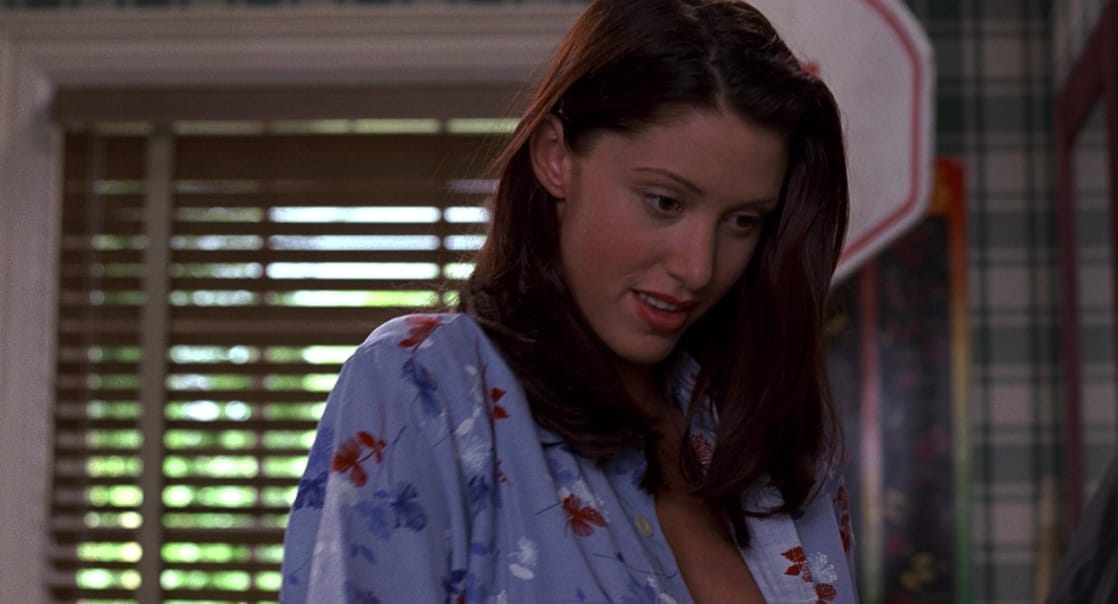
The "pie scene" in the 1999 film American Pie is a definitive moment in cinematic comedy where the protagonist, Jim Levenstein (played by Jason Biggs), attempts to verify a rumor that sexual intimacy "feels like warm apple pie." Interrupted by his father, the scene became a global cultural phenomenon, synonymous with the "gross-out" comedy genre.
The Narrative Context: Why the Pie Scene Happened
To understand the impact of the American Pie pie scene, one must first look at the narrative stakes established in the film's first act. Written by Adam Herz and directed by Paul and Chris Weitz, the movie follows four high school seniors who make a pact to lose their virginity before graduation. Jim Levenstein, the "everyman" of the group, is portrayed as sexually frustrated and socially awkward, making him the perfect vessel for the film’s most vulnerable and outrageous moments.
The scene is triggered by a conversation earlier in the film where the character Stifler or other peers discuss the sensations of intimacy. The specific comparison to a "warm apple pie" becomes an intrusive thought for Jim. When he finds a freshly baked apple pie on the kitchen counter, the combination of teenage curiosity, hormonal drive, and the "instructional" advice he received leads to the infamous experimentation.
The brilliance of the writing lies in its relatability—not necessarily in the act itself, but in the desperate, misguided lengths to which a teenager might go to understand adulthood. By 2026, the scene has transitioned from a shocking piece of "new" comedy to a textbook example of character-driven physical humor that defines an entire era of filmmaking.
Behind the Scenes: Crafting an Iconic Moment
The filming of the pie scene was a technical and performative challenge that required a delicate balance of slapstick and sincerity. Jason Biggs, who was relatively unknown at the time, had to commit fully to a scene that many actors might have found too humiliating.
The Casting of Jason Biggs
The directors have often noted that Biggs was cast because he possessed a "Charlie Chaplin-esque" quality—a physical comedian who could convey deep embarrassment through his eyes while his body was engaged in something ridiculous. During the audition, Biggs had to demonstrate he could handle the awkwardness of the script without making it feel overly "sleazy." His performance in the kitchen is a masterclass in silent acting; for much of the scene, there is no dialogue, only the sound of the pie and Jim’s facial expressions.
The Technical Execution of the "Prop"
The pie itself was a crucial "co-star." The production team didn't just use one pie; they had a dozen standing by. The "filling" had to be the right consistency—thick enough to stay in the pie but pliable enough to react to Biggs’ movements. Interestingly, the pie used in the film was a standard, store-bought variety that was slightly modified for the camera. The crew had to ensure the temperature was safe for the actor while still appearing "freshly baked" to the audience.
The Direction of the Weitz Brothers
Directors Paul and Chris Weitz wanted the scene to feel grounded. They avoided "cartoonish" camera angles, opting instead for a static, observational style. This makes the audience feel like a "fly on the wall" during Jim's private moment, which significantly heightens the cringe factor when his father eventually walks in.
The Role of Eugene Levy: The Master of Awkwardness
While Jason Biggs provides the physical comedy, Eugene Levy, playing Jim’s Dad (Noah Levenstein), provides the heart and the "cringe" resolution. The pie scene is actually a two-part event: the act itself and the discovery.
When Noah walks into the kitchen to find his son mid-act, his reaction is not one of anger or immediate shock, but of confused, polite concern. This was a pivot from traditional "teen movie" tropes where parents were often portrayed as antagonists or completely oblivious. Levy’s decision to play the character as a supportive, albeit incredibly awkward, father turned a "gross-out" gag into a foundational character relationship.
Levy reportedly improvised much of his "talk" after the incident, leaning into the discomfort by trying to normalize a situation that was fundamentally abnormal. This dynamic—the son’s utter mortification versus the father’s relentless desire to "connect"—became the spine of the entire franchise and led to Levy being the only cast member to appear in every single American Pie spin-off and sequel.
Cultural Impact and the R-Rated Comedy Renaissance
Upon its release in late 1999, American Pie was a massive box office success, grossing over $235 million worldwide. The pie scene was the centerpiece of the film's marketing campaign and word-of-mouth buzz. It signaled a shift in Hollywood, proving that there was a massive market for R-rated "coming-of-age" stories that were more explicit than the John Hughes films of the 1980s but more heart-centered than the "slasher" films of the early 90s.
Comparative Evolution of Teen Comedy Scenes
The following table compares the "Pie Scene" with other seminal moments in teen comedy to illustrate its unique placement in film history:
| Movie | Iconic Scene | Comedic Style | Primary Theme |
|---|---|---|---|
| Porky's (1981) | The Peephole Scene | Voyeuristic / Slapstick | Peer Pressure |
| Fast Times at Ridgemont High (1982) | Phoebe Cates / Pool | Sexualized Fantasy | Coming of Age |
| American Pie (1999) | The Pie Scene | Gross-out / Self-Deprecating | Curiosity & Failure |
| Superbad (2007) | The McLovin ID | Character-driven Absurdity | Friendship & Identity |
| Booksmart (2019) | The Uber Argument | Fast-paced Dialogue | Platonic Love |
As seen in the table, the American Pie scene sits as a bridge between the broad slapstick of the 80s and the more character-focused, albeit still crude, comedies of the 2000s (the "Apatow" era).
Technical Depth: The MPAA and the Battle for the "R" Rating
One aspect of the pie scene rarely discussed by casual viewers is the battle with the Motion Picture Association of America (MPAA). In 1999, the ratings board was notoriously strict regarding depictions of "self-pleasure."
The directors initially faced the threat of an NC-17 rating, which would have been a death knell for the film's commercial prospects. To secure an R rating, the Weitz brothers had to edit the scene meticulously. They focused more on Jason Biggs' face and less on the "mechanics" of the act. The irony of the pie scene is that what the audience thinks they see is often more graphic than what is actually shown on screen. This "theatre of the mind" approach is what allowed the film to pass censors while still becoming a "taboo" legend.
Production Logistics: How Many Pies?
For those interested in the technical trivia of the shoot, the production used a local bakery to supply the props. Because the scene required multiple takes from different angles (wide, medium, and close-up), the "continuity" of the pie was a major concern.
- Quantity: 12 to 14 pies were used during the duration of the shoot.
- Safety: The filling was kept at room temperature to prevent burns, despite the steam (which was often enhanced with visual effects or by heating small portions of the pie just before the camera rolled).
- The "Sound": The specific squishing sound heard in the film was Foley-recorded in post-production using various wet materials to ensure the audience felt the "visceral" nature of the scene.
Evaluating the Scene's Legacy in 2026
Standing in 2026, the American Pie pie scene is viewed through a lens of nostalgia, but also as a relic of a specific time in American culture. While some "gross-out" comedies have aged poorly due to changing social sensibilities, the pie scene remains largely "safe" because the joke is entirely at the expense of the male protagonist. It captures a universal (though exaggerated) sense of teenage inadequacy.
Furthermore, the scene transformed the career of Jason Biggs. While he has had a diverse career in stage and television (notably Orange Is the New Black), he is still frequently asked about the pie scene in interviews. He has embraced this legacy, often joking that he is the most famous "pie-related" celebrity in the world.
Frequently Asked Questions
Was the pie real in the American Pie scene?
Yes, the pies used on set were real, edible apple pies. However, they were not "fresh out of the oven" as they appeared in the film; they were kept at a safe, lukewarm temperature to ensure the actor's safety during the multiple takes required to capture the scene.
Did Jason Biggs use a stunt double for the pie scene?
No, Jason Biggs performed the entire scene himself. The directors and Biggs have stated in numerous retrospectives that the authenticity of the comedy relied on Biggs’ physical commitment and facial expressions, which a stunt double could not have replicated.
How did the movie get its name?
The movie was originally titled Untitled Teenage Comedy and later East Great Falls High. The title was changed to American Pie after the script's "pie scene" became the most talked-about element during production. It also references the Don McLean song, symbolizing the loss of innocence.
What did Eugene Levy think of the scene when he first read the script?
Eugene Levy was initially hesitant about the film's crude humor. However, he agreed to do the movie on the condition that he could rewrite his character, Noah Levenstein, to be a more "real" and caring father rather than a buffoon. This change is widely credited with giving the film its heart.
Is the house from the pie scene a real location?
The "Jim’s House" scenes were filmed in a private residence in Long Beach, California. While the interior has since been remodeled, the kitchen layout remains a point of interest for film buffs and tourists visiting filming locations in the area.
Final Recommendation for Viewers
If you are revisiting American Pie in 2026, pay close attention to the silence in the pie scene. Modern comedy often relies on rapid-fire dialogue, but this scene works because it allows the physical awkwardness to breathe. For aspiring filmmakers or actors, it serves as a primary example of how to execute "high-concept" raunchy comedy with "low-concept" sincerity. To get the full context, ensure you watch the "Unrated" version of the film, which restores a few seconds of the scene that were trimmed for the theatrical R-rating.