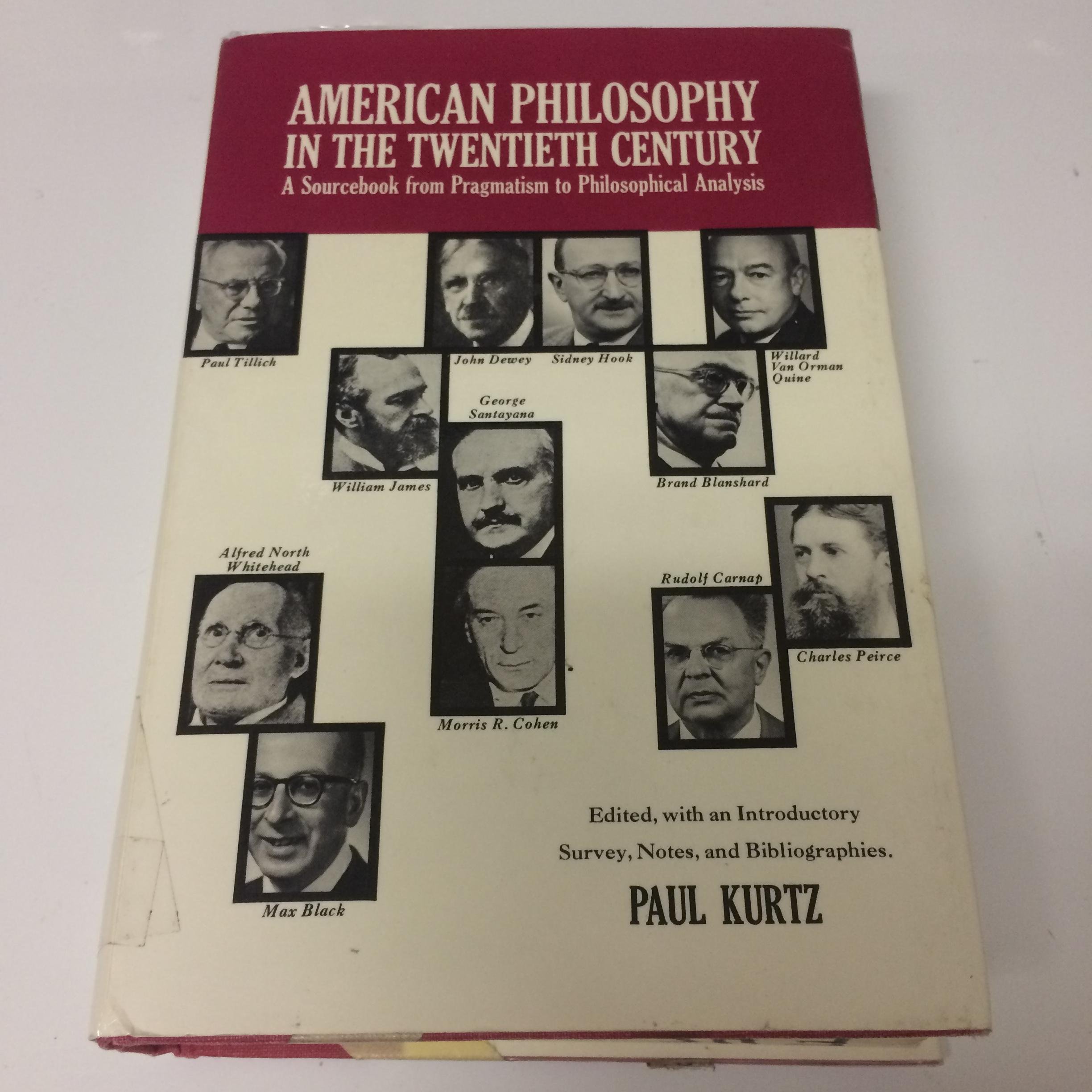
An American philosopher is a thinker whose work originates within the United States or focuses on the distinct intellectual traditions of the nation, characterized primarily by pragmatism, naturalism, and democratic pluralism. While deeply influenced by European roots, American philosophy is defined by its emphasis on experience, utility, and the practical application of ideas to social and scientific problems.
American philosophy has never been a monolithic entity. From the transcendentalist meditations on nature to the rigorous logical analysis of the late 20th century, the field has consistently sought to bridge the gap between abstract thought and lived reality. As we navigate the complexities of 2026, the legacy of these thinkers continues to shape how we understand technology, justice, and the fundamental nature of the human experience.
The Foundations of a Distinctly American Voice
In the early years of the Republic, philosophy was largely an extension of European theology and Enlightenment politics. However, by the mid-19th century, a unique voice began to emerge—one that rejected the rigid structures of the Old World in favor of individual intuition and the wild expansiveness of the American frontier.
The Transcendentalist Awakening
The first major movement to be recognized as uniquely American was Transcendentalism. Led by figures like Ralph Waldo Emerson and Henry David Thoreau, this movement posited that individuals could reach a higher understanding of reality through intuition and a direct relationship with nature, rather than through organized religion or purely rationalist deduction.
Emerson’s 1837 speech, The American Scholar, is often cited as the country's "Intellectual Declaration of Independence." In it, he urged American thinkers to stop looking to Europe for guidance and instead find truth in their own experiences. Thoreau took this further in Walden, providing a philosophical blueprint for civil disobedience and environmental ethics that remains foundational in 2026 environmental policy discussions.
The Shift Toward Naturalism
Following the Civil War, American thought shifted from the idealistic tendencies of the Transcendentalists toward a more grounded, scientific approach. This period saw the rise of Naturalism, the belief that only natural laws and forces (as opposed to supernatural or spiritual ones) operate in the world. This transition paved the way for the most significant contribution the United States has made to global thought: Pragmatism.
The Golden Age of Pragmatism
Pragmatism is the quintessential American philosophy. It suggests that the truth or value of a theory should be judged by its practical consequences. If a belief "works" in the real world—if it allows us to interact more successfully with our environment—then it is considered true for that context.
Charles Sanders Peirce: The Architect of Logic
Often called the "father of pragmatism," Charles Sanders Peirce was a logician and scientist who introduced the Pragmatic Maxim. He argued that to understand the meaning of a concept, one must consider what practical effects that concept might have. Peirce’s work was dense and often mathematical, laying the groundwork for modern semiotics (the study of signs) and the scientific method as a self-correcting process.
William James: The Psychology of Belief
While Peirce was the architect, William James was the great popularizer of pragmatism. A psychologist and philosopher, James applied pragmatic principles to religion and ethics. In his seminal work, The Will to Believe, he argued that in cases where evidence is inconclusive, it is sometimes rational to adopt a belief if doing so has a positive effect on one's life. James championed Pluralism, the idea that there is no single "truth" that can explain the entire universe, but rather a multitude of perspectives that are all valid in different contexts.
John Dewey: Philosophy in Action
John Dewey took pragmatism out of the library and into the classroom and the public square. He viewed philosophy as a tool for social reform. Dewey’s influence on Educational Philosophy cannot be overstated; he believed that education should be based on "learning by doing" rather than rote memorization. For Dewey, democracy was not just a form of government but a way of life that required constant participation and experimental inquiry.
The 20th Century: Analytics and Social Justice
As the 20th century progressed, the American philosopher became increasingly professionalized. The field split into various specialized branches, often influenced by the influx of European scholars fleeing World War II.
The Analytic Turn
Mid-century American philosophy was dominated by the Analytic tradition, which emphasized logic, language, and the philosophy of science. Figures like W.V.O. Quine challenged the long-held distinctions between "analytic" truths (true by definition) and "synthetic" truths (true by observation). Quine’s work suggested that our beliefs are a "web" where every part is interconnected, and no single belief is immune to revision.
Justice as Fairness: John Rawls
In the realm of political philosophy, John Rawls redefined the landscape with his 1971 masterpiece, A Theory of Justice. Rawls introduced the "Veil of Ignorance," a thought experiment where individuals design a society without knowing their place in it (wealth, race, gender). He argued that rational actors would choose a system that protects the least advantaged, a concept known as Justice as Fairness. This remains a primary touchstone for legal and ethical debates in 2026 regarding wealth distribution and social equity.
The Philosophy of Race and Identity
The American experience is inextricably linked to questions of race, which led to the development of a robust tradition of Africana Philosophy. W.E.B. Du Bois introduced the concept of "double consciousness"—the internal conflict experienced by subordinated groups in an oppressive society. This tradition has expanded significantly, with contemporary philosophers examining the intersections of identity, power, and systemic justice.
Comparative Overview of Major American Philosophical Movements
The following table outlines the core tenets and primary figures of the most influential movements in American philosophy.
| Movement | Core Principle | Key Figures | Major Work |
|---|---|---|---|
| Transcendentalism | Individual intuition; divinity of nature. | Emerson, Thoreau | Self-Reliance, Walden |
| Pragmatism | Truth is defined by practical utility. | Peirce, James, Dewey | The Varieties of Religious Experience |
| Analytic Philosophy | Logical analysis of language and science. | Quine, Kripke, Lewis | Word and Object |
| Political Liberalism | Justice as fairness; social contract. | John Rawls | A Theory of Justice |
| Process Philosophy | Reality is change and development. | Alfred North Whitehead | Process and Reality |
| Feminist Philosophy | Critique of patriarchal structures in logic. | Judith Butler, Martha Nussbaum | Gender Trouble |
The Role of the American Philosopher in 2026
In the current year of 2026, the American philosopher is no longer confined to ivory towers. They are increasingly found in tech boardrooms, environmental agencies, and bioethics committees. The "pragmatic" spirit has evolved to meet the challenges of a digital and globalized age.
Ethics of Artificial Intelligence
One of the most active sectors for American philosophers today is the Ethics of AI. Philosophers are working alongside computer scientists to define "algorithmic fairness" and to determine the moral status of autonomous systems. Drawing on the work of pragmatists like Dewey, these thinkers focus on the real-world impact of AI on labor, privacy, and democratic discourse.
Environmental Pragmatism
As climate change continues to dominate the global agenda, Environmental Pragmatism has emerged as a dominant school of thought. Rather than arguing about the intrinsic "rights" of nature—which can lead to political stalemate—philosophers in 2026 are focusing on practical, pluralistic solutions that integrate economic, social, and ecological needs.
The Diversification of the Canon
The definition of "American Philosopher" has expanded to include voices that were historically marginalized. This includes Indigenous philosophies that emphasize relationality and stewardship, as well as Latinx philosophies that explore "nepantla" or the state of being in-between cultures. This diversification is seen as a fulfillment of William James’s original vision of a truly pluralistic intellectual landscape.
Frequently Asked Questions
What is the most famous American philosophy?
Pragmatism is widely considered the most famous and influential American philosophy. It originated in the late 19th century and posits that the meaning and truth of an idea lie in its practical consequences and observable results.
Is Noam Chomsky considered an American philosopher?
Yes, Noam Chomsky is regarded as a major figure in American philosophy, particularly in the philosophy of language and mind. His work on generative grammar and his critiques of political structures have had a profound impact on analytic philosophy and cognitive science.
How does American philosophy differ from European philosophy?
While European philosophy (specifically Continental philosophy) often focuses on existentialism, phenomenology, and grand historical narratives, American philosophy tends to be more "problem-oriented." It emphasizes empirical evidence, logical clarity, and the practical application of ideas to improve democratic life.
Who was the first American philosopher?
While many early colonists wrote on philosophical themes, Jonathan Edwards is often cited as the first great American philosopher. An 18th-century theologian, his work on "Original Sin" and "The Freedom of the Will" blended Puritan theology with Enlightenment reason.
Can a non-US citizen be an "American philosopher"?
In an academic context, "American philosopher" often refers to anyone who makes a significant contribution to the American philosophical tradition or works within the U.S. academic system. For example, Alfred North Whitehead was British but did much of his foundational work in process philosophy at Harvard University.
Why is John Dewey important in 2026?
John Dewey remains relevant in 2026 because his theories on Experimentalism and active citizenship are essential for addressing the current crises in education and digital literacy. His belief that democracy must be "born anew in every generation" serves as a guide for modern civic engagement.
Practical Recommendations for Engaging with American Philosophy
If you are looking to deepen your understanding of this field or pursue a career as a thinker in the modern age, consider the following steps:
- Read the Primary Texts: Start with Emerson’s Nature and William James’s Pragmatism. These texts are more accessible than modern academic papers and provide the essential "flavor" of the American tradition.
- Explore Interdisciplinary Studies: Modern American philosophy is rarely practiced in isolation. Look into how philosophy intersects with cognitive science, law, or environmental studies.
- Utilize Digital Archives: The Stanford Encyclopedia of Philosophy and the Internet Encyclopedia of Philosophy are peer-reviewed, authoritative sources for verifying specific claims and tracking the history of ideas.
- Practice Applied Ethics: If you are in a technical or managerial role, engage with "Ethics-by-Design" frameworks. This is the modern application of the pragmatic method—integrating values into the very structure of our products and policies.
The American philosopher is, above all, an experimenter. Whether through the lens of logic, social justice, or nature, the goal remains the same: to find ideas that not only describe the world but help us live more effectively within it.