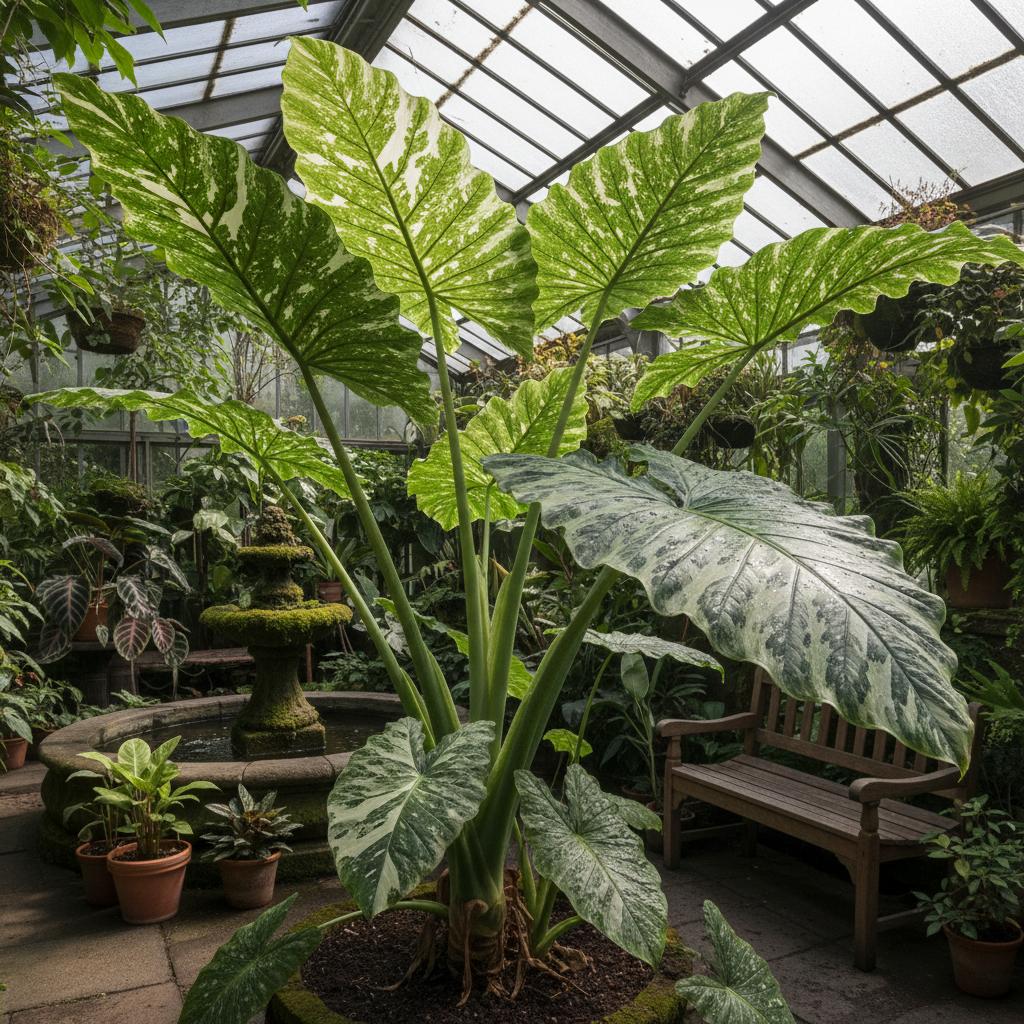
Alocasia odora, commonly known as the Night-Scented Lily or Giant Upright Elephant Ear, is a striking tropical aroid that thrives when provided with high humidity, consistent moisture, and bright, indirect light. Achieving success with this plant requires balancing its need for rapid growth during the summer with a necessary period of dormancy during the cooler months of the year.
The Alocasia odora is prized for its large, glossy, heart-shaped leaves that point upward, creating a dramatic, architectural presence in indoor environments. Unlike some other members of the Alocasia genus, A. odora is relatively robust, provided its environmental requirements are closely mimicked. Because these plants originate from the rainforests of East and Southeast Asia, they are evolved to occupy the understory, where they receive filtered sunlight and exist in a consistently warm, humid microclimate. When transitioning these plants into a home environment, the primary challenge for the grower is maintaining this balance throughout the shifting seasons of the year.
Essential Environmental Requirements
To cultivate a healthy Alocasia odora, one must prioritize its fundamental environmental needs: light, temperature, and moisture. Failure to provide the correct balance of these three factors often leads to leaf drop, stunted growth, or, in extreme cases, root rot.
Lighting Conditions
Alocasia odora requires bright, indirect light to maintain its stature and foliage density. In its natural habitat, the plant is shaded by the forest canopy; therefore, direct, harsh sunlight—particularly during the afternoon—can scorch the leaves, leading to bleached patches or crispy edges. A location near an east-facing window is generally ideal, as it provides the gentle morning sun. If placed near a south or west-facing window, the plant should be positioned several feet back from the glass or shielded by a sheer curtain to diffuse the light intensity. If the plant does not receive enough light, the leaf stems (petioles) may become "leggy," stretching toward the light source in an attempt to capture more energy, and the leaves may lose their deep green luster.
Temperature and Humidity
As a tropical perennial, Alocasia odora thrives in temperatures between 65°F and 85°F (18°C to 29°C). It is sensitive to cold drafts and temperatures below 55°F (13°C), which can trigger early dormancy or damage the cellular structure of the foliage. Humidity is equally vital; ideally, the relative humidity should remain above 60%. In typical home environments, especially during winter months when heating systems dry out the air, the plant may require supplemental humidity. Using a room humidifier is the most effective method, as pebble trays or misting provide only transient relief and do not significantly alter the ambient humidity levels required for long-term health.
Soil and Hydration
The soil must be moisture-retentive yet exceptionally well-draining. A heavy, dense potting mix will retain too much water around the roots, leading to anaerobic conditions and subsequent root rot. A high-quality aroid mix—typically composed of orchid bark, perlite, coco coir, and a small amount of peat or worm castings—ensures that oxygen can reach the roots even when the soil is damp. When watering, apply water until it drains freely from the base of the pot, then discard any excess water in the saucer. Allow the top two inches of soil to dry out between waterings. During the active growing season (spring and summer), the plant will consume water more rapidly, necessitating more frequent checks.
Managing the Growth Cycle and Dormancy
Understanding the seasonal rhythm of Alocasia odora is essential for long-term care. As a tuberous plant, A. odora naturally follows a growth cycle that peaks in the warmer months and slows down significantly as day length decreases and temperatures drop in the autumn.
The Growing Season
From mid-spring through late summer, the plant will push out new leaves frequently. During this time, the metabolic demand is high, and the plant requires consistent moisture and regular fertilization. A balanced, liquid, water-soluble fertilizer, diluted to half-strength, should be applied every four to six weeks. Avoid over-fertilizing, as excess salts can accumulate in the soil and damage the roots, leading to leaf tip burn.
Transition to Dormancy
As the year progresses into late autumn and winter, the plant may enter a period of semi-dormancy. You will notice that new leaf production slows or stops entirely. During this phase, it is critical to reduce watering significantly. If the soil remains wet while the plant's metabolic activity is low, the roots will inevitably rot. Keep the soil barely moist—almost dry—and withhold all fertilizer. If the plant sheds older, outer leaves during this time, do not be alarmed; this is a natural part of the cycle as the plant reallocates its energy to the central tuber.
Troubleshooting Common Issues
Even with diligent care, Alocasia odora can encounter specific health issues. Most problems are environmental, but identifying them early is key to remediation.
- Yellowing Leaves: This can indicate several issues. If the oldest (lowest) leaf turns yellow, it is often part of the natural aging process as the plant makes room for new growth. However, if multiple leaves are yellowing simultaneously, it is likely a sign of overwatering or poor drainage.
- Brown, Crispy Edges: This is the hallmark of low humidity. If the ambient environment is too dry, the plant cannot transpire effectively, leading to tissue death at the leaf margins.
- Pest Infestations: Spider mites and thrips are the most frequent visitors to Alocasia species. Spider mites thrive in dry conditions, while thrips can be introduced from other plants. Inspect the undersides of leaves and the junctions where petioles meet the stem regularly. If pests are detected, treat the plant with insecticidal soap or neem oil, ensuring thorough coverage of all leaf surfaces.
- Drooping: A sudden droop in an otherwise healthy plant often suggests that the plant has gone too long between waterings. If the soil is bone-dry and the plant is wilting, provide a deep soak. It should recover within 24 to 48 hours.
Maintenance and Upkeep Comparison
The table below summarizes the critical care variables required to maintain a healthy Alocasia odora throughout the seasons.
| Feature | Growing Season (Spring/Summer) | Dormant Phase (Fall/Winter) |
|---|---|---|
| Watering | Keep evenly moist; dry top 2 inches | Allow top 3–4 inches to dry |
| Fertilizer | Balanced liquid, half-strength monthly | Do not fertilize |
| Light | Bright, indirect sunlight | Bright, indirect light |
| Humidity | Maintain 60%+ | Maintain 50%+; monitor drafts |
| Repotting | Best done in early spring | Avoid unless an emergency |
Frequently Asked Questions
Is Alocasia odora toxic to pets?
Yes, Alocasia odora contains insoluble calcium oxalate crystals. These crystals cause immediate irritation, burning, and swelling of the mouth, tongue, and throat if ingested by cats or dogs. It is best to keep this plant in a location inaccessible to pets.
Why are my Alocasia leaves "weeping" water?
This process is called guttation. It happens when the plant absorbs more water than it needs, forcing the excess out through specialized pores called hydathodes at the leaf tips. While normal, it can be a sign that you are watering slightly too frequently for the current light levels.
How often should I repot my plant?
Alocasia odora does not mind being slightly root-bound, but if you notice roots growing out of the drainage holes or the soil is drying out within one or two days of watering, it is time to move to a pot that is one to two inches larger in diameter. Always use a pot with drainage holes.
Can I grow Alocasia odora outdoors?
Yes, in regions with warm, frost-free climates, A. odora can be grown outdoors in shaded, sheltered areas. If your climate experiences frost, the plant must be brought indoors or the tuber must be lifted and stored over winter.
How do I encourage faster growth?
The most effective way to encourage growth is to ensure the plant has a stable, warm environment and high-quality, bright, indirect light. Providing a consistent source of warmth—such as a seedling heat mat during the transition to spring—can also accelerate root development and leaf production.
Final Recommendations for Success
To ensure your Alocasia odora thrives, prioritize the establishment of a consistent microclimate. Because this plant is highly sensitive to rapid fluctuations in temperature and moisture, avoid placing it near heat vents, air conditioning units, or drafty entryways. If you are a beginner, focus on the soil mix; by creating a loose, aerated medium using bark and perlite, you provide a safety buffer against the most common cause of plant failure: root rot. Monitor your plant weekly, especially as the seasons shift, and do not hesitate to adjust your watering frequency based on the actual moisture level of the substrate rather than a rigid calendar schedule. With these habits, Alocasia odora will reward you with its magnificent, large-scale tropical foliage for years to come.