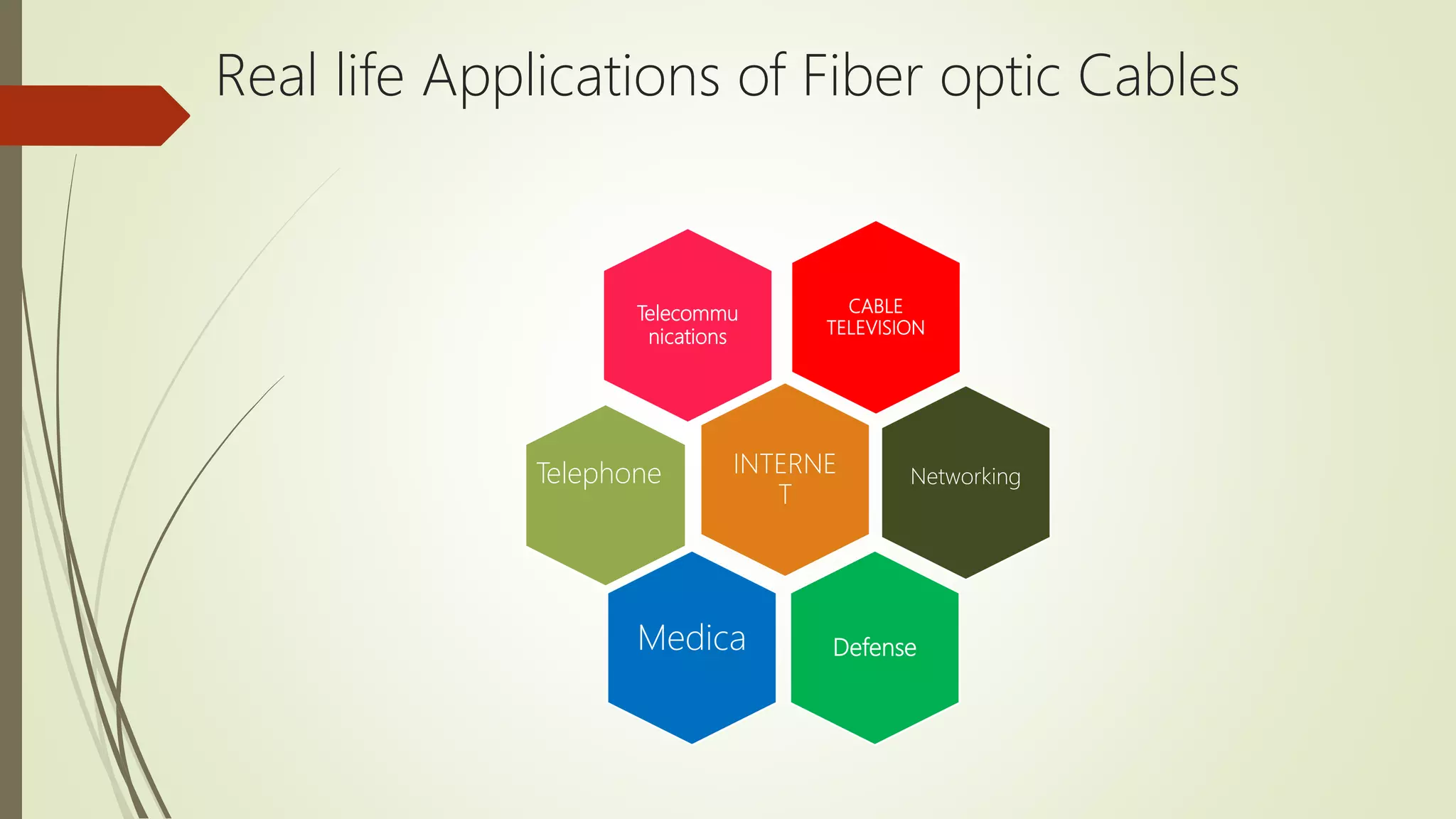
Advanced fiber optics quietly forms the hidden nervous system of modern society, moving far beyond standard home internet lines to power healthcare diagnostics, precision manufacturing, smart city infrastructure, and high-frequency financial trading. While consumers most frequently encounter fiber through FTTH (Fiber-to-the-Home) broadband packages promising gigabit speeds, the underlying optical technology utilizes sophisticated physics—such as wavelength-division multiplexing, specialized glass compositions, and non-linear optics—to reshape how everyday environments function.
Understanding how these sophisticated light-based systems operate reveals a landscape where high-bandwidth communication, ultra-precise sensing, and low-latency data transmission intersect with nearly every facet of daily routines.
The Technical Foundations of Modern Optical Networks
To understand how advanced fiber optics function in everyday life, one must look past the basic concept of bouncing light down a glass tube. Traditional single-mode and multi-mode fibers have evolved into highly engineered transmission media capable of manipulating light waves in ways that were once purely theoretical.
Wavelength-Division Multiplexing (WDM)
At the heart of high-capacity modern infrastructure is Wavelength-Division Multiplexing (WDM). Instead of sending a single stream of data down a fiber strand using one color (wavelength) of light, WDM systems pack dozens or even hundreds of distinct wavelengths onto a single physical fiber simultaneously.
- Coarse Wavelength-Division Multiplexing (CWDM): Typically utilizes wider spacing between wavelengths, often used in regional and enterprise networks where cost efficiency is prioritized over maximum channel density.
- Dense Wavelength-Division Multiplexing (DWDM): Packs wavelengths much closer together within the infrared spectrum, allowing tens of terabits per second to travel across a single strand of hair-thin glass.
This multiplexing capability prevents physical congestion in urban areas. Rather than tearing up streets to lay thousands of new cables, network operators simply upgrade the transceivers at the endpoints of existing glass lines.
Polarization and Non-Linear Optics
Advanced networks also account for the physical behavior of light as it travels over long distances or through complex metropolitan topologies. Polarization-maintaining (PM) fibers preserve the polarization state of light waves, which is vital for coherent detection systems that maximize data throughput. Furthermore, engineers manage non-linear optical effects—phenomena where intense light changes the properties of the transmission medium itself—to prevent signal distortion across trans-oceanic and trans-continental links.
Fiber Optics in Healthcare and Medical Diagnostics
While telecommunications represent the most visible application, advanced fiber optics play a life-critical role in modern medicine. Medical procedures rely on specialized optical fibers for both illumination and image transmission, as well as for laser surgery and sensing.
Minimally Invasive Endoscopy and Imaging
Modern endoscopes utilize coherent fiber optic bundles—where the relative spatial position of each individual fiber is precisely maintained from end to end—to transmit high-resolution images from inside the human body.
- Flexible Endoscopes: Allow gastroenterologists and pulmonologists to navigate narrow, tortuous pathways without major surgical incisions.
- Optical Coherence Tomography (OCT): Combines near-infrared light with fiber interferometry to capture micrometer-resolution, three-dimensional cross-sectional images of biological tissues, such as the retina in ophthalmology or coronary arteries in cardiology.
Laser Surgery and Biophotonics
High-power fiber lasers deliver precise energy levels to targeted tissues with minimal thermal damage to surrounding areas. Because fiber delivery systems can be threaded through flexible catheters, surgeons can perform delicate internal procedures—ranging from kidney stone ablation to tumor resection—with an accuracy unattainable by traditional scalpel-based methods.
Smart Cities, IoT, and Transportation Infrastructure
Urban environments increasingly rely on advanced fiber optic networks and fiber-based sensors to monitor structural integrity, manage traffic flow, and secure public spaces.
Distributed Acoustic Sensing (DAS)
One of the most transformative developments in civil engineering is Distributed Acoustic Sensing (DAS). By launching laser pulses down a standard telecom fiber and analyzing the Rayleigh backscattered light, engineers can turn an ordinary fiber optic cable into a continuous string of thousands of virtual microphones.
[Laser Source] ---> [Fiber Optic Cable in Ground] ---> [Backscattered Light Analysis] ---> [Real-Time Vibration/Strain Map]
- Structural Monitoring: Bridges, tunnels, and railway tracks outfitted with fiber cables detect microscopic shifts, ground settling, or excessive vibration before structural failures occur.
- Traffic Management: DAS systems deployed alongside highways monitor vehicle speeds, traffic density, and congestion patterns in real time without requiring the installation of discrete electronic sensors on every light pole.
Public Safety and Utility Grids
Smart electrical grids use fiber optic communication channels to monitor power substations and transmission lines. Because glass is immune to electromagnetic interference (EMI), fiber sensors can operate safely alongside high-voltage transformers, transmitting telemetry data instantly to grid operators to prevent cascading blackouts.
High-Frequency Finance and Global Data Integrity
The global financial system depends entirely on the ultra-low latency provided by advanced fiber optics. In high-frequency trading (HFT), microseconds dictate market profitability and execution fairness.
Minimizing Propagation Delay
Light travels slower through glass than it does through a vacuum (or air) due to the refractive index of silica glass (typically around $1.46$). To gain a competitive edge, network architects engineer specialized ultra-low-loss fibers with altered chemical dopants that lower the refractive index, speeding up light transmission by fractions of a percent. Furthermore, specialized routing companies invest heavily in digging the straightest possible underground trenches between major financial hubs, such as Chicago and New York, to shave precious milliseconds off transmission times.
Secure Data Transmission
Beyond speed, advanced fiber networks offer superior physical security compared to copper cables or wireless signals. Because data is transmitted via photons rather than electrons, fiber optic cables do not emit electromagnetic radiation that can be intercepted remotely. Tapping a fiber line requires physical intrusion that invariably alters the optical power budget, making covert surveillance immediately detectable by network monitoring systems.
Comparative Overview of Fiber Types and Everyday Applications
Different applications require specialized fiber designs to balance bandwidth, physical flexibility, distance, and cost.
| Fiber Category | Core Technology | Primary Everyday Applications | Key Operational Advantage |
|---|---|---|---|
| Single-Mode Fiber (SMF) | Small core (~9 microns), single light path | Long-haul telecom, FTTH broadband, financial networks | Extremely low signal attenuation over long distances |
| Multi-Mode Fiber (MMF) | Larger core (~50-62.5 microns), multiple light modes | Data centers, enterprise LANs, local hospital equipment | Lower-cost transceivers and easier field termination |
| Polarization-Maintaining (PM) | Asymmetrical stress applied to core | Interferometric sensors, coherent transceivers | Preserves the polarization state of light |
| Specialized Doped Fiber | Silica core doped with rare-earth elements | Fiber lasers, medical surgery, optical amplifiers | High optical gain and power handling capabilities |
Consumer Reality: What Advanced Fiber Means for the Average User
For the everyday consumer, the proliferation of advanced optical technologies translates into tangible changes in daily connectivity, remote work capabilities, and home entertainment.
The Shift Beyond Basic Broadband
While standard fiber internet delivers symmetrical gigabit speeds for streaming and gaming, advanced passive optical networks (PON) are scaling up to 10G-PON and 25G-PON architectures. These newer standards allow multiple households, smart home appliances, local businesses, and security systems to share a single fiber line without bandwidth degradation during peak usage hours.
Reliability and Environmental Resilience
Unlike copper telephone lines that degrade when exposed to moisture or suffer from electrical interference during thunderstorms, fiber optic cables are entirely weatherproof, rust-proof, and immune to lightning strikes. This structural resilience ensures that remote workers and smart home ecosystems maintain consistent uptime regardless of external weather conditions.
Frequently Asked Questions
How does advanced fiber optics differ from standard cable internet?
Standard cable internet relies on coaxial copper cables that share bandwidth across neighborhoods, leading to slowed speeds during peak hours and susceptibility to electrical interference. Advanced fiber optics use dedicated glass strands that transmit data via light pulses, providing symmetrical upload and download speeds, vastly superior bandwidth capacity, and total immunity to electromagnetic interference.
Can fiber optic cables be damaged by household bending or pinching?
Yes, although fiber optic cables are remarkably durable, they possess a minimum bend radius. If a cable is pinched, kinked, or bent tighter than its specified radius, light leaks out of the core—a phenomenon known as macrobending—which degrades signal quality or breaks the glass strand entirely.
Why is fiber optic latency lower than satellite internet?
Fiber optic signals travel through glass at roughly 200,000 kilometers per second, whereas satellite internet signals must travel thousands of miles up to orbit and back down to earth. Even with low-earth orbit (LEO) satellite constellations, the physical distance overhead introduces inherent propagation delay that structured terrestrial fiber avoids.
Is fiber optic internet more secure against cyber attacks?
Fiber optics provide enhanced physical security because they do not emit electromagnetic signatures that can be intercepted in the air. While standard data encryption is still necessary to protect data against software-based breaches, intercepting a fiber line physically requires cutting or splicing the glass, which immediately triggers optical power drops detected by network monitoring tools.
What is the lifespan of modern fiber optic infrastructure?
Once installed underground or inside buildings, high-quality silica glass fiber optic cables can last for decades—often exceeding 30 to 40 years. The physical medium rarely degrades over time; network capacity upgrades are typically achieved by replacing the optoelectronic transceivers at either end rather than replacing the buried cables themselves.
Practical Recommendations for Maximizing Fiber Performance
To extract maximum value from advanced optical infrastructure in residential or office environments, consider the following technical guidelines:
- Inspect Patch Cables: Ensure that fiber patch cords connecting wall outlets to modems or routers are clean and unblemished. Dust or microscopic scratches on optical connectors severely attenuate signal strength.
- Respect Bend Radiis: When routing cables behind furniture or through wall conduits, avoid sharp 90-degree angles. Use gentle, sweeping curves to prevent macrobending losses.
- Match Transceiver Ratings: When upgrading internal enterprise or home networks with fiber switches, verify that transceiver modules (such as SFP+ modules) match the exact wavelength and fiber type (single-mode versus multi-mode) of the installed cabling.