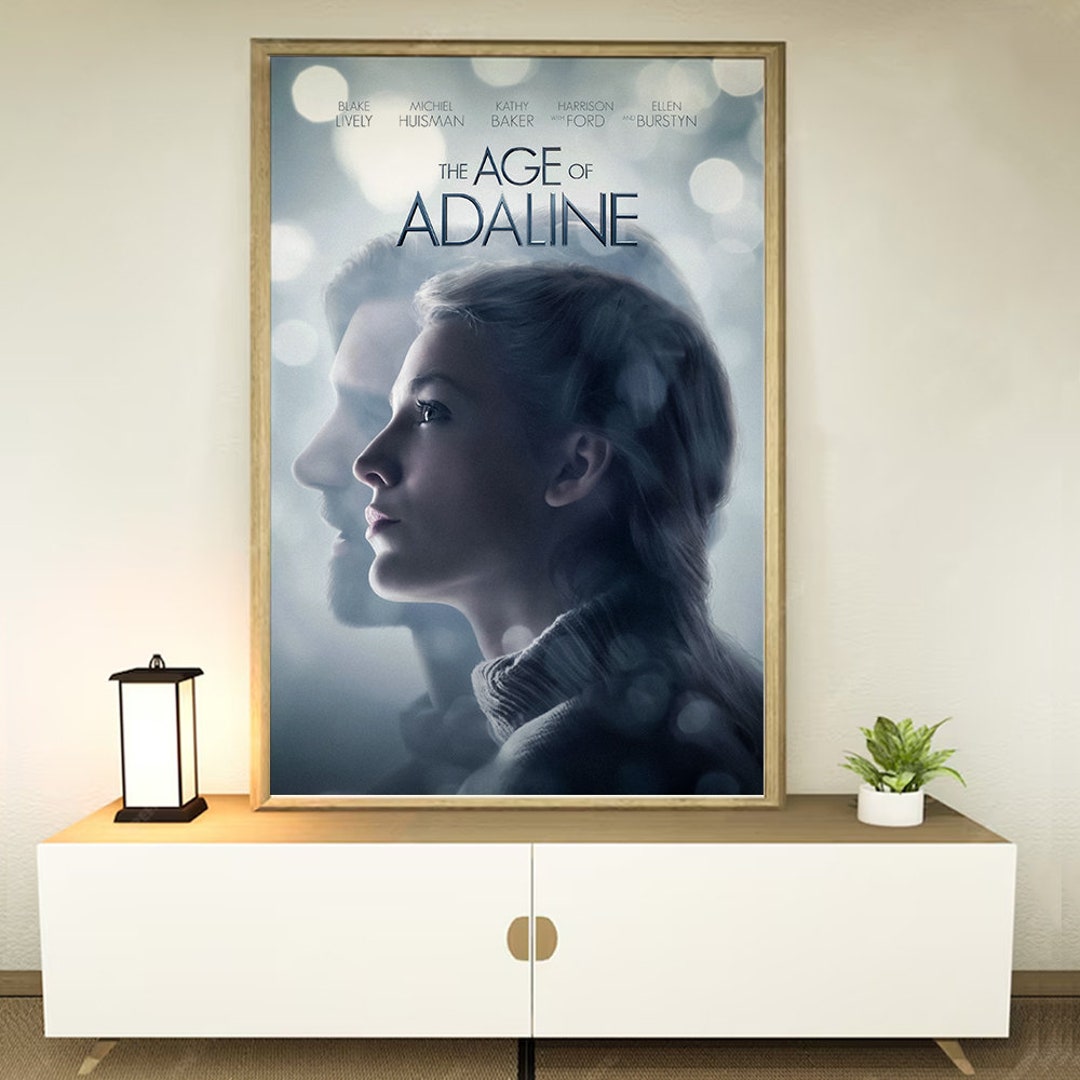
Released in April 2015, The Age of Adaline is a romantic fantasy drama directed by Lee Toland Krieger, starring Blake Lively as Adaline Bowman. The film follows a woman who permanently stops aging at twenty-nine following a freak automobile accident. Across eight decades of emotional isolation, fake identities, and relocation, Adaline avoids attachment until a compelling romance with philanthropist Ellis Jones and a confrontation with a figure from her past force her to confront the emotional cost of eternal youth.
Narrative Premise and the Mechanics of Adaline’s Immortality
The Age of Adaline grounds its high-concept fantasy premise in pseudo-scientific framing narrated throughout the film by voice actor Hugh Ross. The story begins with the birth of Adaline Bowman on January 1, 1908. She grows up, marries a structural engineer who dies during the construction of the Golden Gate Bridge, and gives birth to a daughter named Flemming.
In December 1937, at twenty-nine years old, Adaline suffers a fateful car accident along the Sonoma County coastline. A sudden, meteorologically unexpected snowstorm causes her automobile to skid off the road and submerge in cold water. Adaline experiences severe hypothermia, her heart stops beating, and clinical death occurs. At that exact moment, a bolt of lightning strikes the vehicle, discharging a massive electrical current into the water.
- Vehicle Submersion
- Hypothermia & Cardiac Arrest
- Lightning Strike
- Telomere Compression Suspended
- Ageless Cellular State
The omniscient narrator attributes her condition to a hypothetical future discovery—"electron compression of tissue DNA"—that arrests the natural decay of telomeres. As a result, Adaline’s physical body is locked in an immutable state of twenty-nine years old. While physical invulnerability is absent—she remains susceptible to trauma and injury—her cellular aging completely ceases.
Initially, Adaline attributes her youthful appearance to good luck, diet, and genetics. However, as decades pass and her daughter Flemming grows into an adult while Adaline remains unchanged, public suspicion mounts. During the mid-1950s, amidst Cold War security paranoia, federal agents briefly detain Adaline due to discrepancies in her documentation. Recognizing the danger of medical experimentation or lifetime isolation, she adopts a strict code of survival: change her legal identity, residence, appearance, and occupation every ten years, cut personal ties, and never allow herself to fall in love.
Comprehensive Plot Breakdown: From 1908 to the Present
- 1908: Born
- 1937: Accident/Immortality
- 1950s: Goes into Hiding
- 1960s: Romance with William
- 2014: Meets Ellis
- Resolution: Cellular Recovery
Life in Hiding and Identity Shifts (1937–2014)
For nearly six decades, Adaline operates as a shadow across American history. She moves systematically between major metropolitan areas, maintaining a portfolio of investments managed through a shell corporation to secure financial stability. By 2014, she resides in San Francisco under the alias Jennifer "Jenny" Larson, working in the archives of a public library while preparing for her next scheduled relocation to a remote cottage in Oregon.
Her primary emotional tether is her aging daughter, Flemming (played in her eighties by Ellen Burstyn). Their public dynamic is inverted: Flemming poses as Adaline’s grandmother or elderly aunt to prevent external suspicion. Adaline’s isolation is further underscored by her reluctance to keep pets other than short-lived dogs, as outliving multiple generations of canine companions highlights her burden of permanence.
Ellis Jones and the Disruption of Routine
Adaline’s disciplined routine fractures on New Year’s Eve 2014. While attending a celebration, she attracts the attention of Ellis Jones (Michiel Huisman), a charismatic philanthropist and tech entrepreneur who made his fortune developing data-sorting algorithms. Intrigued by her aloof demeanor and historical erudition, Ellis pursues her relentlessly.
Despite her established rule to avoid romantic entanglement, Adaline relents after Ellis threatens to withhold a valuable historical film archive donation from her library. As their bond deepens, Adaline experiences the friction between her protective instinct to flee and her desire for genuine human intimacy. Ellis represents an authentic future, prompting her to question whether constant flight constitutes true living.
The William Jones Encounter: A Past Reopened
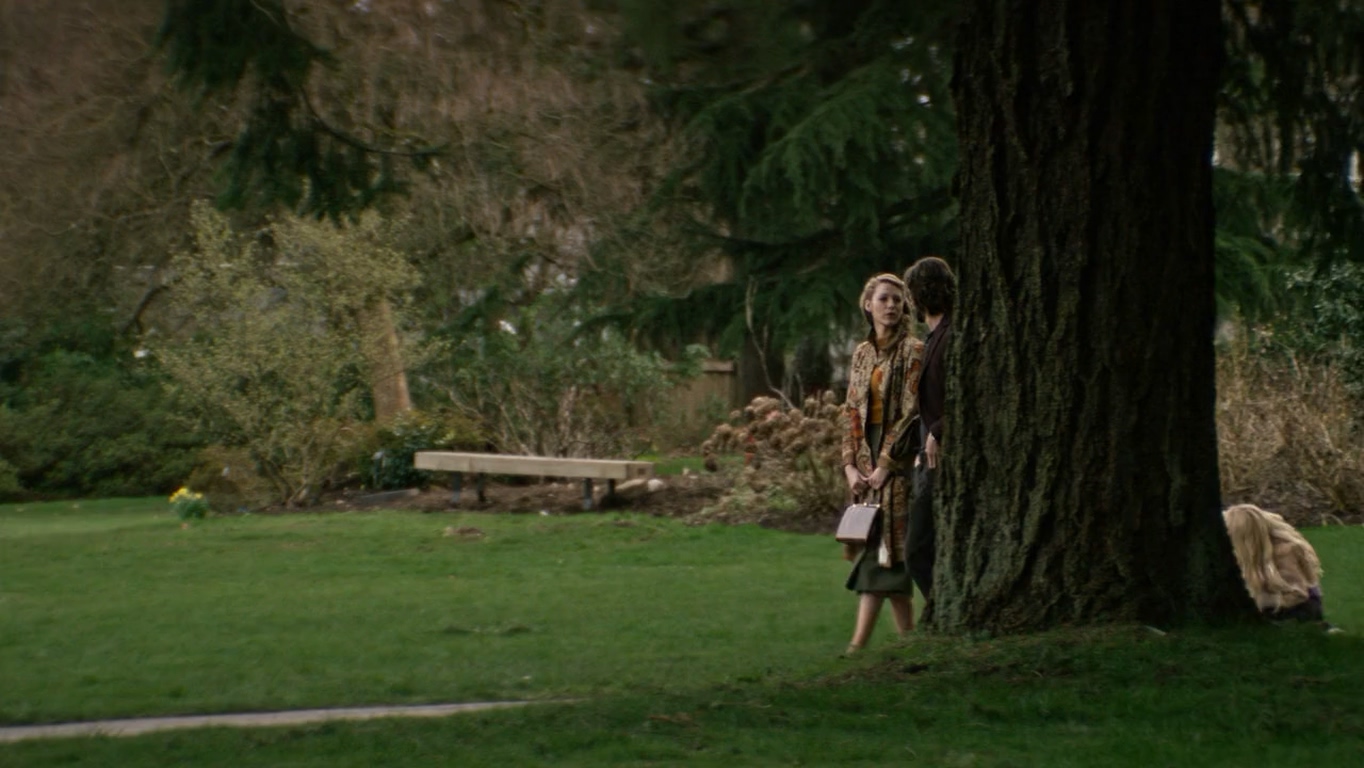
The story reaches its dramatic turning point when Ellis invites Adaline to his parents' coastal estate to celebrate their 40th wedding anniversary. Upon arrival, Adaline meets Ellis’s father, William Jones (Harrison Ford). William immediately recognizes her not as "Jenny," but as Adaline—the woman he loved deeply while studying astronomy in England during the late 1960s.
- Past Connection (1960s England)
- William Jones (Fell in love / Named Comet Della after her) Adaline Bowman
- Present Conflict (2015 Estate Visit)
- Posing as "Jenny"
- William Jones (Recognizes scar / Uncovers true identity) Adaline Bowman
Shocked by her presence, William is confronted with the identical likeness of the woman who abruptly vanished from his life decades prior after he bought an engagement ring. Adaline deflects his suspicion by claiming to be Adaline’s daughter, leveraging the natural physical resemblance between mother and child.
However, William’s suspicion remains active. While walking on the property, he notices a distinct scar on Adaline’s left hand—a cut she sustained while hiking with him in the 1960s, which he had personally stitched. Realizing that "Jenny" is physically identical down to the specific surgical mark, William confronts her directly. Faced with indisputable evidence, Adaline admits her true identity, revealing the tragic burden of her condition and her decision to break his heart decades ago to protect them both.
Climax, Medical Intervention, and Natural Mortality Restored
Overwhelmed by the collision of her past and present, Adaline leaves a note for Ellis, steals a car, and flees the estate into the night, intending to vanish to Oregon as previously planned. En route, she reaches a emotional realization: decades of running have reduced her existence to mere survival without purpose. Deciding to return to Ellis and reveal her secret, she stops her vehicle to turn around.
At that moment, a tow truck skids on an icy patch of road and broadsides her vehicle, forcing it down a steep embankment. History repeats itself: Adaline is thrown into sub-zero temperatures, suffers severe internal injuries, and enters cardiac arrest as her body temperature plunges.
- Car Collision
- Extreme Hypothermia
- Cardiac Arrest
- Paramedic Defibrillation
- Telomere Function Normalizes
- Natural Aging Restored
Paramedics arrive at the scene and apply a high-voltage external defibrillator to resuscitate her. The intense electrical discharge, combined with the extreme hypothermic state, creates a secondary cellular shock that neutralizes the previous phenomenon. Her heart resumes beating, and she is transported to a nearby hospital where Ellis and Flemming rush to her bedside.
After recovering, Adaline tells Ellis the complete truth about her life. One year later, while preparing for an evening event with Ellis, Adaline looks in a mirror and discovers a single strand of gray hair on her temple. She plucks it, examining it with relief: her biological clock has restarted, restoring her to a normal mortal lifespan.
Character Dynamics and Key Performances
The narrative weight of The Age of Adaline relies on grounded performances from a central ensemble cast:
Adaline Bowman/Jenny (Blake Lively)
- Ellis Jones (Michiel Huisman)
- William Jones (Harrison Ford)
- Flemming Bowman (Ellen Burstyn)
- Ellis Jones (Michiel Huisman)
Blake Lively as Adaline Bowman / Jenny Larson: Lively delivers a restrained performance, adopting formal speech patterns, posture, and subtle gestures indicative of someone raised in the early 20th century. Her portrayal emphasizes emotional exhaustion over superheroic invincibility, framing agelessness as an isolating affliction.
Michiel Huisman as Ellis Jones: Huisman plays Ellis with persistent charm and intellectual curiosity. His character serves as the kinetic force that breaks through Adaline’s defensive barriers.
Harrison Ford as William Jones: Ford provides the film's primary emotional anchor. His performance conveys profound nostalgia, regret, and astonishment upon encountering his lost love. Critics widely cited Ford’s performance as one of his finest dramatic turns in his later career. Anthony Ingruber portrays the young William in 1960s flashback sequences, displaying an uncanny vocal and facial impression of a young Ford.
Ellen Burstyn as Flemming Bowman: Burstyn creates a poignant dynamic as Adaline’s aging daughter. The inverse parent-child relationship—where an eighty-year-old daughter acts as a maternal guardian to her physically twenty-nine-year-old mother—gives the film its strongest emotional grounding.
Thematic Exploration: Time, Memory, and the Human Condition
- THEMATIC PILLARS
- TIME & MORTALITY
- LOVE & VULNERABILITY
- IDENTITY AND MEMORY
Immortality as Emotional Stagnation
Unlike traditional fantasy stories that depict eternal youth as a desirable gift, The Age of Adaline explores the psychological toll of timelessness. Adaline’s condition prevents her from forming lasting relationships, turning her life into a series of erased pasts. Her constant movement forces her to abandon homes, careers, and friends, showing that true life requires movement through time, not exemption from it.
The Contrast Between Eternal Youth and Natural Aging
The contrast between Adaline and her daughter Flemming demonstrates the dignity inherent in aging. Flemming’s physical decline is paired with emotional acceptance and life progression, whereas Adaline remains frozen in time. The film argues that mortality provides structure, urgency, and meaning to human experience; without an end, love loses its stakes.
Attachment Versus Self-Preservation
Adaline's journey centers on the conflict between physical safety and emotional risk. By choosing self-preservation, she isolates herself from pain but surrenders joy. Her ultimate acceptance of mortality highlights that vulnerability—opening oneself to loss, decay, and death—is necessary for genuine human connection.
Production Design, Period Costumes, and Aesthetics
Directed by Lee Toland Krieger with cinematography by David Lanzenberg, The Age of Adaline uses visual style to reflect its protagonist's long life.
Visual Architecture:
- Flashbacks (1920s-1960s): Warm vintage tones, soft-focus lenses, rich period textures.
- Present Day (San Francisco): Cool blues, muted grays, classic mid-century furnishings.
- Wardrobe Strategy: Timeless silhouette blending 1940s tailoring, vintage Gucci gowns, and modern classic items.
Costume designer Angus Strathie collaborated with luxury fashion house Gucci to build Adaline's wardrobe. Because Adaline has lived through multiple decades, her clothing style does not reflect fast fashion; instead, she wears high-quality garments collected over a century. Her wardrobe features classic tailoring, vintage coats, 1940s-style dresses, and timeless accessories that subtly signal her historical origins without alienating her from modern San Francisco.
Cinematographer David Lanzenberg differentiated historical eras through distinct lens choices and color grading:
- 1920s–1930s Flashbacks: Captured with warm, saturated tones and soft lighting to evoke early classic cinema.
- 1960s Flashbacks: Styled with golden hues, grain, and handheld camera movements to mirror the aesthetic of 1960s cinema.
- Present Day: Shot with crisp digital clarity, emphasizing cool architectural tones and rain-slicked urban environments, highlighting Adaline's emotional isolation.
Narrative Overview and Character Timeline Matrix
The following table synthesizes the timeline, character connections, and critical plot turning points across Adaline Bowman’s 107-year chronological lifespan:
| Time Period | Chronological Age | Alias / Status | Key Events & Relationships | Narrative Significance |
|---|---|---|---|---|
| 1908–1937 | 0 to 29 years old | Adaline Bowman | Born in San Francisco; marries engineer; gives birth to Flemming; husband dies. | Establishes her original identity and human mortality before the anomaly. |
| 1937 | 29 years old (Biological Freeze) | Adaline Bowman | Suffers severe car accident in snowstorm; clinical death followed by lightning strike. | Inciting incident: cellular telomere decay permanently halts aging. |
| 1950s | 40s (Appears 29) | Various Aliases | Detained by FBI agents due to unaging appearance; escapes and acquires fake documents. | Forces Adaline to adopt her code of secrecy, routine identity changes, and isolation. |
| 1960s | 50s (Appears 29) | Unknown Alias | Meets astronomy student William Jones in England; falls in love; flees before engagement. | Creates the central historical heartbreak that resurfaces decades later. |
| 2014–2015 | 106–107 (Appears 29) | Jennifer "Jenny" Larson | Works at San Francisco library; meets Ellis Jones; meets his father, William. | Climax: past and present collide; scar uncovers her identity; flees once more. |
| Resolution | 107+ (Biological Clock Restored) | Adaline Bowman | Suffers second accident; cardiac defibrillation restores normal telomere function; finds first gray hair. | Story resolution: immortality ends, allowing her to age naturally alongside Ellis. |
Critical Reception and Box Office Performance
Upon its release in spring 2015, The Age of Adaline received mixed-to-positive reviews from film critics, while proving commercially profitable for Lionsgate and Lakeshore Entertainment.
Financial & Critical Summary:
- Production Budget: ~$25 Million
- Worldwide Box Office Gross: ~$65.7 Million
- Rotten Tomatoes Score: 55% (Critics) / 66% (Audience)
- Key Praise: Harrison Ford's performance, costume design, visual atmosphere.
- Key Criticism: Reliance on voiceover exposition, conventional romance tropes.
Box Office Summary
Produced on an estimated budget of $25 million, the film grossed approximately $42.6 million domestically in North America and $23.1 million internationally, yielding a global box office total of roughly $65.7 million. Strong home entertainment sales and streaming viewership further solidified its financial success.
Critical Assessment
Review aggregators like Rotten Tomatoes scored the film at 55% based on critic reviews, while audience scores remained higher at 66%. Mainstream critics offered several consistent observations:
- Voiceover Exposition: Multiple reviewers noted that the recurring scientific narration by Hugh Ross felt heavy-handed, attempting to offer empirical explanations for what was fundamentally a romantic fairy tale.
- Lead Performances: Blake Lively received praise for her poise, screen presence, and mid-Atlantic cadence, proving her capacity to carry a major studio feature. Harrison Ford earned widespread acclaim, with critics highlighting his vulnerability and expressive depth as the standout element of the second half.
- Visual Craft: Reviewers lauded Angus Strathie’s costume design and David Lanzenberg’s cinematography for elevating the film above standard romance conventions into an aesthetically refined melodrama.
Frequently Asked Questions
Why did Adaline stop aging in the 2015 film?
Adaline stopped aging due to a rare combination of physical events in December 1937. After her car plunged into cold water, she developed severe hypothermia, causing her heart to stop. A simultaneous lightning strike delivered a massive electrical charge that suspended cellular decay and compressed tissue DNA telomeres, keeping her physically frozen at twenty-nine years old.
How does Adaline become mortal again at the end of the movie?
Adaline becomes mortal after surviving a second automobile accident in 2015. After going into hypothermia and cardiac arrest, emergency medical technicians used a high-voltage external defibrillator to restart her heart. The combination of extreme cold and electrical shock reversed the previous cellular anomaly, restoring normal telomere decay and allowing her to age naturally again.
Who plays the young Harrison Ford character in the flashbacks?
Actor Anthony Ingruber plays the young William Jones in the 1960s flashback sequences. Ingruber was cast primarily due to his striking facial resemblance and accurate vocal impersonation of Harrison Ford, seamless blending his scenes with Ford’s present-day portrayal.
What is the relationship between Adaline and Ellen Burstyn’s character?
Ellen Burstyn plays Flemming Bowman, Adaline’s biological daughter born in the 1930s before Adaline's accident. Because Flemming ages normally while Adaline remains perpetually twenty-nine, Flemming appears to be Adaline’s grandmother or elderly aunt in public to protect her secret.
What is the significance of the scar on Adaline’s hand?
The scar on Adaline's left hand serves as the key evidence that uncovers her identity to William Jones. William personally stitched the laceration after she cut her hand on a fence while hiking with him in the 1960s. Decades later, recognizing the identical surgical mark on "Jenny" confirms to William that she is indeed Adaline.
Viewing Guidance and Final Verdict
The Age of Adaline remains a compelling romantic drama that uses its high-concept fantasy premise to explore love, memory, and mortal human connection. Supported by strong production values, timeless costume design, and a standout dramatic performance by Harrison Ford, the film transforms what could have been a simple romantic trope into a thoughtful meditation on time.
For viewers seeking a romantic film featuring classic visual aesthetics, historically rooted storytelling, and an exploration of the burden of immortality, The Age of Adaline offers an engaging experience. It is widely available for streaming, digital rental, and physical media purchase on major platforms.