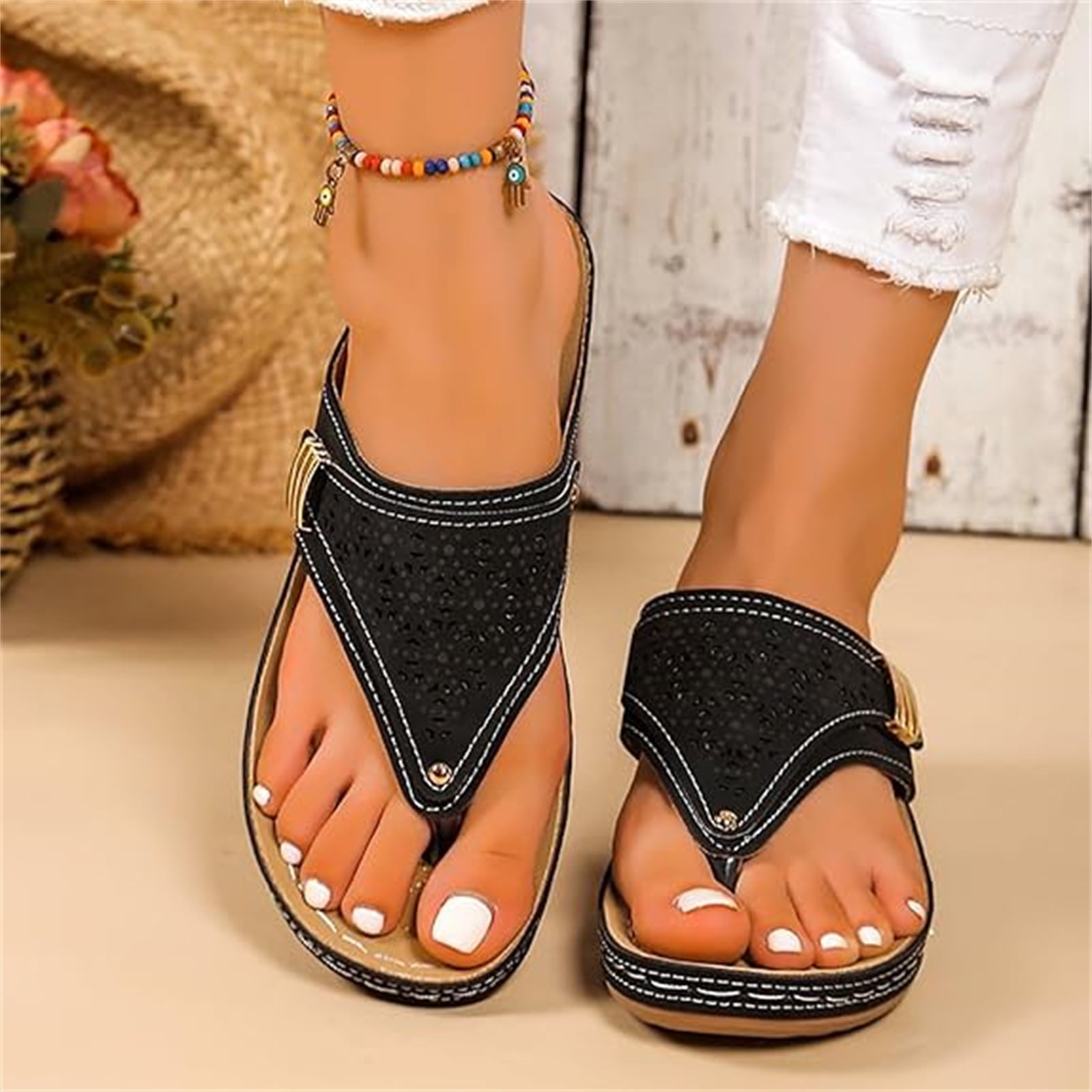
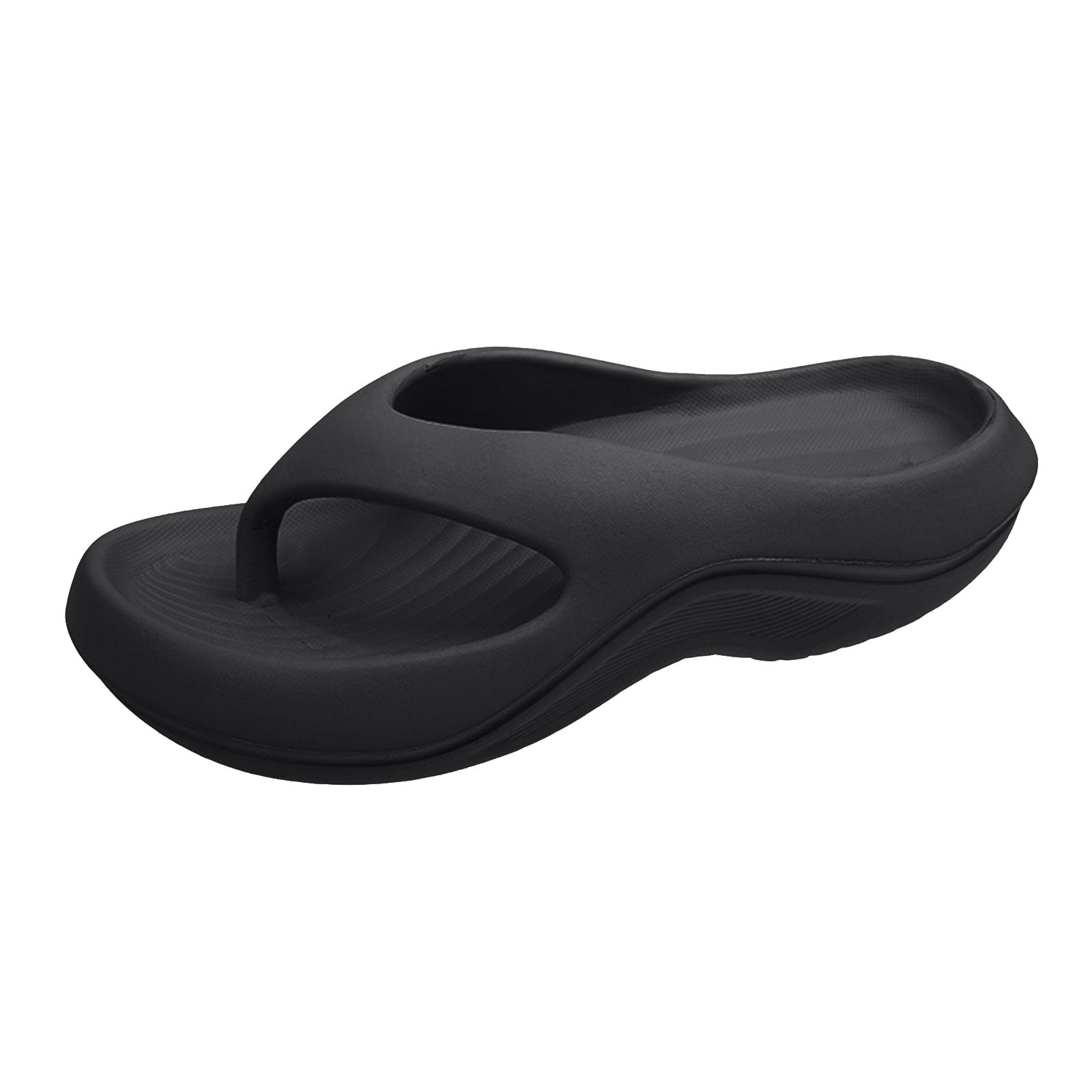
Finding relief from plantar fasciitis requires footwear that prioritizes longitudinal arch support, deep heel cups, and impact-absorbing midsoles. For women in 2026, the best "footprint" flip flops—those featuring a contoured footbed designed to mimic the natural shape of a healthy foot—provide the necessary bio-mechanical alignment to reduce tension on the plantar fascia ligament and alleviate morning heel pain.
The Bio-Mechanics of the "Footprint" Footbed
To understand why a specific "footprint" design is essential for plantar fasciitis, one must first understand the pathology of the condition. Plantar fasciitis involves the inflammation of the thick band of tissue (the plantar fascia) that runs across the bottom of your foot and connects your heel bone to your toes. In a healthy foot, this tissue acts as a shock-absorbing bowstring. However, when the arch is unsupported or the foot overpronates (rolls inward), the fascia is subjected to repetitive micro-tears.
Standard, flat flip flops are often cited by podiatrists as a primary contributor to foot pain. They offer no arch support, forcing the toes to "grip" the shoe to keep it on, which further strains the fascia. In contrast, "footprint" flip flops are engineered with an orthotic contour. This contouring fills the gap between the floor and the arch, redistributing pressure away from the calcaneal tuberosity (the heel bone) and across the entire plantar surface.
By 2026, the integration of 3D-mapped footbeds has become the industry standard for orthotic footwear. These designs focus on three primary zones:
- The Rearfoot: A deep heel cup that stabilizes the fatty pad under the heel.
- The Midfoot: A rigid or semi-rigid arch support that prevents the collapse of the medial longitudinal arch.
- The Forefoot: A metatarsal dome or contoured toe bar that allows for natural toe splay and reduces pressure on the balls of the feet.
Selection Criteria for Orthotic Flip Flops
When evaluating footwear for plantar fasciitis, certain technical specifications are non-negotiable. For an article of footwear to be considered "therapeutic," it must meet the following standards:
- Firmness vs. Cushioning: While "soft" shoes feel good initially, they often lack the structural integrity to support the arch. The ideal flip flop uses dual-density foam—a firm base for alignment and a softer top layer for comfort.
- Heel-to-Toe Drop: A slight elevation in the heel (usually 8mm to 12mm) can take the tension off the Achilles tendon and the plantar fascia.
- APMA Seal of Acceptance: The American Podiatric Medical Association (APMA) grants this seal to products found to promote good foot health. Many of the models listed below hold this distinction.
- Torsional Rigidity: If you can easily twist the flip flop or fold it in half, it will not provide enough support for a foot suffering from fasciitis.
Detailed Reviews of the 8 Best Footprint Flip Flops for Women
1. Vionic Tide II Post Sandals
The Vionic Tide II remains a gold standard in 2026 for its proprietary Orthaheel technology. Designed by podiatrists, the "footprint" of this sandal is specifically engineered to treat overpronation.
The Tide II features a built-in orthotic that is substantial and rigid. For women with high arches or those who experience significant inward rolling of the ankle, the Tide II provides an immediate corrective force. The foam-lined straps reduce friction, which is a common complaint in traditional flip flops. Its midsole is constructed from medium-density EVA, which absorbs shock while maintaining its shape over months of heavy use.
2. OOFOS OOlala Recovery Sandal
While Vionic focuses on alignment, OOFOS focuses on recovery and impact reduction. The OOlala series utilizes "OOfoam," a patented material that claims to absorb 37% more impact than traditional footwear foams.
The "footprint" here is characterized by a high, soft arch that "cradles" the foot. It is particularly effective for women who spend long hours on hard surfaces like tile or concrete. The OOlala is designed to allow for a more natural walking motion, reducing the energy exertion required by the ankles by up to 47%. It is also moisture and bacteria-resistant, making it a practical choice for post-workout or beach use.
3. Birkenstock Gizeh Birko-Flor
Birkenstock is the original "footprint" shoe. The Gizeh model features the iconic cork-latex footbed that mimics a footprint in the sand. Unlike synthetic foams, cork is a natural material that gradually molds to the wearer's specific foot shape over time.
The Gizeh offers four distinct arches: the medial, lateral, transverse, and a deep heel cup. This comprehensive support system ensures that the weight is distributed evenly across the entire sole. For women with plantar fasciitis, the initial "break-in" period can be challenging, as the footbed is quite firm. However, once the cork adapts to the foot, it provides a level of customized support that synthetic materials cannot match.
4. Aetrex Maui Orthotic Flip Flops
Aetrex has leveraged its history in digital foot scanning to create the Maui, a lightweight, water-friendly flip flop with a built-in "Cobra" orthotic. The design is unique because it provides "neutral" alignment while offering significant pressure relief at the heel.
The Maui is made from UltraSky™ EVA, which provides a bouncy, responsive feel. The key feature for plantar fasciitis sufferers is the strategically placed "heel cushion" that specifically targets the area where the plantar fascia attaches to the heel bone. This is a top choice for women who want a minimalist aesthetic without sacrificing clinical-grade support.
5. Orthofeet Sorrento
Orthofeet is widely recognized in the medical community for creating footwear for sensitive feet, including those with diabetes or neuropathy. The Sorrento flip flop is designed with an anatomical arch and a "Heel-Pain Relief" system.
The Sorrento features a multi-layered orthotic insole that includes an anatomical arch support and a cushioning heel pad. What sets this model apart is the adjustable strap system, which allows users to customize the fit for narrow or wide feet, ensuring the arch support stays exactly where it needs to be. The cushioning is substantial, making it one of the most "plush" options for severe heel pain.
6. Hoka Ora Recovery Flip
Hoka has translated its "maximalist" running shoe philosophy into the Ora Recovery Flip. This sandal features an oversized midsole and the signature "Meta-Rocker" geometry.
The Meta-Rocker design is crucial for plantar fasciitis because it creates a fulcrum effect, encouraging a smooth transition from heel-strike to toe-off without requiring the foot to flex excessively at the midfoot. This "rocking" motion minimizes the stretching of the plantar fascia during the gait cycle. The "footprint" is wide and stable, providing a secure base for women who struggle with balance or ankle instability.
7. Spenco Yumi Total Support Sandal
The Spenco Yumi is often recommended as an affordable yet highly effective medical-grade flip flop. It features the "Total Support" footbed, which includes a metatarsal dome.
The metatarsal dome is a small raised area in the center of the footbed that helps offload pressure from the ball of the foot and helps realign the toes. This is particularly beneficial for women who have developed secondary issues like Morton’s neuroma alongside their plantar fasciitis. The Yumi uses an impact-motion control system to stabilize the heel and prevent the foot from twisting.
8. FitFlop Lulu Leather Toe-Post Sandals
FitFlop utilizes "Microwobbleboard" technology in the Lulu model. This triple-density midsole was developed by British bio-mechanicists to diffuse underfoot pressure by increasing the contact area between the foot and the midsole.
The "footprint" of the Lulu is wider than a standard fashion flip flop, which provides a more stable platform. The heel section is high-density to absorb impact, the midsection is low-density to create instability that "activates" leg muscles, and the toe section is mid-density to maintain pace. For women who want a stylish leather finish that they can wear to dinner or the office while still managing heel pain, the Lulu is a premier choice.
Comparative Analysis of Support Technologies
The following table compares the specific design elements of the eight featured models to help you identify which matches your foot type and lifestyle.
| Brand & Model | Primary Technology | Footbed Material | Arch Type | Best For |
|---|---|---|---|---|
| Vionic Tide II | Orthaheel Technology | Medium-Density EVA | High/Rigid | Overpronation |
| OOFOS OOlala | OOfoam™ Impact Absorption | Proprietary Foam | High/Soft | Active Recovery |
| Birkenstock Gizeh | Cork-Latex Footbed | Natural Cork/Suede | Moderate/Molding | Long-term wear |
| Aetrex Maui | Cobra Orthotic System | UltraSky™ EVA | High/Responsive | Water/Poolside |
| Orthofeet Sorrento | Bio-Mechanical Insole | Multi-layer Foam | Customizable | Sensitive Feet |
| Hoka Ora Recovery | Meta-Rocker Geometry | Oversized EVA | Moderate/Cradled | Gait Correction |
| Spenco Yumi | Total Support System | Compression Molded EVA | Moderate w/ Dome | Metatarsalgia |
| FitFlop Lulu | Microwobbleboard™ | Triple-Density EVA | Moderate/Wide | Style & Comfort |
Factors Affecting Longevity and Performance
In 2026, the durability of orthotic materials has improved significantly, but no flip flop lasts forever. For women dealing with plantar fasciitis, wearing a "dead" shoe can be as damaging as wearing a flat one.
Compression Set
Over time, the EVA foam in flip flops like OOFOS or Hoka will experience "compression set," meaning the bubbles in the foam collapse and the arch support flattens. Most experts recommend replacing orthotic flip flops every 8 to 12 months if worn daily, or as soon as you notice a return of morning heel pain.
Maintenance and Care
To preserve the "footprint" shape:
- Avoid Extreme Heat: Leaving EVA sandals in a hot car can cause them to shrink or warp, ruining the orthotic alignment.
- Cleaning: Most synthetic orthotic sandals can be cleaned with mild soap and water. For Birkenstocks, use a cork sealer to prevent the footbed from drying out and cracking.
- Rotation: Rotating between two different pairs of supportive sandals can allow the foam to "decompress" between wears, extending the life of both pairs.
Common Mistakes to Avoid
When transitioning to "footprint" flip flops, many users make errors that can delay healing.
- Too Much, Too Soon: If you are used to flat shoes, a high-arch orthotic can feel intrusive or even painful. Wear them for 1-2 hours a day initially to allow your muscles and ligaments to adapt to the new alignment.
- Ignoring the Sizing: Arch support only works if it hits the right part of your foot. If the flip flop is too long, the arch support will sit too far forward, potentially causing more pain. Always align your heel perfectly in the heel cup before checking the arch position.
- Assuming "Soft" Means "Good": Many women reach for the softest, squishiest flip flop they can find. While this provides temporary relief, the lack of structural support will cause the plantar fascia to continue stretching and tearing throughout the day.
Frequently Asked Questions
Can I wear orthotic flip flops all day if I have plantar fasciitis?
Yes, provided the flip flop offers sufficient arch support and heel stability. High-quality brands like Vionic and Orthofeet are designed for all-day wear. However, if your job requires standing for 8+ hours, you may benefit from alternating these with a full-motion control sneaker.
Do these flip flops work for flat feet?
Absolutely. Most "footprint" flip flops are designed to create the arch that flat feet lack. This prevents the foot from collapsing and reduces the strain on the plantar fascia. Women with exceptionally flat feet should look for the more rigid supports found in Vionic or Birkenstock models.
Why does the arch support feel like a "bump" under my foot?
This is a common sensation when first wearing orthotic footwear. The "bump" is actually the support filling your arch. If your fascia is tight, it may feel uncomfortable initially. Within a week of consistent use, your foot should adapt, and the sensation will transition from "noticeable" to "supportive."
Are there waterproof versions of these shoes for the beach?
Several models, including the Aetrex Maui and the OOFOS OOlala, are made from non-porous EVA or proprietary foams that are completely waterproof. These are ideal for beach or pool use where traditional cork or leather sandals might be damaged.
How do I know if my plantar fasciitis is healing while using these?
The hallmark of healing is the reduction of "first-step" pain in the morning. If you notice that you can get out of bed and walk to the bathroom without significant sharp pain in your heel, the footwear and any accompanying physical therapy are likely working.
Final Recommendations
The most effective "footprint" flip flop for your plantar fasciitis depends on your specific foot anatomy. If you require maximum correction for overpronation, the Vionic Tide II is the most clinically proven option. For those who need maximum cushioning due to a thin fat pad on the heel or high-impact activities, the OOFOS OOlala or Hoka Ora Recovery are superior choices. Always ensure you measure your foot accurately to guarantee the arch support aligns with your natural "footprint."