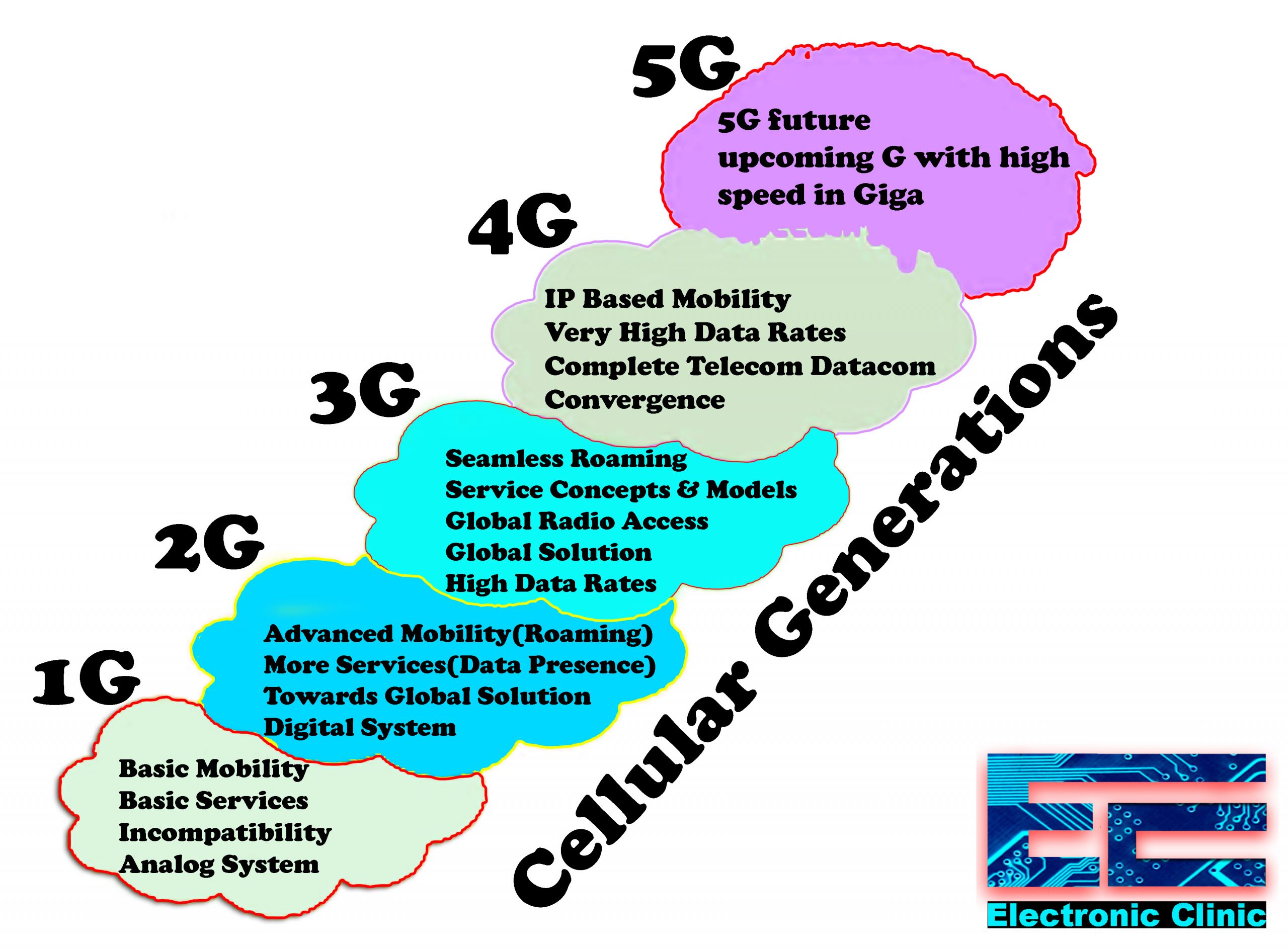
The evolution of 5G represents a decade-long transition from theoretical academic research and standard-setting bodies to a commercial, globally deployed infrastructure. This technological shift progressed through formal 3GPP releases—starting with Release 15 for non-standalone architecture up to Release 17 and beyond for advanced capabilities—gradually shifting telecommunications from consumer-centric mobile broadband to mission-critical industrial applications.
The Foundation: Defining the 5G Standard
The journey of fifth-generation wireless technology began long before the first cell tower broadcast a commercial signal. Telecommunications standard-setting organizations, most notably the 3rd Generation Partnership Project (3GPP), laid the groundwork by establishing formal specifications that redefined how cellular networks handle data, latency, and device density.
Unlike previous cellular transitions—such as the jump from 3G to 4G LTE, which focused primarily on increasing mobile data speeds—5G was architected as a unified, highly flexible framework. The International Telecommunication Union (ITU) established the official framework through its International Mobile Telecommunications-2020 (IMT-2020) vision, setting rigorous technical benchmarks. These benchmarks included peak data rates up to 20 gigabits per second (Gbps), user-experienced data rates in the hundreds of megabits per second, latencies as low as one millisecond, and the capacity to connect up to one million devices per square kilometer.
To achieve these ambitious targets, the 3GPP structured the standardization process into sequential phases known as releases:
- 3GPP Release 15 (2018): Established the initial 5G New Radio (NR) standard, focusing heavily on enhanced Mobile Broadband (eMBB) and laying out both Non-Standalone (NSA) and Standalone (SA) deployment options.
- 3GPP Release 16 (2020): Expanded the standard into vertical industries, introducing ultra-reliable low-latency communication (URLLC) enhancements, vehicle-to-everything (V2X) direct communications, and industrial IoT specifications.
- 3GPP Release 17 (2022) and Release 18 (Advanced): Further refined energy efficiency, introduced artificial intelligence and machine learning (AI/ML) frameworks for air interface management, and expanded satellite-to-device integration (Non-Terrestrial Networks).
Architectural Shifts: Non-Standalone vs. Standalone Rollouts
As telecommunications operators prepared for commercialization, they faced a critical architectural choice that shaped the early phase of the global rollout: deploying 5G via Non-Standalone (NSA) networks or transitioning directly to Standalone (SA) networks.
Non-Standalone (NSA) 5G
In the early years of the rollout, virtually all major carriers adopted the NSA architecture specified in 3GPP Release 15. In an NSA deployment, the 5G New Radio control plane and user plane rely on the existing 4G Long-Term Evolution (LTE) Evolved Packet Core.
- Advantages: Carriers could leverage their sunk capital investments in 4G infrastructure, significantly accelerating time-to-market and reducing upfront capital expenditures. It allowed operators to market "5G speeds" to consumers using existing core network management systems.
- Limitations: NSA networks cannot deliver the full suite of 5G promises. Because they rely on a 4G core, latency improvements are modest, and advanced features like network slicing and true machine-to-machine autonomy remain restricted.
Standalone (SA) 5G
True evolution to 5G requires a Standalone architecture, where 5G NR base stations connect directly to a cloud-native 5G Core (5GC). This eliminates all reliance on legacy 4G network architecture.
- Advantages: SA architecture unlocks ultra-low latencies, native support for massive machine-type communications (mMTC), and network slicing—the ability to partition a single physical network into multiple virtual networks tailored to specific performance or security requirements.
- Challenges: Deploying a cloud-native 5G core requires substantial financial investment, complex software-defined networking (SDN) integration, and a complete overhaul of operational support systems (OSS) and business support systems (BSS).
Spectrum Strategy: Low-Band, Mid-Band, and Millimeter-Wave
A defining characteristic of the 5G evolution is the diversification of radio frequency spectrums. Regulators worldwide auctioned and allocated spectrum across three distinct ranges to balance coverage area and data throughput.
| Spectrum Band | Frequency Range | Coverage Radius | Penetration Capability | Primary Use Case |
|---|---|---|---|---|
| Low-Band | Sub-1 GHz (e.g., 600 MHz, 700 MHz) | Wide (Several kilometers) | Excellent (Passes walls and buildings easily) | Broad rural coverage, deep indoor penetration, initial coverage footprint. |
| Mid-Band | 1 GHz to 6 GHz (e.g., 2.5 GHz, 3.5 GHz, C-Band) | Moderate (1 to 3 kilometers) | Good (Balanced wall penetration) | The primary workhorse for urban and suburban enhanced mobile broadband. |
| High-Band (mmWave) | 24 GHz to 100 GHz+ | Short (Hundreds of meters) | Poor (Blocked by walls, glass, and foliage) | Dense urban hotspots, sports stadiums, fixed wireless access (FWA). |
Carriers had to strategically combine these frequencies. While early rollouts in dense cities frequently utilized millimeter-wave (mmWave) spectrum to showcase maximum download speeds, operators quickly realized that mid-band spectrum (often referred to as C-Band) provided the optimal economic and technical balance for widespread, high-capacity coverage.
Phased Global Commercial Deployment
The global rollout of 5G did not happen overnight; it advanced through distinct geographic waves influenced by regulatory frameworks, government subsidies, spectrum availability, and macroeconomic conditions.
Early Adopters (2018–2019)
South Korea, the United States, and China were among the first nations to launch commercial 5G services. South Korea's three major carriers simultaneously launched commercial 5G in April 2019, supported by proactive government alignment and high smartphone penetration. In the United States, carriers initiated localized fixed wireless access and mobile rollouts using both sub-6 GHz and mmWave frequencies throughout late 2018 and 2019.
Mass Market Expansion (2020–2023)
During this period, European nations, Japan, Australia, and major Latin American markets conducted extensive spectrum auctions and began large-scale deployments. Despite supply chain disruptions and geopolitical friction surrounding telecommunications equipment vendors, operators in Europe utilized existing site infrastructure to deploy mid-band 5G rapidly. In China, state-backed operators built millions of 5G base stations, establishing the world's largest standalone 5G footprint by 2023.
Maturation and Advanced Deployments (2024–2026)
By 2026, 5G has matured from a consumer novelty into critical national infrastructure. The focus has largely shifted from basic population coverage to enterprise private networks, advanced Standalone core adoption, and the integration of edge computing. Telecommunications providers are actively shutting down legacy 3G networks (and in some regions, beginning the long-term planning for 4G sunsetting) to reallocate valuable spectrum resources to 5G-Advanced technologies.
Enterprise Integration and Vertical Industries
While consumer marketing focused heavily on fast video streaming and mobile gaming, the most transformative phase of the 5G evolution involves enterprise applications and vertical industry digitalization.
- Smart Manufacturing and Industry 4.0: Factories utilize private 5G Standalone networks to replace cumbersome industrial wiring with ultra-reliable, low-latency wireless connections. This enables real-time robotics control, automated guided vehicles (AGVs), and predictive maintenance through massive IoT sensor arrays.
- Fixed Wireless Access (FWA): 5G FWA has emerged as a viable broadband alternative to traditional cable and fiber, particularly in suburban and rural areas where running physical lines is cost-prohibitive.
- Logistics and Supply Chain: Massive Machine-Type Communications (mMTC) allow logistics providers to track millions of assets simultaneously with high location accuracy and minimal battery consumption on the tracking devices.
Ongoing Challenges and Technical Hurdles
Despite widespread global availability, the 5G evolution continues to navigate several operational and technical hurdles:
- Return on Investment (ROI): Because building dense 5G networks requires immense capital expenditure, operators face ongoing pressure to monetize enterprise services beyond standard consumer data plans.
- Energy Consumption: 5G base stations and active antenna units (AAUs) consume significantly more electrical power than legacy 4G hardware, prompting heavy investments in AI-driven sleep modes and energy-efficient baseband processing.
- Interference and Spectrum Sharing: Coordinating C-Band deployment near commercial aviation radar altimeters required extensive regulatory mediation and technical adjustments to prevent interference.
Frequently Asked Questions
What is the difference between Non-Standalone (NSA) and Standalone (SA) 5G?
Non-Standalone (NSA) 5G uses a 4G LTE core network to manage signaling while utilizing 5G radio frequencies for data transmission. Standalone (SA) 5G operates entirely on a dedicated 5G cloud-native core, enabling advanced capabilities like network slicing, ultra-low latency, and true machine-to-machine communication.
Why is mid-band spectrum considered the most important for 5G rollout?
Mid-band spectrum (including C-Band frequencies) offers the ideal compromise between coverage area and data capacity. Unlike low-band spectrum, which offers wide coverage but slower speeds, and mmWave spectrum, which provides ultra-fast speeds but very short range, mid-band frequencies can penetrate buildings effectively while carrying substantial data loads over kilometers.
Did 5G replace 4G LTE entirely?
No. 4G LTE remains a critical foundational layer for global mobile connectivity. Even in mature 5G markets, devices frequently drop back to 4G LTE for voice calls (via VoLTE) or when 5G signals are unavailable. Furthermore, NSA networks depend directly on 4G infrastructure.
How does 5G enable network slicing?
Network slicing is a feature unique to Standalone 5G cores. It allows operators to partition a single physical telecommunications network into multiple virtual networks. Each virtual slice can be configured with specific performance guarantees regarding speed, latency, reliability, and security, tailored to different applications like emergency services or industrial automation.
Next Steps for Network Optimization and Adoption
Organizations and consumers evaluating or optimizing their 5G integration should audit their current infrastructure requirements. Enterprises should assess whether their operational models benefit from transitioning from public 5G services to private Standalone campus networks. Meanwhile, IT and telecommunications leaders must monitor ongoing 3GPP releases—particularly 5G-Advanced—to prepare for software upgrades that enhance energy management, uplink performance, and satellite connectivity.