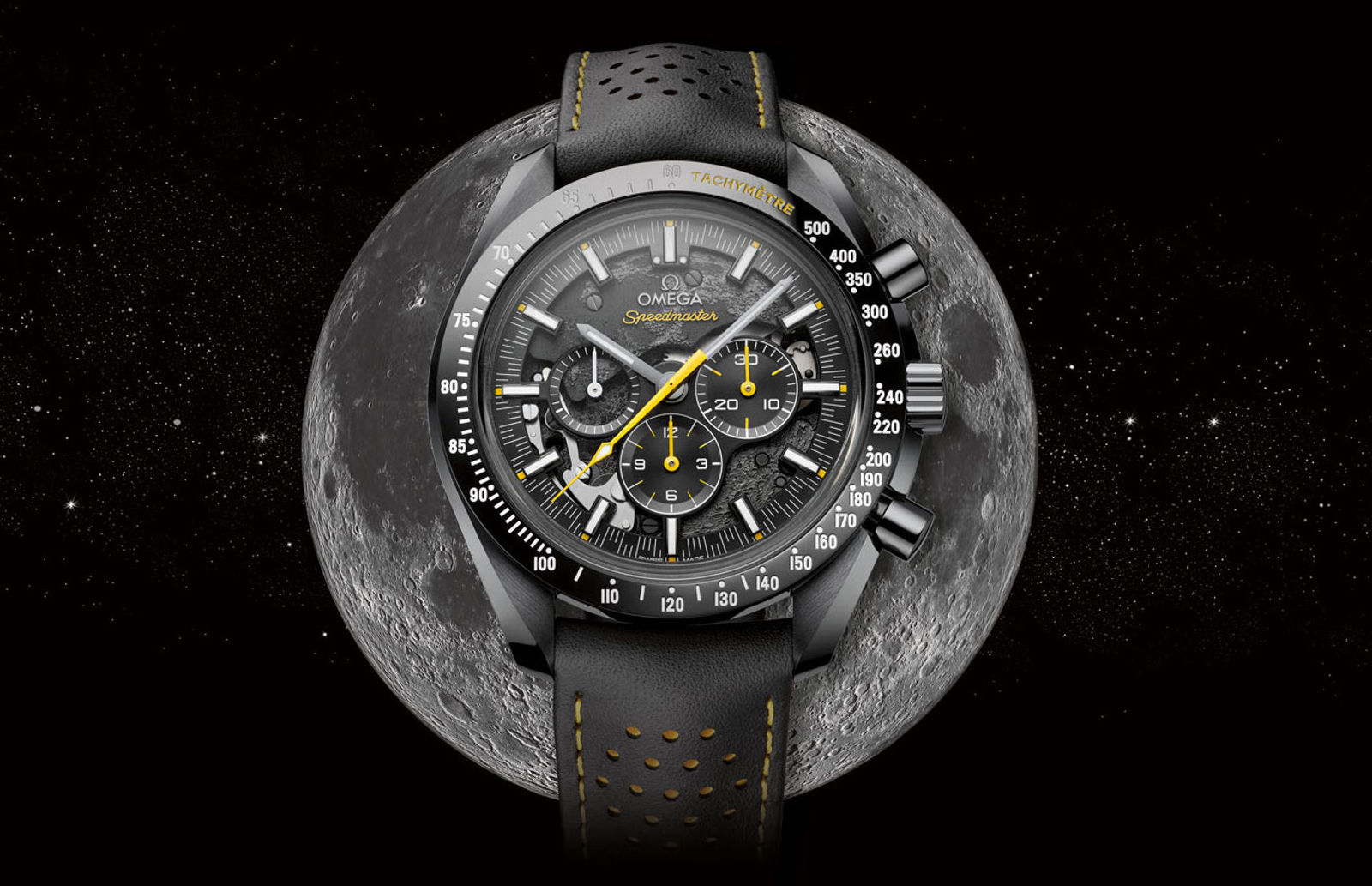
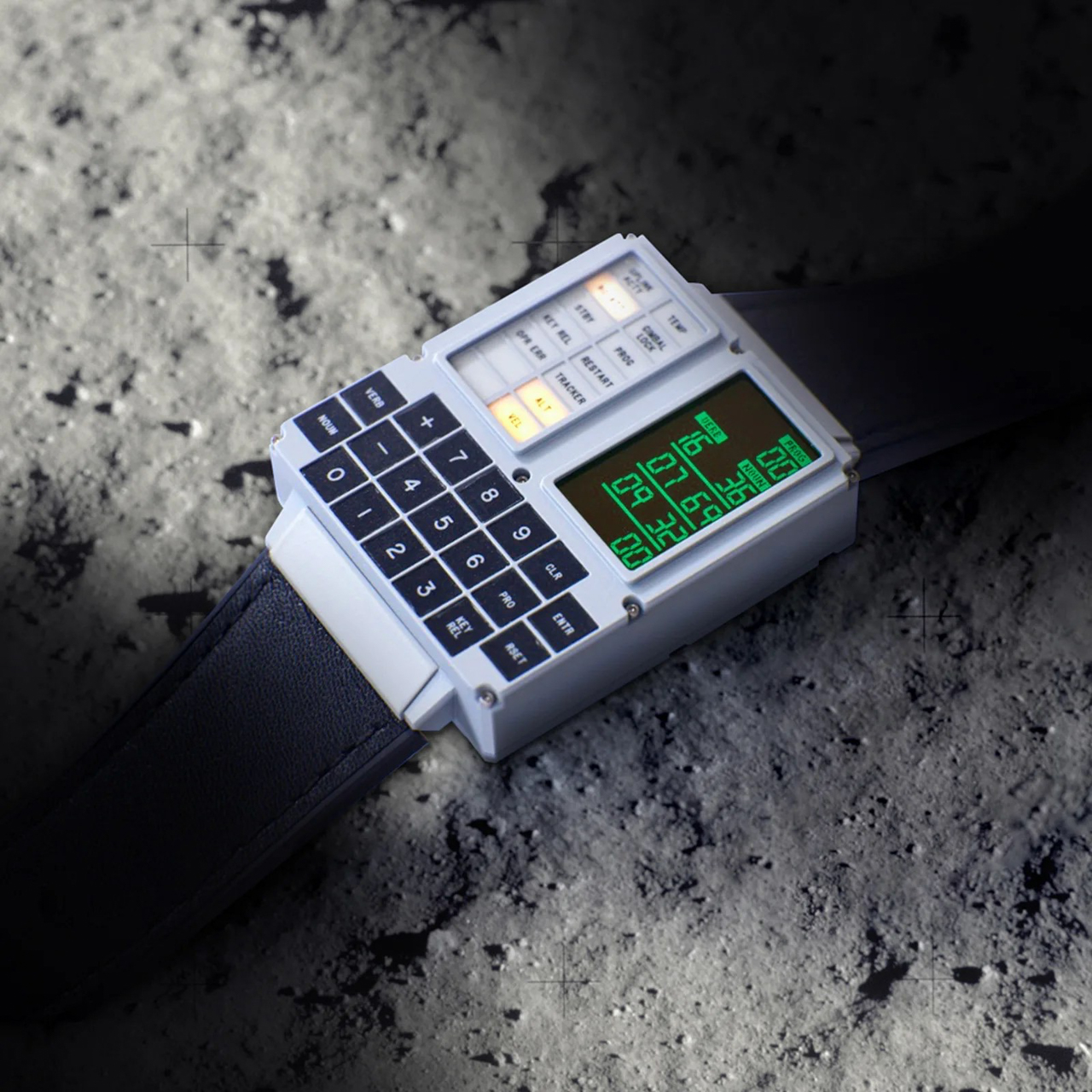
The connection between the Apollo watch, the DSKY interface, and the Omega Speedmaster Moonwatch represents the ultimate intersection of mechanical reliability and early digital space computing. While the mechanical Omega Speedmaster Professional served as NASA's officially flight-qualified wrist chronograph, the Display Keyboard (DSKY) was the primary digital user interface for the Apollo Guidance Computer (AGC). Today, this legacy inspires both original Moonwatch history and modern horological tributes that recreate DSKY aesthetics on the wrist.
The Dual Pillars of Apollo Spaceflight: Mechanical Backup and Digital Innovation
During the Apollo program of the 1960s and 1970s, NASA relied on two fundamentally different timing and calculation philosophies to land humans on the Moon and return them safely to Earth. On one hand was high-tech digital innovation represented by the Apollo Guidance Computer (AGC) and its cockpit interface, the Display Keyboard (DSKY). On the other hand was absolute mechanical autonomy, embodied by the flight-certified Omega Speedmaster Professional chronograph, affectionately known as the "Moonwatch."
- APOLLO CABIN HARDWARE
- Digital Computing
- Apollo Guidance Computer (AGC)
- Interface: DSKY Display
- Analog Backup
- Omega Speedmaster Professional
- Mechanical Wrist Chronograph
- Digital Computing
Understanding how these two systems operated side-by-side clarifies why space historians and watch collectors view them as complementary technologies. The DSKY provided complex trajectory calculations, state-vector updates, and engine firing commands. Meanwhile, the mechanical Moonwatch served as an independent, mission-critical timing instrument strapped to the outside of the astronaut's pressure suit or worn on the wrist inside the command module.
In recent years, the distinct visual identity of the DSKY interface—with its high-contrast numeric display panels, indicator lights, and famous VERB and NOUN keying system—has spilled over into independent watchmaking. Modern microbrands and homage projects have developed "DSKY watches" that translate the physical layout and retro-futuristic digital language of the Apollo guidance hardware into wearable wristwatches.
Engineering the DSKY: The Interface That Guided Apollo
To understand how the DSKY inspired modern space-themed horology, one must examine its mechanical and electronic construction. Developed by the MIT Instrumentation Laboratory under the leadership of Charles Stark Draper and manufactured by Raytheon, the Apollo Guidance Computer was a marvel of mid-century electrical engineering. It was one of the earliest computers to utilize integrated circuits (ICs), dramatically reducing its physical footprint so it could fit aboard the Command Module (CM) and Lunar Module (LM).
The Physical Display and Keypad Layout
The astronaut-facing element of the AGC was the DSKY interface (pronounced "DIS-kee"). Installed in both the main display console and the optical navigation station, the DSKY measured roughly 8 by 8 inches on its face and featured a highly structured visual hierarchy:
- Status Indicators (Alarm and Activity Lights): Located on the left side of the panel, these backlit indicators illuminated to alert the crew to system events or computer alarms (such as the famous 1201 and 1202 program alarms during the Apollo 11 lunar descent). Key indicators included
COMP ACTY(Computer Activity),UPLINK ACTY,PROG, andGIMBAL LOCK. - Data Register Displays: Positioned on the upper right, three five-digit signed numeric display lines shown in high-contrast green segments presented numerical telemetry, coordinates, velocity changes, or orbital parameters.
- Verb and Noun Displays: Two dual-digit segments displayed the active operational mode.
VERBindicated the action to be executed (e.g., Display, Monitor, Load, or Change), whileNOUNspecified the data variable being acted upon (e.g., Celestial Body, Engine Burn Time, or Longitude/Latitude). - Keyboard Matrix: A physical 19-button keypad featuring numerical keys (0–9), sign keys (+/−), operational function keys (
VERB,NOUN,KEY REL,CLR,PRO,ENTR), allowing manual entry under high-g flight conditions.
The visual signature of the DSKY—specifically its electroluminescent green numeric segments set against a matte black bezel, framed by crisp rectangular indicator blocks—remains one of the most recognizable design languages in industrial computer history.
The Omega Speedmaster Moonwatch: NASA’s Flight-Qualified Chronograph
While the AGC calculated complex spatial mathematics, NASA required a personal timing device for every astronaut that did not rely on spacecraft power or internal wiring. In 1964, NASA Project Gemini flight crew operations engineers sent an informal request for proposals to various watch manufacturers to find a personal wrist chronograph capable of surviving extreme spaceflight environments.
- NASA Qualification Testing (1964–1965)
- High Temperature Test: 48 hours at 160°F
- Low Temperature Test: 4 hours at 0°F
- Temperature-Pressure Cycles: 10−6 atm
- Relative Humidity: 240 hours at >95% humidity
- High-Oxygen Environment: 100% O2 at 0.35 atm
- Shock & Acceleration: 40g shocks, 11g linear
- Omega Speedmaster Pass: Qualified for Space Flight (March 1, 1965)
NASA Qualification Protocols
The testing procedures conducted at the Manned Spacecraft Center (now Johnson Space Center) in Houston were brutal. Timepieces were subjected to extreme environmental stress tests:
- High and Low Temperature Exposure: 48 hours at 160°F (71°C) followed by 30 minutes at 200°F (93°C), and 4 hours at 0°F (−18°C).
- Temperature-Pressure Cycles: Heated to 160°F at 0.000001 atmospheres, then cooled to 0°F.
- Relative Humidity Testing: 240 hours at relative humidity of at least 95% across varying temperatures.
- Oxygen Atmosphere Test: Exposure to 100% oxygen atmosphere at 0.35 atmospheres for 48 hours.
- Shock and Acceleration: Impact testing of 40g in six different directions, alongside linear acceleration testing up to 11g.
- Decompression and Acoustic Noise: Exposure to low pressure and 130 dB acoustic vibration across frequencies from 40 to 10,000 Hz.
On March 1, 1965, NASA officially declared the manual-wind Omega Speedmaster Professional (reference ST 105.003) "Flight Qualified for All Manned Space Missions." Subsequent references, including the ST 105.012 and ST 145.012—which featured asymmetrical cases with integrated crown guards—became the standard hardware issued to Apollo astronauts.
| Specification | Omega Speedmaster Professional (Apollo-Era ST 105.012) |
|---|---|
| Movement | Lemania-based Caliber 321 (Manual-wind column wheel) |
| Case Material | 316L Stainless Steel with twisted lyra lugs |
| Crystal | Hesalite (Acrylic) - chosen to prevent shattering |
| Bezel | Anodized Aluminum with Tachymeter Scale |
| Dial | Matte Black with tritium luminescent hour markers |
| Strap | Long Velcro (NASA Spec SEB12100030-202) for suit wear |
Hesalite acrylic crystal was chosen instead of mineral glass or sapphire because acrylic does not shatter into tiny, hazardous fragments under extreme impact. In a zero-gravity cabin, floating glass dust could enter an astronaut's eyes or short-circuit electrical instrument panels—including the open circuitry of the DSKY.
When Digital Failed: The Interplay Between Speedmaster and DSKY
The relationship between the digital DSKY and the mechanical Moonwatch was not theoretical; it was proven in critical mission environments, most famously during the near-disaster of Apollo 13 in April 1970.
Following the explosion of Service Module oxygen tank 2, the Command Module Odyssey lost power, water, and oxygen supplies. The crew—Jim Lovell, Jack Swigert, and Fred Haise—were forced to retreat to the Lunar Module Aquarius, using it as a life raft. To preserve limited battery power for re-entry, the crew powered down non-essential electrical systems, including the Apollo Guidance Computer and its DSKY displays.
- Event: Oxygen Tank Explosion
- Action: LM Aquarius powered up as life raft
- Action: AGC/DSKY Powered OFF to conserve energy
- Challenge: Course Correction Burn Needed
- Target Duration: Exactly 14.0 Seconds
- Hardware: Lunar Module Descent Engine
- Execution:
- Jim Lovell: Kept craft aligned on Earth terminator
- Jack Swigert: Timed burn with Omega Speedmaster
- Result: Burn executed within 0.1s accuracy
Without the DSKY operational to calculate and time the engine burn, the crew had to manually align the Lunar Module's descent engine and execute a critical 14-second burn to correct their trajectory back toward Earth.
Command Module Pilot Jack Swigert used his manual-wind Omega Speedmaster Professional chronograph to time the exact 14.0-second engine burn while Commander Jim Lovell controlled the spacecraft's attitude by keeping the Earth's terminator line aligned in the optical window. The burn was successful, resulting in safe ocean splashdown. For its critical role in saving the crew, Omega was awarded NASA's Snoopy Award in October 1970, the highest honor bestowed by NASA astronauts for outstanding contributions to flight safety and mission success.
The Rise of DSKY-Inspired Wristwatches
While the Omega Speedmaster represents the historical wrist hardware worn alongside the AGC, modern space exploration enthusiasts and watch creators have designed timepieces directly modeled on the DSKY hardware itself. These creations bridge the gap between retro space computing and wearable design.
| DSKY Hardware Element | Transformed Horological Feature |
|---|---|
| 7-Segment Electroluminescent Green Data Registers | Retro-LED / Custom LCD digital display or custom mechanical jump-hour discs |
| VERB / NOUN Digital Indicators | Dual-window mode/date indicators |
| Anodized Aluminum Metal Housing with Beveled Corners | Machined 316L Stainless Steel case with blasted gray/silver finishes |
| Status Indicator Grid (COMP ACTY, UPLINK ACTY) | Color-blocked dial segments, lume pads, or functional push-button labels |
Key Aesthetics of DSKY-Themed Watches
- Segmented Digital Displays: Authentic DSKY watches incorporate numerical displays styled after the original 7-segment green electroluminescent glass panels designed by Raytheon. Modern iterations use custom LED modules or positive-reflective LCD displays with green backlighting to mirror the look of glowing vacuum tubes and EL displays.
- Verb and Noun Interface Visuals: Many tribute watches use custom date wheels or secondary displays that cycle through operational commands. For instance, the "VERB" window might show mode settings (Time, Date, Stopwatch), while "NOUN" indicates parameters (Seconds, Month, Year).
- Industrial Case Geometry: Instead of traditional circular watch shapes, DSKY-inspired watches frequently use squared or faceted metal cases with bead-blasted, industrial surfaces mimicking the avionics housings found in the Command and Lunar Modules.
- Color-Coded Status Panels: Incorporating bright amber, red, and green status boxes—referencing historical indicators like
PROG,RESTART, orGIMBAL LOCK—onto the dial face or watch crystal perimeter.
Technical Comparison: Moonwatch Heritage vs. DSKY Homage Timepieces
For collectors evaluating space-related watches, it is essential to distinguish between certified historical flight hardware (the Omega Speedmaster Moonwatch) and thematic aesthetic tributes (DSKY-inspired timepieces).
| Feature / Metric | Omega Speedmaster Professional (Moonwatch) | Modern DSKY-Inspired Homage Watches |
|---|---|---|
| Primary Design Focus | Mechanical analog triple-register chronograph | Retro-futuristic digital display / AGC interface |
| Movement Architecture | Manual-wind Mechanical (Caliber 1861/3861) | Quartz / Custom Digital LED / Quartz-Digital hybrid |
| NASA Flight Certification | Certified for All Manned Spaceflight (1965–Present) | N/A (Independent commemorative/tribute hardware) |
| Crystal Construction | Hesalite (Acrylic) or Sapphire ("Sapphire Sandwich") | Mineral Glass or Flat Sapphire Crystal |
| Display Illumination | Super-LumiNova on hands & hour markers | Active LED Backlight / Electroluminescent Green |
| Water Resistance | 50 Meters / 5 BAR | 30 to 100 Meters (varies by manufacturer) |
| Historical Role | Operational EVA/Cabin Wrist Chronograph | Commemorative Tribute to Apollo Computing |
| Typical Target Audience | Pure horology collectors, space history purists | Retro-tech enthusiasts, Apollo AGC collectors |
Collector’s Guide: Authenticating and Selecting Apollo-Era Timepieces
Whether acquiring a contemporary Omega Speedmaster Professional Moonwatch or sourcing a DSKY-themed tribute watch, collectors should evaluate specific authenticity and engineering factors.
1. Evaluating an Omega Speedmaster Professional Moonwatch
When purchasing a classical Moonwatch with authentic Apollo heritage connections, pay attention to case references and mechanical caliber details:
- Pre-Moon References (ST 105.003, ST 105.012, ST 145.012): These feature the historic Caliber 321 column-wheel movement. ST 105.012 and ST 145.012 are the exact case references worn on the surface of the Moon during Apollo 11.
- Post-Apollo References (ST 145.022 onwards): Utilized the shuttle-era Caliber 861 or Caliber 1861 cam-lever movements. Modern models incorporate the Caliber 3861, which retains manual winding while adding Master Chronometer certification and a co-axial escapement resistant to magnetic fields up to 15,000 gauss.
- Dial Details: Look for the historical "Dot Over 90" (DON) bezel on pre-1970 models and special editions, alongside stepped dials where the outer minute track drops slightly below the central dial plane.
- Caliber 321 (1957–1968)
- Column-wheel chronograph, 18,000 vph
- Caliber 861 / 1861 (1968–2021)
- Cam-actuated chronograph, 21,600 vph
- Caliber 3861 (2019–Present)
- Co-Axial, Master Chronometer, Silicon
2. Evaluating DSKY Tribute Timepieces
When inspecting independent DSKY homage watches, focus on build quality and module functionality:
- Display Quality: Ensure the green LED or backlit LCD panel offers clear visibility under direct sunlight. True 7-segment displays should replicate the font geometry of the original Raytheon EL displays.
- Case Finish: Look for solid 316L stainless steel construction with matte bead-blasted or PVD coatings that reflect authentic spacecraft panel finishes rather than cheap decorative plating.
- Button Responsiveness: Function keys (
VERB,NOUN,ENTER) should possess crisp tactile feedback. On high-end microbrand DSKY watches, these pushers operate the chronograph, display modes, or backlighting.
Frequently Asked Questions
Did astronauts actually wear a DSKY on their wrists?
No. The DSKY was a built-in control panel hardwired directly to the Apollo Guidance Computer inside the Command Module and Lunar Module cabin consoles. Astronauts wore mechanical wrist chronographs—specifically the NASA-issued Omega Speedmaster Professional—on their wrists over their pressure suits using long Velcro straps. Modern "DSKY watches" are horological tributes that shrink the appearance of the spacecraft console panel into a wearable wristwatch format.
Why did Neil Armstrong leave his Speedmaster inside the Lunar Module?
During the Apollo 11 moon landing, the primary in-cabin timer on the Lunar Module Eagle malfunctioned. Neil Armstrong left his Omega Speedmaster Professional (reference ST 105.012) onboard the LM to serve as a reliable mechanical backup timer for the crew's return launch while he and Buzz Aldrin conducted their moonwalk. Buzz Aldrin wore his Speedmaster on the lunar surface, making it the first watch worn on the Moon.
What do the VERB and NOUN buttons on the DSKY mean?
The DSKY interface used a simple language structure to communicate with the computer. VERB indicated the action the computer should take (such as display data, monitor a sensor, or execute a program), while NOUN specified the data parameter or variable being targeted (such as velocity, altitude, or orbital angle). Users pressed VERB followed by a two-digit code, then NOUN followed by a two-digit code, and finally ENTER.
Are Hesalite crystals better than Sapphire for space watches?
For actual spaceflight, Hesalite (acrylic) is preferred over traditional sapphire glass because acrylic deforms or scratches under heavy impact rather than shattering. Shattered sapphire creates microscopic glass fragments that float in zero gravity, presenting severe electrical short-circuit and inhalation hazards. For everyday wear on Earth, sapphire is often preferred by modern buyers due to its exceptional scratch resistance.
How were Apollo Guidance Computer commands validated during flight?
When an astronaut keyed a command into the DSKY using the VERB and NOUN buttons, the entered numbers flashed on the display registers. The AGC would not execute the command until the astronaut reviewed the input numbers and pressed the physical PRO (Proceed) or ENTR (Enter) key. This step prevented accidental keystrokes during high-g maneuvers or spacecraft turbulence.
Next Steps for Enthusiasts and Collectors
If you are looking to explore or collect Apollo-era space timepieces, consider these actions:
- Study Historical Avionic Artifacts: Visit original technical documentation such as the MIT Museum AGC Digital Archive or the Smithsonian National Air and Space Museum to review authentic Apollo cabin photography, DSKY program listings, and NASA flight log entries.
- Inspect Original Speedmaster Specifications: Review official NASA flight qualification records and cross-reference model numbers (ST 105.003, ST 105.012, and ST 145.012) when shopping for vintage or modern Moonwatch models.
- Evaluate DSKY Microbrand Projects: When considering independent DSKY-inspired watches, check movement specifications, case materials (favoring 316L stainless steel), water resistance ratings, and display module durability before purchasing.