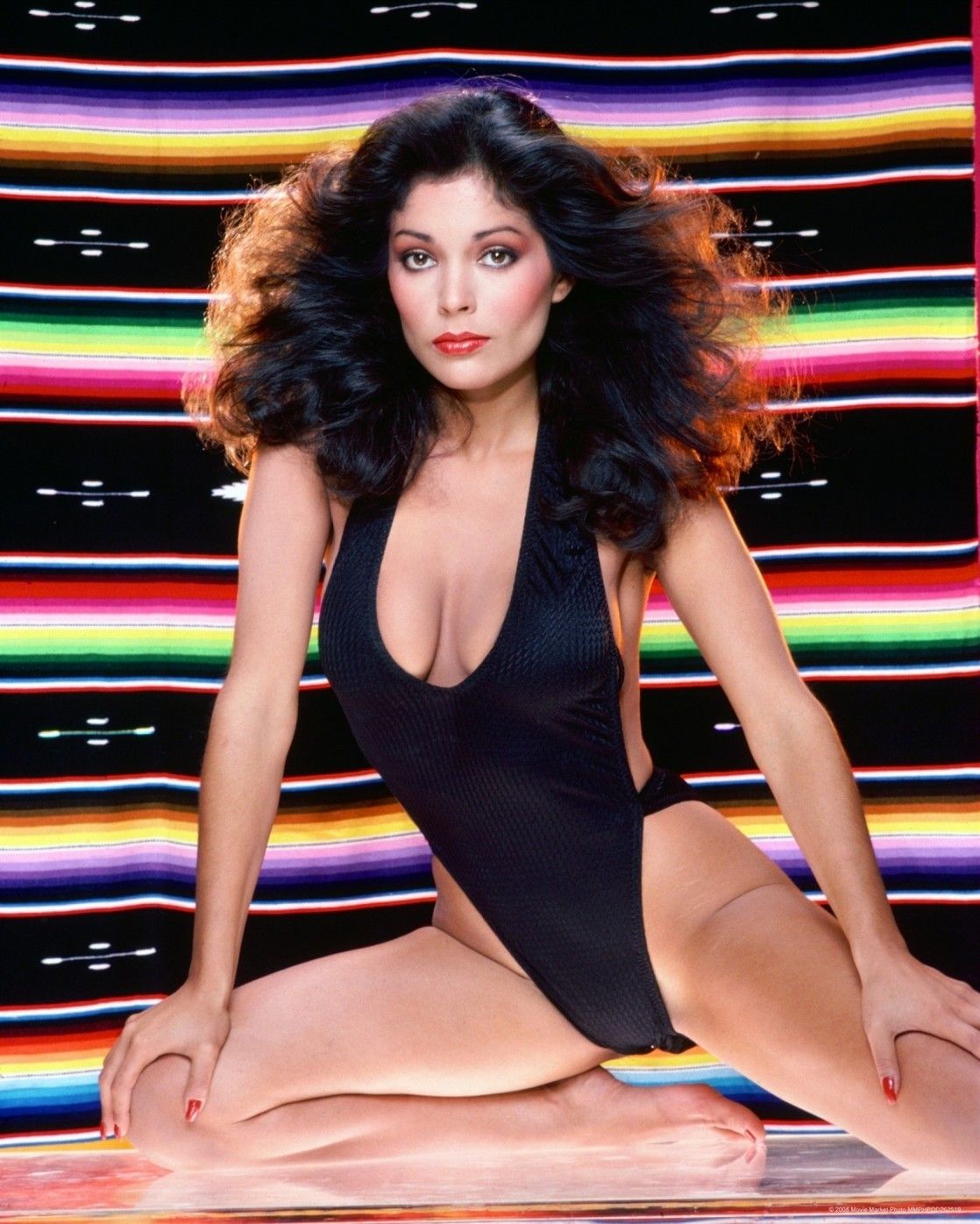
Apollonia Kotero defined a pivotal moment in 1980s pop culture, rising from local Los Angeles modeling and television guest spots to international stardom as Prince’s co-star in the 1984 blockbuster film Purple Rain. As the frontwoman of Apollonia 6, a prime-time soap opera star on Falcon Crest, and a solo recording artist, Kotero became an enduring symbol of 1980s glamour, music, and Latina representation.
Early Career and Discovery: From Modeling to Hollywood Guest Spots (1980–1983)
Before she became globally recognized by her mononym, Apollonia was Patricia Kotero, born in Santa Monica, California, to Mexican immigrant parents. Raised in Southern California, she pursued entertainment from an early age, working as a model, dancer, and actor. In 1980, she won the Miss San Pedro beauty pageant, which opened doors to professional modeling assignments and talent representation in Los Angeles.
During the early 1980s, Kotero secured high-profile commercial work and became a cheerleader for the Los Angeles Rams. Her striking visual presence led to roles in television series during the golden era of episodic network television. Between 1982 and 1983, she appeared in guest roles across several top-rated television shows:
- CHiPs (1982): Played the character Barbara in the episode "Rock Devil Rock," marking one of her earliest network appearances.
- Tales of the Gold Monkey (1983): Appeared as a island maiden in the adventure series episode "Force of Habit."
- Fantasy Island (1983): Guest-starred in the episode "Naranjas/A Vision," expanding her footprint in prime-time network drama.
- Matt Houston (1984): Filmed guest appearances just prior to her breakthrough in feature films.
Alongside her television appearances, Kotero featured in music videos, including the clip for The J. Geils Band's hit "Centerfold" and Eddie Money's "Shakin'." These early camera roles established her confidence on set, her ability to dance and perform under pressure, and her strong screen presence—qualities that soon caught the attention of music executives and Hollywood casting directors.
The Purple Rain Phenomenon: Casting, Character, and Global Stardom (1983–1984)
The trajectory of Apollonia Kotero’s career shifted permanently in the summer of 1983. Musician Prince was preparing his feature film debut, Purple Rain, alongside managers Cavallo, Ruffalo & Fargnoli and director Albert Magnoli. Originally, the lead female role opposite Prince was designed for Denise "Vanity" Matthews, leader of the Prince-created trio Vanity 6. However, Vanity abruptly left the project shortly before production began to pursue a solo recording contract with Motown Records.
With production deadlines looming, the filmmakers launched an urgent nationwide casting search to find a replacement who possessed stage presence, vocal capability, and on-screen chemistry with Prince.
The Audition and Renaming
Kotero attended an open audition in Los Angeles. Her screen tests demonstrated an immediate, electric rapport with Prince. Impressed by her magnetism and exotic charm, Prince cast her as the film’s female lead. As part of joining Prince's artistic universe, she adopted the stage name Apollonia, inspired by her middle name and her heritage.
Film Role and Cultural Impact
Released in theaters on July 27, 1984, Purple Rain became a massive box-office success, grossing over $68 million in North America against a modest $7 million production budget. Kotero played a fictionalized version of herself—an aspiring singer arriving in Minneapolis who finds herself caught between her own musical ambitions, a romance with Prince's character ("The Kid"), and competing interest from rival bandleader Morris Day.
Several key moments featuring Kotero became iconic highlights of 1980s cinema:
- The Lake Minnetonka Scene: The famous dialogue sequence where The Kid tricks Apollonia into jumping into freezing water to prove her commitment to joining his musical circle (filmed at Cedar Lake in Minnesota).
- First Avenue Performances: The musical sequences showing Apollonia taking the stage at the legendary Minneapolis venue First Avenue, symbolizing her character's artistic independence.
- The Kid’s Romantic Arc: Apollonia’s character served as the emotional anchor for The Kid's personal growth, balancing his turbulent home life and artistic rivalry.
Purple Rain went on to win the Academy Award for Best Original Song Score, solidifying Kotero’s place in music and film history.
Apollonia 6 and the Minneapolis Sound Era
To coincide with the release of Purple Rain, Prince revamped the former Vanity 6 vocal group into Apollonia 6. Joining Kotero in the trio were original members Brenda Bennett and Susan Moonsie. Positioned as a key project within the burgeoning Minneapolis Sound, the group fused synth-pop, funk, dance rhythms, and provocative imagery.
- APOLLONIA 6 (1984)
- Apollonia Kotero (Lead Vocalist)
- Brenda Bennett (Background/Vocals)
- Susan Moonsie (Background/Vocals)
- Produced & Maintained by Prince / Warner Bros.
The Self-Titled Album (1984)
In October 1984, Warner Bros. Records released the self-titled album Apollonia 6. Recorded primarily at Sunset Sound in Los Angeles and Prince's Flying Cloud Drive Warehouse in Minnesota, the album was written and produced by Prince under the pseudonym "The Starr Company."
The record featured seven tracks designed for dance floors and pop radio:
- "Sex Shooter" – The lead single and central track performed in the Purple Rain film.
- "Blue Limousine" – A sleek synth-pop entry featuring vocal arrangements by Brenda Bennett.
- "Ooo She She Wa Wa" – An up-tempo dance track showcasing playful call-and-response hooks.
- "In a Spanish Eden" – A mid-tempo track highlighting Latin-influenced rhythm arrangements.
Chart Performance of "Sex Shooter"
"Sex Shooter" became the group's signature song and a dance-club staple across the United States and Europe during the late months of 1984.
- Billboard Dance Club Songs: Reached #7
- Billboard Hot R&B/Hip-Hop Songs: Reached #19
- Billboard Hot 100: Reached #85
While Prince originally planned a full mini-movie video album for Apollonia 6, the project was curtailed as Kotero sought to broaden her artistic career beyond the Minneapolis scene.
Transition to Television and Solo Music (1985–1989)
Recognizing the risk of being pigeonholed solely as a Prince protégé, Apollonia Kotero made a deliberate decision in 1985 to leave the Prince organization and chart her own independent career path. Her post-Purple Rain work focused on high-profile network television roles, feature films, and solo recording contracts.
Prime-Time Soap Opera Stardom: Falcon Crest (1985–1986)
In 1985, Kotero joined the cast of CBS's hit prime-time soap opera Falcon Crest during its fifth season. She played Apollonia Benjamin, an ambitious pop singer who becomes romantic partners with playboy Lance Cumson, played by Lorenzo Lamas.
Her 10-episode arc on Falcon Crest was specifically written to leverage her real-life musical talents. On the show, her character performed original songs written for the series, including "Red Light Tears" and "Man With the Look." Her addition brought a youth-oriented pop-culture edge to the established nighttime drama, expanding her audience to tens of millions of television viewers weekly.
Solo Recording Career: Apollonia (1988)
After completing her arc on Falcon Crest and guest-starring on shows such as The A-Team, Kotero signed a solo recording contract with Chrysalis Records. In 1988, she released her debut self-titled solo album, Apollonia.
Unlike the Minneapolis Sound synth-funk of Apollonia 6, her solo album embraced late-1980s dance-pop, R&B, and adult contemporary styles, featuring production work from industry veterans Andy Goldmark, Steve Barri, and Tony Peluso.
Key Tracks from the 1988 Solo Album:
- "Mismatch" – The album's energetic lead single, which gained traction in dance clubs and radio airplay, reaching the Billboard Hot Dance Music/Maxi-Singles Sales chart.
- "Since I Fell for You" – A smooth ballad showcasing a softer vocal delivery.
- "The Same Dream" – A pop track featuring crisp 80s drum-machine sequencing and guitar riffs.
Feature Films at the End of the Decade
As the decade drew to a close, Kotero continued working in film, appearing in several action and drama productions:
- Back to Back (1989): Played the female lead role of Jesse in this action-drama alongside Bill Paxton.
- Ministry of Vengeance (1989): Portrayed Zohra in an international action thriller featuring Ned Beatty and John Vance.
Style, Identity, and Representation in 1980s Pop Culture
Apollonia Kotero’s impact on 1980s popular culture extended beyond her music sales and box-office returns. Her visual presentation and heritage made her a distinct cultural figure during the decade.
Fashion and Visual Aesthetics
Kotero helped define mid-1980s glamour. Her style blended lace camisoles, high-waisted leather pants, studded belts, dramatic metallic jewelry, and voluminous hairstyles. Her image on album covers, magazine spreads (including high-profile features in Playboy in 1985), and television appearances championed lingerie-as-outerwear, a trend that dominated 1980s fashion trends inspired by Prince, Madonna, and the MTV generation.
Latina Representation in Mainstream Media
During an era when Hispanic actors were underrepresented in mainstream Hollywood films and prime-time network television, Kotero stood out as one of the few high-profile Latina sex symbols and lead actresses in global pop culture. By maintaining her identity, pride in her Mexican heritage, and prominent position in a major Hollywood studio release, she paved the way for subsequent generations of Latina performers in music and film.
Key Milestones of Apollonia Kotero’s 1980s Career
The following table summarizes Apollonia Kotero's primary projects, roles, and commercial achievements throughout the 1980s:
| Year | Project / Title | Category | Role / Format | Key Achievement / Historical Significance |
|---|---|---|---|---|
| 1980 | Miss San Pedro Pageant | Beauty Pageant | Winner | Early career recognition; launched modeling work in Los Angeles. |
| 1982 | CHiPs | Television | Guest Role (Barbara) | Early network TV appearance (Episode: "Rock Devil Rock"). |
| 1983 | Fantasy Island | Television | Guest Role | Featured in network drama before her film breakthrough. |
| 1984 | Purple Rain | Feature Film | Lead Female Role (Apollonia) | Global box-office hit ($68M+ domestic); Oscar-winning score. |
| 1984 | Apollonia 6 | Studio Album | Lead Vocalist | Debut album on Warner Bros. Records featuring "Sex Shooter." |
| 1984 | "Sex Shooter" | Single | Lead Vocalist | Peak #7 Billboard Dance; featured in Purple Rain soundtrack. |
| 1985–1986 | Falcon Crest | Television | Recurring Role (Apollonia Benjamin) | 10-episode arc on top-rated CBS prime-time soap opera. |
| 1988 | Apollonia | Studio Album | Solo Artist | Released via Chrysalis Records; featured single "Mismatch." |
| 1989 | Back to Back | Feature Film | Lead Female Role (Jesse) | Co-starred alongside Bill Paxton in late-80s film drama. |
Frequently Asked Questions About Apollonia Kotero in the 80s
How did Apollonia get cast in Purple Rain?
Apollonia Kotero was cast after an open audition in Los Angeles in 1983. Original lead Denise "Vanity" Matthews left the project right before filming started. Director Albert Magnoli and Prince selected Kotero due to her on-screen charisma, vocal ability, and immediate natural chemistry with Prince during chemistry reads.
Did Apollonia sing her own vocals in Apollonia 6 and on her solo albums?
Yes. Apollonia provided lead vocals for the Apollonia 6 project and performed her own vocals across all tracks on her 1988 self-titled solo album on Chrysalis Records. On her 1985 Falcon Crest television appearances, she also performed original vocal tracks recorded specifically for the show.
What were Apollonia’s biggest hit songs in the 1980s?
Her most famous hit single was "Sex Shooter" (1984) with Apollonia 6, which reached #7 on the Billboard Hot Dance Club Songs chart and #19 on the Hot R&B chart. As a solo artist, her 1988 dance-pop single "Mismatch" gained significant dance-club play and chart recognition.
Why did Apollonia leave Prince's management after Purple Rain?
Apollonia chose to leave Prince’s camp in 1985 to avoid being restricted to a single artistic team or image. She wanted to broaden her professional options, which allowed her to secure acting roles on network television series like Falcon Crest and sign an independent recording deal with Chrysalis Records.
What character did Apollonia play on Falcon Crest?
She played Apollonia Benjamin during Season 5 (1985–1986) of the CBS prime-time soap opera. Her character was an aspiring pop singer who developed a romantic storyline with main character Lance Cumson (played by Lorenzo Lamas).
How to Explore Apollonia Kotero’s 80s Discography and Filmography
For music collectors, film historians, and fans of 1980s pop culture seeking to explore Apollonia Kotero's work from this era, the following practical steps offer the best entry points:
- Watch Purple Rain (1984): Available on standard digital streaming and physical Blu-ray/4K Ultra HD formats. Viewing the film provides the essential context for her breakout cultural impact.
- Listen to the Apollonia 6 (1984) Album: Seek out original vinyl pressings or authorized digital reissues to experience classic Minneapolis Sound funk tracks like "Sex Shooter" and "Blue Limousine."
- Explore Her 1988 Solo Album Apollonia: Compare her Prince-era work with her late-80s Chrysalis Records release to track the evolution of late-80s dance-pop production.
- Review Her Television Arc on Falcon Crest (Season 5): Watch her guest appearances on Season 5 DVD releases or retrospective broadcast archives to see how prime-time network television adapted 1980s pop music stars into dramatic soap opera storylines.