Apollo 13 never touched the Moon because a catastrophic oxygen tank explosion in its Service Module severely damaged the spacecraft's electrical and life-support systems two days into the flight. The mission was forced to abandon its planned lunar landing, using the Moon's gravitational force to slingshot the crew safely back toward Earth.
The Planned Mission vs. Reality: Why Apollo 13 Aborted Its Lunar Landing
Launched on April 11, 1970, Apollo 13 was designed to be NASA’s third crewed moon landing following the historical successes of Apollo 11 and Apollo 12. Command Module Pilot John L. "Jack" Swigert Jr., Lunar Module Pilot Fred W. Haise Jr., and Mission Commander James A. Lovell Jr. were scheduled to explore Fra Mauro, a hilly lunar upland region selected to provide insight into the geological history of the Moon.
Approximately 56 hours into the flight, on April 13, 1970, the mission suffered a major failure. While the spacecraft was about 200,000 miles (320,000 kilometers) from Earth, ground control instructed Swigert to perform a routine maintenance procedure: stirring the cryogenic oxygen and hydrogen tanks in the Service Module to ensure accurate density readings.
Moments after the switch was activated, an electrical arc caused by damaged Teflon insulation on the fan wiring ignited an oxygen fire inside Oxygen Tank 2. The pressure rapidly spiked, resulting in a sudden explosion that blew off an outer panel of the Service Module and ruptured the adjacent Oxygen Tank 1.
Within minutes, the spacecraft lost two of its three fuel cells, which generated power by combining hydrogen and oxygen. The loss of oxygen stopped the fuel cells from operating and depleted the Command Module's primary electrical supply and breathing air, leaving the crew with insufficient power and life support to attempt a moon landing. NASA flight directors in Houston immediately cancelled the landing mission and transitioned to a survival operation.
Looping the Moon: The Slingshot Trajectory and Far-Side Flyby
Although Apollo 13 never touched the lunar surface, the spacecraft had to fly around the Moon to make its way home. At the time of the explosion, the spacecraft was on a hybrid trajectory—a pathway optimized for landing in the Fra Mauro region that did not automatically return the spacecraft to Earth if power failed.
To safely return the astronauts, NASA flight controllers, guided by Lead Flight Director Gene Kranz, executed a critical course correction using the propulsion system of the Lunar Module, named Aquarius.
- Earth Departure
- Oxygen Tank Explosion
- Abort Lunar Landing
- Lunar Orbit Slingshot
- Closest Pass: 254 km
- Safe Earth Entry
Directly reversing direction in deep space would have required firing the Service Module's main Service Propulsion System (SPS) engine. Flight controllers could not verify whether the explosion had damaged the SPS engine bell or its surrounding structural casing. Firing an unstable engine risked a second catastrophic explosion.
Instead, NASA used the undamaged Descent Propulsion System (DPS) engine on Aquarius to push the combined spacecraft back onto a free-return trajectory. This path allowed the Moon’s gravity to bend the spacecraft's flight path into an oval loop back toward Earth.
On April 15, 1970, Apollo 13 passed behind the far side of the Moon at an altitude of approximately 254 kilometers (158 miles / 137 nautical miles) above the surface. This closest pass, known as pericynthion, set a record for the farthest distance human beings have ever traveled from Earth—roughly 400,171 kilometers (248,655 miles).
While behind the Moon, the crew experienced a temporary radio blackout as lunar mass blocked line-of-sight communication with Mission Control. Astronauts Jim Lovell and Fred Haise observed and photographed the cratered surface from their windows, but no physical contact or touchdown occurred.
The Space Lifeboat: How the Lunar Module Aquarius Saved the Crew
Because the Command Module, named Odyssey, was losing power and oxygen, the crew had to shut it down to preserve its entry batteries for the final descent through Earth's atmosphere. The crew evacuated into the Lunar Module Aquarius, transforming the two-person landing craft into an emergency lifeboat for three astronauts.
| Spacecraft Component | Function / Status |
|---|---|
| Command Module (Odyssey) | Crew Survival Compartment |
| Service Module | Damaged by Explosion |
| Lunar Module (Aquarius) | Used as Emergency Lifeboat |
Using Aquarius as a lifeboat presented unprecedented operational challenges that required ground engineers and the crew to improvise technical solutions:
- Carbon Dioxide Removal: Aquarius was designed to support two astronauts for two days, not three astronauts for four days. The spacecraft’s round lithium hydroxide canisters, which filter toxic carbon dioxide from the air, quickly became saturated. The Command Module used square canisters, which were incompatible with the sockets in the Lunar Module. Engineers at Mission Control built an adapter using plastic bags, cardboard, suits hoses, and duct tape—a modification the crew successfully duplicated on board.
- Power and Thermal Management: To keep the Lunar Module's batteries alive until splashdown, electrical consumption was reduced to bare minimums. Heating systems were turned off, causing temperatures inside the cabin to drop near freezing (around 38°F / 3°C). Condensation covered the interior walls and instrument panels.
- Water Rationing: Water was essential for cooling the electronic equipment aboard Aquarius, as well as for crew consumption. Astronauts limited their fluid intake to six ounces per day per person, leading to severe dehydration and kidney issues for crew members like Fred Haise.
Chronological Timeline of the Apollo 13 Abort and Safe Return
The emergency recovery of Apollo 13 required precise execution of emergency procedures over five days. The timeline below highlights key events during the mission.
- April 11, 1970: Mission Launch from Kennedy Space Center
- April 13, 1970: Cryogenic Oxygen Tank Explodes at ~56 Hours GET
- April 14, 1970: Crew Evacuates to LM Aquarius; Free-Return Burn Fired
- April 15, 1970: Lunar Flyby at 254 km Altitude (Farthest Human Flight)
- April 17, 1970: SM & LM Jettisoned; Odyssey Re-enters & Splashes Down
April 11, 1970
Apollo 13 launches from Saturn V launch vehicle at Kennedy Space Center at 14:13 EST. Despite a minor issue with the central engine of the S-II stage shutting down early, the spacecraft enters Earth parking orbit and executes a successful Trans-Lunar Injection (TLI).
April 13, 1970
At 55 hours and 54 minutes into the mission, Jack Swigert initiates a routine stir of the cryogenic tanks. Oxygen Tank 2 ruptures. Pressure drops in both oxygen tanks, and fuel cells 1 and 3 fail. Lovell utters the famous statement to Mission Control: "Houston, we've had a problem here." The planned landing at Fra Mauro is officially aborted.
April 14, 1970
The crew powers down Odyssey to preserve energy for re-entry and moves into Aquarius. A mid-course correction burn using the Descent Propulsion System (DPS) engine puts the spacecraft back on a free-return trajectory.
April 15, 1970
Apollo 13 reaches pericynthion, looping around the far side of the Moon at an altitude of 254 kilometers. Two hours after pericynthion (PC+2), the crew performs a major engine burn using the DPS engine to increase their speed, cutting their return time to Earth by roughly 10 hours.
April 16, 1970
The crew battles extreme cold, lack of sleep, and severe dehydration. Mission Control finalizes power-up sequences for the dormant Command Module Odyssey, which had never been restarted from a frozen state in flight before.
April 17, 1970
The crew jettisons the damaged Service Module, capturing the first photographs of the extensive damage caused by the explosion. Hours later, the Lunar Module Aquarius is jettisoned after serving its purpose as a lifeboat. Odyssey re-enters Earth's atmosphere and safely splashes down in the South Pacific Ocean, where the crew is retrieved by the USS Iwo Jima.
Spacecraft System Comparison: Command Module vs. Lunar Module During Abort
The table below illustrates the roles and limitations of Apollo 13's primary spacecraft components after the emergency occurred:
| Spacecraft Component | Intended Primary Role | Post-Explosion Condition | Emergency Function Provided |
|---|---|---|---|
| Command Module (Odyssey) | Habitat, Earth Re-entry & Landing | Depleted oxygen, lost primary electrical grid, deactivated in space | Powered down to save battery energy and heat shields for Earth re-entry. |
| Service Module (SM) | Main Propulsion, Power Generation, Oxygen Supply | Structural panel blown off; Oxygen Tank 2 destroyed; Fuel cells non-functional | Jettisoned prior to Earth re-entry without firing its primary SPS engine. |
| Lunar Module (Aquarius) | Descent to Lunar Surface, Surface Habitat, Lunar Ascent | Undamaged by explosion; fully loaded with propellant, water, and batteries | Served as emergency lifeboat, providing life support, navigation, and trajectory propulsion. |
Historical Impact and Engineering Changes at NASA
Following the safe return of the crew, NASA established the Apollo 13 Review Board, led by NASA Langley Research Center Director Edgar Cortright. The investigation identified a combination of design flaws, manufacturing oversight, and operational mishaps during pre-flight testing.
- Pre-Flight Voltage Overload
- Insulation Melted on Wiring
- Cryo-Stir Spark Ignition
- Tank Rupture & Abort
Prior to launch, the oxygen tank had been installed in another spacecraft, removed for modifications, and reinstalled in Apollo 13. During a ground test at Kennedy Space Center, the tank was not draining properly. Technicians used internal heaters to evaporate remaining liquid oxygen, applying 65 volts DC from ground power equipment—exceeding the 28-volt rating of the tank's internal heater thermostat switches. The higher voltage fused the thermostat contacts shut, melting the Teflon insulation covering the fan wires inside the tank.
The review board’s findings led to major modifications across the Apollo program before Apollo 14 was cleared for flight:
- Oxygen Tank Redesign: The internal heaters were eliminated, fan motors were removed from inside cryogenic tanks, and stainless-steel conduit replaced aluminum components to reduce fire hazards.
- Auxiliary Power Source: NASA added a third independent 337-ampere-hour emergency battery inside the Service Module to ensure power for critical systems in the event of main battery loss.
- Third Oxygen Tank: Spacecraft were retrofitted with an additional isolated oxygen tank located in a separate section of the Service Module to prevent single-point failures.
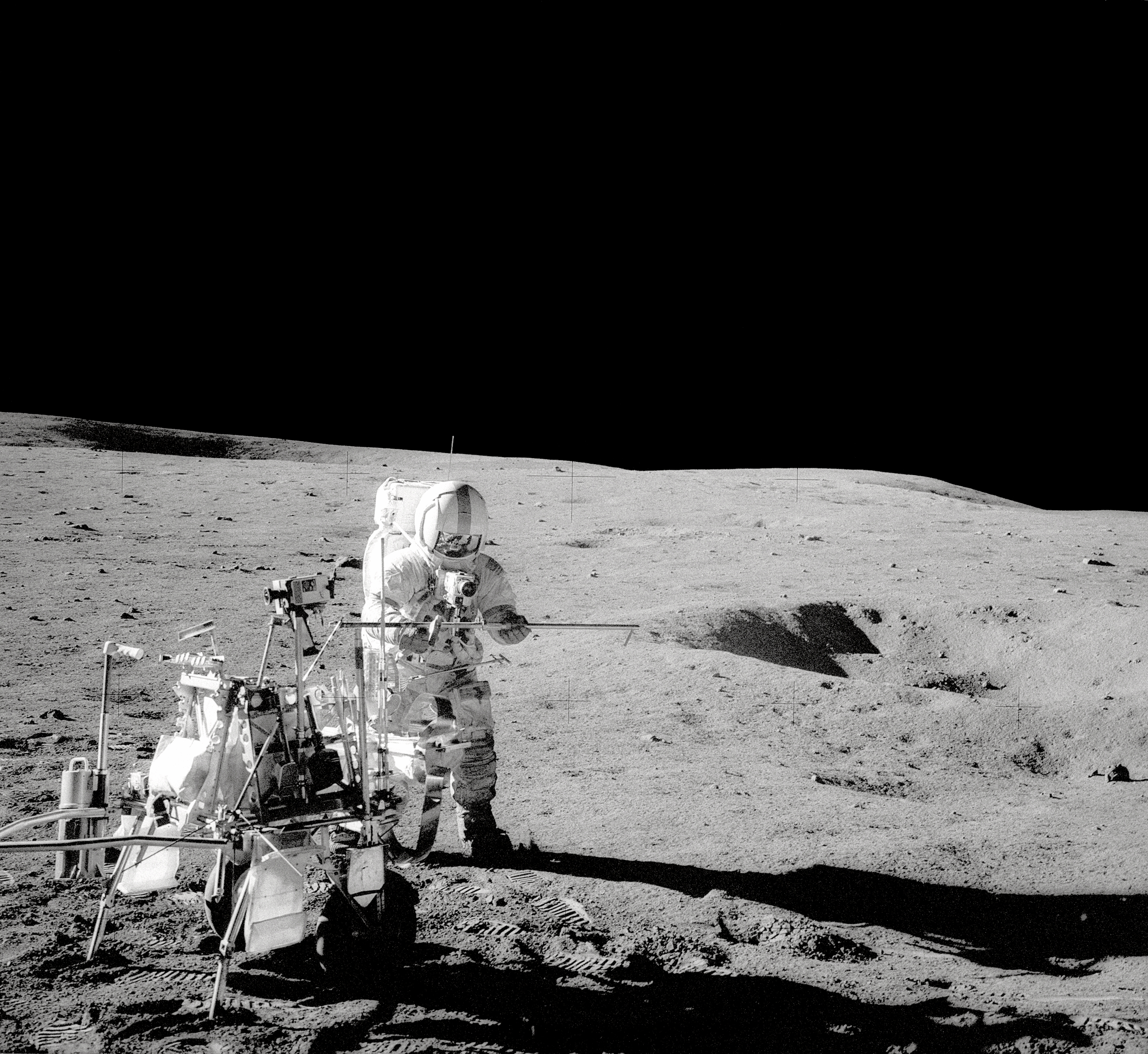
- Site Reassignment: The landing site originally assigned to Apollo 13—the Fra Mauro highlands—was reassigned to Apollo 14. Astronauts Alan Shepard and Edgar Mitchell successfully landed on and explored Fra Mauro in February 1971.
For detailed historical analysis of the Apollo 13 investigation, consult the NASA History Division records on the Cortright Commission report. Additional technical specifications regarding Apollo hardware modifications are maintained in the official NASA Technical Reports Server.
Myth vs. Fact: Clearing Up Apollo 13 Misconceptions
Despite extensive historical documentation, several common myths persist regarding the Apollo 13 mission.
- Myth: Apollo 13 crashed into the Moon.Fact: Apollo 13 never made contact with the lunar surface. The spacecraft orbited around the Moon on a free-return trajectory at a high altitude before flying back toward Earth. However, the third stage of the Saturn V rocket (S-IVB stage) was intentionally targeted to crash into the Moon prior to the spacecraft's arrival to perform seismic tests measured by instruments left by Apollo 12.
- Myth: The crew landed on the Moon secretly before returning.Fact: Landing on the Moon required the Lunar Module's descent engine and fuel supply, which were instead conserved to adjust the return trajectory to Earth. Without power or life support in the Command Module, a moon landing was physically impossible.
- Myth: Apollo 13 was stranded in space and couldn't get back.Fact: While the situation was perilous, the crew was never stranded without options. The natural laws of orbital mechanics enabled the spacecraft to use the Moon's gravity to swing back toward Earth without relying on the main propulsion system.
- Myth: The Apollo program was immediately cancelled due to Apollo 13.Fact: NASA paused flights to complete a thorough investigation and implement hardware redesigns. The program resumed nine months later with Apollo 14 and successfully completed four additional lunar landings through Apollo 17 in December 1972.
Frequently Asked Questions
Did Apollo 13 ever land on the Moon?
No. Apollo 13 did not land on the Moon. An oxygen tank explosion in the Service Module damaged critical life-support and electrical systems, forcing NASA to cancel the planned lunar landing and focus entirely on bringing the astronauts safely back to Earth.
How close did Apollo 13 get to the Moon?
Apollo 13 passed approximately 254 kilometers (158 miles / 137 nautical miles) above the far side of the lunar surface during its gravity-assist slingshot maneuver on April 15, 1970.
What happened to the intended Apollo 13 lunar landing site?
The target landing site for Apollo 13 was the Fra Mauro formation. Because Apollo 13 could not land, NASA reassigned the site to the next mission, Apollo 14, which landed successfully in February 1971.
Why couldn't Apollo 13 turn back immediately after the explosion?
Turning around directly in deep space would have required firing the Service Module's primary engine (SPS). Flight controllers could not verify if the engine had sustained damage in the explosion, making its ignition extremely dangerous. Using the Lunar Module's engine to loop around the Moon was the safest path home.
How did the Apollo 13 astronauts survive without main oxygen and power?
The crew used the Lunar Module Aquarius as a space lifeboat. Aquarius supplied oxygen, water, and electrical power until the astronauts reached Earth, at which point they transferred back into the Command Module Odyssey for re-entry.
Key Historical Takeaways
- Apollo 13 was an aborted moon landing caused by an electrical fire and oxygen tank explosion inside the Service Module.
- The crew never touched down on or landed on the Moon, but they set a human spaceflight record by swinging 254 kilometers above the far side of the lunar surface.
- Innovative problem-solving by NASA flight controllers and the crew—such as constructing carbon dioxide scrubbers and utilizing the Lunar Module as a lifeboat—allowed all three astronauts to return safely to Earth on April 17, 1970.
- The mission prompted comprehensive engineering redesigns that improved the safety of subsequent missions, including Apollo 14 through Apollo 17.
For readers seeking further primary historical documentation, detailed flight logs, and audio transcripts, access the official mission archives via the NASA Apollo 13 Mission Page.