On April 15, 1970, at 00:21 UTC, the Apollo 13 spacecraft reached a distance of 400,171 kilometers (248,655 statute miles) from Earth’s surface. This incredible altitude, achieved while swinging behind the far side of the Moon, remains the farthest absolute distance from Earth that human beings have ever traveled.
| Apollo 13 Record at a Glance | Details |
|---|---|
| Maximum Distance (Surface) | 400,171 km / 248,655 mi |
| Maximum Distance (Center) | 401,056 km / 249,205 mi |
| Timestamp of Peak Distance | April 15, 1970 (00:21 UTC) |
| Lunar Far-Side Altitude | 254 km / 158 mi |
| Key Trajectory Type | Free-Return Trajectory Slingshot |
The Unexpected Origins of an Exploration Record
The record set by Apollo 13 was never part of NASA’s original mission plan. Launched on April 11, 1970, Apollo 13 was intended to be the United States’ third crewed lunar landing mission. The targeted destination was the Fra Mauro highlands, a geologically complex region on the lunar nearside. The crew consisted of Commander James A. Lovell Jr., Command Module Pilot John L. Swigert Jr., and Lunar Module Pilot Fred W. Haise Jr.
Roughly 56 hours into the flight, at a distance of approximately 330,000 kilometers from Earth, routine maintenance turned into a life-threatening crisis. Flight controllers requested that the crew stir the cryogenic liquid oxygen tanks inside the Service Module (SM) to maintain accurate pressure readings. An electrical short circuit in Oxygen Tank 2 ignited insulation, causing the tank to rupture violently.
The explosion damaged adjacent equipment, severed the primary supply to Oxygen Tank 1, and rapidly depleted the Command Module’s fuel cells, which relied on oxygen and hydrogen to generate electricity, water, and breathable air. Within hours, the Command Module Odyssey was completely disabled as a long-term life-support vehicle, forcing the crew to power it down and transfer into the Lunar Module Aquarius to use it as a survival shelter or "life raft."
With the lunar landing immediately aborted, NASA Flight Director Gene Kranz and the team at Mission Control in Houston faced an unprecedented problem: how to bring three astronauts home safely from deep space using a crippled spacecraft combination with limited electrical power, water, and consumables.
Orbital Mechanics: Why Apollo 13 Traveled So Far
To understand why Apollo 13 holds the human altitude record, one must examine the celestial alignment and orbital mechanics governing the mission trajectory. Two primary factors combined to create this extreme distance:
- The Moon’s Position Near Apogee: The Moon’s orbit around Earth is elliptical rather than perfectly circular. Its distance from Earth fluctuates between perigee (closest approach, roughly 363,300 km) and apogee (farthest distance, roughly 405,500 km). In mid-April 1970, the Moon was approaching its apogee, placing the entire lunar neighborhood unusually far from Earth.
- The Free-Return Trajectory Requirement: Prior to the explosion, Apollo 13 had performed a mid-course maneuver to leave a standard free-return trajectory and enter a hybrid trajectory. This hybrid path enabled better lighting conditions for landing at Fra Mauro, but it meant that without further rocket burns, the spacecraft would miss Earth on its return path.
Following the accident, Mission Control executed a critical burn using the Lunar Module’s Descent Propulsion System (DPS) engine to push Apollo 13 back onto a free-return trajectory. A free-return trajectory uses the gravitational force of the Moon to loop the spacecraft around the lunar far side and slingshot it directly back toward Earth without requiring major propulsive maneuvers from a potentially damaged main engine.
- Trajectory path:
- Earth
- Moon
- Pericynthion (254 km altitude)
- Deep Space (Peak Distance: 400,171 km to Earth Surface)
Because the trajectory carried Aquarius and Odyssey around the far side of the Moon at an altitude of approximately 254 kilometers (158 statute miles), the distance of the spacecraft from Earth was the sum of:
- The Earth-to-Moon center-to-center distance at that precise moment.
- The physical radius of the Moon (1,737 km).
- The orbital altitude of Apollo 13 above the lunar surface (254 km).
When measured from Earth's surface, the spacecraft reached 400,171 km (248,655 miles). When measured center-to-center, the peak distance reached 401,056 km (249,205 miles). This remains an official Guinness World Record for the maximum distance from Earth reached by a human crew.
Comparing Peak Distances Across Apollo Missions
During the Apollo program (1968–1972), nine crewed missions traveled to the vicinity of the Moon. However, variations in lunar orbital position, landing target coordinates, and flight trajectories resulted in varying peak distances from Earth for each mission.
| Mission | Primary Objective | Target Destination | Peak Distance from Earth Surface (Approx.) | Key Trajectory Detail |
|---|---|---|---|---|
| Apollo 8 | First Lunar Orbit | Lunar Orbit Insertion | ~377,349 km (234,474 mi) | Moon near mid-orbit distance |
| Apollo 11 | First Lunar Landing | Sea of Tranquility | ~389,645 km (242,114 mi) | Standard transfer trajectory |
| Apollo 13 | Aborted Landing / Return | Fra Mauro (Aborted) | 400,171 km (248,655 mi) | Far-side loop during lunar apogee |
| Apollo 15 | J-Series Exploration | Hadly Rille / Apennines | ~397,000 km (246,684 mi) | Deep lunar inclination loop |
| Apollo 17 | Final Apollo Landing | Taurus-Littrow | ~399,000 km (247,927 mi) | High-altitude parking orbit |
While uncrewed missions—such as NASA’s Artemis I mission in 2022 using the Orion spacecraft—have since traveled beyond 430,000 kilometers from Earth in a distant retrograde orbit, no human crew has yet surpassed the distance record established by Apollo 13.
Technical Challenges at Peak Distance
Passing behind the Moon at a distance of 400,171 kilometers from Earth was not merely a passive orbital flight; it was an intense operational trial for both the crew and ground control.
| Apollo 13 Consumables Crisis: Problem | Emergency Solution |
|---|---|
| Electrical Power Shortage | Shut down CM completely |
| CO2 Accumulation in LM | Duct-tape LiOH adapter |
| Water Deprivation | Strict 6-oz daily limit |
| Thermal Drop (Near Freezing) | Warm clothing layers |
1. The Loss of Direct Communication (Radio Blackout)
As Apollo 13 passed behind the lunar far side, the massive body of the Moon blocked all direct radio signals between the spacecraft and NASA’s Deep Space Network stations on Earth. For nearly 45 minutes at their maximum distance from home, the astronauts were completely isolated. They could not communicate with Mission Control, receive real-time trajectory calculations, or report operational updates. During this period of silence, the crew took photographs of the lunar far side, though their primary focus remained managing life-support hardware and monitoring system performance.
2. Management of Critical Consumables
The Lunar Module Aquarius was designed to support two astronauts for approximately 45 hours on the lunar surface. Following the abort decision, it was required to keep three men alive for more than 80 hours during the deep-space coast back to Earth. To prevent complete exhaustion of consumables:
- Electrical Power: All non-essential electronic systems, including guidance computers and cabin heaters, were powered down. Electrical consumption was reduced to a fraction of normal operational levels, dropping cabin temperatures inside Odyssey and Aquarius to near freezing (around 38°F / 3°C).
- Carbon Dioxide Scrubbing: Aquarius utilized cylindrical Lithium Hydroxide (LiOH) canisters to remove toxic carbon dioxide from the air. However, the available supply of round canisters was insufficient for the extended journey. The crew was forced to improvise an adapter using plastic bags, cardboard, towels, and suit hoses to connect the square LiOH canisters from Odyssey to the round sockets of Aquarius.
- Water Conservation: Water was essential not only for human consumption but also for cooling the electronic hardware inside the spacecraft via sublimators. The crew voluntarily restricted their personal water intake to six ounces per person per day to ensure sufficient coolant remained for re-entry preparations.
3. Trajectory Adjustments (PC+2 Burn)
Two hours after passing pericynthion—the point of closest approach to the Moon and maximum distance from Earth—the crew executed another critical maneuver known as the PC+2 burn (Pericynthion plus 2 hours).
Using the LM Descent Engine, Flight Dynamics Officers (FIDOs) in Houston calculated a 4-minute and 24-second burn. This maneuver sped up the return trajectory, shaving roughly 10 hours off the return journey and causing the spacecraft to target an ocean splashdown in the South Pacific. This time reduction was vital to ensure that the surviving water and battery reserves would last until atmospheric entry.
Human Factors: Living at 400,000 Kilometers
From a psychological and physiological stance, the crew of Apollo 13 operated under extreme conditions while establishing their distance record.
| Crew Health & Living Conditions | Details |
|---|---|
| Cabin Temperature | 38°F - 45°F (3°C - 7°C) |
| Water Intake | 6 oz / day / person |
| Sleep Loss | Severe (due to cold/noise) |
| Medical Complication | Fred Haise (Kidney Infection) |
The spacecraft cabin became damp with condensation as moisture from the astronauts' breath settled on unheated aluminum walls and instrument panels. The lack of adequate drinking water caused severe dehydration among the crew members. Lunar Module Pilot Fred Haise developed a severe kidney and urinary tract infection during the flight, running a high fever while continuing to perform vital operational duties.
Commander Jim Lovell later reflected on the experience of looking back at Earth from such immense distances. At 400,000 kilometers away, the entire home planet could be covered by a thumb held at arm's length. The sense of isolation was compounded by the knowledge that their primary propulsion system (the Service Propulsion System engine) was presumed damaged and unusable, leaving them dependent entirely on the lander's descent engine to direct their flight path.
Navigating Deep Space Without Digital Computers
To conserve power during the deep-space transit, Mission Control instructed the crew to turn off the Primary Guidance and Navigation System (PGNS) computer in the Lunar Module for large stretches of the coast.
Without an automated guidance computer running continuously, the crew had to perform manual optical sightings using the spacecraft’s optical alignment telescope. Normally, astronauts aligned their alignment platform using known navigation stars. However, debris from the exploded oxygen tank reflected sunlight, creating a bright cloud of shimmering particles around the spacecraft that made visual star identification nearly impossible.
To solve this, NASA trajectory experts devised a method for the crew to align the spacecraft by using the Sun and the crescent limb of the Moon or Earth as visual reference markers. Jim Lovell held the spacecraft manually attitude-stable using control thrusters while Swigert and Haise monitored timing and alignment parameters. This precision piloting ensured the spacecraft remained within the strict entry corridor required to safely penetrate Earth's atmosphere without skipping off into space or burning up due to an excessively steep entry angle.
The Safe Return and Atmospheric Entry
On April 17, 1970, four days after reaching their record-setting distance, Apollo 13 approached Earth. Before re-entry, the crew had to jettison both the damaged Service Module and the Lunar Module Aquarius that had served as their life raft.
As the Service Module separated, the astronauts photographed it for the first time, seeing an entire side panel blown clear off by the oxygen tank explosion. Shortly thereafter, the crew transferred back into the Command Module Odyssey, reactivated its main batteries using power transferred earlier from Aquarius, and jettisoned the Lunar Module.
| Re-Entry Sequence Summary | Details |
|---|---|
| 1. Service Module Separation | Exposed severe structural damage |
| 2. Lunar Module Separation | Aquarius jettisoned after power-up |
| 3. Atmospheric Interface | 36,000 ft/s entry speed |
| 4. Communications Blackout | 4 minutes, 24 seconds |
| 5. Splashdown Location | South Pacific Ocean (USS Iwo Jima) |
Odyssey entered the atmosphere at a velocity exceeding 36,000 kilometers per hour (22,000 mph). The friction of atmospheric entry heated the heat shield to thousands of degrees Celsius, causing a standard radio blackout. Because of the unusual entry profile, this blackout lasted four minutes and 24 seconds—roughly 30 seconds longer than predicted—causing intense anxiety in Mission Control.
At 18:07 UTC on April 17, 1970, Odyssey safely deployed its main parachutes and splashed down in the South Pacific Ocean near American Samoa, where the recovery ship USS Iwo Jima retrieved the crew.
Will the Apollo 13 Distance Record Be Broken?
Apollo 13’s distance record has stood for more than five decades. However, modern deep-space exploration architecture means this historical mark will likely be broken in the near future.
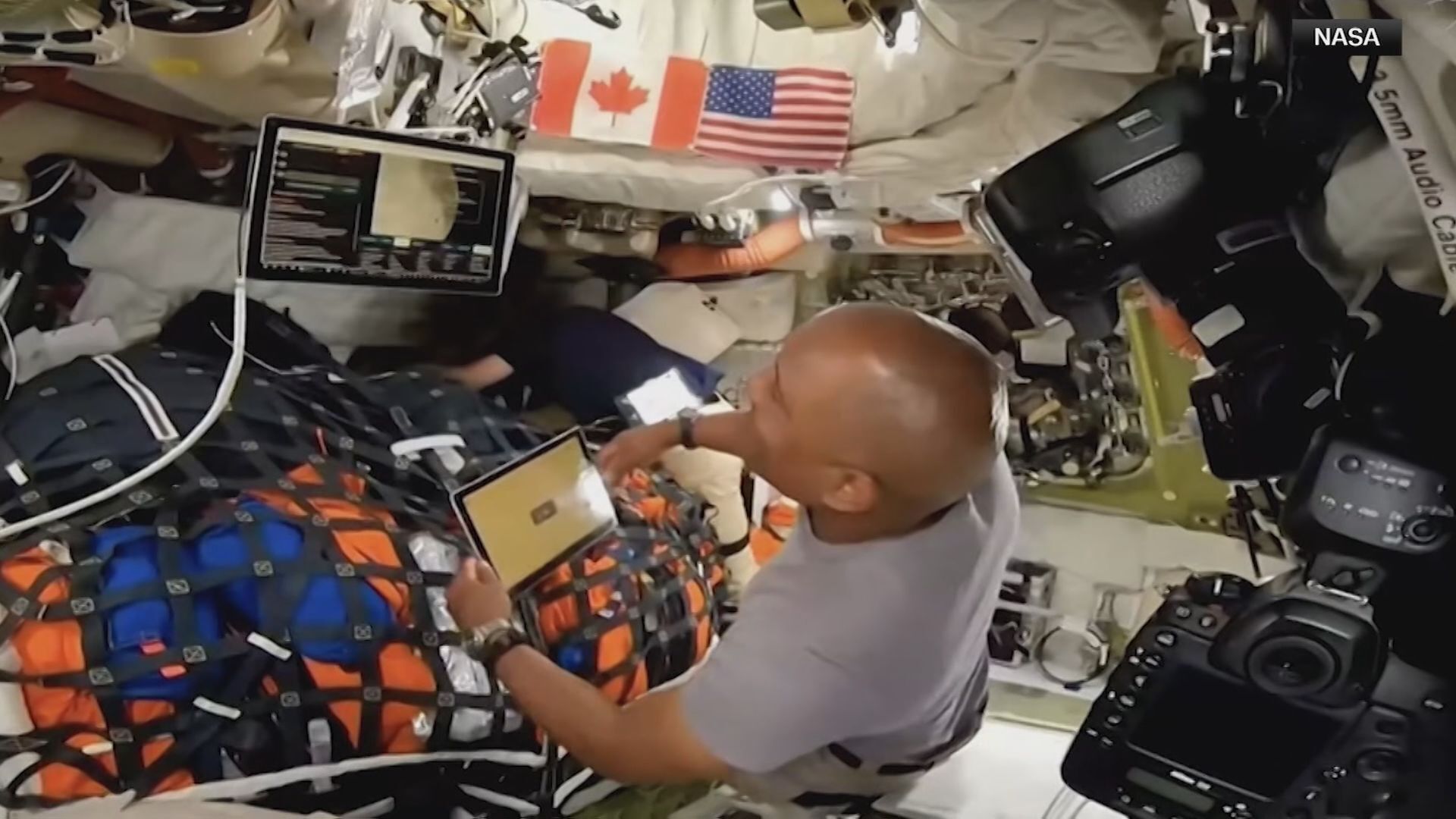
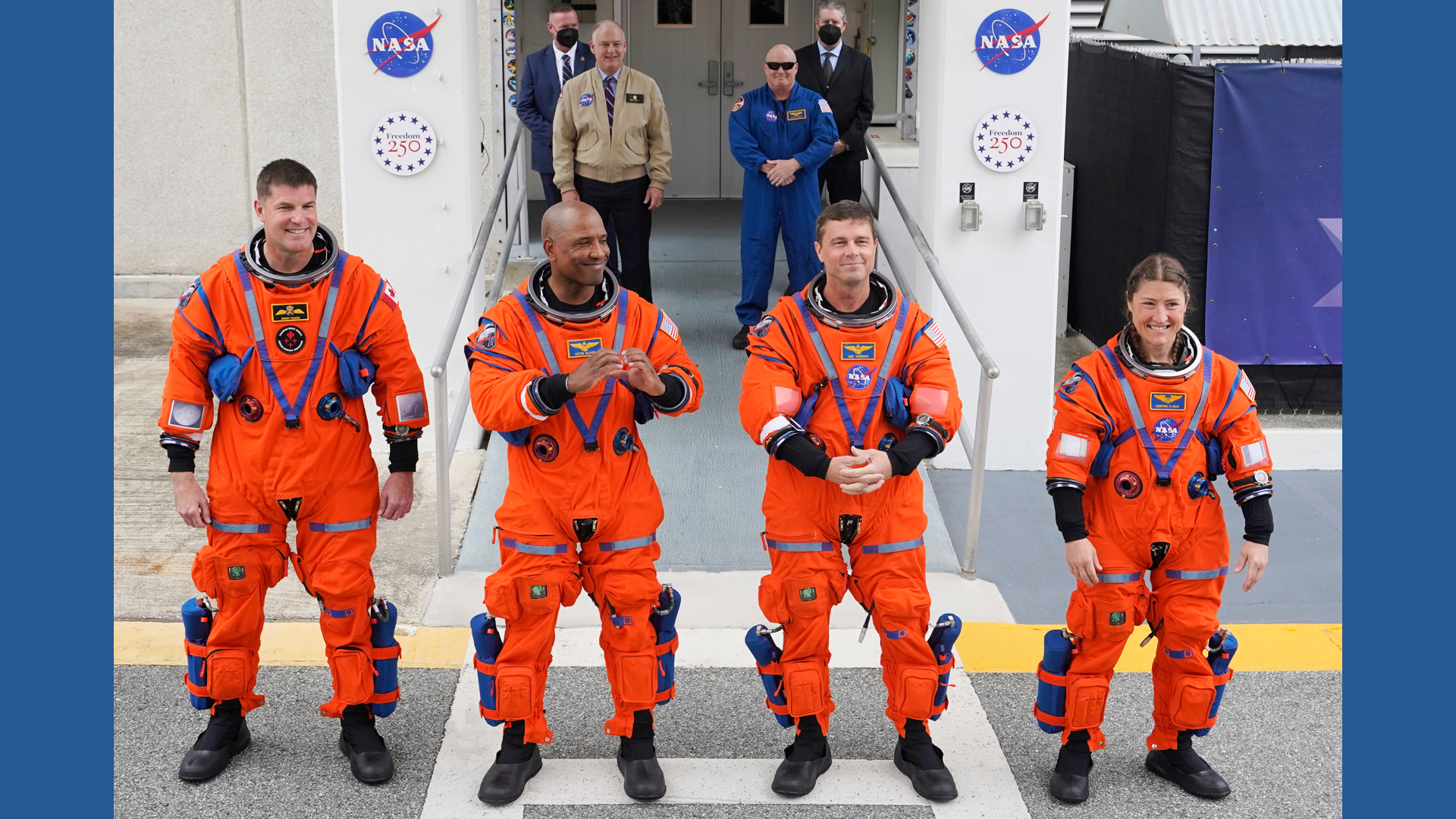
Under NASA’s Artemis Program, crewed missions are designed to return humans to deep space. While early missions like Artemis II are planned to take a crew around the Moon on a hybrid free-return trajectory similar to Apollo 13, future iterations incorporating Distant Retrograde Orbits (DRO) or deep solar-orbit transits will extend human spaceflight profiles.
Distance Comparison: Historical vs Future Human Missions
- Apollo 11 (1969): 389,645 km
- Apollo 13 (1970): 400,171 km [Current Human Record]
- Artemis II (Planned): ~404,000 km [Targeted Trajectory]
- Future Mars Transfer: 55,000,000+ km
Artemis II: NASA’s planned crewed flight test of the Space Launch System (SLS) and Orion spacecraft targets a high-altitude circumlunar trajectory. Depending on the exact launch date and lunar orbital mechanics during its execution window, Artemis II may carry its crew past Apollo 13's peak altitude.
Mars Exploration: Human missions to Mars, projected for future decades, will completely dwarf lunar distance records. A crewed spacecraft traveling to Mars will cover tens of millions of kilometers from Earth, permanently shifting human spaceflight records from the lunar scale to interplanetary space.
Frequently Asked Questions
What was Apollo 13's maximum distance from Earth?
Apollo 13 reached a peak distance of 400,171 kilometers (248,655 statute miles) from the surface of Earth (401,056 kilometers measured from Earth’s center). This measurement was recorded on April 15, 1970, at 00:21 UTC as the spacecraft swung around the far side of the Moon.
Why did Apollo 13 travel farther from Earth than any other Apollo mission?
Apollo 13 traveled farther because it used a wide free-return trajectory around the Moon's far side at a moment when the Moon was approaching its apogee (the point in its elliptical orbit farthest from Earth). The combination of the Moon’s extreme distance from Earth and the spacecraft's orbital loop behind the lunar far side created this maximum altitude.
Did Apollo 13 land on the Moon?
No. Apollo 13’s lunar landing was canceled following an explosion in Oxygen Tank 2 inside the Service Module approximately 56 hours after launch. The primary objective shifted entirely to returning the three-man crew safely to Earth using the Lunar Module Aquarius as a life raft.
Is Apollo 13 still listed in the Guinness World Records?
Yes. Apollo 13 holds the official Guinness World Record for the farthest absolute distance from Earth ever reached by a crewed spacecraft.
Has any uncrewed spacecraft traveled farther than Apollo 13?
Yes. Numerous robotic spacecraft have traveled much farther. For example, NASA’s Voyager 1 probe is tens of billions of kilometers away in interstellar space. Additionally, the uncrewed Artemis I Orion spacecraft reached a distance of 432,210 kilometers from Earth in 2022. However, Apollo 13 retains the absolute distance record for crewed human spaceflight.
Practical Takeaways for Space Exploration Enthusiasts
To explore the operational details, telemetry logs, and historical archives of the Apollo 13 record flight:
- Review Original Mission Reports: Access primary documentation through the NASA History Division archives, which contain official flight anomaly reports, transcripts of air-to-ground communications, and orbital tracking data.
- Examine Spacecraft Telemetry: Researchers analyzing deep-space trajectories can reference the Apollo 13 Mission Report (MSC-02680) published by NASA’s Manned Spacecraft Center for detailed breakdowns of the PC+2 engine burn and pericynthion calculations.
- Track Future Milestones: Monitor upcoming deep-space flight profiles via official space agency mission portals to follow how new crewed programs like Artemis aim to update human distance records in space.