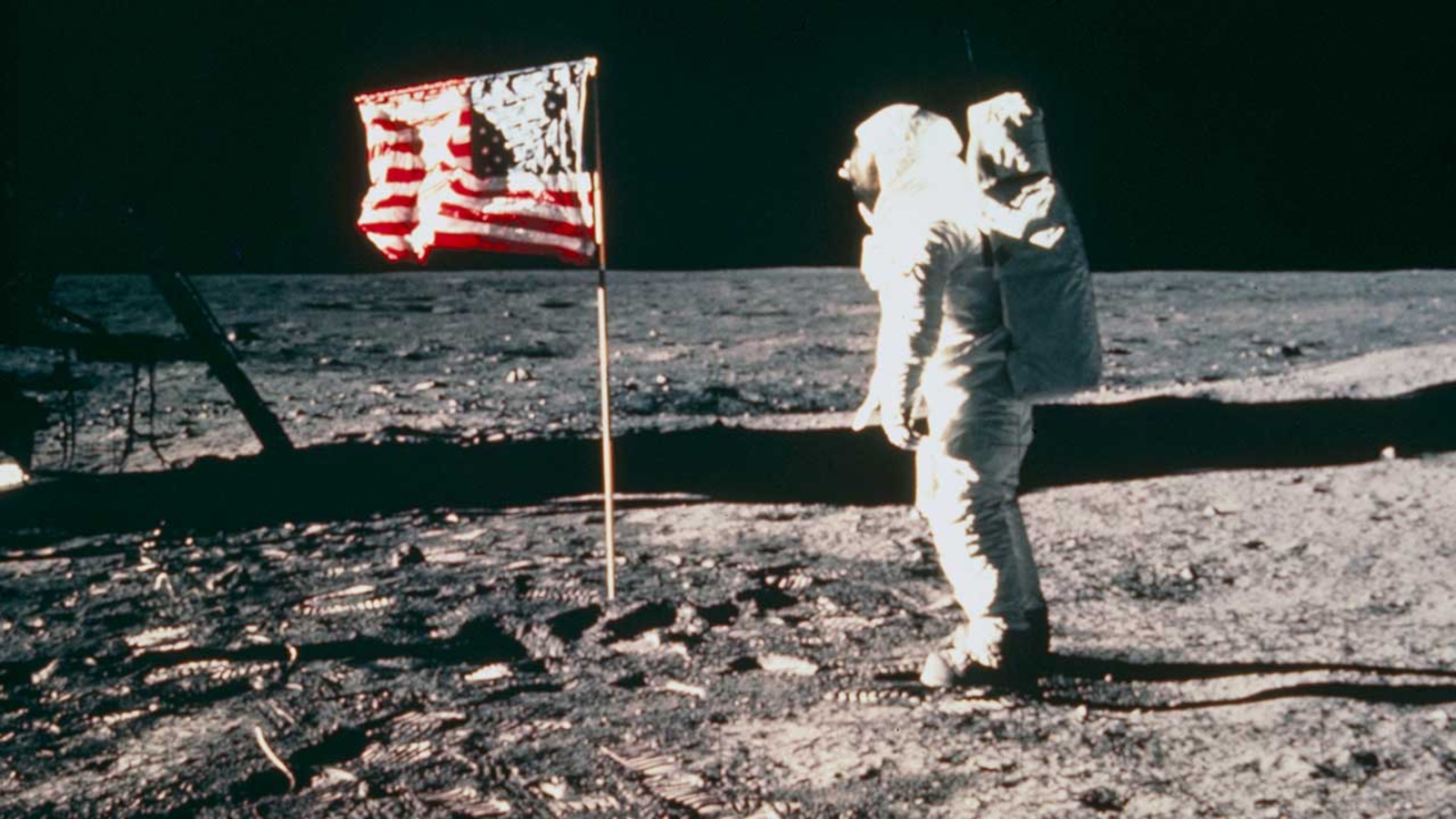
Apollo 13 did not land on the moon. Launched on April 11, 1970, the lunar landing was aborted approximately 56 hours into the mission after an oxygen tank inside the Service Module exploded. Instead of landing at the Fra Mauro highlands, crew members Jim Lovell, Jack Swigert, and Fred Haise executed a rescue trajectory around the moon, returning safely to Earth on April 17, 1970.
Mission Profile: What Apollo 13 Was Intended to Accomplish
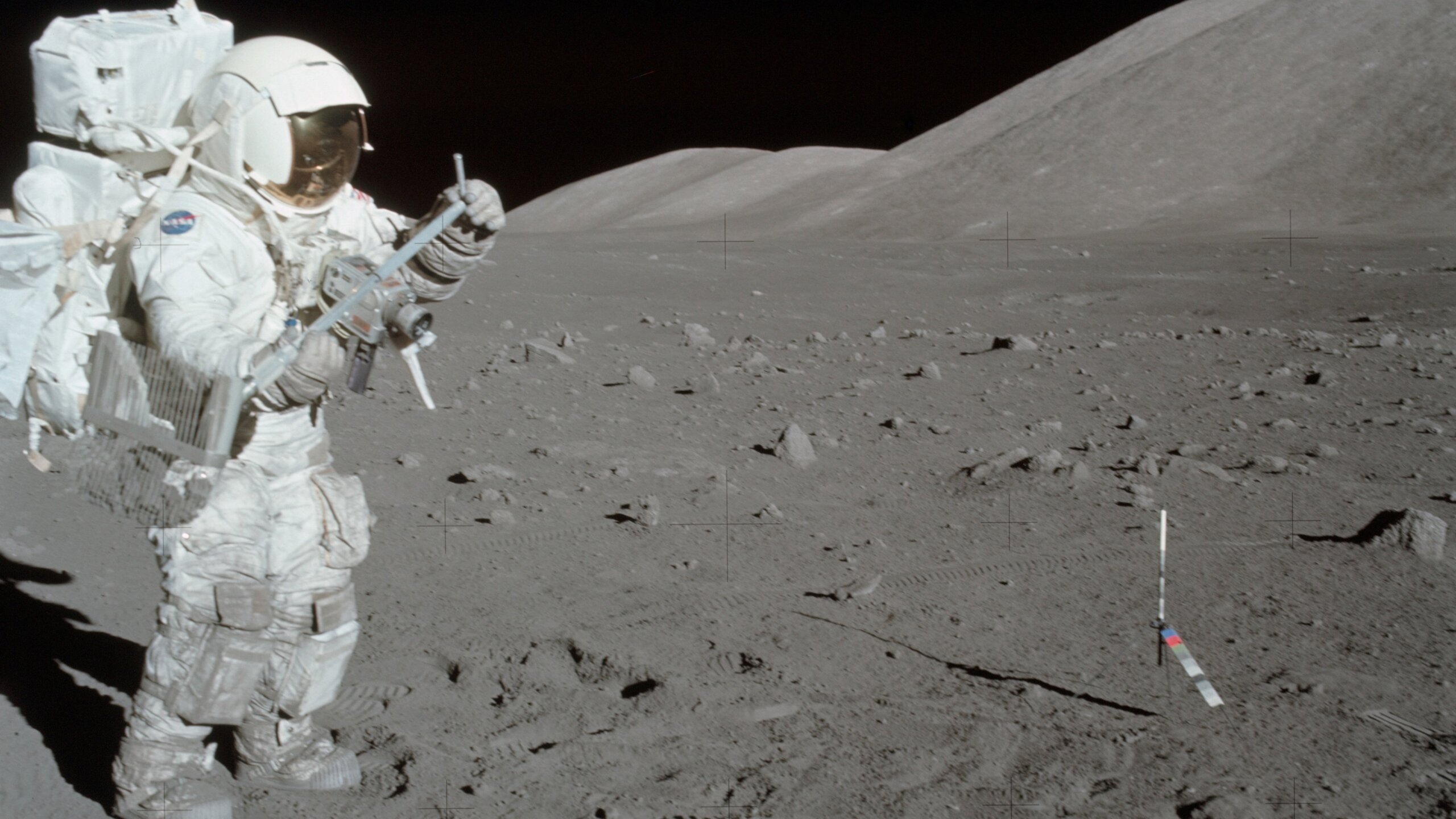
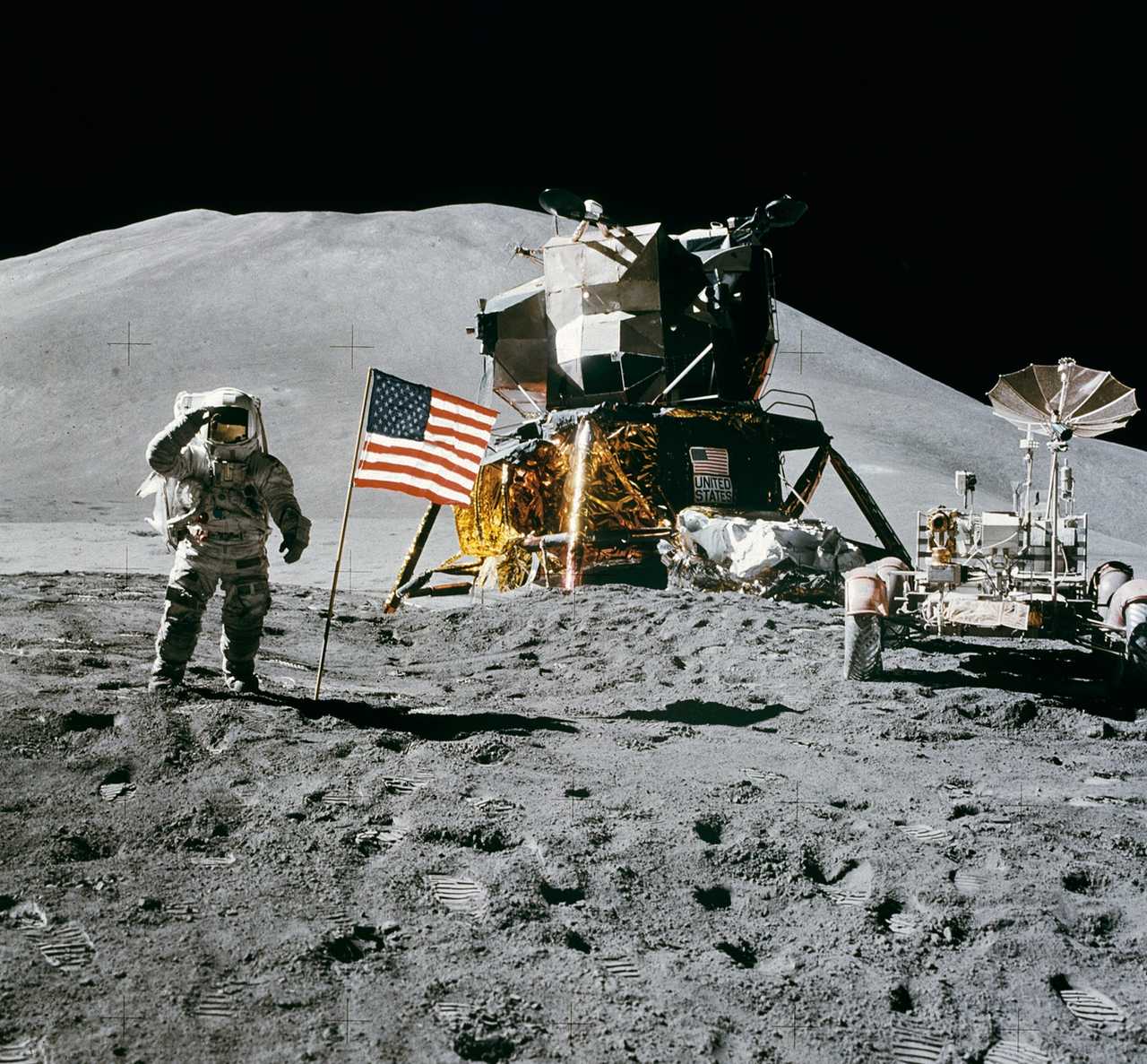
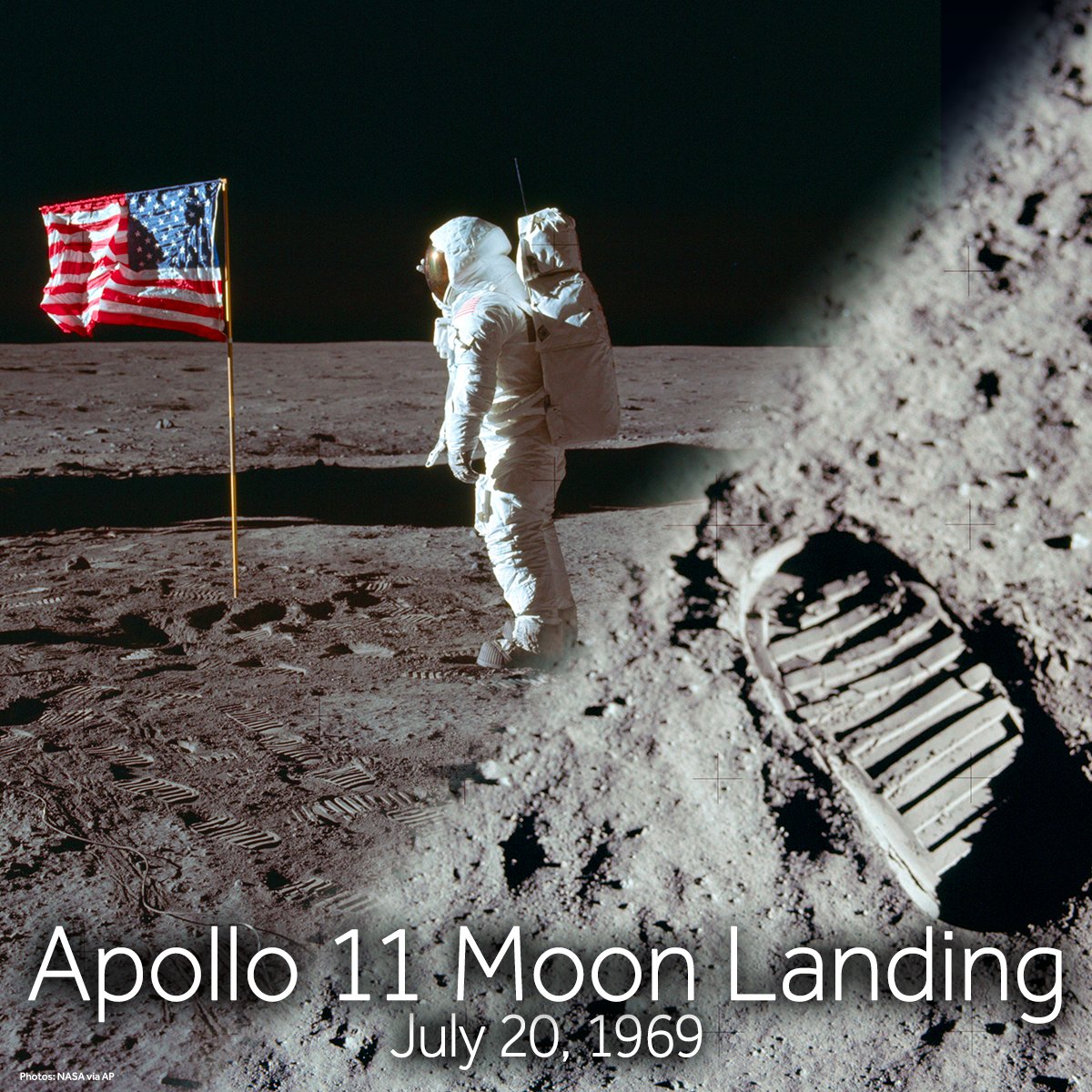
Apollo 13 was designated as NASA's third targeted human lunar landing mission, following the triumphs of Apollo 11 and Apollo 12 in 1969. While the earlier missions proved that humanity could land on the lunar surface and conduct targeted landings, Apollo 13 was designed to transition the Apollo program from initial exploration to intensive scientific inquiry.
The mission’s primary target was the Fra Mauro formation, a hilly, impact-ejecta site thought to contain material blasted out from deep within the moon’s crust during the formation of the Imbrium Basin. Scientists sought samples from this region to date the moon's geologic history and understand the planetary formation of the early solar system.
The Crew Architecture
The mission crew comprised three experienced astronauts, though an unexpected medical emergency altered the lineup days before launch:
- James A. Lovell Jr. (Commander): A veteran of Gemini 7, Gemini 12, and Apollo 8, Lovell was one of NASA's most experienced astronauts and was poised to become the fifth person to walk on the moon.
- Fred W. Haise Jr. (Lunar Module Pilot): A former military fighter pilot and civilian research pilot, Haise was selected to descend to the lunar surface alongside Lovell while operating the Lunar Module Aquarius.
- John L. "Jack" Swigert Jr. (Command Module Pilot): Swigert was originally the backup Command Module Pilot. He was moved to the prime crew just 72 hours before launch after original CMP Thomas K. "Ken" Mattingly was exposed to German measles (rubella) and lacked immunity.
Key Spacecraft Systems
The Apollo 13 spacecraft consisted of two primary vehicles mated together, mounted atop a Saturn V launch vehicle:
- Command and Service Module (CSM-109), named Odyssey: Composed of the Command Module (CM), which served as the crew's living quarters and re-entry vehicle, and the Service Module (SM), which contained main propulsion systems, electrical fuel cells, and life-support consumables (oxygen and water).
- Lunar Module (LM-7), named Aquarius: A two-stage vehicle designed solely for operation in the vacuum of space. Its primary role was to transport Lovell and Haise from lunar orbit down to the Fra Mauro surface, support a 33-hour stay on the moon, and launch them back to lunar orbit to rejoin Odyssey.
The Incident: Why Apollo 13 Never Reached the Lunar Surface
On April 13, 1970, at 55 hours and 54 minutes into the mission—approximately 200,000 miles (320,000 kilometers) from Earth—the mission altered drastically during a routine maintenance procedure.
Timeline of the Crisis (UTC / Ground Elapsed Time)
- [GET 55:54] Oxygen tank stir command given by Mission Control
- [GET 55:55] Electrical short ignites Teflon insulation in SM Oxygen Tank 2
- [GET 55:56] Oxygen Tank 2 explodes; Oxygen Tank 1 damaged; main power drops
- [GET 56:09] Lovell reports: "Houston, we've had a problem here"
- [GET 57:40] Decision made to use LM Aquarius as a "lifeboat"
The Oxygen Tank Explosion
Astronauts routinely performed a process known as a "cryo stir" to homogenize the supercooled liquid oxygen and liquid hydrogen inside the Service Module tanks. This process prevented the cryogens from settling into layers, ensuring accurate pressure readings.
When Jack Swigert flipped the switch to activate the fan inside Oxygen Tank 2, damaged electrical insulation on the fan's wiring sparked. The bare wire ignited the Teflon insulation inside the pure oxygen environment. The rapid rise in pressure caused the tank to rupture violently, blowing off an outer structural panel of the Service Module and damaging the adjacent Oxygen Tank 1.
Within minutes, Oxygen Tank 2 lost all pressure, and Oxygen Tank 1 began leaking rapidly. Because the spacecraft's three fuel cells combined hydrogen and oxygen to produce electrical power and drinking water, the loss of oxygen meant that Odyssey’s power supply collapsed rapidly.
Abandoning the Lunar Landing Goal
With the Service Module's main engine (the Service Propulsion System, or SPS) rendered suspect due to potential damage from the explosion, and with fuel cells failing, a lunar landing was impossible. The primary operational directive shifted instantly from scientific exploration to crew survival.
Flight Director Gene Kranz and the team at Mission Control in Houston, along with the astronauts, faced a immediate problem: Odyssey was dying, its batteries had only hours of life remaining, and the spacecraft was on a trajectory that would miss Earth if left uncorrected.
Survival Architecture: Converting Aquarius into a Lifeboat
To survive the return trip to Earth, NASA made the tactical decision to use the Lunar Module Aquarius as a makeshift space lifeboat. Aquarius possessed independent systems, including functional batteries, a dedicated supply of drinking water, oxygen tanks intended for lunar extravehicular activities (EVAs), and a controllable rocket motor—the Descent Propulsion System (DPS).
However, the Lunar Module was engineered specifically to support two astronauts for roughly two days on the moon. It was not designed to keep three men alive for nearly four days in deep space.
APOLLO 13 SPACECRAFT
- COMMAND MODULE "Odyssey"
- Powered down to save power for atmospheric re-entry
- Cabin cooled below freezing
- Re-entry shield preserved
- LUNAR MODULE "Aquarius"
- Used as "lifeboat"
- Supplies 3 crewmen
Conserving Consumables
To preserve Aquarius’s limited resources until re-entry, ground controllers and the crew enacted extreme conservation measures:
- Electrical Power: Systems were powered down to bare operational minimums, reducing power draw to less than 12 amperes—roughly equivalent to the power consumed by a standard household light bulb.
- Water Usage: Water was essential not only for crew hydration but primarily for cooling the electronic equipment via sublimators. The crew rationed drinking water severely, leading to dehydration and physical exhaustion.
- Thermal Control: With electric heaters switched off, temperatures inside both Odyssey and Aquarius plunged. The cabin temperature inside Odyssey dropped to near freezing (around 38°F / 3°C), causing condensation to form on all metal surfaces and instrument panels.
The Carbon Dioxide Problem
A critical operational hazard emerged from an unexpected source: carbon dioxide ($CO_2$) filtration.
The Lunar Module used cylindrical lithium hydroxide (LiOH) canisters to scrub $CO_2$ exhaled by the crew. Because Aquarius was carrying three men instead of two, these canisters were consumed far faster than planned. While the Command Module had plenty of spare LiOH canisters, they were rectangular in shape and completely incompatible with the Lunar Module’s round filter sockets.
CARBON DIOXIDE SCRUBBER ADAPTER
- CM Spare Canister (Rectangular)
- LM Filter Socket (Circular)
- IMPROVISED ADAPTER "Mailbox"
- Used:
- Duct tape
- Cardboard maps
- Suit hoses
- Used:
Engineers at Mission Control, led by Ed Smylie, devised a low-tech solution using materials known to be on board: plastic storage bags, cardboard from flight manuals, suit hoses, and roll upon roll of gray duct tape. They relayed step-by-step assembly instructions to the crew. The improvised unit, dubbed "The Mailbox," successfully reduced cabin $CO_2$ levels to safe thresholds within minutes of installation.
Orbital Dynamics: The Return Trajectory
Without the Service Module's main engine available for a direct turn-back maneuver, NASA relied on celestial mechanics to return Apollo 13 to Earth.
THE LUNAR FLYBY
- Earth
- Free-Return Trajectory (Slingaround via DPS burn)
- Moon
Free-Return Trajectory
When Apollo 13 experienced its explosion, it had already maneuvered off a standard "free-return" trajectory into a hybrid orbit designed to reach the Fra Mauro landing site. If left on this path without intervention, the spacecraft would have swung around the moon and missed Earth by thousands of miles, drifting indefinitely in space.
Roughly 5 hours after the explosion, the crew fired the Lunar Module's Descent Propulsion System (DPS) engine for approximately 61 seconds. This burn adjusted their flight path back onto a free-return trajectory, ensuring that lunar gravity would swing them around the far side of the moon and aim them back toward Earth.
The PC+2 Burn
After looping around the moon—during which the astronauts passed over the lunar farside at an altitude of approximately 158 miles (254 km), setting the record for the farthest distance humans have ever traveled from Earth—NASA determined that the basic free-return path was too slow. Under that path, consumables in Aquarius would deplete hours before re-entry, and the spacecraft would splash down in the Indian Ocean, far from US recovery forces.
Two hours after passing the point of closest approach to the moon (Pericynthion plus 2 hours, or PC+2), the crew executed another critical DPS engine burn. This 4-minute, 24-second burn increased the spacecraft’s velocity, shaving 10 hours off the return journey and targeting a safe splashdown in the South Pacific Ocean.
Re-Entry and Recovery
The final phase of the mission presented severe engineering challenges. Odyssey had been completely powered down and subjected to sub-freezing temperatures for nearly four days. No Apollo Command Module had ever been shut down in deep space and subsequently restarted prior to re-entry.
Re-Entry Sequence Timeline (April 17, 1970)
- 13:15 UTC: Service Module (SM) Jettisoned; Crew photographs damage
- 15:43 UTC: Lunar Module Aquarius Jettisoned; "Farewell, Aquarius"
- 16:53 UTC: Atmospheric Entry Interface (400,000 feet altitude)
- 17:07 UTC: Splashdown in South Pacific Ocean; USS Iwo Jima recovers crew
Powering Up a Dead Spacecraft
Working from procedures written from scratch by flight controllers and astronaut Ken Mattingly in simulator sessions over the preceding days, Jack Swigert systematically powered up Odyssey.
Engineers worried that moisture from condensation would cause electrical short circuits inside the control panels during power-up. Fortunately, insulation improvements installed after the 1967 Apollo 1 fire prevented electrical shorting, and the systems came online cleanly.
Jettisoning the Spacecraft Modules
Before entering Earth's atmosphere, the crew had to discard both the damaged Service Module and their "lifeboat," Aquarius:
- Service Module Release: The SM was jettisoned first. As it detached, the crew took the first photographs of the damage, revealing that an entire outer panel had been blown off, exposing wrecked internals.
- Lunar Module Release: Once the Command Module was fully powered and verified, Lovell, Swigert, and Haise transferred back into Odyssey and jettisoned Aquarius. Ground controllers gently vented remaining LM pressure to push the vehicle away. Aquarius burned up in Earth's atmosphere over the South Pacific, its job complete.
RE-ENTRY CONFIGURATION
- SERVICE MODULE (SM)
- Jettisoned
- Burned up in atmosphere
- LUNAR MODULE "Aquarius"
- Jettisoned
- COMMAND MODULE "Odyssey"
- Retained for Heat Shield Atmosphere Entry
Splashdown
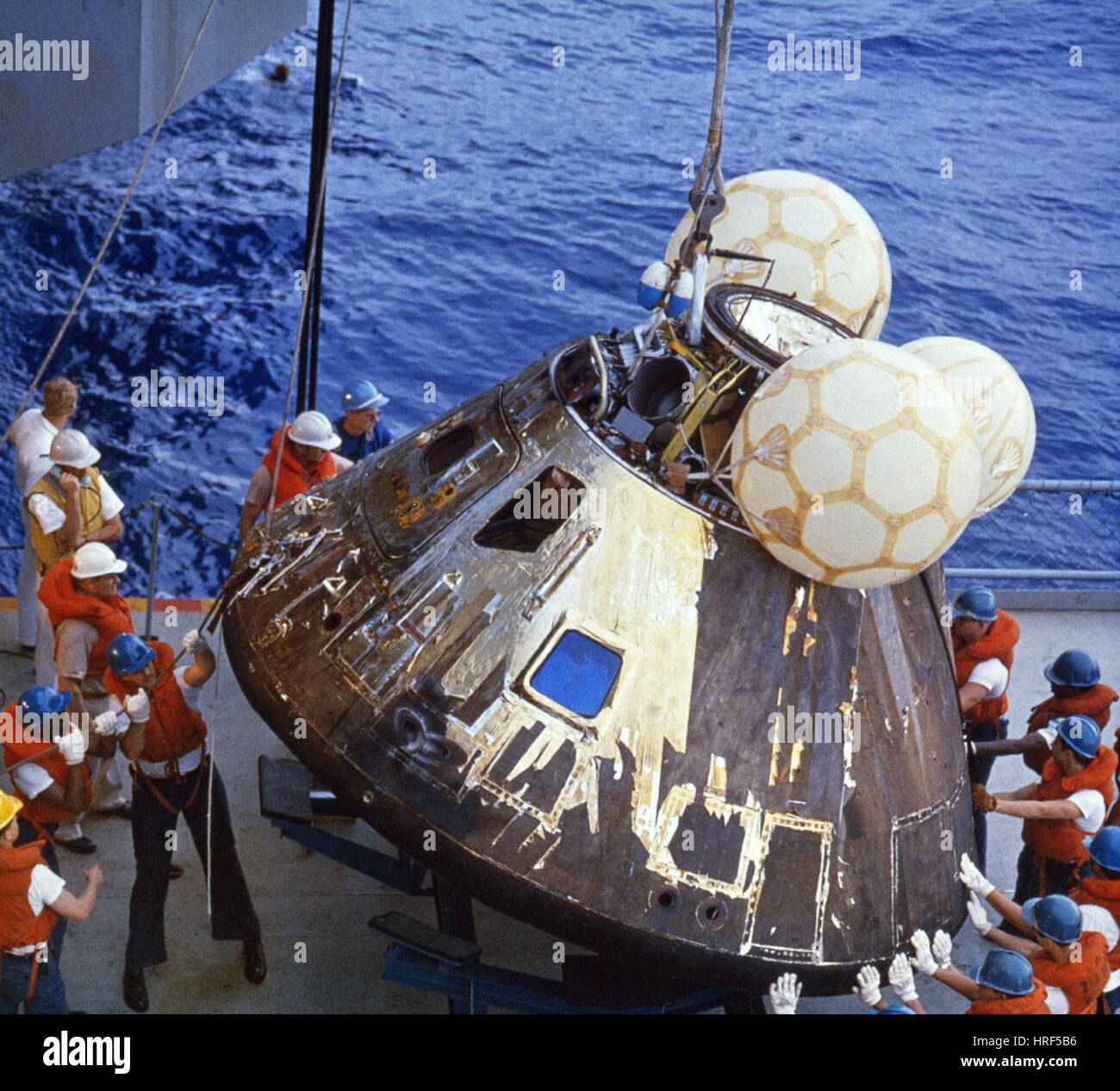
At 17:07 UTC on April 17, 1970, Odyssey parachuted safely into the South Pacific Ocean near American Samoa, just 4 miles (6.5 km) from the primary recovery vessel, the amphibious assault ship USS Iwo Jima.
Despite suffering from extreme fatigue, severe dehydration, cold exposure, and in Haise's case, a kidney infection, all three crew members survived.
Technical Comparison: Apollo 13 vs. Successful Apollo Missions
To understand the scope of the Apollo 13 abort, it is helpful to compare its performance parameters with standard Apollo missions.
| Mission Parameter | Apollo 11 (Standard Landing) | Apollo 12 (Targeted Landing) | Apollo 13 (Aborted Landing) |
|---|---|---|---|
| Launch Date | July 16, 1969 | November 14, 1969 | April 11, 1970 |
| Primary Target Site | Sea of Tranquility | Ocean of Storms | Fra Mauro Highlands |
| Lunar Landing Achieved? | Yes | Yes | No |
| Surface Time | 21 hours, 36 minutes | 31 hours, 31 minutes | 0 hours (Aborted) |
| Lunar Surface Extravehicular Activity (EVA) | 1 moonwalk (2h 31m) | 2 moonwalks (7h 45m total) | None |
| Lunar Samples Returned | 47.5 lbs (21.5 kg) | 75.6 lbs (34.3 kg) | 0 lbs (0 kg) |
| Farthest Distance from Earth | ~240,000 miles | ~240,000 miles | 248,655 miles (Record) |
| Primary Spacecraft Rescue Vehicle | N/A (Nominal flight) | N/A (Nominal flight) | Lunar Module Aquarius |
| Mission Outcome | Success | Success | "Successful Failure" |
Investigation Findings and Legacy
President Richard Nixon awarded the Presidential Medal of Freedom to the Apollo 13 crew and the Apollo 13 Mission Operations Team, calling their recovery a triumph of human skill and perseverance.
Following the splashdown, NASA established the Apollo 13 Review Board, chaired by NASA Langley Research Center Director Edgar M. Cortright, to determine the root cause of the accident.
ROOT CAUSE CHAIN
- Thermostat rated for 28V left unchanged during 1965 redesign
- 56V heater test at factory melted thermostat contacts shut
- Teflon wire insulation damaged by undetected overheating
- Cryo stir switch flipped in space: Electrical short & explosion
The Root Cause Analysis
The investigation traced the failure to a sequence of manufacturing, design, and testing errors:
- Voltage Mismatch: In 1965, the Command Module's internal power supply voltage standard was upgraded from 28 volts to 65 volts DC. However, the heater thermostatic switches inside Oxygen Tank 2 were not updated to handle the higher voltage.
- Factory Damage: During pre-flight testing at the contractor plant in 1970, the oxygen tank could not be emptied normally. Technicians applied 65 volts to the tank's internal heater coils to boil off the liquid oxygen. The high voltage melted the thermostatic switches, locking them in a closed position.
- Undetected Overheating: As the heaters ran continuously, temperatures inside the tank rose above 1,000°F (537°C), baking and severe scorching the Teflon insulation on the fan power wires.
- Ignition in Space: When Jack Swigert turned on the cryo stir fans on day three of the mission, electrical current flowed through the exposed wire, igniting the Teflon in the pure oxygen environment and causing the tank burst.
Engineering Redesigns for Subsequent Missions
NASA suspended further Apollo launches for nearly ten months while implementing structural updates across the Apollo fleet:
- Third Oxygen Tank Added: A third auxiliary oxygen tank was added to the Service Module, isolated from the primary two, ensuring dedicated emergency oxygen for the Command Module fuel cells.
- Design Modifications: Internal fans were removed from cryo tanks, eliminate internal wiring stir components. Heaters were replaced with stainless steel-sheathed heating elements.
- Emergency Water Reserves: Additional emergency battery capacity and auxiliary water storage bags were placed in the Command Module to prevent reliance on Lunar Module consumables in an abort scenario.
What Happened to Fra Mauro?
Because Apollo 13 failed to land on the moon, its geological objectives remained unfulfilled. NASA reassigned the Fra Mauro landing target to Apollo 14, launched in January 1971. Astronauts Alan Shepard and Edgar Mitchell successfully landed Antares at Fra Mauro, completing two moonwalks and collecting 94 pounds (43 kg) of moon rocks, fulfilling the science goals originally set for Apollo 13.
Frequently Asked Questions
Did Apollo 13 bring back any moon rocks?
No. Because Apollo 13 never landed on the moon, the crew was unable to gather lunar soil or rock samples. The mission’s sole focus was safely returning the crew to Earth using the spacecraft's remaining emergency supplies.
What caused the explosion on Apollo 13?
An electrical short circuit inside Oxygen Tank 2 in the Service Module ignited damaged Teflon wiring insulation. The resulting fire caused rapid pressure buildup, exploding the tank, tearing off an exterior panel of the spacecraft, and damaging the adjacent Oxygen Tank 1.
How far did Apollo 13 travel around the moon?
Apollo 13 passed over the far side of the moon at an altitude of 134 nautical miles (158 miles or 254 kilometers) above the lunar surface. In doing so, the crew reached a distance of 248,655 miles (400,171 kilometers) from Earth, setting a record for the farthest distance humans have ever traveled from our home planet.
Who was supposed to walk on the moon on Apollo 13?
Commander James A. Lovell Jr. and Lunar Module Pilot Fred W. Haise Jr. were scheduled to walk on the moon. Command Module Pilot Jack Swigert was planned to remain in lunar orbit aboard Odyssey.
Did the Apollo 13 crew survive?
Yes. All three crew members—Jim Lovell, Jack Swigert, and Fred Haise—survived the incident. Through emergency trajectory corrections, extreme consumable conservation, and improvised engineering solutions created by NASA ground control, the crew landed safely in the Pacific Ocean on April 17, 1970.
Historical Context and Next Steps
The Apollo 13 mission stands as a milestone in the history of human spaceflight, demonstrating the critical importance of spacecraft systems redundancy, real-time emergency management, and orbital dynamics in extreme operational environments.
For researchers and space history enthusiasts seeking further primary documentation:
- Consult the NASA History Division Archive for raw mission transcripts, flight logs, and audio recordings of Mission Control during the flight.
- Review the official Apollo 13 Review Board Report (Cortright Commission) published by NASA in June 1970 for full schematics, failure mode analysis, and technical recommendations.
- Examine restored Apollo flight data hosted by the National Air and Space Museum, which displays the original Command Module Odyssey hardware.