Amazon fulfillment centers in the USA scale distribution through multi-tier inventory placement networks, advanced robotics, and regionalized logistics architecture that enable standard same-day and next-day deliveries nationwide. However, this unmatched operational throughput continues to generate persistent, unresolved issues surrounding warehouse safety metrics, workforce turnover, third-party seller fee structures, localized environmental footprints, and ongoing antitrust regulatory scrutiny.
The Architecture of Amazon’s U.S. Distribution Network
Amazon’s U.S. logistics infrastructure relies on a highly specialized, multi-tiered network designed to move inventory from ocean container ports and domestic suppliers directly to consumer doorsteps. Rather than using a single unified warehouse model, Amazon segmentates facilities by function, item size, velocity, and fulfillment stage to minimize transit times and reduce transport costs per unit.
- Inbound Supply / Vendors
- Inbound Cross-Dock Facilities (IXD) (Receives bulk shipments, breaks down, and routes to FCs)
- Fulfillment Centers (FCs) (Non-Sortable, Sortable AR, Specialty, Sub-Same-Day Storage/Pick)
- Sortation Centers (SCs) (Consolidates packages by ZIP code and postal route)
- Delivery Stations (DS) (Last-mile staging for Amazon Flex & DSP vans)
Inbound Cross-Dock Facilities (IXD)
Inbound Cross-Dock (IXD) facilities act as the primary intake valves for the fulfillment network. These facilities take massive, palletized shipments from manufacturers and third-party merchants, unpack them, and redistribute the inventory across regional fulfillment centers. IXD sites do not hold inventory long-term; their focus is rapid cross-docking to balance stock levels across geographic regions before consumer demand spikes.
Fulfillment Centers (FCs)
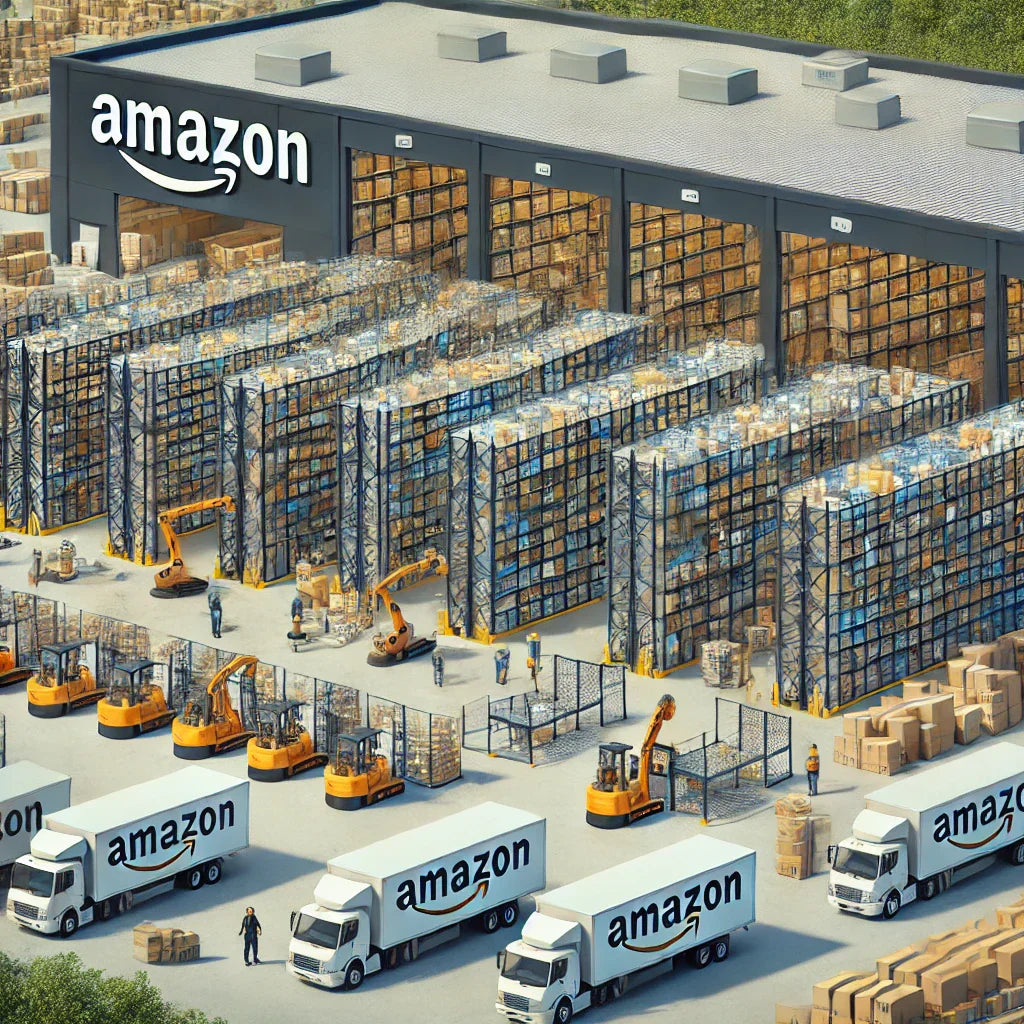
Fulfillment centers serve as the core storage and order-picking engines. Spanning between 600,000 and 4 million square feet, these buildings store tens of millions of discrete SKUs. They fall into distinct functional categories:
- Sortable Fulfillment Centers: Handle smaller items that fit into standardized totes (e.g., books, electronics, apparel). These facilities make extensive use of multi-level storage mezzanines and automated robotic drives.
- Non-Sortable Fulfillment Centers: Store large, bulky, or uniquely shaped inventory (e.g., patio furniture, large appliances, outdoor equipment). Operations here rely more on human-operated material handling equipment like order pickers and heavy forklifts.
- Specialty Facilities: Tailored for specific product domains such as hazmat storage, high-value electronics, or Amazon Fresh grocery cold-chain infrastructure (chilled and frozen vaults).
Sortation Centers (SCs) and Delivery Stations (DSs)
Once an item is picked and packed inside an FC, it travels downstream toward package delivery nodes. Sortation centers aggregate packed orders from multiple FCs, sorting them by postal ZIP codes to enable package injection into either carrier networks (such as USPS, UPS, or FedEx) or Amazon's internal middle-mile transit network.
The final node is the Delivery Station, typically located near metropolitan population centers. Delivery stations receive package flows from sortation centers, stage them into route-specific totes, and load them into Delivery Service Partner (DSP) vans or Amazon Flex vehicles for final-mile drop-off.
The Shift to Regionalized Distribution
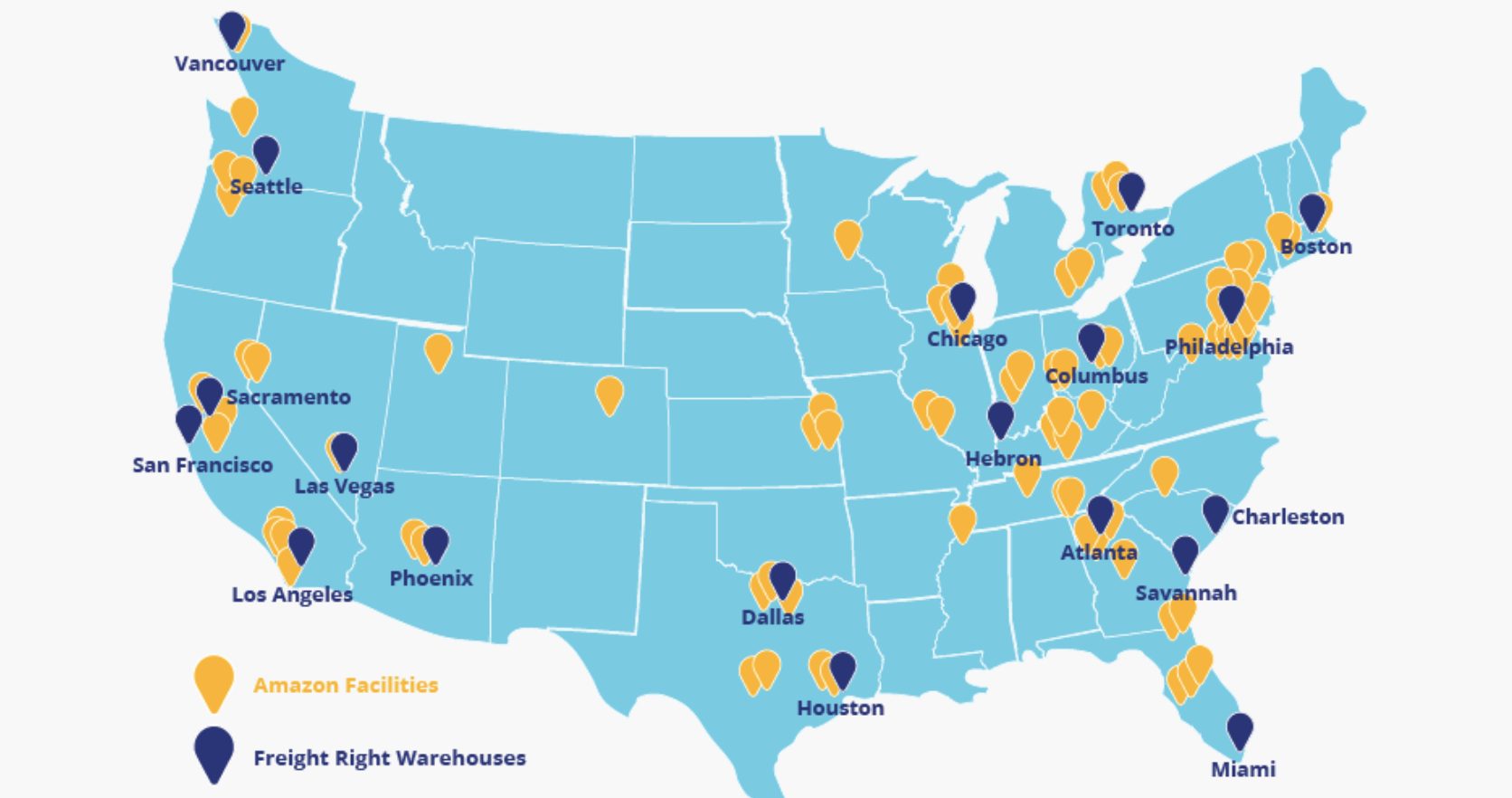
Historically, Amazon operated a centralized national distribution network where an item picked in California might ship via air transport to a customer in Ohio. To reduce middle-mile transit costs and expand same-day delivery windows, Amazon executed a structural reorganization, dividing the continental United States into distinct, semi-autonomous regional networks.
Under this model, each region holds a balanced selection of high-velocity stock. Algorithms favor fulfillment from local nodes, reducing inter-regional shipping, decreasing transit miles, and limiting package touches across transit hubs.
Technological Infrastructure Driving Mass Scale
Scaling fulfillment across hundreds of North American facilities requires orchestration software, robotic automation, and machine-learning models operating simultaneously.
- Centralized Predictive Algorithms (Local Demand Forecasting & Stock)
- Warehouse Management System (WMS) (Real-Time Tote Routing & Work)
- Autonomous Hardware (Proteus, Drive Units)
- Computer Vision Systems (SLAP, Sparrow Arms)
Amazon Robotics Integration
Automated material handling forms the bedrock of modern Amazon fulfillment centers. The primary driver of warehouse efficiency is the Goods-to-Person (G2P) platform:
- Robotic Drive Units (Hercules/Kiva): Autonomous mobile robots (AMRs) navigate beneath mobile shelving units ("pods"), lift them off the floor, and transport them directly to ergonomic human work cells. This eliminates the necessity of pickers walking long warehouse aisles to locate individual SKUs.
- Proteus Autonomous Mobile Robots: Fully autonomous floor-navigating drives utilizing LiDAR and computer vision safety systems, allowing them to operate safely alongside human workers in un-caged open warehouse floors to transport heavy carts.
- Sparrow and Manipulative Arms: Multi-axis robotic arms equipped with suction and soft-grip end-effectors capable of identifying, grabbing, and stowing individual unstructured objects directly out of inventory totes.
AI and Predictive Inventory Placement
Physical speed is constrained by inventory proximity. Amazon uses deep learning models to predict localized demand for specific SKUs down to the neighborhood level. The software evaluates local purchasing history, regional trending data, and promotional schedules to direct inbound inventory to specific fulfillment centers before orders are placed.
When a customer clicks "Buy Now," the item is frequently already positioned within a delivery station or same-day facility located within 15 miles of the destination address.
Warehouse Management Systems (WMS) and Computer Vision
Warehouse processes rely on real-time task allocation via proprietary management software. Items traveling on miles of internal conveyor systems are continuously monitored by high-speed computer vision systems:
- Auto-SLAP (Print-and-Apply): Automated machinery applies shipping labels to packages moving at high speeds across conveyors without requiring human interaction.
- Item Identification and Quality Inspection: Overhead vision arrays scan tote contents to verify item attributes, volume calculations, and undamaged package integrity, reducing manual barcodes scanning steps.
Comparative Overview of Amazon Fulfillment Nodes
The table below contrasts the primary operating models, technologies, and structural bottlenecks found across Amazon's U.S. logistics footprint.
| Facility Type | Primary Purpose | Tech Integration | Labor Profile | Operational Bottleneck |
|---|---|---|---|---|
| Inbound Cross-Dock (IXD) | High-volume intake & redistribution of supplier goods | Conveyor routing, high-density palette racking, automated barcode sorting | Pallet operators, bulk receiving, truck unloader teams | Unscheduled supplier arrivals; port backlogs affecting intake speed |
| Robotic Sortable FC | Storage, picking, and packing of small/medium items | AMR pod-drives (Hercules), Sparrow arms, automated packaging machines | Pickers, stowers, packers, maintenance engineers | High tote congestion; machinery maintenance downtime |
| Non-Sortable FC | Handling oversized, heavy, or irregularly shaped goods | Heavy industrial forklifts, high-capacity cranes, computer-guided order pickers | Forklift operators, heavy-lift handlers, manual packers | Spatial constraints; elevated physical labor intensity |
| Sortation Center (SC) | Package grouping by postal zip code for middle-mile transport | High-speed linear sorters, cross-belt conveyors, scanning tunnels | Sortation associates, pallet builders, staging crews | Peak processing volumes during holiday transport spikes |
| Delivery Station (DS) | Final-mile dispatch and route loading for last-mile delivery | Scanning rings, automated tote sorters, digital vehicle staging boards | Stagers, driver marshals, Flex/DSP delivery drivers | Curb space limitations; urban traffic congestion surrounding delivery sites |
| Sub-Same-Day (SSD) | Ultra-fast fulfillment of localized high-demand items | Micro-fulfillment rack layouts, integrated pick-to-pack workflows | Hybrid pick-pack associates, rapid dispatch teams | Tight window deadlines (under 4 hours end-to-end processing) |
Major Unresolved Operational and Systemic Issues
Despite the technological scale of Amazon’s fulfillment network, rapid operational growth has generated ongoing structural problems. These issues draw scrutiny from labor advocates, federal regulators, industrial logistics experts, and third-party seller communities.
- Operational & Scale Demands at Amazon
- Human Labor & Safety Limits
- Labor Policy & Organizing
- Merchant Fees & Dependance
- Environmental Externalities
- Increased Regulatory & Legal Scrutiny (OSHA, FTC, Local Policy)
1. Ergonomics, Safety Metrics, and Work Rates
The pace maintained in Amazon fulfillment centers remains a persistent point of contention. The use of robotic drives has eliminated long walking distances for pickers, but it has drastically raised the expected rate of item touches per hour. Human operators stand at fixed work cells, performing repetitive bending, reaching, and twisting motions to retrieve or stow items at speeds governed by software targets.
- Repetitive Motion Injuries: Reports and inspectorial findings by the U.S. Occupational Safety and Health Administration (OSHA) have repeatedly highlighted elevated rates of musculoskeletal disorders (MSDs) among fulfillment center personnel.
- Time Off Task (TOT) Enforcement: Amazon’s monitoring systems track worker activity down to the second. Extended periods where scanning stops trigger automated system logs for Time Off Task. While Amazon has adjusted TOT policies to reduce pressure on workers, staff advocates maintain that strict pacing metrics discourage necessary rest breaks and increase strain injuries.
2. Employee Turnover and Labor Relations
The intense physical demands of warehouse roles contribute to high annual turnover rates among frontline fulfillment associates. In several regions, high turnover presents long-term staffing risks in areas where Amazon has exhausted a large portion of the local hourly workforce pool.
- Unionization Campaigns: Efforts to establish collective bargaining units—most notably by the Amazon Labor Union (ALU) at facilities like JFK8 in Staten Island, NY, alongside efforts in Alabama, Illinois, and California—highlight ongoing friction between management and frontline staff regarding wage rates, shift scheduling, and job security.
- Automated Oversight Concerns: Workers and labor law researchers frequently criticize management processes that rely on automated system algorithms for tracking performance, evaluating output rates, and issuing attendance infractions.
3. Merchant Dependencies and Fee Architecture
Amazon’s fulfillment footprint is heavily reliant on independent third-party merchants who sell via the Amazon Marketplace. Third-party sellers account for more than half of all physical goods sold on the platform, and most use the Fulfillment by Amazon (FBA) service to secure Prime badge eligibility.
- Third-Party Merchant Inventory
- Fulfillment by Amazon (FBA) System
- Inbound Placement Fees
- Standard Storage Fees
- Low-Inventory Surcharges
- Margin Squeeze on Independent Brands
However, recent shifts in FBA logistics policies have introduced new challenges for merchant bottom lines:
- Complex Fee Structures: Merchants face a growing list of logistics fees, including inbound placement service fees, peak-season storage surcharges, long-term inventory storage fees, and low-inventory-level fees applied to products holding insufficient safety stock.
- Operational Friction: The low-inventory-level fee requires sellers to maintain specific inventory balances in Amazon’s network. If inventory drops below target thresholds, sellers pay penalties per unit sold. However, if they ship too much inventory to avoid penalties, they risk incurring high storage fees and inbound processing delays.
4. Environmental Footprint and Localized Freight Impact
Operating a network of vast fulfillment buildings and hundreds of delivery stations generates localized environmental and infrastructure strains:
- Heavy Industrial Freight Congestion: Communities surrounding major logistics hubs—such as the Inland Empire region in Southern California—experience heavy heavy-duty diesel truck traffic, elevated particulate matter emissions, and increased wear on local municipal roadways.
- Packaging Waste Expansion: Despite initiatives to eliminate plastic air pillows, transition to paper padded mailers, and use Ships in Own Container (SIOC) programs, the sheer volume of package transactions generates substantial corrugated cardboard and single-use packaging waste.
5. Antitrust and Regulatory Challenges
Amazon’s integrated position as both a dominant online retail marketplace operator and the primary logistics provider for independent sellers has drawn intense regulatory interest:
- Federal Trade Commission (FTC) Scrutiny: The FTC and state attorneys general have pursued legal actions alleging that Amazon exercises monopoly power. A central argument in these suits focuses on whether Amazon conditions seller marketplace success—such as Buy Box placement and Prime eligibility—on mandatory adoption of FBA services, hindering competing third-party logistics (3PL) providers from offering fulfillment services to Amazon sellers.
Strategic Mitigation and Future Outlook Through 2026
To maintain its competitive lead while navigating regulatory pressures and internal operational hurdles, Amazon is pursuing several key structural adjustments across its distribution footprint:
Human-Robot System Integration
Rather than replacing human workers outright, current technical efforts focus on reducing physical strain through advanced ergonomics. Next-generation robotic arms, such as Sparrow and Digit humanoids undergoing testing, aim to take over repetitive bending and reaching tasks in heavy-lift zones. Software metrics are also evolving to incorporate ergonomic rotations, moving associates between different tasks throughout shifts to avoid repetitive stress injuries.
- Future Mitigation & Network Development
- Advanced Safety Engineering (Ergonomic Task Rotation & Collaborative Robotics)
- Network Regionalization (Reduced Regional Transit & Lower Split Shipments)
- Sustainability Upgrades (Fleet Electrification & Packaging Reduction)
Deep Network Regionalization
Amazon continues to refine its eight-region operational split within the continental United States. By improving predictive algorithms, the company increases the proportion of orders satisfied within a customer's immediate geographic region. This regionalization strategy offers three clear operational advantages:
- Reduced Air Cargo Reliance: Limits the need for expensive middle-mile air transport via Amazon Air, lowering logistics costs per package.
- Lower Carbon Intensity: Shorter delivery distances reduce fuel usage and vehicle wear across the delivery network.
- Faster Shipping Times: Planners can offer 4-hour, 2-hour, or micro-window deliveries by bringing high-velocity stock closer to dense urban hubs.
Electrification and Decarbonization Investments
To address environmental impacts, Amazon continues to scale its fleet of custom electric delivery vehicles (EDVs), alongside heavy-duty electric day-cab freight trucks for short-haul transfer runs between FCs and Sortation Centers. These vehicle deployments work alongside rooftop solar installations on massive facility roofs to reduce the net carbon impact of localized shipping operations.
Frequently Asked Questions
What is the primary difference between an Amazon Fulfillment Center and an Amazon Delivery Station?
An Amazon Fulfillment Center (FC) is a large regional warehouse (typically 600,000 to over 1 million square feet) designed to store inventory, pick products out of stock, and pack customer orders into boxes or mailers. An Amazon Delivery Station (DS) is a smaller, highly localized facility focused exclusively on final-mile logistics. Delivery stations receive packed shipments from FCs and sortation centers, stage them by delivery routes, and load them onto local vans for final customer drop-off.
How does Amazon's regionalized fulfillment model lower transport costs?
Under a regionalized model, the U.S. is divided into distinct geographic regions, each stocked with a self-sustaining catalog of popular products. Orders placed within a region are fulfilled by an FC located within that same region. This design minimizes long-haul transport, drastically reduces reliance on domestic air cargo, decreases total transit miles per package, and cuts shipping costs while maintaining standard next-day and same-day delivery speeds.
What are the main causes of high injury rates reported in Amazon facilities?
High injury rates, particularly musculoskeletal disorders (MSDs), are primarily attributed to high work speeds and repetitive physical motions required at stationary pick-and-pack stations. Although autonomous mobile drives transport inventory to workers, associates must continuously perform high-speed reaching, bending, twisting, and lifting motions to meet software-driven output quotas.
Why do third-party sellers face increasing costs when using Fulfillment by Amazon (FBA)?
Amazon continually updates its FBA fee schedules to optimize warehouse space and shift storage and transit costs onto merchants. Fees such as inbound placement service fees, long-term storage charges, and low-inventory-level penalties are structured to encourage merchants to distribute stock evenly, ship inventory in bulk to optimal entry points, and clear slow-moving goods out of fulfillment centers.
How do Federal Trade Commission (FTC) lawsuits impact Amazon’s fulfillment business model?
Regulators argue that Amazon implicitly ties prime search visibility and Buy Box prominence on its marketplace to mandatory merchant adoption of FBA services. If regulatory challenges succeed, Amazon could be required to decouple its marketplace promotional systems from FBA, allowing third-party logistics providers (3PLs) to deliver orders for Amazon marketplace sellers under the Prime banner.
Operational Takeaways for Industry Stakeholders
- For Logistics Engineers & Warehouse Operators: Relying exclusively on automation to solve speed requirements without addressing worker ergonomics often shifts operational bottlenecks rather than eliminating them. Facility designers should prioritize task rotation models alongside robotic integration to reduce repetitive strain injuries and stabilize high worker turnover.
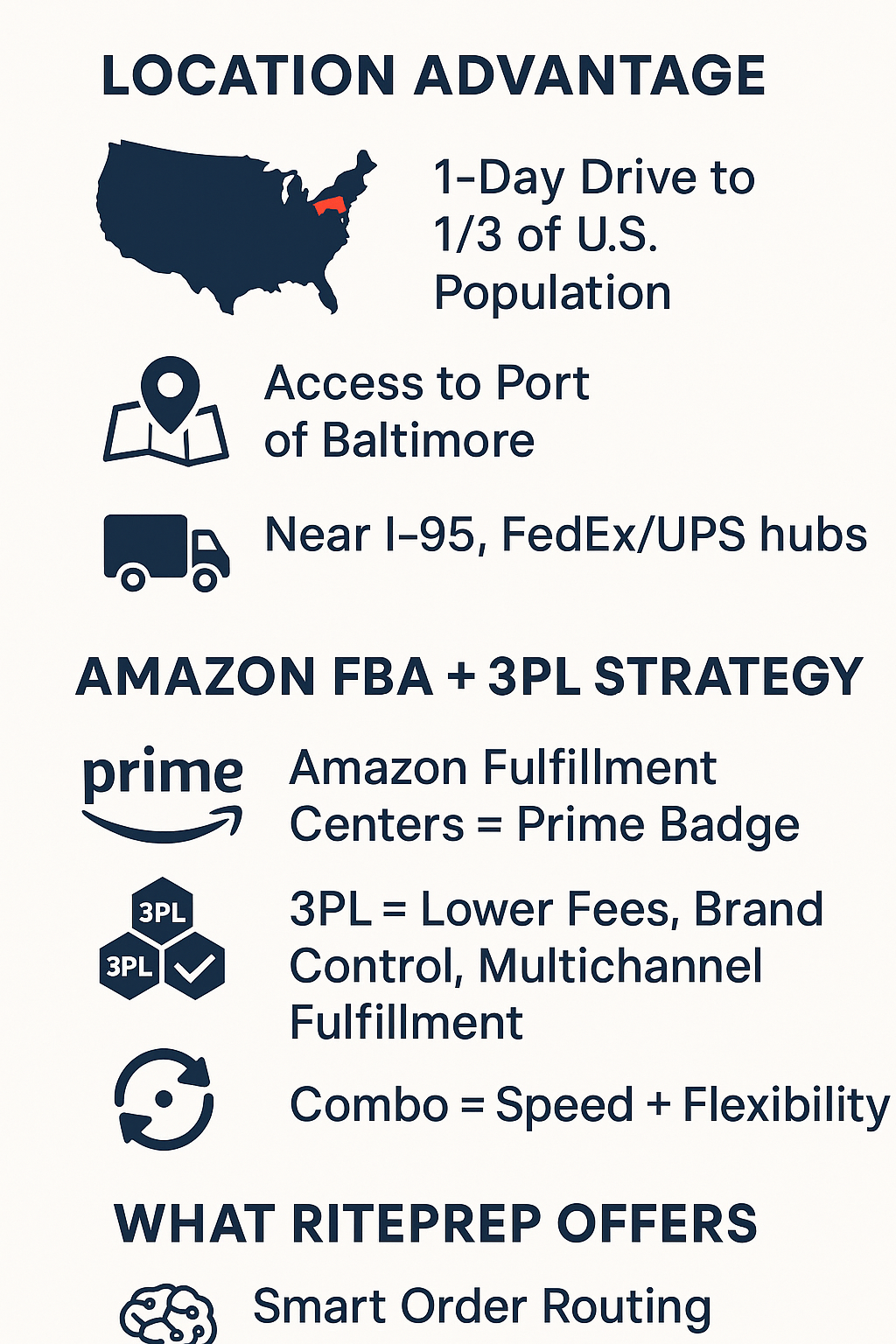
- For Third-Party E-Commerce Merchants: Relying entirely on FBA exposes brands to shifting fee structures and unexpected storage penalties. Enterprise brands should maintain hybrid fulfillment models, balancing FBA for high-velocity Prime SKUs alongside independent 3PL logistics options to manage inventory fees and reduce operational risk.
- For Supply Chain Executives: Amazon's pivot from centralized distribution to localized, regionalized fulfillment hubs underscores the value of moving inventory closer to end consumers. Reducing middle-mile transit distances yields greater cost savings and speed improvements than relying on expedited long-haul transit networks.