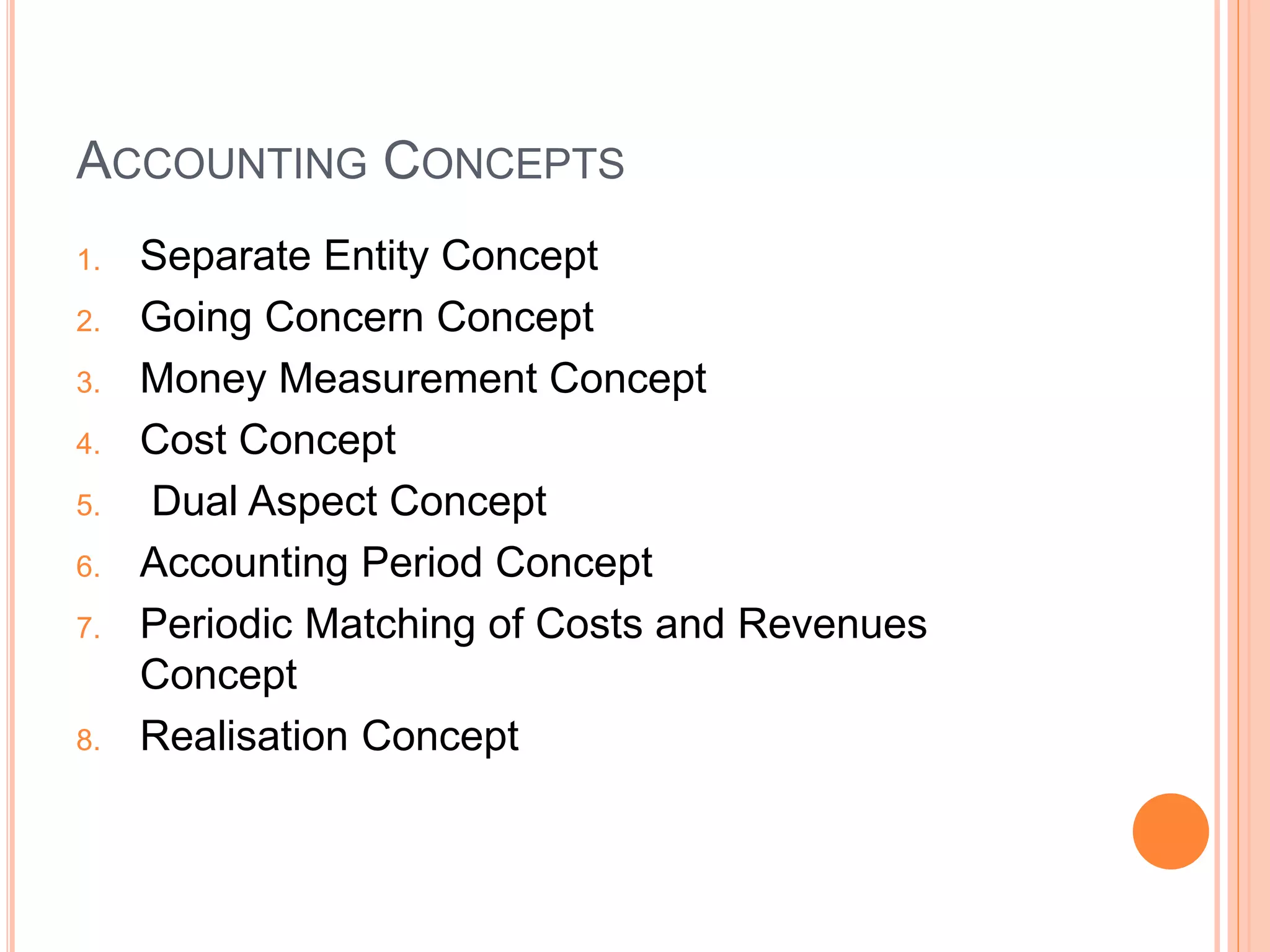
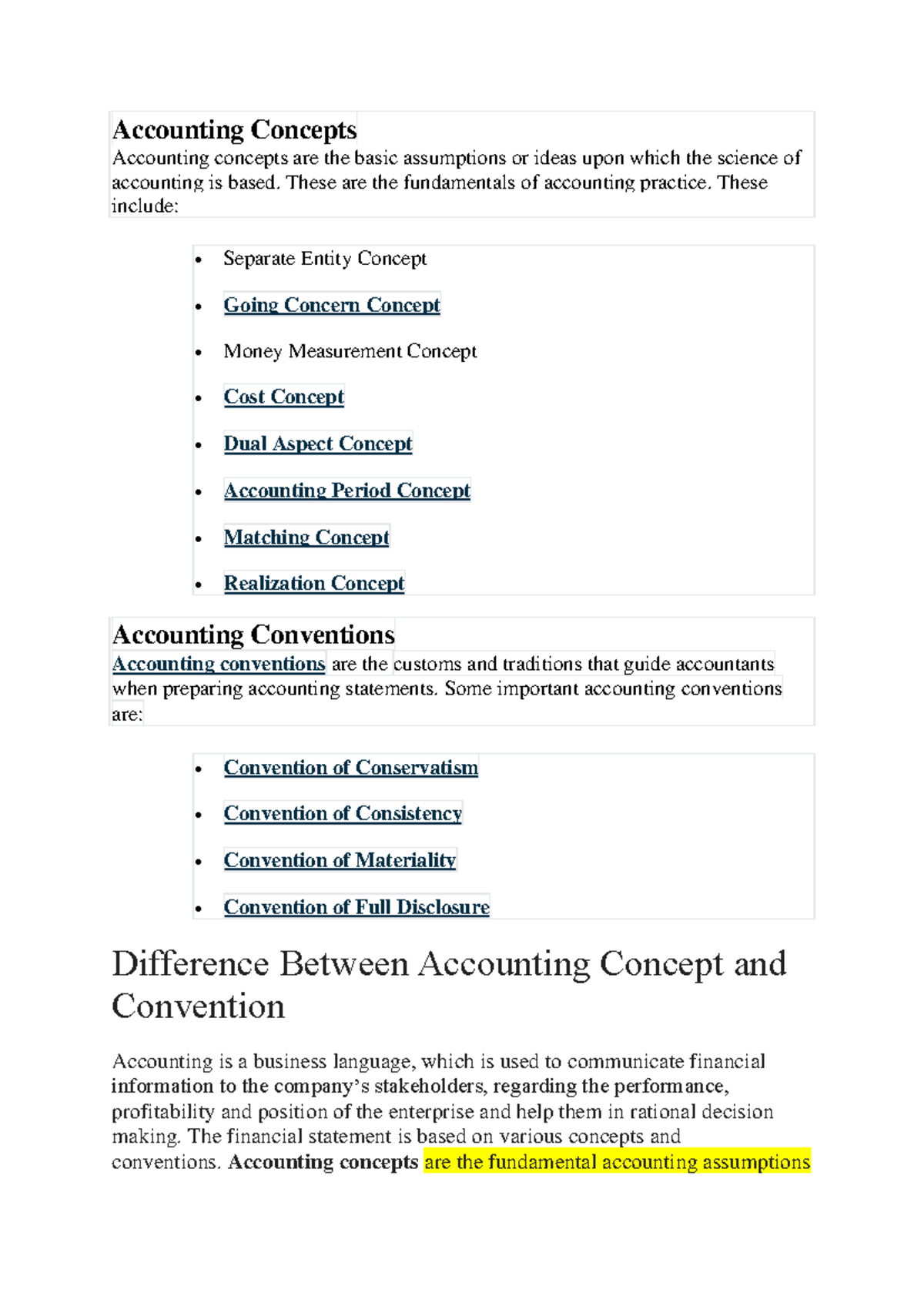
Accounting concepts are the foundational rules and assumptions that ensure financial information is recorded consistently, accurately, and transparently. These principles, including the accrual basis, the accounting equation, and the double-entry system, allow businesses to communicate their financial health to stakeholders like investors, lenders, and tax authorities using a standardized global language.
The Foundation of Financial Literacy: Why Accounting Concepts Matter
In 2026, even as artificial intelligence and automated systems handle the bulk of data entry, the underlying concepts of accounting remain the "source of truth" for any economic entity. Without a firm grasp of these basics, financial data is merely a collection of numbers without context. Accounting serves as the "language of business," and like any language, it is governed by specific grammatical rules—these are our concepts and principles.
Whether you are a small business owner, a student, or a corporate manager, understanding these concepts is critical for interpreting balance sheets, managing cash flow, and ensuring regulatory compliance. These principles are primarily governed by two major frameworks: Generally Accepted Accounting Principles (GAAP) in the United States and International Financial Reporting Standards (IFRS) used globally. While they have technical differences, they share the same conceptual core.
The Four Fundamental Accounting Assumptions
Before recording a single transaction, accountants operate under four primary assumptions. These provide the environment in which financial reporting exists.
1. The Economic Entity Assumption
This concept dictates that a business is a separate legal and economic entity from its owners. Even if you are a sole proprietor, your personal grocery bills must never be mixed with your business’s utility payments. This separation is vital for assessing the true performance and value of a business without the "noise" of the owner's personal finances.
2. The Monetary Unit Assumption
In accounting, we only record transactions that can be expressed in terms of money. While a company’s brand loyalty or the expertise of its workforce are incredibly valuable, they are not "concepts in the basics" for a balance sheet because they lack a direct, objective monetary measurement. In 2026, this remains a challenge for intangible-heavy firms, but the rule persists to maintain objectivity.
3. The Periodicity (Time Period) Assumption
Stakeholders cannot wait until a business closes its doors forever to see if it was profitable. The periodicity assumption allows us to break the life of a business into artificial time segments, such as months, quarters, or years. This enables "cut-off" points where performance can be measured and compared over time.
4. The Going Concern Assumption
Accountants assume that a business will continue to operate indefinitely. It will not go bankrupt or liquidate in the foreseeable future. This assumption allows a company to "defer" certain costs into the future—for example, depreciating a machine over ten years rather than recording the entire cost the moment it is purchased. If a company is no longer a "going concern," its assets must be valued at what they would fetch in a forced sale (liquidation value).
The Universal Accounting Equation
At the heart of all accounting is a simple but unbreakable mathematical relationship known as the accounting equation. Every transaction, no matter how complex, must keep this equation in balance.
Assets = Liabilities + Equity
- Assets: These are the resources owned or controlled by the business that have future economic value. Examples include cash, inventory, accounts receivable (money customers owe you), and equipment.
- Liabilities: These are the obligations of the business—what you owe to outsiders. This includes bank loans, accounts payable (money you owe suppliers), and accrued taxes.
- Equity: Also known as "Owner’s Equity" or "Shareholders' Equity," this represents the residual interest in the assets after deducting liabilities. It is essentially the "net worth" of the business from an accounting perspective.
The equation stays in balance through the Double-Entry System. Every transaction affects at least two accounts. If you take out a $10,000 loan, your Assets (Cash) increase by $10,000, and your Liabilities (Notes Payable) also increase by $10,000. The equation remains balanced.
Core Accounting Principles for Recording Transactions
Once the assumptions are understood, the following principles guide exactly when and how transactions are recorded.
The Accrual Basis vs. Cash Basis
This is perhaps the most important distinction in basic accounting. Under the Cash Basis, you record revenue when money hits your bank and expenses when money leaves it. While simple, it is often inaccurate for long-term business health.
Under the Accrual Basis (required by GAAP and IFRS), you record revenue when it is earned and expenses when they are incurred, regardless of when the cash moves. If you perform a service in December 2025 but get paid in January 2026, the revenue belongs to 2025. This provides a much more accurate picture of profitability.
The Revenue Recognition Principle
Revenue should be recognized when the "performance obligation" is met. In simple terms, once you have delivered the goods or provided the service, you can claim the revenue. This prevents companies from "inflating" their numbers by recording prepayments for work they haven't started yet.
The Matching Principle (Expense Recognition)
The matching principle states that expenses must be matched with the revenues they helped generate. If you sell a product in June, the cost of the materials used to make that product must be recorded as an expense in June, even if you paid the supplier for those materials back in May. This "matching" allows for the calculation of an accurate profit margin for a specific period.
The Historical Cost Principle
Assets are generally recorded at their original purchase price (historical cost). Even if a piece of land you bought for $100,000 in 2010 is now worth $500,000 in 2026, it typically stays on the books at $100,000. This is done to ensure objectivity. Market values are often subjective and fluctuate; the original receipt is a cold, hard fact.
The Conservatism (Prudence) Principle
When in doubt, choose the accounting treatment that is least likely to overstate assets and income. If a company faces a potential lawsuit, it should record the potential loss as soon as it is probable and estimable. However, if a company expects a windfall gain, it cannot record it until it actually happens. This "play it safe" approach protects investors from overly optimistic reporting.
Understanding the Accounting Cycle
The accounting cycle is the collective process of identifying, analyzing, and recording the accounting events of a company. It is a repetitive eight-step process that occurs every reporting period.
- Identify Transactions: Collect receipts, invoices, and bank statements.
- Record Journal Entries: Use the double-entry system (debits and credits) to record transactions chronologically.
- Post to the General Ledger: Transfer journal entries to individual accounts (e.g., the "Cash" account or the "Rent Expense" account).
- Prepare an Unadjusted Trial Balance: A list of all accounts to ensure debits equal credits.
- Adjusting Entries: Record accruals, deferrals, and depreciation at the end of the period.
- Adjusted Trial Balance: Verify the math again after adjustments.
- Financial Statements: Generate the Income Statement, Balance Sheet, and Cash Flow Statement.
- Closing the Books: Reset "temporary" accounts (revenue and expenses) to zero to start the next period.
Comparison Table: Cash vs. Accrual Accounting
| Feature | Cash Basis Accounting | Accrual Basis Accounting |
|---|---|---|
| Revenue Recognition | When cash is received | When earned (goods delivered) |
| Expense Recognition | When cash is paid | When incurred (benefit received) |
| Complexity | Low; easy for small entities | High; requires adjusting entries |
| Accuracy of Profit | Can be misleading (timing gaps) | Highly accurate representation |
| GAAP Compliance | Not GAAP compliant | Mandatory for GAAP/IFRS |
| Tax Impact | Often used for small tax filings | Used by all larger corporations |
The Role of Materiality and Full Disclosure
Two final concepts act as "quality control" for financial reporting: Materiality and Full Disclosure.
Materiality suggests that an accounting rule can be ignored if the amount is so small that it wouldn't influence the decision of a reasonable person. If a multi-billion dollar corporation loses a $10 calculator, it doesn't need to be depreciated over five years; it can be expensed immediately. The cost of perfectly tracking it exceeds the benefit of the information.
Full Disclosure requires that any information that could materially affect a reader's understanding of the financial statements must be included, either in the body of the statements or in the accompanying "Notes to the Financial Statements." This includes pending lawsuits, changes in accounting methods, or significant risks.
Relevant FAQ
What is the difference between a debit and a credit?
In basic accounting, debits and credits are simply "left" and "right" sides of an account. For Assets and Expenses, a debit increases the balance. For Liabilities, Equity, and Revenue, a credit increases the balance. They must always balance in every transaction.
Why is the Going Concern assumption so important?
It allows companies to report assets at their long-term value rather than their "fire-sale" price. If we assumed every business was about to close, we couldn't justify recording long-term assets like buildings at their cost; we would have to record them at what they would sell for today under duress.
Can a company change its accounting methods?
Yes, but the Consistency Principle requires that once a method (like a specific depreciation style) is chosen, it should be used every year. If a change is made, it must be disclosed and justified in the financial notes to prevent companies from "manipulating" their profit numbers by switching rules.
Does basic accounting apply to cryptocurrency in 2026?
Yes. While the assets are digital, the concepts remain. Under current FASB guidelines, crypto is often treated as an intangible asset or measured at fair value, but the double-entry logic and the accounting equation still apply to every digital wallet transaction.
What is the "Matching Principle" in simple terms?
Think of it as "cause and effect." If you spent money on advertising (the cause) to get sales in December (the effect), that advertising cost should be recorded in December’s financial report, even if you paid the ad agency in November.
Practical Recommendation for 2026
If you are just starting with accounting concepts, focus first on mastering the Accounting Equation (A = L + E) and the Accrual Concept. These two pillars support almost everything else in finance. For small business owners, even if you use automated software, perform a "manual" review of your Profit & Loss statement once a month to ensure that revenues and expenses are being matched to the correct periods. For students, ensure you understand the "Why" behind the IFRS and GAAP frameworks, as the "How" is increasingly handled by AI, but the interpretation of the results remains a human-led professional task.