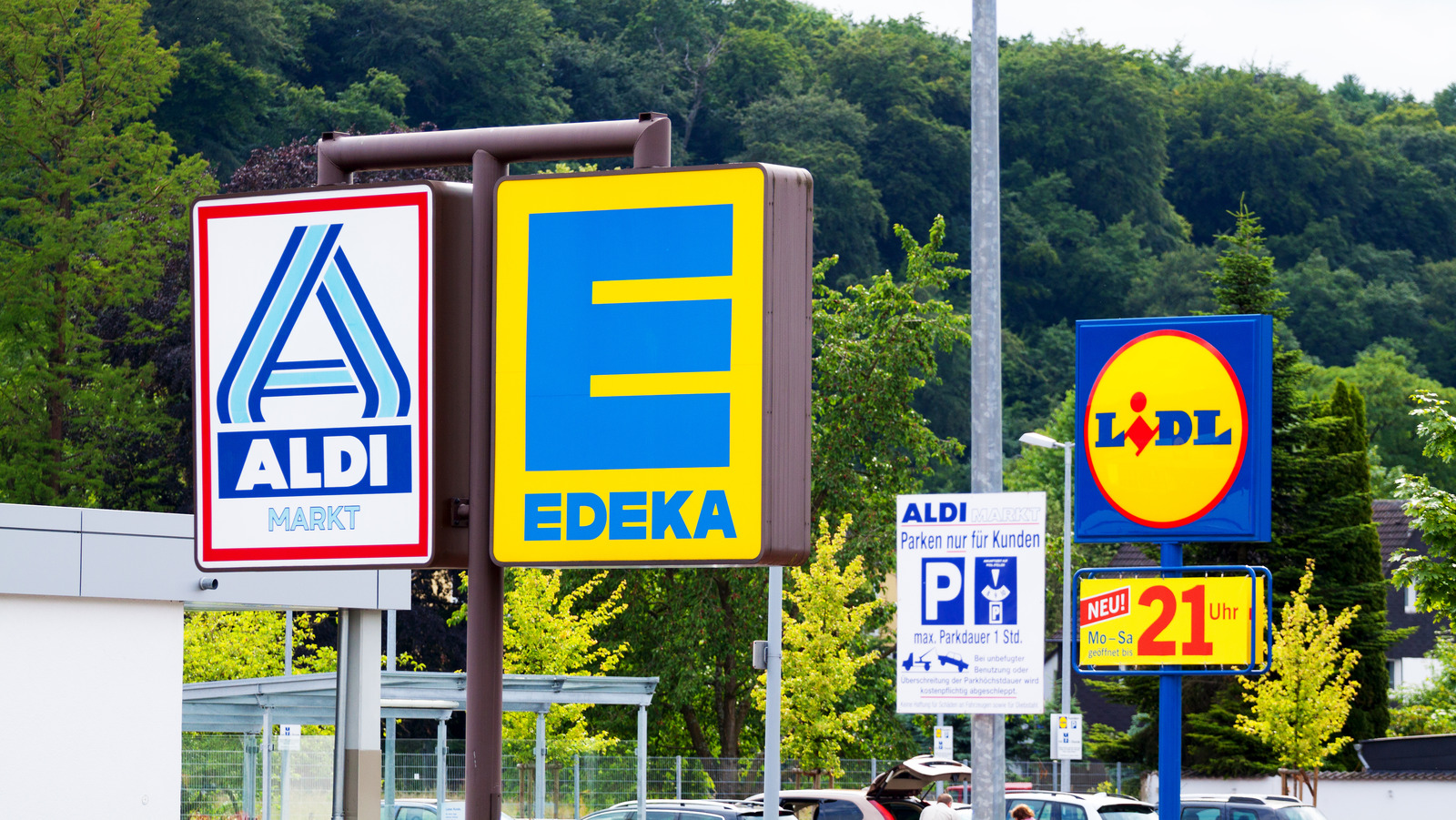
Aldi and Lidl are not owned by the same brothers. While both originated as family-run German discount retailers, they are entirely separate entities with distinct ownership structures and management histories. The confusion often stems from their shared home country and similar business models, which prioritize low prices, limited assortments, and rapid store expansion.
The Origins of the Aldi Empire
To understand why people often conflate these two corporate giants, one must first examine the history of the Albrecht family. The foundation of the company known today as Aldi dates back to 1913, when Anna Albrecht opened a small grocery store in the Schonnebeck suburb of Essen, Germany. Her husband, Karl Albrecht Sr., had previously worked as a miner and then as a baker’s assistant, providing the initial stability for the household.
After the Second World War, the two sons of Anna and Karl—Karl Jr. and Theo Albrecht—took over the family business. In 1946, they began expanding the operation, eventually adopting the name "Aldi," which is a portmanteau of Albrecht Diskont. Their business philosophy was rooted in extreme cost-cutting, limiting the inventory to fast-moving goods, and maintaining high operational efficiency.
The critical turning point in the internal history of Aldi occurred in 1960. While the brothers had built a successful network of stores, they had a fundamental disagreement regarding the sale of tobacco products. Karl believed that selling cigarettes would attract shoplifters, whereas Theo disagreed. Rather than continue their partnership in conflict, they split the company into two distinct legal entities: Aldi Nord (owned by Theo’s side of the family) and Aldi Süd (owned by Karl’s side). This split remains the defining characteristic of the Aldi corporate structure today, but it is important to note that this is an internal family divide, completely separate from the company known as Lidl.
The Origins of the Schwarz Group and Lidl
Lidl, by contrast, has no direct blood relationship to the Albrecht family. The history of Lidl begins with the Schwarz family. In 1930, Josef Schwarz became a partner in the fruit wholesaler Lidl & Co., based in Heilbronn, Germany. The company evolved over several decades, shifting from a wholesale business to a retail powerhouse.
The modern incarnation of the discount supermarket Lidl was spearheaded by Dieter Schwarz, the son of Josef, in the 1970s. Dieter took inspiration from the success of the discount model established by other German retailers, but he developed his own brand, strategy, and infrastructure. Unlike the split nature of Aldi, the Schwarz Group—the parent company of Lidl—remains a private, highly integrated entity. It is one of the largest retail groups in the world, and it has maintained its independence from the Albrecht family throughout its entire existence.
The two companies are not, and have never been, owned by the same brothers. The misconception likely persists because both chains rose to prominence by perfecting the "hard discount" retail model simultaneously in the German market, eventually expanding across Europe and the globe using very similar operational tactics.
Comparing the Business Structures
While they are not related by ownership, Aldi and Lidl share a DNA in terms of their business logic. Both companies were designed to provide essential goods at prices lower than traditional supermarkets by minimizing overhead and complexity. However, their management styles and internal governance differ significantly.
| Feature | Aldi (Nord & Süd) | Lidl (Schwarz Group) |
|---|---|---|
| Ownership | Split between Albrecht family branches | Owned by the Schwarz Group |
| Business Model | Hard discount, private label focus | Hard discount, hybrid brand/private label |
| Store Layout | Simple, efficient, pallet-based | Slightly more curated, focus on fresh food |
| Expansion Strategy | Regionalized control by parent branches | Highly centralized global oversight |
Aldi operates as two semi-independent groups. Aldi Nord covers northern Germany and many international markets, while Aldi Süd handles southern Germany and other regions like the United States, Australia, and the UK. This split ensures that while the brand identity remains consistent, the day-to-day operations can be tailored to the specific regulatory and logistical needs of different territories.
Lidl, under the umbrella of the Schwarz Group, operates with a more centralized command structure. Dieter Schwarz has been instrumental in steering the company’s massive growth, utilizing the group’s immense logistical reach to control the supply chain more tightly than many of their competitors.
Why the Misconception Persists
The idea that Aldi and Lidl are "brother-owned" companies is a common urban legend. This belief is fueled by several factors that define the landscape of 21st-century retail:
- Geographic Proximity: In many towns across Europe and, increasingly, in North America, you will find an Aldi and a Lidl located within a short drive of each other. This physical proximity creates a sense of competition that mimics the familial rivalry of the Albrecht brothers.
- Shared Retail Philosophy: Both companies use a "hard discount" strategy. This involves smaller store footprints, a smaller number of employees, limited inventory diversity, and the prominent use of private-label brands. To the average shopper, the experience of navigating the aisles—often characterized by center-aisle seasonal "middle aisles"—feels identical.
- The "German Discount" Narrative: Media coverage often bundles them together as the "German discount duo." Journalists frequently discuss them as a pair because they disrupted the traditional supermarket model in markets like the UK and the US during the 2000s and 2010s. This linguistic bundling makes it easy for consumers to assume they are branches of the same family tree.
- Cultural Obscurity: Large, private, family-owned conglomerates are often shrouded in secrecy. Because neither company is publicly traded on a stock exchange, they do not release the same depth of ownership information as public corporations. This lack of transparency allows myths about their origins to fill the void.
Operational Differences in 2026
By 2026, the distinctions between the two have grown more pronounced as both companies have evolved their offerings. Aldi has invested heavily in organic produce and premium private-label lines to appeal to a more health-conscious demographic. Meanwhile, Lidl has doubled down on its "middle aisle" strategy, creating a high-frequency turnover of non-food items, ranging from power tools to clothing and high-end electronics.
The Role of Private Labels
Both chains rely on private labels to maintain low prices. By cutting out the middleman (the national brand manufacturer), they can exert control over the cost of goods sold. However, Lidl often stocks a wider variety of recognized brand-name products alongside their own labels, whereas Aldi focuses more strictly on its own proprietary brands to manage its inventory density.
Supply Chain Logistics
The way they approach logistics also highlights their independence. Aldi’s split structure means that in some countries, they are effectively running two different companies with separate supply chains. Lidl, conversely, benefits from the massive scale of the Schwarz Group, which includes not just supermarkets but also plastics manufacturing and waste management divisions, allowing them to optimize costs in ways Aldi cannot.
Frequently Asked Questions
Are Aldi and Lidl rivals?
Yes, they are fierce competitors. They often engage in aggressive price wars and site-selection battles to capture the same value-conscious consumer segment. While they share a business model, they are constantly vying for market share in every region where they both operate.
Do Aldi and Lidl share the same suppliers?
While they may purchase from the same agricultural regions or food processing plants, they have independent procurement departments and separate contracts with manufacturers. They do not share a unified supply chain or procurement infrastructure.
Is one of them higher quality than the other?
Quality perception is subjective and often varies by location. Because both companies prioritize private labels, the quality of specific products can shift depending on the contract manufacturer for that region. Generally, both are recognized for offering high-quality essentials at significant discounts compared to major national supermarkets.
Can I return items from one at the other?
Absolutely not. Because they are legally separate, independent businesses with different systems, receipts from Aldi will not be accepted at Lidl, and vice versa. Each company manages its own inventory tracking, returns policies, and financial reporting.
Final Perspective
The persistence of the "brother-owned" myth speaks to the profound impact these two companies have had on the retail sector. They successfully challenged the status quo, forcing legacy supermarkets to lower their prices and rethink their operations. However, from a corporate and historical standpoint, the connection is purely circumstantial.
If you are a consumer trying to choose between the two, recognize that you are not choosing between two arms of the same family business. You are choosing between two distinct, independently operated titans of the retail world. Whether you prefer the streamlined, private-label-heavy approach of Aldi or the hybrid, high-turnover model of Lidl, your choice is between two separate corporate strategies.
In 2026, the retail environment remains as competitive as ever. The next time you find an Aldi and a Lidl near each other, look past the visual similarities. Observe the differences in their product range, their store branding, and their specific approach to customer service. These differences are the result of decades of independent growth, not a shared family lineage.