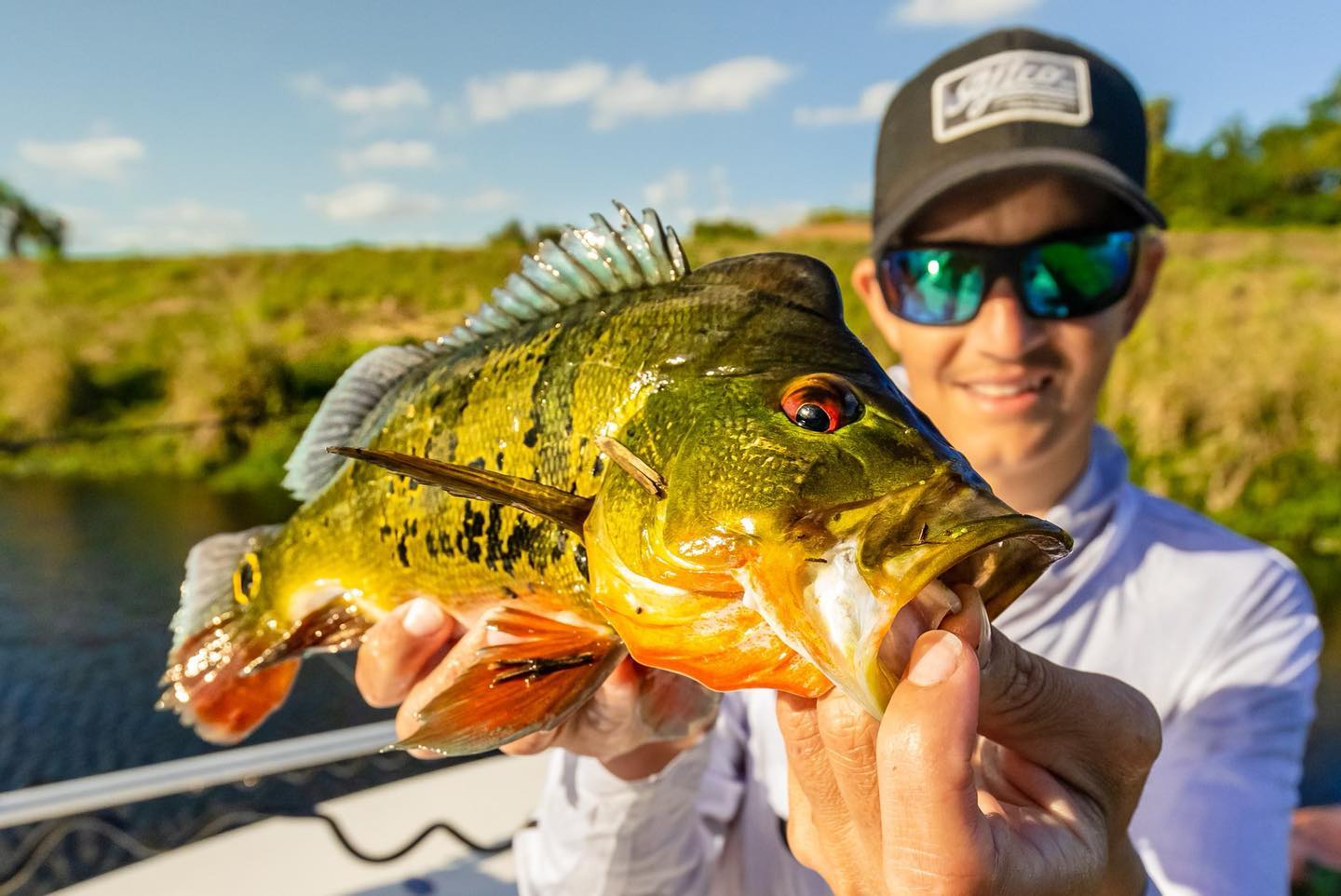
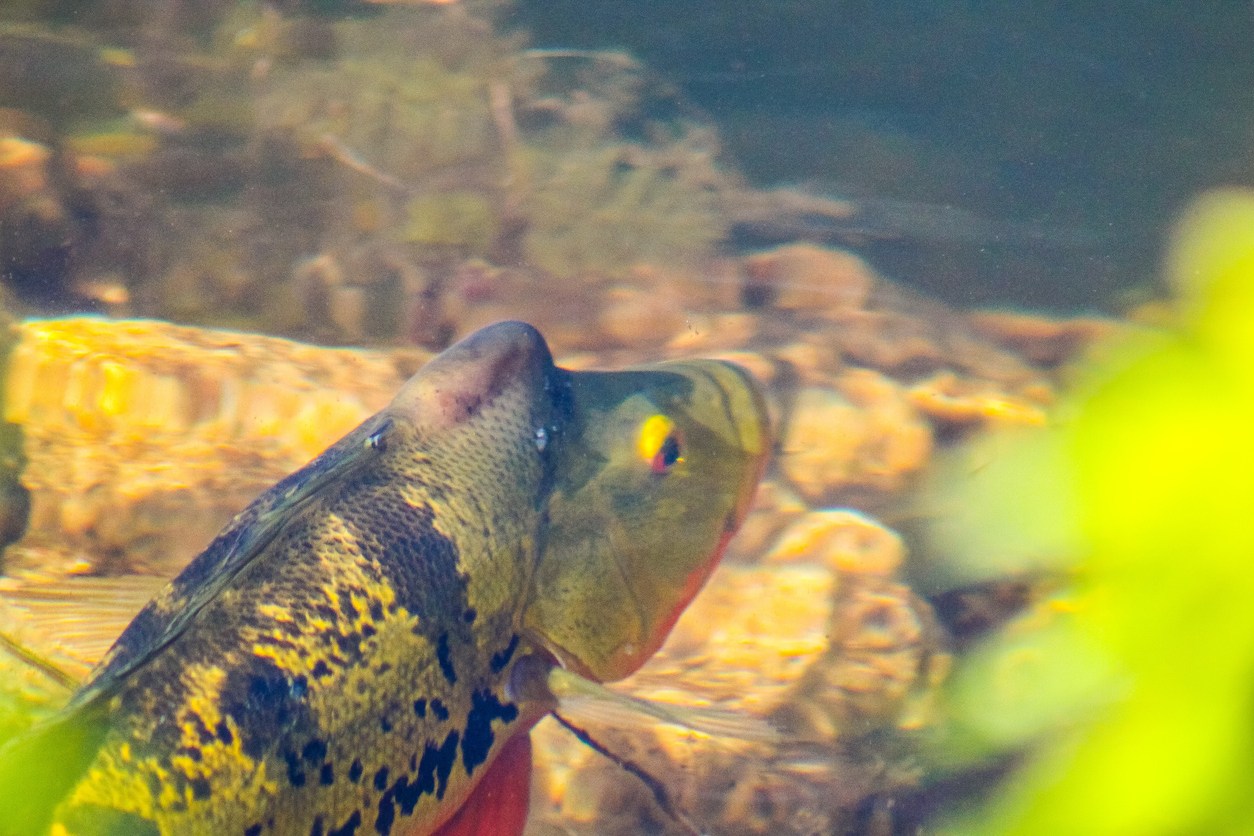
Yes, vibrant populations of peacock bass thrive in the freshwaters of South Florida, specifically within the canal systems of Miami-Dade and Broward counties. Introduced intentionally by the Florida Fish and Wildlife Conservation Commission in 1984 to control invasive exotic prey fish like the spotted tilapia, these South American natives have established a world-class sport fishery that draws anglers from across the globe.
Historical Introduction and Biological Context
The presence of peacock bass in the United States is not a historical accident of nature, but rather the result of a carefully calculated and executed fisheries management strategy. Native to the warm, tropical river basins of South America—most notably the Amazon and Orinoco river systems—peacock bass (Cichla species) were imported to Florida in the early 1980s. Before their introduction, South Florida’s urban canals were increasingly populated by problematic exotic species such as the spotted tilapia and oscars, which disrupted native aquatic ecosystems and failed to provide adequate sportfishing opportunities.
Biologists with the Florida Game and Fresh Water Fish Commission (now the Florida Fish and Wildlife Conservation Commission, or FWC) studied the butterfly peacock bass (Cichla ocellaris) extensively to determine its suitability as a biological control agent. Research confirmed that butterfly peacock bass possess ideal characteristics for this role: they are aggressive visual predators, they reproduce readily in warm waters, and, crucially, they are highly sensitive to cold temperatures. This thermal vulnerability acts as a natural environmental barrier, preventing the tropical fish from migrating northward out of South Florida's thermally moderated canal networks into the cooler central and northern regions of the state.
Geographical Distribution and Habitat Preferences
Peacock bass are not found throughout the entirety of Florida. Their distribution is largely restricted to the interconnected canal networks, lakes, and retention ponds of Southeast Florida. The highest concentrations occur within Miami-Dade and Broward counties, extending marginally into extreme southern Palm Beach County. Urban and suburban waterways—such as the C-4 (Tamiami) Canal, the C-9 (Snake Creek) Canal, and the C-100 canal series—offer prime habitats that support robust populations.
Understanding the micro-habitats favored by peacock bass is essential for locating and catching them. Unlike native largemouth bass (Micropterus salmoides), which often lurk deep within thick sub-surface vegetation or heavy timber, peacock bass are voracious open-water hunters that prefer structure with distinct current edges and hard bottoms. Anglers frequently find them congregating around:
- Concrete bridge pilings and seawalls
- Fallen Australian pine branches and debris piles
- Rock ledges, drop-offs, and canal intersections
- Warm-water discharge pipes from industrial or power facilities during cooler winter months
Because peacock bass are tropical fish, water temperature dictates their daily and seasonal movements. They become largely inactive and stop feeding aggressively when water temperatures drop below 60°F (15°C). Consequently, during sudden winter cold snaps, these fish seek out deeper holes in canals or thermal refuges where water remains stable.
Biology, Behavior, and Identification
The term "peacock bass" is somewhat of a misnomer. While they belong to the sunfish family (Centrarchidae) and share the colloquial "bass" designation among sportfishermen, they actually belong to the cichlid family (Cichlidae). The most common species established in Florida is the butterfly peacock bass (Cichla ocellaris), though limited stockings of speckled peacock bass (Cichla temensis) and butterfly-kelp hybrids have occurred historically; however, the butterfly peacock remains the dominant, widespread gamefish.
Visually, butterfly peacock bass are unmistakable. Their flanks display a brilliant golden-green coloration crossed by three vertical dark bars, and mature adults feature a prominent, iridescent black spot surrounded by a gold halo on the caudal (tail) fin—the "peacock" eye-spot that gives the fish its common name. Spawning males often develop a pronounced fatty hump on their foreheads during breeding season.
| Feature / Characteristic | Butterfly Peacock Bass (Cichla ocellaris) | Native Largemouth Bass (Micropterus salmoides) |
|---|---|---|
| Family | Cichlidae (Cichlids) | Centrarchidae (Sunfishes) |
| Primary Florida Range | Miami-Dade and Broward Counties (South Florida) | Statewide across Florida lakes and rivers |
| Thermal Tolerance | Sensitive; becomes dormant or dies below 60°F | Highly tolerant of wide temperature ranges |
| Spawning Season | Spring through summer (peaks April–July) | Winter through spring (late winter to spring) |
| Dietary Habits | Diurnal, visual predator focused on live fish (tilapia, shiners) | Generalist predator; ambushes prey day or night |
| Maximum Size in FL | Typically 2 to 5 pounds (State record: 9.08 lbs) | Can exceed 10 to 15 pounds |
Behaviorally, peacock bass differ significantly from largemouth bass. They are strictly diurnal hunters, meaning they feed exclusively during daylight hours. They do not hunt by scent or lateral-line vibration alone; they rely heavily on sharp eyesight to spot and chase down fast-moving prey. This aggressive, school-oriented hunting style makes them exceptionally exciting targets for artificial-lure anglers.
Fishing Regulations and Conservation Management
The FWC manages the peacock bass fishery with strict conservation regulations to ensure sustainable populations and maintain trophy-sized specimens. Because these exotic fish are valuable biological controls and world-class sport assets, catch-and-release is strongly encouraged, though specific harvest rules apply.
Anglers must possess a valid Florida freshwater fishing license, unless exempt by age or residency status. The bag and size limits for peacock bass in Florida are carefully regulated:
- Daily Bag Limit: Anglers are permitted to keep a total of two peacock bass per day.
- Size Restrictions: Of the two fish allowed in the daily bag, only one may be greater than 17 inches in total length. All peacock bass under 17 inches can be kept within the two-fish limit, but catch-and-release practices predominate among the angling community to protect breeding stock.
Transporting live peacock bass across state or county lines without proper permitting is strictly prohibited to prevent unauthorized and ecologically damaging introductions into non-target watersheds. Reviewing the official Florida Fish and Wildlife Conservation Commission freshwater fishing regulations page before heading out ensures full compliance with current statutory limits.
Angling Techniques, Gear, and Tackle
Targeting peacock bass requires distinct adjustments compared to traditional largemouth bass fishing. Because these fish are fast, aggressive, and possess abrasive tooth patches rather than crushing teeth, tackle must be selected with durability and speed in mind.
Rods, Reels, and Line
Medium-light to medium-action spinning or baitcasting setups measuring 6.5 to 7 feet are standard. Spooling with 10- to 20-pound braided line provides the necessary casting distance and sensitivity, tied to a 20- to 30-pound fluorocarbon leader to resist abrasion against concrete canal walls and submerged structures.
Lures and Baits
- Topwater Baits: Small prop-baits, walking plugs, and poppers generate explosive surface strikes, as peacock bass eagerly attack disturbances on top of the water column.
- Jigs and Jerkbaits: White, chartreuse, or pearl-colored soft-plastic jerkbaits rigged weightless or on light jigheads mimic injured baitfish effectively.
- Live Bait: Live golden shiners or small live tilapia fished under a float remain exceptionally productive, particularly for larger, warier fish hugging deep canal bottoms.
Frequently Asked Questions
Can you eat peacock bass found in Florida?
Yes, peacock bass are legal to harvest within daily bag limits, and their white, flaky meat is widely considered excellent for consumption. However, because many South Florida canals are located in urban settings, anglers should consult health advisories regarding local water quality and mercury or contaminant consumption limits before eating fish caught in urban retention ponds.
Do peacock bass hybridize with native largemouth bass?
No, peacock bass and largemouth bass belong to entirely different biological families (Cichlidae versus Centrarchidae). They cannot interbreed or produce hybrid offspring, meaning the introduction of peacock bass has not genetically compromised native largemouth bass populations.
Can peacock bass survive cold winters in North Florida?
No, peacock bass cannot survive sustained water temperatures below 60°F (15°C). Severe winter cold fronts historically caused localized mortality events in South Florida canals, and this thermal ceiling is the primary environmental barrier preventing them from expanding northward into Central and North Florida.
Where is the best public access for peacock bass fishing?
The most reliable public access points are found along public canal banks, bridge crossings, and boat ramps managed by local municipalities or county parks in Miami-Dade and Broward counties. Popular access areas include the Tamiami Canal network alongside major roadways and neighborhood retention basins with public right-of-ways.
Do I need a special permit to fish for peacock bass in Florida?
No special permit is required beyond a standard Florida freshwater fishing license. Standard state licensing rules, fees, and exemptions apply to all anglers targeting peacock bass in public waters.
Conclusion and Next Actions
Peacock bass provide an exceptional sportfishing experience unique to the freshwaters of South Florida. To pursue these vibrant exotics successfully, secure a current Florida freshwater fishing license, inspect local canal maps for public access points in Miami-Dade or Broward counties, and prepare fast-moving topwater lures or live bait presentations geared toward daytime visual predators.