In most cases, dividends paid on a life insurance policy are not taxable because the Internal Revenue Service (IRS) views them as a return of a portion of the premiums you paid. However, dividends become taxable if the total amount received exceeds the total premiums paid into the policy, or if the dividends earn interest while held by the insurance company.
Life insurance dividends are a unique financial feature primarily associated with "participating" policies issued by mutual insurance companies. Unlike the dividends you might receive from a stock portfolio, which represent a share of a corporation's profits, life insurance dividends are technically considered a retroactive adjustment of the policy's cost. As we navigate the financial landscape of 2026, understanding the nuances of these payments is essential for proper tax planning and estate management.
Understanding the Nature of Life Insurance Dividends
To determine the taxability of these payments, one must first understand what they represent. In the insurance industry, dividends are paid to policyholders of participating whole life insurance policies. These policies are typically offered by mutual life insurance companies—entities owned by their policyholders rather than by external shareholders.
When a mutual insurer experiences better-than-expected financial results—such as lower mortality rates among policyholders, lower administrative expenses, or higher investment returns—it may distribute a portion of that surplus back to the policyholders. The IRS classifies this distribution not as income, but as a "return of premium." Effectively, the government acknowledges that you overpaid for your insurance coverage, and the company is simply returning the excess.
Because these funds were originally paid into the policy with after-tax dollars, returning them to you does not trigger a new tax event. This is a fundamental distinction from corporate dividends, which are distributions of corporate earnings and are typically taxed as qualified or non-qualified dividends.
The Cost Basis: The Threshold for Taxability
The "cost basis" is the most critical concept in determining when life insurance dividends transition from tax-free to taxable. In the context of life insurance, the cost basis is the total amount of premiums you have paid into the policy, minus any previous tax-free withdrawals or dividends you have already received.
As long as the cumulative dividends you receive are less than or equal to the total premiums you have paid, the dividends remain non-taxable. However, if you hold a policy for several decades, the cumulative dividends may eventually exceed the total premiums paid. At that exact point, any additional dividend payments are considered gain on the investment and are taxable as ordinary income.
How to Calculate Your Cost Basis in 2026
To monitor your tax liability, you should track your "investment in the contract." The formula is relatively straightforward:
- Total Premiums Paid: Sum all out-of-pocket premium payments made since the policy’s inception.
- Subtract Non-Taxable Distributions: Deduct any previous dividends taken in cash, dividends used to reduce premiums, and any partial surrenders of cash value.
- Result: This is your current cost basis.
If your policy has a cash value of $100,000 and you have paid $60,000 in premiums over twenty years, your cost basis is $60,000. If the policy issues a $1,000 dividend this year, it is tax-free. If your cumulative dividends eventually reach $60,001, that final $1 is taxable.
When Dividends Become Taxable: Specific Scenarios
While the "return of premium" rule covers the majority of situations, there are several specific scenarios where policyholders will encounter a tax bill.
1. Interest Earned on Dividends
One of the most common ways to manage dividends is to leave them with the insurance company to "accumulate at interest." In this scenario, the dividend itself may be a tax-free return of premium, but the interest the insurance company pays you on those accumulated dividends is fully taxable as ordinary income in the year it is credited to your account.
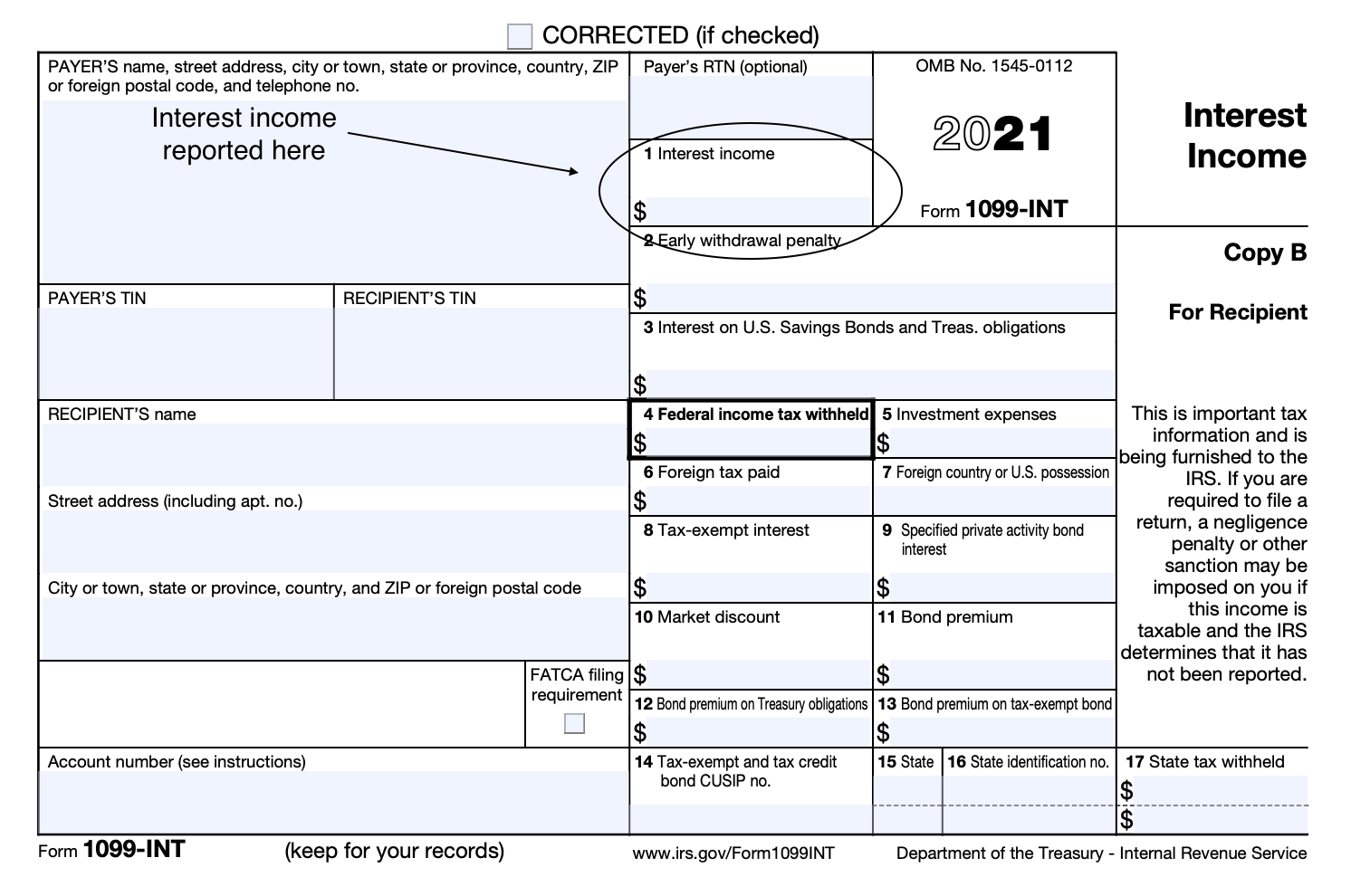
The insurance company will issue a Form 1099-INT if the interest earned exceeds the current reporting threshold (typically $10). It is a common mistake for policyholders to assume that because the dividend was tax-free, the interest is also protected. In 2026, the IRS continues to monitor these interest payments closely to ensure they are reported as annual income.
2. Modified Endowment Contracts (MECs)
If a life insurance policy is classified as a Modified Endowment Contract (MEC), the tax rules change significantly. A policy becomes a MEC if the funding exceeds federal tax limits (specifically the "7-pay test"), which identifies policies that are being used more as investment vehicles than as life insurance.
For a MEC, dividends received in cash or used to pay off policy loans are taxed on a "gain-first" basis (LIFO - Last In, First Out). This means dividends are considered taxable income to the extent there is gain in the policy before they are considered a tax-free return of basis. Furthermore, if you are under age 59½, taxable distributions from a MEC may be subject to a 10% additional tax penalty.
3. Dividends Exceeding Basis
As previously mentioned, once the "return of premium" threshold is crossed, every subsequent dollar is taxable. This occurs most frequently in "paid-up" policies where premiums are no longer being paid, but dividends continue to be issued based on the substantial cash value accumulated over forty or fifty years.
4. Policy Surrender or Lapse
If you surrender your policy for its cash value or if the policy lapses while there is an outstanding loan, the dividends you received over the life of the policy are factored into the final tax calculation. The IRS determines your total gain by taking the total value received (cash plus loan forgiveness) and subtracting your cost basis. In this context, dividends that were "tax-free" during the life of the policy effectively reduce your basis, which can increase the taxable gain upon surrender.
How Different Dividend Options Affect Taxes
When you own a participating policy, you generally have five options for how to receive or use your dividends. Each has unique tax implications.
| Dividend Option | Immediate Tax Status | Impact on Cost Basis | Long-Term Benefit |
|---|---|---|---|
| Cash Payment | Generally Tax-Free | Reduces Basis | Immediate Liquidity |
| Reduce Premium | Generally Tax-Free | Reduces Basis | Lowers Out-of-Pocket Cost |
| Paid-Up Additions | Tax-Deferred | Increases Death Benefit | Maximizes Policy Growth |
| Accumulate at Interest | Interest is Taxable | Dividend portion reduces basis | Savings-like growth |
| Term Insurance | Tax-Free | Reduces Basis | Extra protection for one year |
Paid-Up Additions: The "Tax-Free" Growth Engine
Many financial advisors recommend using dividends to purchase "paid-up additions" (PUAs). This option uses the dividend to buy a small amount of additional whole life insurance that has its own cash value and death benefit.
From a tax perspective, PUAs are highly efficient. The dividend used to buy the PUA is not taxed (unless it exceeds the basis), and the cash value within the PUA grows tax-deferred. Over time, this can significantly increase both the death benefit and the total cash value of the policy without creating an annual tax liability.
Premium Reduction
Using dividends to pay part of your premium is perhaps the simplest option. If your annual premium is $2,000 and your dividend is $500, you only pay $1,500 out of pocket. The $500 is not taxed, but it does mean your "cost basis" only increases by the $1,500 you actually paid.
Reporting Requirements and Documentation
As of 2026, insurance companies are required to provide clear documentation regarding the tax status of policy distributions. If you receive taxable interest on dividends, you will receive a Form 1099-INT. If you receive a dividend that exceeds your cost basis, or if you receive a distribution from a MEC, the company will typically issue a Form 1099-R.
It is essential to keep a permanent record of all premium payments and dividend statements. While insurance companies track the cost basis, errors can occur—especially if the policy has been transferred between companies or modified through a Section 1035 exchange. A Section 1035 exchange allows you to trade one life insurance policy for another without triggering a tax event on the accumulated gain, but the cost basis from the old policy must be accurately carried over to the new one.
Strategic Considerations for 2026
In the current financial environment, life insurance remains one of the few remaining "tax-advantaged" assets. Unlike high-yield savings accounts or taxable brokerage accounts, the growth within a life insurance policy (including dividends used for PUAs) is not taxed annually.
However, policyholders must be wary of "phantom income." This occurs most often when dividends are used to pay interest on a policy loan. While the dividend itself might be tax-free, using it to pay loan interest does not provide the policyholder with cash to pay any potential taxes that might arise if the policy's total distributions have already exceeded the basis.
For high-net-worth individuals, the interaction between life insurance dividends and the federal estate tax is also relevant. While the dividends themselves are an income tax issue, the total death benefit (including any increases from paid-up additions) is generally included in the policyholder's gross estate unless the policy is owned by an Irrevocable Life Insurance Trust (ILIT).
Common Mistakes to Avoid
- Ignoring the 1099-INT: Many taxpayers see a small 1099-INT from an insurance company and ignore it, thinking life insurance is always tax-free. This can lead to underreporting penalties.
- Over-funding for MEC Status: In an attempt to maximize "tax-free" dividends, some policyholders pay in too much cash too quickly, inadvertently turning their policy into a MEC and losing the "return of premium" tax treatment.
- Lapsing a Loan-Heavy Policy: If a policy lapses because the loan exceeds the cash value, all the "tax-free" dividends you received in the past are suddenly calculated into the taxable gain. This can result in a massive tax bill without any cash from the policy to pay it.
- Misunderstanding Stock vs. Mutual Dividends: Assuming that life insurance dividends are "qualified dividends" subject to lower capital gains rates. They are not; if they are taxable at all, they are taxed at ordinary income rates.
Frequently Asked Questions
Are dividends from a term life insurance policy taxable?
Most term life insurance policies do not pay dividends because they do not accumulate cash value or surplus. If a specific "return of premium" term policy issues a refund at the end of the term, that refund is generally not taxable as it is a return of the premiums paid, provided the refund does not exceed the total premiums paid.
If I use my dividends to buy more insurance, is that a taxable event?
No. Using dividends to purchase paid-up additions (PUAs) is generally not a taxable event. The dividend is treated as a return of premium used to buy a new "mini-policy." This is often considered the most tax-efficient way to use dividends, as it keeps the money within the tax-deferred umbrella of the life insurance contract.
Do I need to report non-taxable dividends on my tax return?
Generally, no. If a dividend is a return of premium and does not exceed your cost basis, it does not need to be reported as income on your federal or state tax return. However, if you receive a 1099-R or 1099-INT, you must report the amounts shown on those forms.
How does the IRS know if my dividends exceed my cost basis?
Insurance companies are required to track the "investment in the contract" for every policy. Once the cumulative distributions (including dividends and withdrawals) exceed the premiums paid, the insurance company is legally obligated to report the excess to the IRS and the policyholder via Form 1099-R.
Can I deduct the premiums I pay for life insurance?
For individual policies, premiums are generally not tax-deductible. This is why the dividends are allowed to be returned tax-free; you have already paid taxes on the money used to pay the premiums. If premiums were deductible, dividends would likely be fully taxable upon receipt.
Is the tax treatment different for corporate-owned life insurance (COLI)?
The rules for business-owned life insurance are more complex, particularly regarding the deductibility of premiums and the taxability of proceeds under the Pension Protection Act of 2006. However, for participating policies held by businesses, the basic "return of premium" logic for dividends generally remains consistent, provided notice and consent requirements are met.
Final Recommendation
When managing a life insurance policy in 2026, your primary goal regarding dividends should be to maintain the policy's tax-advantaged status. If your policy is not a Modified Endowment Contract, you can generally enjoy dividends tax-free until you have recovered your entire investment in the contract.
To ensure you stay on the right side of the IRS, request an "In-Force Illustration" from your insurance carrier every two to three years. This document will show your current cost basis, the total dividends received to date, and a projection of when your dividends might start exceeding your basis. If you find yourself approaching that threshold, or if you are dealing with a MEC, consult with a qualified tax professional to evaluate whether shifting your dividend option (for example, from cash to paid-up additions) could help mitigate your future tax exposure.