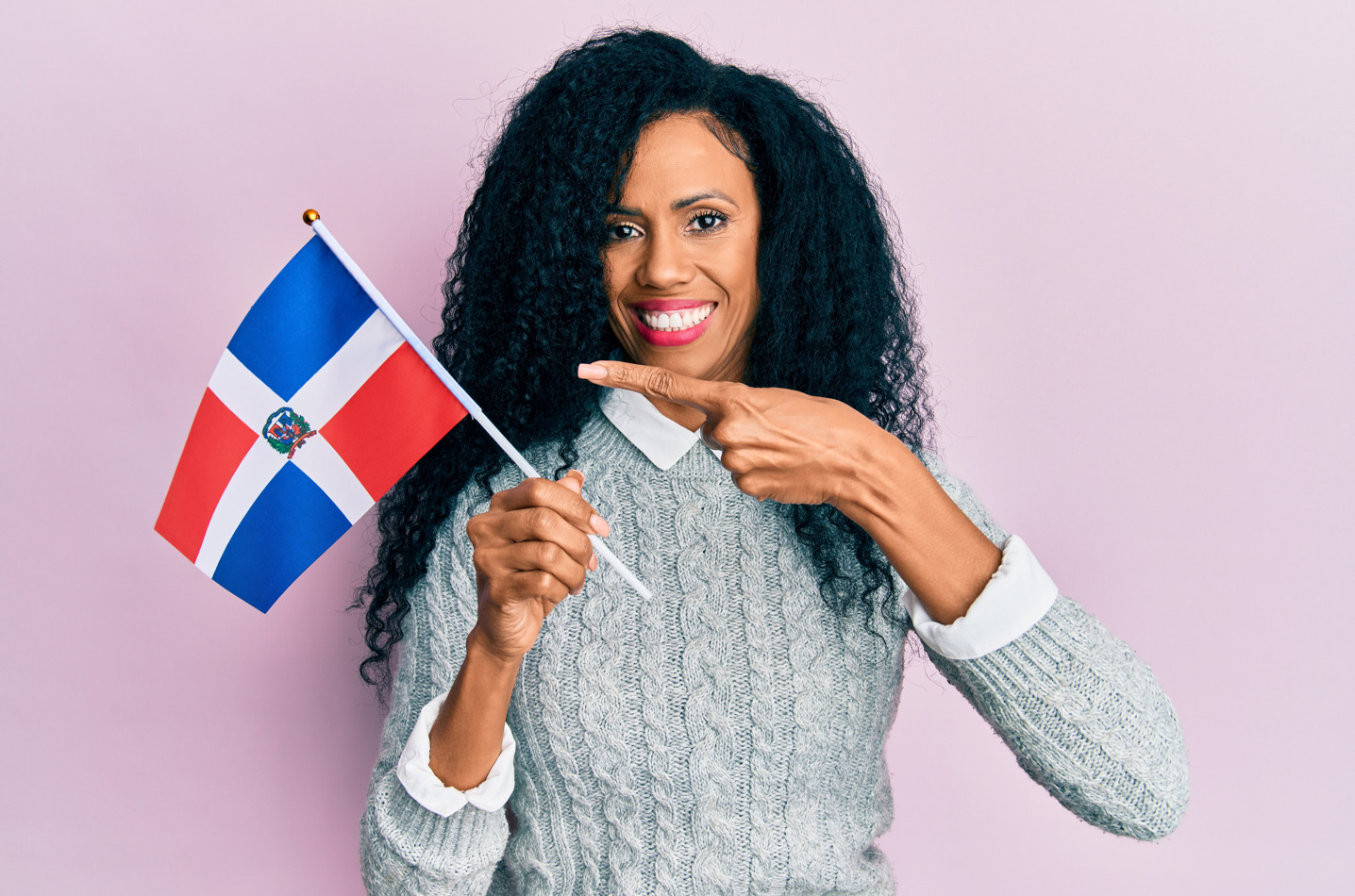
The question of whether people from the Dominican Republic are Black is complex because it involves a distinction between biological ancestry and social identity. Genetically, a significant majority of Dominicans possess substantial African ancestry, making them Black or multiracial in a biological sense. However, for historical and political reasons, many Dominicans traditionally self-identify using terms like "Indio" or "Mestizo" rather than "Black," though this social perception is rapidly shifting toward an embrace of Afro-Dominican identity in 2026.
The Genetic Landscape: Ancestry vs. Identity
To understand the racial makeup of the Dominican Republic, one must first look at the data provided by modern genomic science. Over the past several decades, and continuing into 2026, various DNA studies have consistently shown that the average Dominican person is a genetic mosaic.
Research conducted by the National Geographic Genographic Project and various Caribbean universities indicates that the average Dominican’s genetic profile is approximately 40% to 50% African, 40% to 45% European, and 4% to 10% Indigenous (Taino). These percentages vary significantly from person to person, but they confirm that the vast majority of the population has deep African roots. In a strictly North American or European racial framework, where the "one-drop rule" historically categorized anyone with visible African ancestry as Black, most Dominicans would be considered Black or biracial.
However, in the Dominican Republic, race is often viewed as a spectrum of color rather than a binary of Black or White. A person with significant African features might be described as moreno, trigueño, or indio rather than negro. This distinction is vital because it highlights the gap between how a person is categorized by outside observers versus how they perceive themselves within their own cultural context.
The Historical Roots of Dominican Identity
The history of the Dominican Republic is the history of the first encounter between Europe, Africa, and the Americas. The island of Hispaniola, which the Dominican Republic shares with Haiti, was the site of the first permanent European settlement in the Americas and the first place where enslaved Africans were brought in large numbers.
The Taino Legacy and the Spanish Influence
Before the arrival of Christopher Columbus in 1492, the island was inhabited by the Taino people. While the Taino population was largely decimated by disease, overwork, and conflict within a few decades of Spanish arrival, their genetic and cultural influence remained. Spanish colonizers, primarily men, intermarried with Taino women and later with enslaved African women, creating a "Mestizo" and "Mulatto" population from the very beginning of the colonial era.
The Transatlantic Slave Trade
The Spanish colony of Santo Domingo relied heavily on enslaved labor for sugar plantations and cattle ranching. Consequently, African culture, music, religion, and genetics became foundational to the Dominican identity. Despite this, the Spanish crown promoted a "Hispanophile" identity—a focus on Spanish language, Catholic religion, and European heritage—as a way to distinguish the colony from its neighbors.
The "Indio" Label and the Trujillo Era
Perhaps the most significant factor in why many Dominicans have historically hesitated to identify as Black is the influence of Rafael Trujillo, who ruled the country from 1930 to 1961. Trujillo, who was himself of partial African descent but famously used powder to lighten his skin, implemented a state-sponsored ideology of "Hispanidad."
Trujillo’s regime sought to "whiten" the Dominican population, both physically and culturally. He promoted the term Indio (Indian) as a racial category in the national census and on identification cards. By labeling the majority of the population as "Indio" (claro, oscuro, or lavado), he effectively erased "Blackness" from the official Dominican lexicon.
The goal was twofold:
- Distance from Haiti: Haiti, which shares the island, is a nation that proudly embraces its Blackness and African heritage. Trujillo used anti-Haitian sentiment to define Dominican identity as the opposite of Haitian identity. If Haitians were Black and practiced Voodoo, Dominicans were "Indio" or White and practiced Catholicism.
- National Unity: By creating a broad "Indio" middle ground, Trujillo attempted to minimize racial friction and create a unified national identity based on a mythological indigenous past rather than a tangible African present.
Even in 2026, the legacy of the "Indio" label persists in some generations, though younger Dominicans are increasingly questioning its historical accuracy.
Race vs. Ethnicity: The Role of Hispanic Culture
In many discussions regarding Dominican identity, the distinction between race (physical traits/ancestry) and ethnicity (culture/language) becomes blurred. Dominicans are ethnically Hispanic or Latino, but these are not racial categories. A Dominican person can be White, Black, or Multiracial while still being 100% Hispanic.
In the Dominican Republic, social class often influences racial perception—a phenomenon described by the phrase "money whitens." A wealthy person with dark skin may be perceived as "less Black" than a poor person with the same complexion. This social fluidity is a hallmark of Latin American racial dynamics and differs sharply from the more rigid racial lines found in the United States.
Comparison: Racial Identity Constructs
The following table illustrates how racial identity is categorized in the Dominican Republic compared to the United States and Haiti, providing context for how a Dominican person might be viewed in different regions.
| Category | Dominican Republic | United States | Haiti |
|---|---|---|---|
| Dominant Identity | Indio / Morena / Mestizo | Black / White / Biracial | Noir (Black) / Mulâtre |
| Focus of Identity | Language and Culture | Ancestry and Physical Traits | History of Revolution and Negritude |
| Classification System | Spectrum of color (Colorism) | Binary (Black/White) | Class-based color distinctions |
| Official Census Terms | Often excludes "Black" as a primary choice | Requires specific racial selection | Emphasizes African heritage |
| Historical Driver | Hispanidad (Spanish heritage) | One-Drop Rule | Anti-Colonialism / Negritude |
The Modern Shift: Afro-Dominicanidad in 2026
As we navigate 2026, there is a visible and growing movement within the Dominican Republic and its diaspora to reclaim African roots. This movement, often referred to as Afro-Dominicanidad, seeks to challenge the "Indio" myth and acknowledge the profound African contributions to Dominican life.
Several factors have contributed to this shift:
- The Diaspora Influence: Dominicans living in cities like New York, Miami, and Madrid often find themselves categorized as Black by those societies. This external categorization has forced many to reconcile their Dominican identity with their African ancestry, leading to a "re-importation" of Black pride back to the island.
- Education and Social Media: Younger generations have greater access to historical records and genetic testing, which debunk the idea that the Taino people are the primary source of their tan or dark skin.
- Cultural Expression: There is a renewed interest in Afro-Dominican music forms like Palos and Congos, as well as a rejection of Eurocentric beauty standards. In 2026, it is far more common to see Dominican women embracing their natural hair texture rather than chemically straightening it to look more "Spanish."
Common Misconceptions About Dominican Race
There are several misunderstandings that often arise when outsiders discuss Dominican identity.
1. "Dominicans are in denial about being Black."
While some may see the use of terms like "Indio" as denial, many sociologists argue it is simply a different cultural framework. Dominicans aren't necessarily denying their African blood; they are prioritizing a cultural identity (Hispanic) over a racial one (Black). However, the political history of anti-Haitianism did undeniably play a role in stigmatizing the word "Black."
2. "Dominican Republic is a 'White' country."
Because the national narrative long emphasized Spanish roots, some assume the population identifies as White. In reality, very few Dominicans identify as purely White. The vast majority recognize themselves as a mix, even if they use non-Black terms to describe that mix.
3. "There is no racism in the Dominican Republic."
Because the country is so mixed, some claim it is a "racial democracy." However, colorism remains a significant issue. Lighter skin is often associated with higher social status, and "Blacker" features can still be a barrier to certain types of social and professional advancement.
Frequently Asked Questions
Are Dominicans considered Afro-Latino?
Yes, Dominicans are one of the primary groups that fall under the Afro-Latino umbrella. "Afro-Latino" is an identity that acknowledges both Latin American cultural heritage and African ancestry. While the term is more popular in the United States than in the Dominican Republic itself, it is gaining traction among activists and scholars on the island as of 2026.
Why do some Dominicans say they are not Black?
This usually stems from a historical and cultural definition of "Black" that is tied specifically to being Haitian or being of unmixed African descent. In the Dominican mindset, "Black" often refers to a person with no European admixture, whereas most Dominicans view themselves as a blend. Additionally, decades of state propaganda under Trujillo linked "Blackness" to foreignness.
What is the difference between "Indio" and "Black" in the DR?
In the Dominican Republic, "Indio" is a color descriptor used to describe various shades of brown skin. It is used as a euphemism to avoid the word "Negro" (Black), which historically carried more negative social connotations. "Black" is often reserved for very dark-skinned individuals or those of recent Haitian descent.
How does the Dominican Republic view its African history?
The view is evolving. Traditionally, African history was marginalized in school curriculums in favor of Spanish colonial history. However, in recent years, there has been a push to include more information about the slave trade, maroon communities (Cimarrones), and the African origins of Dominican folklore and religion.
Is hair texture a factor in racial identity in the DR?
Yes, hair texture is often a primary marker of race in Dominican culture. Hair that is "pelo malo" (bad hair/kinky) is associated with African ancestry, while "pelo bueno" (good hair/straight or wavy) is associated with European or Indigenous ancestry. This has led to a massive salon culture focused on hair straightening, though the natural hair movement has gained significant ground by 2026.
Summary and Next Steps
The answer to whether Dominican Republic people are Black is not a simple yes or no, but rather a "yes, and." Yes, they are genetically and historically Black through their significant African ancestry. And, they are also European, Indigenous, and culturally Hispanic. The identity is a layered one that is currently undergoing a period of profound reflection and change.
For those looking to understand this identity better, the best next step is to engage with Dominican culture directly. Listen to the African rhythms in Bachata and Merengue, read the works of Afro-Dominican authors like Elizabeth Acevedo or Junot Díaz, and observe how the country continues to navigate its complex history. Understanding the Dominican Republic requires looking past binary racial categories and embracing the nuance of a nation that is truly a crossroads of the world.