Generally, the death benefit from a life insurance policy is not considered taxable income to the beneficiary. However, "earnings" within a policy—such as interest on death benefits, cash value growth above the premium basis, or dividends in specific scenarios—may be subject to federal income tax depending on how the funds are accessed or distributed.
Navigating the tax landscape of life insurance requires distinguishing between the face value of the policy and the accumulated growth or interest. As of 2026, the Internal Revenue Service (IRS) continues to treat life insurance as a tax-advantaged financial instrument, but these advantages are not absolute. To protect your financial plan, you must understand the specific conditions under which the government views your policy's growth as taxable income.
The Tax Status of Death Benefit Proceeds
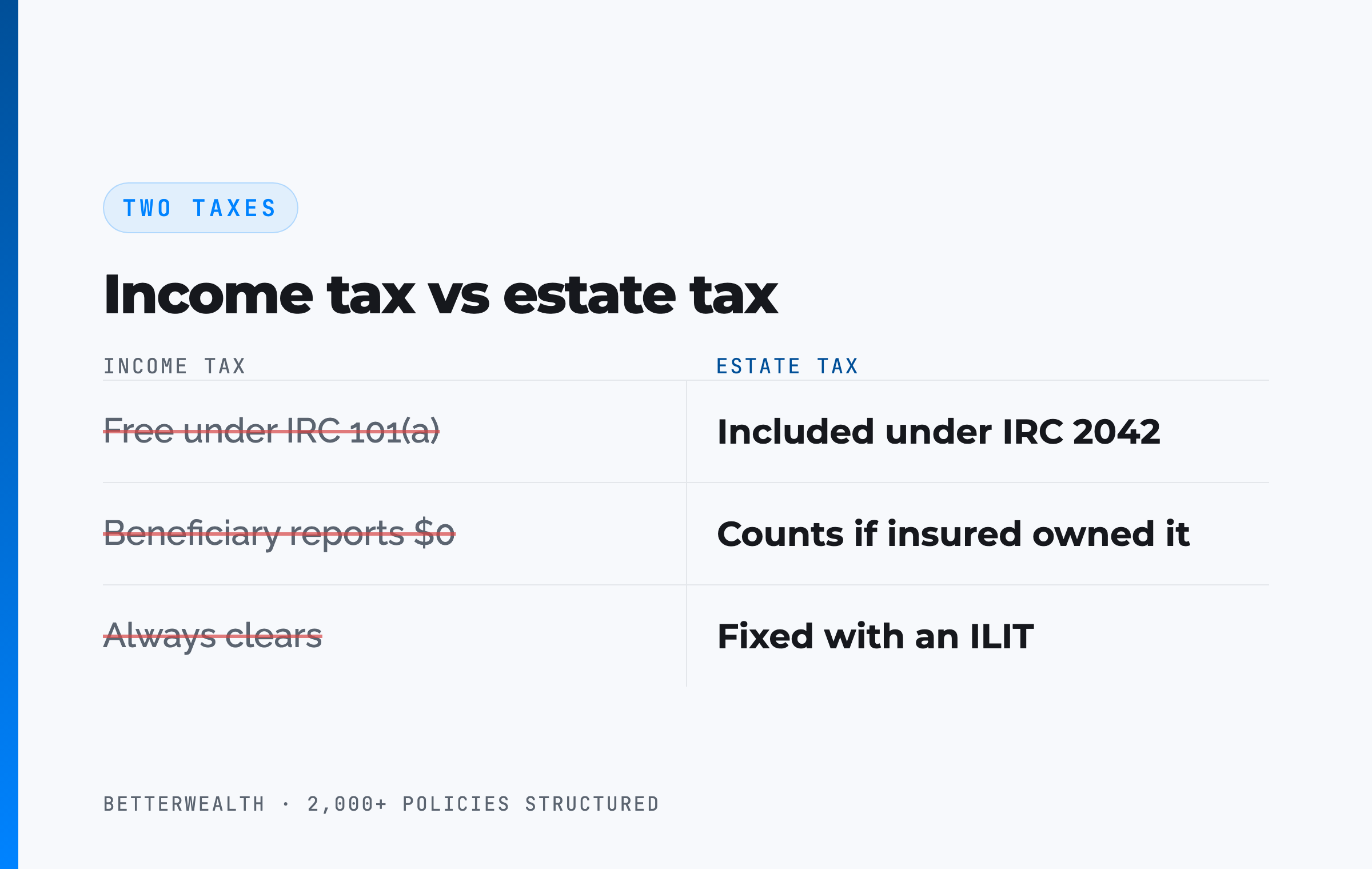
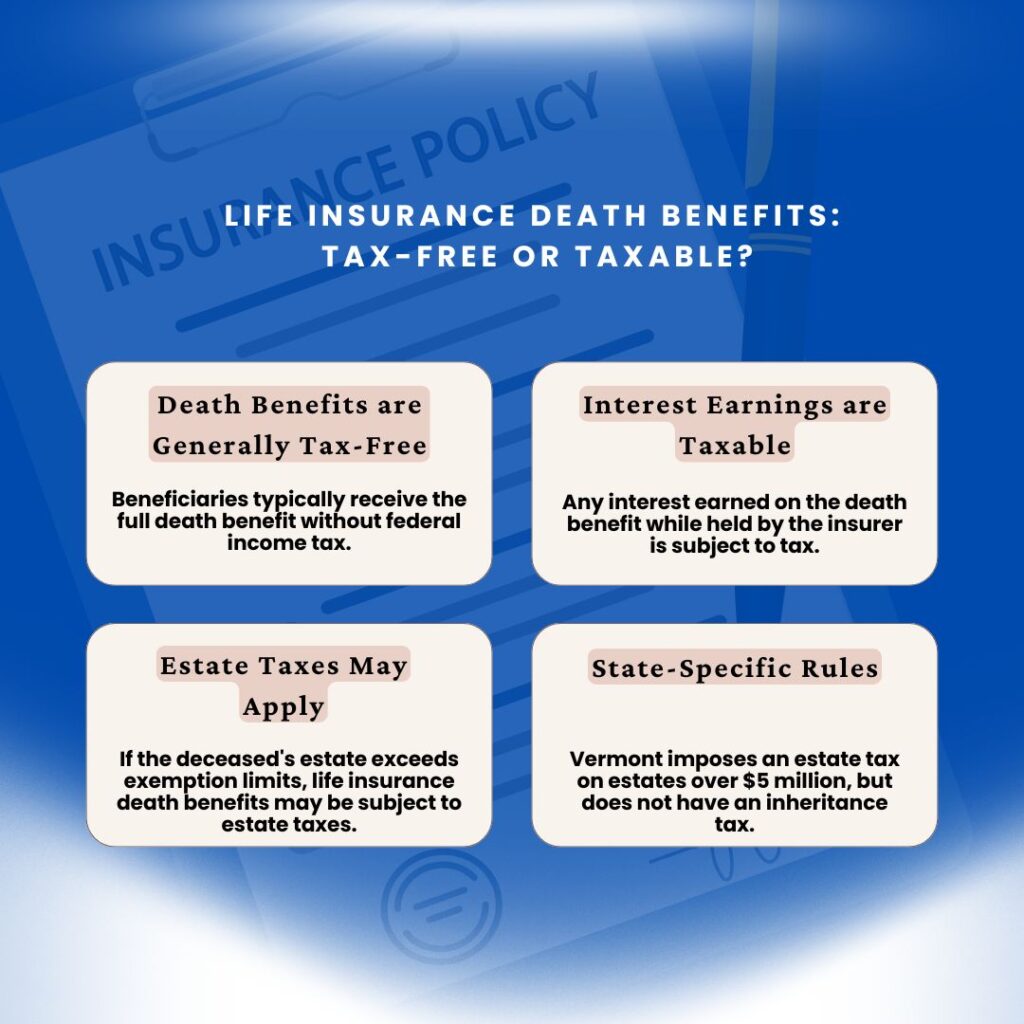
For most beneficiaries, the primary concern is the lump-sum payment received upon the death of the insured. Under Internal Revenue Code Section 101(a), life insurance proceeds paid by reason of the death of the insured are generally excluded from gross income. This means if you are the named beneficiary of a $500,000 policy, you typically receive the full $500,000 without owing federal income tax.
Interest Earned on Death Benefits
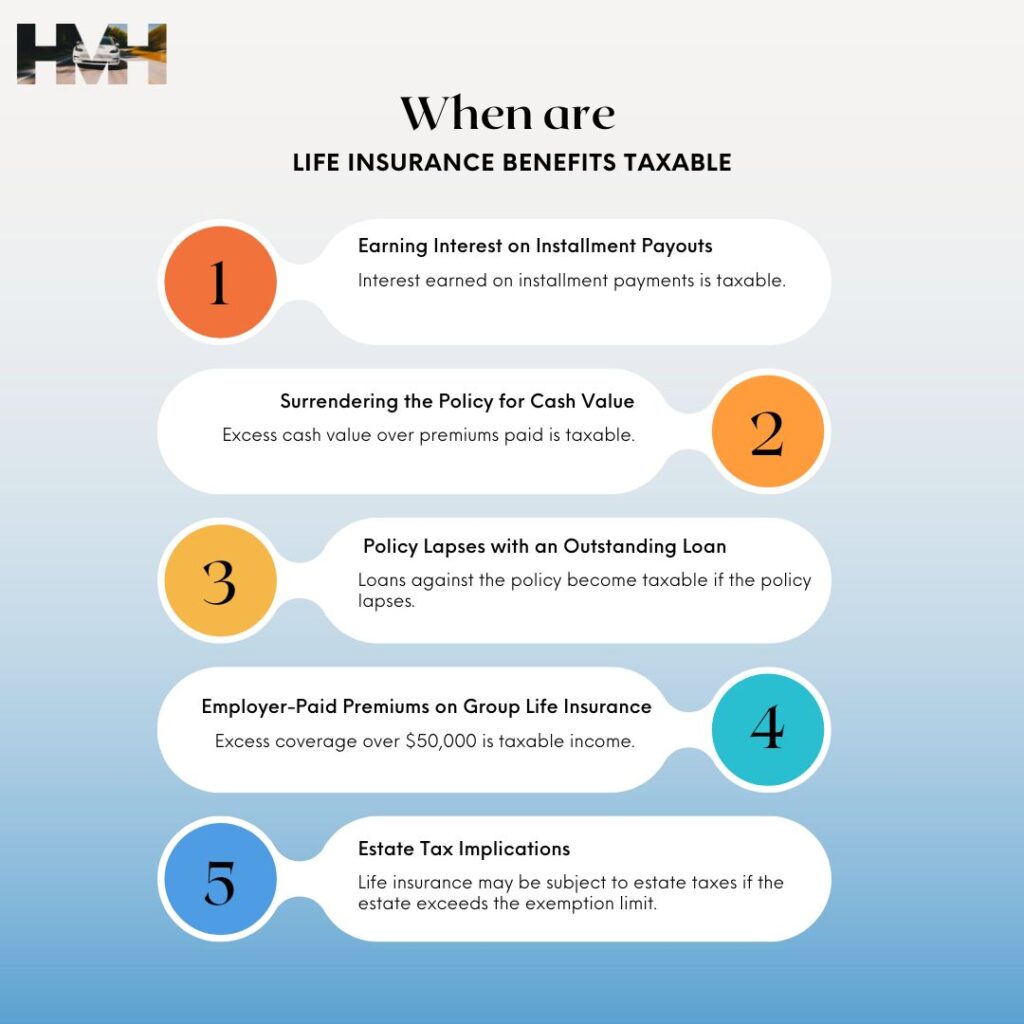
While the core death benefit is tax-free, any interest earned on that benefit after the death of the insured is taxable. For example, if the insurance company delays payment for several months and pays out the $500,000 plus $2,000 in interest, the $2,000 interest portion is considered ordinary income. The insurer will typically issue a Form 1099-INT to the beneficiary reporting this amount.
Installment Payments and Annuity Options
If a beneficiary elects to receive the death benefit in installments rather than a lump sum, each payment consists of two parts: a portion of the tax-free principal and a portion of the interest earned on the remaining balance held by the insurer. Only the interest portion of these payments is taxable. This calculation is performed using an exclusion ratio provided by the insurance carrier, ensuring that the original death benefit remains protected from taxation while the growth is captured by the IRS.
Taxation of Cash Value Growth
Permanent life insurance policies, such as whole life or universal life, include a cash value component that grows over time. This growth is one of the most significant tax benefits of life insurance because it occurs on a tax-deferred basis.
Tax-Deferred Accumulation
As long as the "earnings" stay inside the policy, you do not pay taxes on the interest, dividends, or capital gains generated by the cash value. This allows the policy to benefit from compound growth without the annual "tax drag" experienced by a standard brokerage account. In 2026, this remains a cornerstone of executive compensation and high-net-worth estate planning.
The Concept of Cost Basis
To understand when earnings become taxable, you must understand your "cost basis." The cost basis is generally the total amount of premiums you have paid into the policy, minus any dividends you have received in cash or used to reduce premiums.
- Withdrawals up to Basis: Most life insurance policies follow a "First-In, First-Out" (FIFO) tax treatment. This means you can withdraw cash from your policy tax-free up to the amount of your cost basis.
- Withdrawals above Basis: Any amount withdrawn that exceeds your total premiums paid is considered "earnings" and is taxed as ordinary income at your current tax rate.
Policy Loans vs. Withdrawals
A common strategy for accessing life insurance earnings without triggering a tax bill is taking a policy loan.
Why Loans Are Generally Tax-Free
The IRS does not view a policy loan as a distribution of income; rather, it is viewed as a loan secured by the policy's cash value. Because you are technically borrowing against your own collateral, the loan proceeds are not taxable, even if the loan amount exceeds your cost basis. This is a primary reason why permanent life insurance is used as a source of "tax-free" retirement income.
Risks of Policy Lapse
The tax-free nature of policy loans is contingent on the policy remaining in force. If a policy lapses or is surrendered while a loan is outstanding, the IRS treats the outstanding loan balance as a distribution. If the total of the loan plus any cash received exceeds your cost basis, you will face a "tax bomb," where the entire gain is taxed as ordinary income in the year the policy terminated.
The Modified Endowment Contract (MEC) Trap
The most significant exception to the favorable FIFO tax treatment is the Modified Endowment Contract (MEC). If a policy is funded too quickly—exceeding the "7-pay test" limits defined by the IRS—it loses its status as a standard life insurance contract for tax purposes.
LIFO Taxation and Penalties
Once a policy is classified as a MEC, it is taxed on a "Last-In, First-Out" (LIFO) basis. This means the very first dollar you withdraw is considered to come from "earnings" and is fully taxable. Furthermore, if you take a withdrawal or loan from a MEC before the age of 59½, you may be subject to a 10% federal tax penalty on the taxable portion, similar to an early withdrawal from an IRA or 401(k).
Summary of Taxation by Event Type
| Event Type | Tax Treatment | Key Condition |
|---|---|---|
| Death Benefit (Lump Sum) | Tax-Free | Generally always exempt from income tax. |
| Cash Value Growth | Tax-Deferred | No tax while funds remain in the policy. |
| Withdrawals (Standard) | FIFO | Tax-free up to the amount of premiums paid. |
| Withdrawals (MEC) | LIFO | Earnings are taxed first; 10% penalty if < 59.5. |
| Policy Loans | Tax-Free | Taxable only if the policy lapses with a loan. |
| Dividends | Generally Tax-Free | Taxed only if they exceed the total premiums paid. |
| Policy Surrender | Taxed on Gain | Amount received minus cost basis = taxable income. |
Surrendering a Policy for Cash
If you decide you no longer need coverage and surrender the policy for its cash value, the calculation for taxation is straightforward:
- Take the total cash value received (including any debt forgiveness).
- Subtract your cost basis (total premiums paid).
- The remainder is your taxable gain, taxed as ordinary income.
It is important to note that you cannot claim a tax loss if you surrender a policy for less than you paid in premiums. The IRS views the difference as the "cost of insurance" you enjoyed during the years the policy was active.
Life Settlements and Selling Your Policy
In 2026, the secondary market for life insurance (life settlements) remains a viable option for seniors who no longer need their policies. When you sell a policy to a third party, the tax treatment is more complex than a surrender.
- The portion of the sale price up to the cost basis is tax-free.
- The portion of the sale price from the cost basis up to the cash surrender value is taxed as ordinary income.
- Any amount received above the cash surrender value is generally taxed as a capital gain.
This three-tier tax structure requires careful documentation of the policy's value and the owner's basis to ensure accurate reporting to the Internal Revenue Service.
Estate Tax Considerations
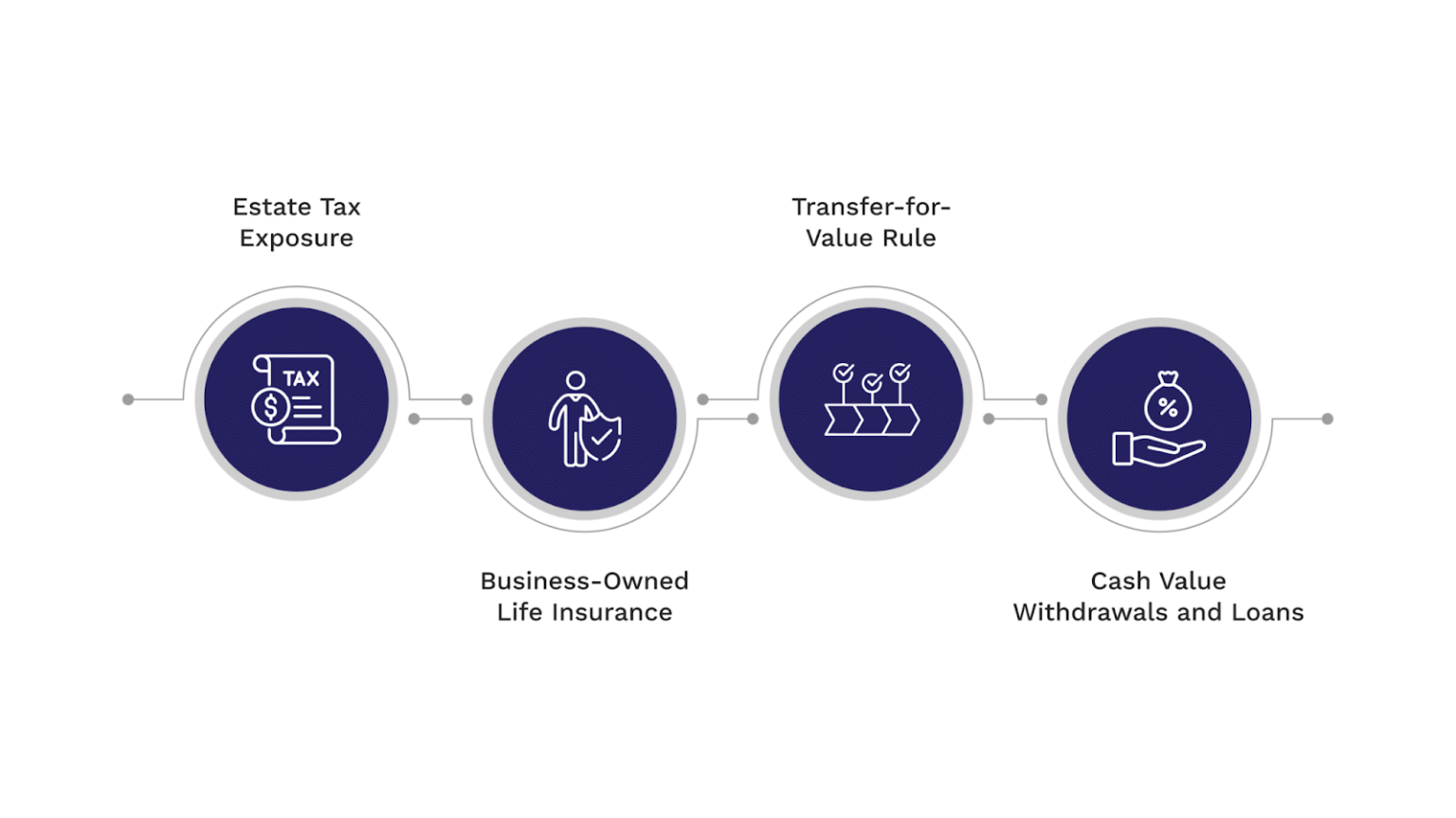
While death benefits are usually free from income tax, they are not necessarily free from estate tax. If the deceased owned the policy at the time of death, the full death benefit is included in their gross estate.
As of 2026, the federal estate tax exemption remains high, but for individuals with significant assets, the inclusion of a large life insurance policy could push the estate over the threshold. To mitigate this, many individuals use an Irrevocable Life Insurance Trust (ILIT). By having the trust own the policy, the proceeds are removed from the taxable estate, providing liquidity to heirs without increasing the estate tax burden.
Accelerated Death Benefits and Chronic Illness
If an insured individual is diagnosed with a terminal illness (usually defined as having a life expectancy of 24 months or less), they may access a portion of the death benefit while still living. Under Section 101(g) of the Internal Revenue Code, these accelerated death benefits are generally received tax-free. Similar rules apply to chronic illness riders, provided the funds are used for qualified long-term care services as defined by HIPAA standards.
Frequently Asked Questions
Are dividends from a life insurance policy taxable?
In most cases, no. The IRS views dividends on a participating life insurance policy as a return of part of the premium you paid. They only become taxable if the total dividends you have received over the life of the policy exceed the total amount of premiums you have paid. If you leave dividends with the insurer to earn interest, the interest earned on those dividends is taxable as ordinary income.
Is interest on a life insurance loan tax-deductible?
For most individuals, no. Interest paid on a personal life insurance loan is considered personal interest and is not deductible. However, in some business-owned life insurance (BOLI) scenarios, there may be limited deductibility, though these rules were significantly tightened by the Tax Cuts and Jobs Act and subsequent 2020s-era regulations.
What is the "Transfer for Value" rule?
The "Transfer for Value" rule is a trap that can make a death benefit taxable. If a life insurance policy (or any interest in one) is transferred to another person for "valuable consideration" (money or something of value), the death benefit may lose its tax-exempt status. Exceptions exist for transfers to the insured, a partner of the insured, or a corporation in which the insured is a shareholder or officer.
How does group life insurance through an employer affect taxes?
Employers can provide up to $50,000 of group term life insurance to employees as a tax-free benefit. If your employer provides more than $50,000 in coverage, the "cost" of the coverage above $50,000 (calculated using IRS Table I rates) is considered imputed income and must be reported on your W-2.
Are earnings in a Variable Life Insurance policy taxed differently?
The "earnings" in a variable policy (which are based on the performance of underlying sub-accounts like mutual funds) follow the same tax-deferral rules as whole life insurance. You do not pay capital gains taxes when the sub-accounts are rebalanced. Taxation only occurs if you withdraw funds in excess of your basis or if the policy is a MEC.
Practical Recommendations
To manage the taxability of your life insurance earnings effectively, consider the following actions:
- Request a Basis Report: Contact your insurance carrier to get an updated "cost basis" for your policy. This is essential before taking any withdrawals or surrendering a policy.
- Avoid MEC Status: If you are making large lump-sum payments into a policy, ensure your agent runs a "7-pay test" illustration to confirm the policy does not become a Modified Endowment Contract.
- Review Beneficiary Designations: Ensure your beneficiaries are up to date. If a death benefit is paid to an estate rather than a named beneficiary, it may be subject to additional administrative costs and potential tax complications.
- Consult a Professional: Tax laws are subject to change. Before making major changes to a high-cash-value policy, consult with a tax advisor or financial planner who understands the 2026 tax landscape.
By understanding these rules, you can maximize the unique tax advantages of life insurance while avoiding unexpected liabilities from your policy's growth.