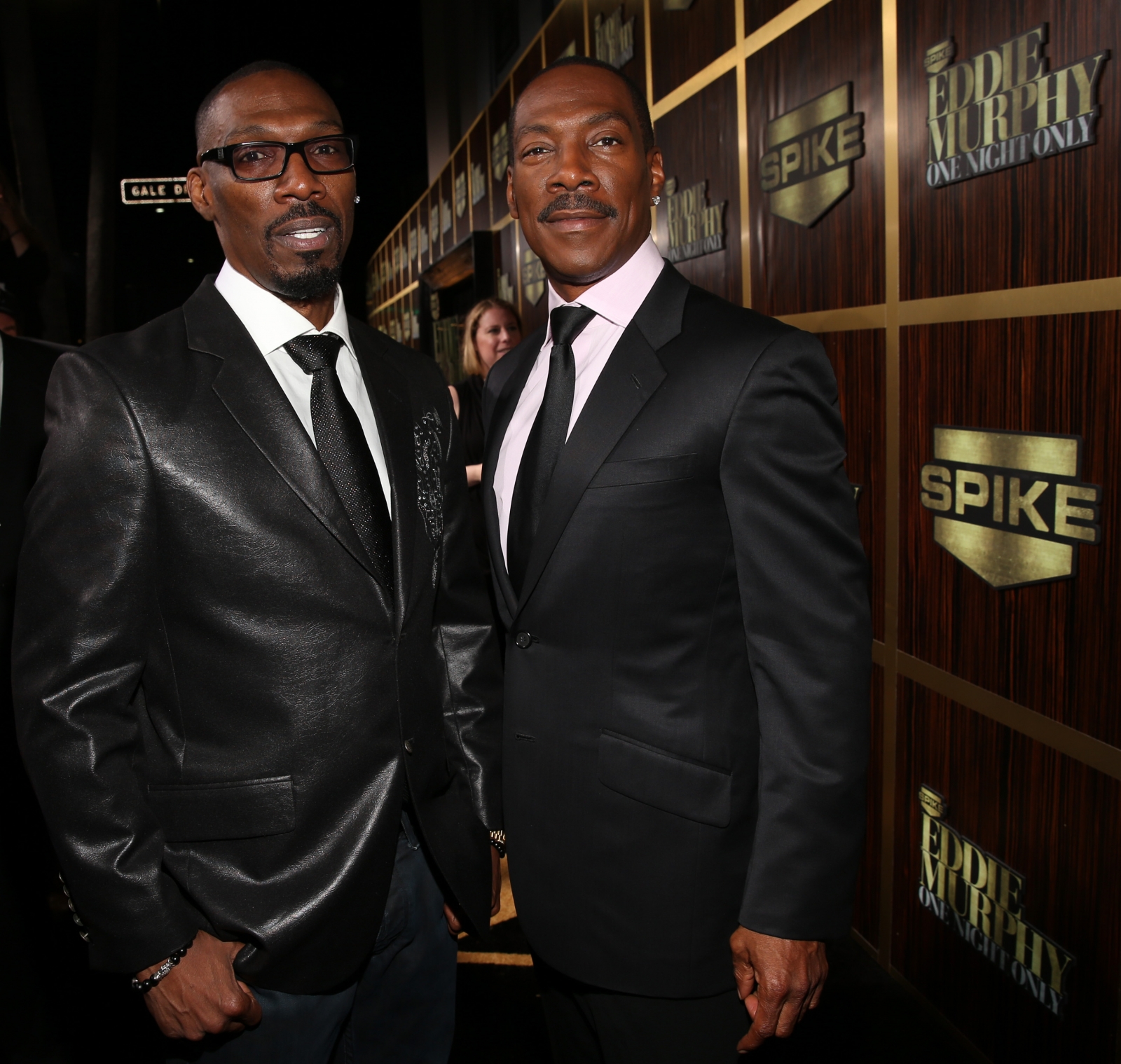
Yes, Eddie Murphy and Charlie Murphy were biological brothers. Charlie Murphy, born in 1959, was the older brother of global comedy icon Eddie Murphy, born in 1961. They shared the same mother, Lillian Murphy, and biological father, Charles Edward Murphy, and remained close throughout their personal lives and professional careers until Charlie’s death in 2017.
The Family Roots and Early Life in Brooklyn
To understand the relationship between Eddie and Charlie Murphy, one must look back at their upbringing in the Bushwick neighborhood of Brooklyn, New York. Born just two years apart—Charlie on July 12, 1959, and Eddie on April 3, 1961—the brothers grew up in a household that faced significant early challenges. Their father, Charles Edward Murphy, was a transit police officer and an amateur comedian, perhaps providing the genetic spark for the talent that would later define both brothers.
Tragedy struck the family early when their father passed away in 1969, a period that significantly impacted the young brothers. Following his death, their mother, Lillian, fell ill, leading to a brief period where Eddie and Charlie lived in foster care. This era of their lives is often cited by Eddie as a formative experience that helped develop his sense of humor as a defense mechanism and a tool for resilience. Eventually, Lillian recovered and married Vernon Lynch, a foreman at an ice cream plant. From this union, the brothers gained a younger half-brother, Vernon Lynch Jr., who also entered the entertainment industry as a producer.
The bond between Eddie and Charlie was forged in these tight-knit, often difficult urban environments. While Eddie showed an early, almost preternatural talent for impressions and stand-up comedy, Charlie’s path was more circuitous. As the older brother, Charlie often took on a protective role, a dynamic that would eventually transition into his professional life during the 1980s.
Divergent Paths: The Superstar and the Serviceman
While Eddie Murphy was skyrocketing to fame as the youngest cast member in the history of Saturday Night Live (SNL) in the early 1980s, Charlie Murphy took a different route. In 1978, Charlie enlisted in the United States Navy, serving for six years as a boiler technician. This period of separation was crucial, as it allowed Charlie to develop an identity entirely independent of his brother’s emerging "megastar" status.
By the time Charlie was discharged from the Navy in 1984, Eddie Murphy was arguably the biggest star in the world, having transitioned from SNL to box-office dominance with films like 48 Hrs. and Trading Places. Upon returning to civilian life, Charlie stepped into his brother’s world, but not initially as a performer. He spent several years working as part of Eddie’s security detail. This "fly-on-the-wall" perspective gave Charlie the material for what would eventually become his most famous comedic contributions: the "True Hollywood Stories."
During the 1980s and 1990s, the public perception was often that there was only one "Murphy" in the spotlight. However, behind the scenes, Charlie was honing his craft as a writer and storyteller, observing the absurdities of the celebrity lifestyle from the inner circle.
Professional Collaborations and Shared Credits
The question of whether Eddie and Charlie Murphy were brothers is often asked by fans who notice their names appearing together in film credits. They did not just share a last name; they actively collaborated on several high-profile projects.
Writing and Creative Partnership
Charlie Murphy was a talented screenwriter who frequently collaborated with Eddie to tailor scripts to Eddie’s specific comedic strengths. Their most notable joint writing effort was the 2007 film Norbit. Charlie co-wrote the screenplay and the story, which allowed Eddie to play multiple characters—a staple of his career. Despite the film's polarizing critical reception, it was a massive commercial success, further cementing the brothers' status as a bankable creative duo.
On-Screen Appearances
While they often worked behind the scenes, the brothers did share the screen. One of the most significant examples is Harlem Nights (1989), which Eddie Murphy wrote, directed, and starred in. Charlie appeared in the film as the character Jimmy, marking one of the early instances where audiences could see the two brothers in the same cinematic universe.
Charlie also provided voice work for the animated series The Boondocks and appeared in films like Vampire in Brooklyn (1995), another project where Eddie served as the lead and a producer. These collaborations were never about Eddie giving his brother a "handout"; rather, they were a testament to Charlie’s genuine utility as a gritty, street-smart writer and a character actor with a distinct, gravelly presence.
The Chappelle’s Show Era: Charlie Murphy Finds His Voice
It was not until the early 2000s that Charlie Murphy truly stepped out from his brother’s shadow to become a household name in his own right. His segments on Chappelle’s Show, known as "Charlie Murphy’s True Hollywood Stories," became cultural phenomena.
In these sketches, Charlie recounted his real-life encounters with celebrities like Prince and Rick James during the height of the 1980s. The brilliance of these segments lay in Charlie’s deadpan delivery and his unique perspective as Eddie Murphy’s brother. He wasn't just a witness; he was an active participant in the legendary parties and basketball games of the era.
| Feature | Eddie Murphy | Charlie Murphy |
|---|---|---|
| Birth Date | April 3, 1961 | July 12, 1959 |
| Primary Style | Impressions, Character Comedy | Storytelling, Gritty Satire |
| Breakout Role | Saturday Night Live (1980) | Chappelle's Show (2003) |
| Military Service | None | U.S. Navy (1978–1984) |
| Notable Writing | Coming to America, Harlem Nights | Norbit, Paper Soldiers |
| Key Movie | Beverly Hills Cop | The Players Club |
| Death Date | N/A (Active in 2026) | April 12, 2017 |
The Rick James sketches, in particular, popularized the catchphrase "I'm Rick James, b****!" while the Prince sketch highlighted Charlie’s ability to find comedy in the surreal reality of being "the brother of the star." These stories didn't just make people laugh; they validated Charlie as a comedic force independent of Eddie. Eddie himself has often remarked in interviews that Charlie was the funniest person he knew, often the source of inspiration for Eddie’s own characters.
Differences in Comedic Style and Public Persona
While they were brothers, their comedic "DNA" was quite different. Eddie Murphy is a master of mimicry and high-energy performance. His comedy often relies on his ability to transform into someone else—whether it is Buckwheat, Mr. Robinson, or Sherman Klump. Eddie’s persona is that of the polished, charismatic leading man who can command a room with a single laugh.
Charlie, by contrast, possessed a more rugged, observational style. His humor was rooted in "street" authenticity and the weary perspective of a man who had seen the world from the Navy to the VIP lounges of Los Angeles. Charlie’s comedy felt more personal and anecdotal. He didn't need to put on a prosthetic suit to be funny; he simply needed to tell you what happened last Tuesday.
This difference allowed them to coexist in the industry without being direct competitors. Charlie found his niche in stand-up tours like the "Triple Threat" tour and as a mainstay in "Black Hollywood" cinema, while Eddie remained a pillar of global blockbuster entertainment.
The Legacy of the Murphy Brothers in 2026
As of 2026, the legacy of the Murphy brothers remains a cornerstone of American comedy. Charlie Murphy passed away on April 12, 2017, at the age of 57 after a private battle with leukemia. His death was a significant blow to the comedy community and to Eddie personally. Following Charlie’s passing, Eddie released a statement on behalf of the family, describing Charlie as a "son, brother, father, uncle, and friend" who filled their lives with love and laughter.
In the years since Charlie’s death, Eddie Murphy has experienced a significant career "renaissance." His work in Dolemite Is My Name (2019) and the sequels to his classic hits, such as Coming 2 America and the 2024 release of Beverly Hills Cop: Axel F, has kept the family name at the forefront of the industry. In interviews conducted as recently as this year, Eddie continues to credit Charlie’s influence on his work, often noting that his brother’s storytelling ability was a standard he always tried to match.
The "True Hollywood Stories" continue to be a staple of streaming services and social media clips, ensuring that Charlie’s unique voice reaches new generations. The brothers' story is ultimately one of mutual respect; Charlie never seemed bitter about Eddie’s massive success, and Eddie never stopped championing Charlie’s individual talent.
Frequently Asked Questions
Did Charlie Murphy use Eddie Murphy to get famous?
While Eddie's success certainly provided Charlie with access to the industry, Charlie’s fame was largely self-made through his writing and his specific role on Chappelle’s Show. Charlie worked for years in security and as a background writer before his individual talent as a storyteller was recognized by the general public.
How many brothers does Eddie Murphy have?
Eddie Murphy had one older biological brother, Charlie Murphy. He also has a younger half-brother, Vernon Lynch Jr., who is a successful producer and writer. The three grew up together in a close-knit family environment.
Are Eddie and Charlie Murphy twins?
No, they are not twins. Charlie was born in 1959, making him approximately 21 months older than Eddie, who was born in 1961. Their physical resemblance and shared last name lead some to believe they were twins, but they were simply close in age.
What happened to Charlie Murphy?
Charlie Murphy passed away on April 12, 2017, in a New York City hospital. The cause of death was complications from leukemia. He had been undergoing chemotherapy and had kept his health struggle relatively private from the media.
Did Eddie and Charlie ever do stand-up together?
While they both had successful stand-up careers, they rarely performed on the same ticket. Eddie was a stadium-level act in the 1980s, while Charlie’s stand-up career peaked in the 2000s and 2010s. However, they frequently supported each other's shows and shared comedic ideas privately.
Is Vernon Lynch related to Eddie Murphy?
Yes, Vernon Lynch Jr. is Eddie and Charlie’s half-brother. He is the son of their mother, Lillian, and their stepfather, Vernon Lynch Sr. He has worked as a producer on several of Eddie's projects and was a member of the 80s R&B group K-9.
Conclusion and Further Reading
Eddie and Charlie Murphy’s relationship is a rare example of two siblings achieving high-level success in the same competitive industry while maintaining a supportive bond. Their brotherhood was the foundation of a comedic dynasty that shaped the landscape of American humor for over four decades.
To learn more about the specific history of the Murphy family and their impact on film and television, fans are encouraged to explore:
- The official filmography of Eddie Murphy on IMDb.
- Archived episodes of Chappelle’s Show featuring Charlie Murphy’s "True Hollywood Stories."
- Biographical features on the History Channel or Biography.com regarding Eddie Murphy’s early life in Brooklyn.