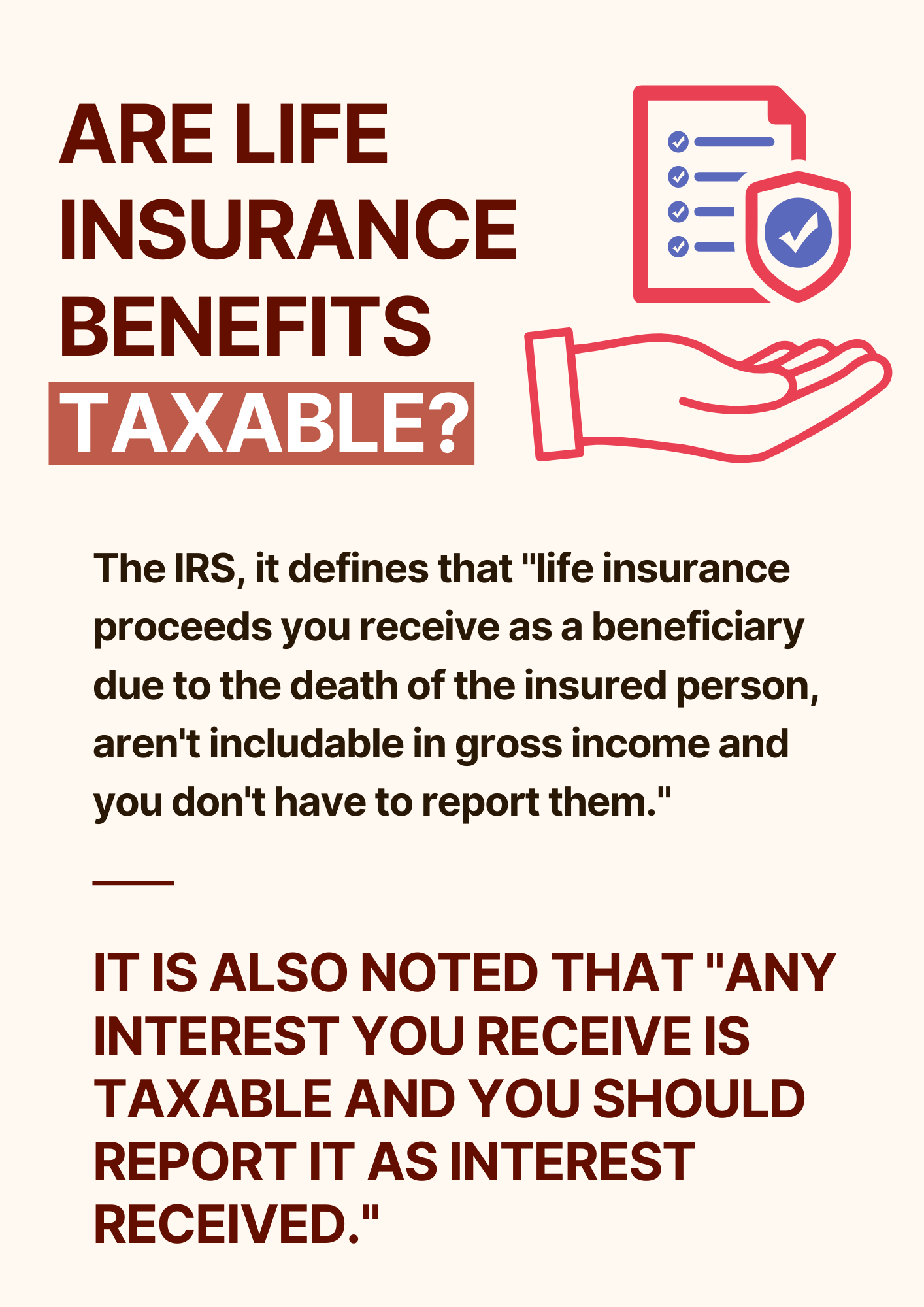
Death proceeds from a life insurance policy are generally not included in the beneficiary's gross income for federal income tax purposes. Under Internal Revenue Code Section 101(a), a lump-sum death benefit paid to a designated beneficiary due to the death of the insured is tax-free. However, notable exceptions apply regarding accrued interest, policy transfers, employer-owned contracts, and estate taxes.
Disclaimer: This article provides general educational information regarding U.S. federal tax principles as of 2026. Tax laws vary by jurisdiction and personal circumstances. Consult a qualified Certified Public Accountant (CPA), estate planning attorney, or financial advisor for personalized advice.
The Core Rule: Internal Revenue Code Section 101(a) Explained
The general rule governing life insurance death benefits is set forth in Section 101(a)(1) of the Internal Revenue Code (IRC). Under this provision, gross income does not include amounts received under a life insurance contract if such amounts are paid by reason of the death of the insured.
This tax-exempt status applies across virtually all standard personal life insurance products, including:
- Term Life Insurance: Provides coverage for a specified term (e.g., 10, 20, or 30 years). If the insured dies during the term, the full death benefit is paid to the beneficiary income-tax-free.
- Whole Life Insurance: Permanent life insurance that includes a cash value component. The death benefit paid upon the insured's passing remains exempt from federal income tax.
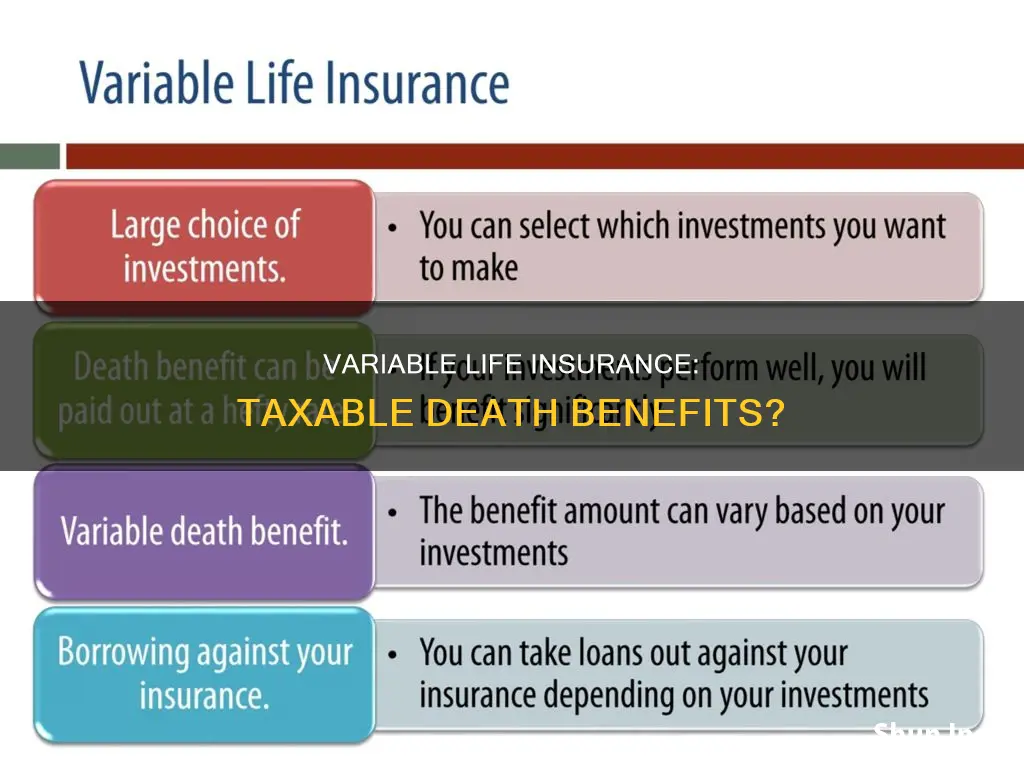
- Universal Life Insurance: Flexible permanent coverage. Regardless of fluctuations in cash value or premium payments, the resulting death payout remains non-taxable under standard conditions.
Why Does the IRS Exclude Death Benefits from Gross Income?
The statutory exclusion exists because life insurance proceeds are designed to indemnify beneficiaries against the financial loss caused by the death of the insured. Unlike investment yield or earned wages, the baseline death benefit is viewed by tax authorities as compensatory replacement capital rather than new economic gain.
Premiums paid for personal life insurance policies are generally paid with post-tax dollars and are non-deductible under IRC Section 264. Because the money used to purchase the coverage was already taxed, the IRS does not tax the underlying lump-sum payout when it is returned to the beneficiary.
When Life Insurance Proceeds Become Taxable: Key Exceptions
While the general rule protects beneficiaries from income tax on death proceeds, several specific situations create tax liabilities. Policyholders and beneficiaries must understand these major statutory exceptions.
- Does the Payout Exceed Death Proceeds?
- YES
- Taxable Components:
- Accrued Interest
- Transfer Value Gain
- Non-Compliant EOLI
- Taxable Components:
- NO
- Non-Taxable Status:
- Pure Death Benefit
- Standard Lump-Sum Payout
- Non-Taxable Status:
- YES
1. Interest Earned on Delayed or Installment Payouts (IRC Section 101(d))
If a beneficiary elects to receive the death benefit in installments or as an annuity rather than a single lump sum, the insurer holds the principal balance and pays interest over time. Alternatively, if an insurer delays paying out a lump-sum claim, state laws often require the insurer to pay interest from the date of death until the claim is settled.
Under IRC Section 101(d), only the original death benefit principal remains tax-free. Any interest accrued after the date of death is fully taxable as ordinary income in the tax year it is received.
Example: A beneficiary is entitled to a $500,000 lump-sum death benefit. They choose an annuity settlement option that pays $35,000 annually over 20 years (totaling $700,000). The $500,000 principal portion is spread tax-free over the 20-year period ($25,000/year), while the additional $10,000 per year represents taxable interest income.
2. The Transfer-for-Value Rule (IRC Section 101(a)(2))
If a life insurance policy is transferred or sold to another party for valuable consideration (money, property, or legal satisfaction of debt) prior to the insured's death, the death benefit loses its full tax-exempt status.
Under the Transfer-for-Value Rule, the transferee beneficiary can only exclude from gross income an amount equal to:
- The actual value of the consideration paid to acquire the policy, plus
- Any additional premiums paid by the transferee after the transfer.
The remaining portion of the death proceeds is taxed as ordinary income.
Statutorily Permitted Exceptions to the Transfer-for-Value Rule
The IRS provides specific "safe harbor" exceptions where a policy can be transferred for valuable consideration without triggering income tax on the death benefit (IRC Section 101(a)(2)(A)-(B)):
- A transfer to the insured individual.
- A transfer to a partner of the insured.
- A transfer to a partnership in which the insured is a partner.
- A transfer to a corporation in which the insured is a shareholder or officer.
- A transfer where the basis of the policy is determined in whole or in part by reference to the transferor's basis (e.g., a tax-free corporate reorganization or gift).
3. Employer-Owned Life Insurance (EOLI) Rules (IRC Section 101(j))
Businesses frequently purchase life insurance policies on key executives or employees ("key-person insurance"). Under IRC Section 101(j), enacted under the Pension Protection Act of 2006, death proceeds from employer-owned policies issued after August 17, 2006, are taxable as ordinary income unless strict statutory notice and consent requirements are met before the policy is issued.
To retain the tax-free status of employer-owned death benefits, the employer must fulfill three prerequisites prior to policy issuance:
- Notice: Written notification to the employee stating that the employer intends to insure the employee's life and specifying the maximum face amount for which the employee may be insured.
- Consent: Written consent from the employee acknowledging coverage and authorizing the employer to remain the beneficiary after employment terminates.
- Statutory Status: The insured employee must meet specific status criteria (e.g., being a director, highly compensated employee, or key officer at the time the policy is issued, or having been employed within the 12 months preceding death).
If an employer fails to maintain documented notice and consent forms, the proceeds received by the business in excess of premiums paid will be subject to federal corporate income tax.
4. Policy Surrenders vs. Death Proceeds
It is essential to distinguish between receiving death proceeds upon the insured's passing and surrendering a cash-value policy during the insured's lifetime.
- Death Proceeds: Tax-free under IRC Section 101(a).
- Lifetime Cash Surrender: If a policyholder surrenders a whole life or universal life policy while alive, any cash value received in excess of the policy's cost basis (total premiums paid minus prior tax-free withdrawals) is taxable as ordinary income under IRC Section 72(e).
Similarly, if a policy is classified as a Modified Endowment Contract (MEC)—a policy that fails the IRS "seven-pay test" by being funded too quickly—lifetime distributions and policy loans are taxed on a last-in, first-out (LIFO) basis as taxable income. However, the eventual death benefit of a MEC paid to a beneficiary upon the insured's death remains exempt from income tax under IRC Section 101(a).
5. Proceeds Payable to the Insured’s Estate
If a policyholder fails to name a living designated beneficiary, or if all primary and contingent beneficiaries predecease the insured, the insurance policy payout defaults to the insured's probate estate under the policy provisions.
While proceeds paid to an estate remain technically exempt from income tax, paying proceeds directly to an estate subjects the money to:
- Probate Court Expenses and Delays: Funds become part of the public probate process and can be delayed for months or years.
- Creditor Claims: Direct beneficiaries receive asset protection from the deceased's personal creditors in most states; proceeds paid to an estate become available to satisfy outstanding debts, medical bills, and claims.
- Federal and State Estate Taxes: Inclusion in the gross estate increases the risk of crossing estate tax thresholds.
Federal Estate Tax vs. Federal Income Tax
A common point of confusion is the distinction between federal income tax and federal estate tax. Even when life insurance proceeds are 100% exempt from income tax, they are not automatically exempt from federal or state estate taxes.
| FEDERAL INCOME TAX | FEDERAL ESTATE TAX |
|---|---|
| Applies to earnings and income. | Applies to total wealth transferred at death above statutory limits. |
| Death benefits are GENERALLY EXEMPT under IRC Section 101(a). | Death benefits are INCLUDED IN THE GROSS ESTATE if IRC 2042 applies. |
The Incidents of Ownership Rule (IRC Section 2042)
Under Internal Revenue Code Section 2042, the proceeds of a life insurance policy on the life of a decedent are included in the decedent's gross estate for federal estate tax purposes if:
- The proceeds are payable to the decedent’s estate, OR
- The decedent possessed any incidents of ownership in the policy at the time of death, exercisable either alone or in conjunction with any other person.
What Constitutes an "Incident of Ownership"?
"Incidents of ownership" refers to the legal rights to control or benefit from the economic value of the policy. Common incidents of ownership include:
- The right to change or designate beneficiaries.
- The right to surrender, cancel, or lapse the policy.
- The right to assign the policy or revoke an assignment.
- The right to pledge the policy for a loan or borrow against its cash value.
If an individual owns a $5 million life insurance policy on their own life and holds the right to change the beneficiary, the full $5 million death benefit is added to their gross estate upon death. If their total gross estate exceeds the federal estate tax exemption threshold, the estate may owe federal estate tax at rates up to 40%.
Avoiding Estate Tax with an Irrevocable Life Insurance Trust (ILIT)
To prevent life insurance death benefits from inflating the gross estate, individuals with large taxable estates often utilize an Irrevocable Life Insurance Trust (ILIT).
When structured correctly:
- The ILIT is established as an independent legal entity.
- The trustee of the ILIT applies for and owns the life insurance policy directly, with the trust designated as the primary beneficiary.
- The insured holds zero incidents of ownership in the policy.
- Upon the insured's death, proceeds are paid to the ILIT income-tax-free and estate-tax-free, and distributed to trust beneficiaries according to the trust agreement.
The Three-Year Lookback Rule (IRC Section 2035)
If a policyholder transfers an existing life insurance policy that they currently own into an ILIT or to another individual, IRC Section 2035 dictates that the transfer must occur at least three years prior to the insured's death. If the insured dies within three years of transferring ownership, the IRS pulls the full death proceeds back into the insured's gross estate for estate tax calculation purposes.
State-Level Tax Considerations
State tax laws generally mirror federal treatment, but variations exist across jurisdictions regarding income and inheritance rules.
- State Income Tax: Most states mirror IRC Section 101(a) and do not tax lump-sum life insurance death proceeds as income.
- State Estate Taxes: Several states impose separate state-level estate taxes with significantly lower exemption thresholds than the federal limits. Policy proceeds included under state incidents-of-ownership rules can trigger state estate liabilities.
- State Inheritance Taxes: A small number of states levy an inheritance tax paid by the beneficiary based on their relationship to the deceased. While spousal beneficiaries are uniformly exempt, payouts to non-relatives or distant relatives may trigger state-level taxation depending on regional statutes.
Tax Treatment Summary Across Life Insurance Scenarios
The following table summarizes how federal tax rules apply across common life insurance transaction scenarios:
| Scenario / Payout Condition | Federal Income Tax Status | Federal Estate Tax Status | Primary Governing IRS Code / Rule |
|---|---|---|---|
| Lump-Sum Death Benefit (Standard Individual Policy) | Completely Tax-Free | Included in estate if insured held incidents of ownership | IRC § 101(a)(1) & § 2042 |
| Accrued Interest on Delayed Payouts | Taxable as Ordinary Income | N/A (Interest earned post-death) | IRC § 101(d) |
| Policy Owned by Irrevocable Trust (ILIT) | Completely Tax-Free | Excluded from gross estate (if 3-year rule satisfied) | IRC § 101(a) & § 2035 |
| Transfer-for-Value (Sold Policy) | Taxable above cost basis & premiums paid | Depends on ownership at death | IRC § 101(a)(2) |
| Employer-Owned Policy (Notice & Consent Met) | Completely Tax-Free | N/A (Corporate ownership) | IRC § 101(j) |
| Employer-Owned Policy (Notice & Consent Missing) | Taxable above premiums paid | N/A (Corporate ownership) | IRC § 101(j)(1) |
| Lifetime Cash Surrender of Policy | Taxable on gain over cost basis | N/A (Insured is still alive) | IRC § 72(e) |
| Modified Endowment Contract (MEC) Death Benefit | Completely Tax-Free | Included in estate if insured held incidents of ownership | IRC § 101(a) & § 7702A |
Practical Action Steps for Policyholders and Beneficiaries
To protect life insurance proceeds from unnecessary taxation, administrative friction, or legal challenges, follow these best practices:
1. Review and Maintain Beneficiary Designations
- Name Direct Beneficiaries: Always specify primary and contingent beneficiaries by name and Social Security Number (or Tax ID) rather than defaulting to "my estate."
- Avoid Minor Children as Direct Beneficiaries: Insurers will not pay life insurance proceeds directly to minors. Naming a minor directly forces court-appointed guardianship proceedings. Instead, establish a minor's trust or designate a custodian under the Uniform Transfers to Minors Act (UTMA).
- Update Policy Designations Periodically: Update designations following major life events such as marriage, divorce, birth, or adoption.
2. Choose the Appropriate Payout Option
- If avoiding annual taxable income is a priority, select a lump-sum distribution.
- If electing installment payments or annuities for financial discipline, prepare to receive Form 1099-INT or Form 1099-R for the interest portion earned each year.
3. Handle Business and Key-Person Policies Properly
- Ensure corporate policy documentation includes explicit written notice and employee consent signatures before policy underwriting is completed.
- Structuring buy-sell agreements using cross-purchase arrangements or statutory exceptions under IRC Section 101(a)(2)(B) prevents transfer-for-value traps.
4. Address High Net Worth Estate Planning
- Individuals approaching federal or state estate tax limits should evaluate establishing an Irrevocable Life Insurance Trust (ILIT).
- If transferring existing policies to an ILIT, complete transfers early to navigate the 3-year lookback rule under IRC Section 2035.
Frequently Asked Questions
Are life insurance proceeds reported on IRS Form 1099-INT or 1099-R?
Standard tax-free lump-sum death proceeds are not taxable income and are generally not reported on Form 1099. However, if the insurer pays interest on delayed claims or installment options, the interest component is reported on Form 1099-INT. If a policy is surrendered for cash during the insured's lifetime at a gain, the taxable gain is reported on Form 1099-R.
What happens if a beneficiary receives monthly installment payments instead of a lump sum?
When a beneficiary receives installment payments, the total payout consists of two parts: a tax-free return of the original principal death benefit and taxable interest earned while the insurer held the funds. The insurance company calculates the non-taxable principal ratio under IRC Section 101(d) and provides an annual statement outlining the taxable interest component.
Does a policy surrendered for cash value carry tax obligations?
Yes. If a policyholder surrenders a cash-value life insurance contract while living, any proceeds received that exceed total premiums paid (net of prior tax-free withdrawals) are subject to ordinary income tax. Unlike death benefits, lifetime policy surrenders do not benefit from the exclusion provided by IRC Section 101(a).
How does the Transfer-for-Value rule apply to business buy-sell agreements?
In business entity-purchase or cross-purchase buy-sell agreements, owners often transfer existing insurance policies among themselves or to the company. If a policy is transferred for valuable consideration without meeting statutory exceptions (such as transfers to a partner or corporate officer), the transferee will owe ordinary income tax on death benefit proceeds exceeding their purchase cost and subsequent premium payments.
Can estate taxes reduce the amount a beneficiary actually receives?
Yes, indirect reductions can occur. If the policyholder retained incidents of ownership in the policy, the proceeds are included in the deceased's gross estate. If the estate owes federal or state estate taxes and lacks liquid assets to settle the tax bill, the executor may seek reimbursement from life insurance beneficiaries under federal tax apportionment laws (IRC Section 2206), unless the decedent's will explicitly directs otherwise.
Recommended Next Steps
To verify your policy's tax status and ensure efficient asset transfer:
- Gather Policy Documentation: Retrieve current policy declarations, beneficiary designations, and ownership records for all active coverage.
- Confirm Beneficiary Accuracy: Verify that primary and contingent beneficiaries are named clearly and that no proceeds are set to default to your estate.
- Audit Business Policies: Inspect employer-owned or business-partner policies to confirm that written consent forms complying with IRC Section 101(j) are on file.
- Consult Professionals: Work with a licensed tax advisor or estate planning attorney to review taxable estate liabilities and determine whether an Irrevocable Life Insurance Trust (ILIT) or policy restructuring is required.