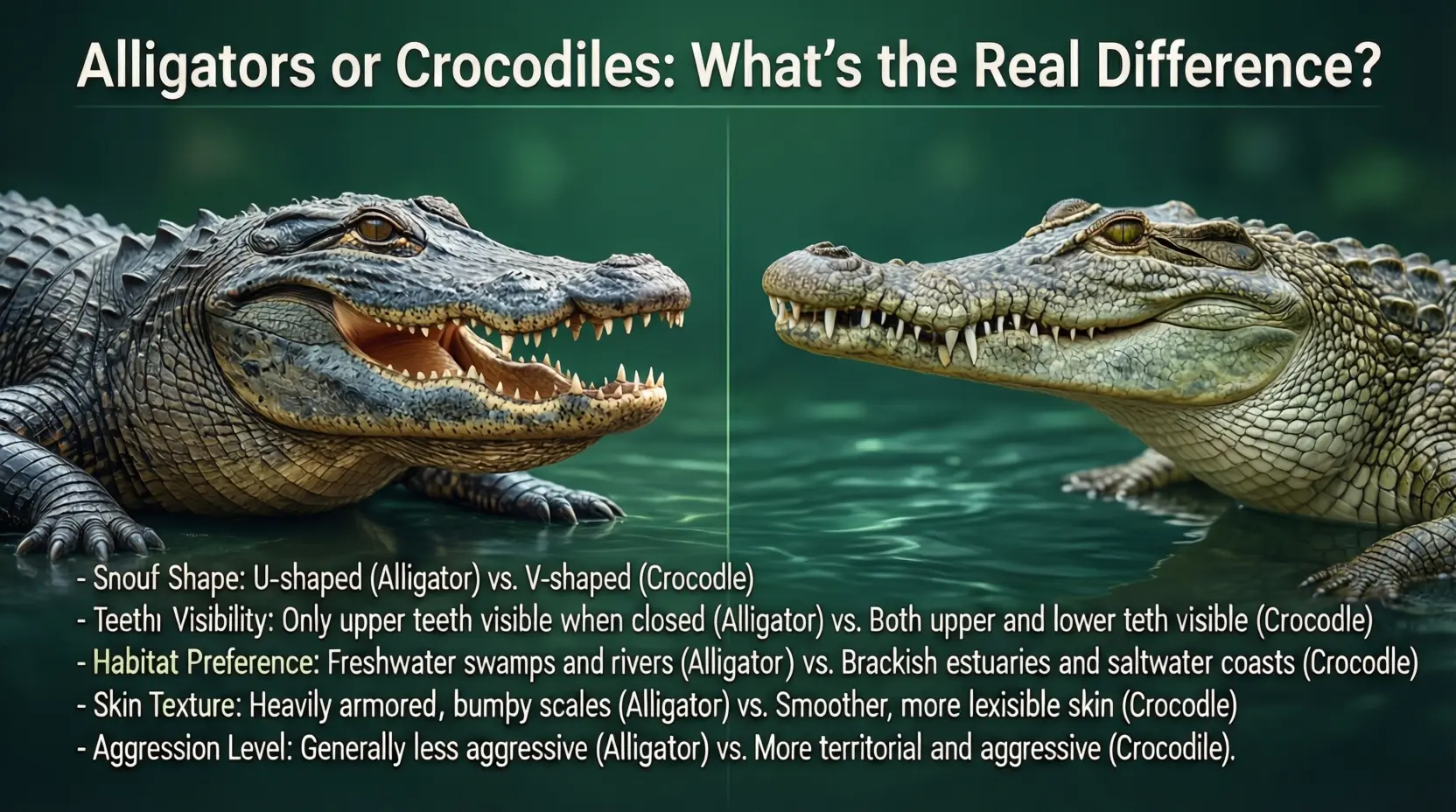
While a manufactured crocodile decoy—often made of high-density foam or resin—cannot physically bite or hunt, these "fake" crocodiles present real threats through secondary risks. These include environmental degradation from microplastics, a false sense of property security, and the potentially fatal mistake of misidentifying a stationary, living crocodile as a harmless plastic imitation.
The term "fake crocodile" usually refers to one of two things: a realistic decoy used for pest control or a misidentified living reptile that appears immobile. As of 2026, the use of realistic wildlife decoys has surged in residential and commercial landscaping, particularly in regions where property owners seek non-lethal ways to deter nuisance birds like Canada geese. However, the efficacy and safety of these products are subjects of significant debate among wildlife experts and environmental safety officers.
The Utility and Mechanism of Crocodile Decoys
Crocodile decoys are primarily designed as visual deterrents. They exploit the innate "fear response" of smaller animals and waterfowl. Because crocodiles are apex predators, many species have an evolutionary drive to avoid any object that resembles the silhouette of a crocodilian head or back breaking the water's surface.
How Decoys Work in Pest Management
Most decoys are designed to float, often mimicking the "low profile" of a crocodile in the water. They are weighted to ensure that only the eyes, snout, and a portion of the back are visible. In theory, this triggers a "flight" response in pests. For example, golf courses and lakeside HOAs frequently deploy these to prevent geese from congregating on docks or greens.
The effectiveness of these tools is largely dependent on movement. A static decoy that remains in the exact same spot for weeks eventually loses its "threat value" because birds are capable of habituation. If the "predator" never moves or strikes, the pests eventually realize it is not a threat. By 2026, more advanced models have integrated solar-powered motors to provide random movement, which slightly extends their window of effectiveness.
The Limits of Habituation
The primary "threat" to the consumer here is financial and practical. Without constant repositioning, a fake crocodile becomes an expensive lawn ornament. Wildlife biologists often point out that decoys are a temporary fix rather than a permanent solution to wildlife management. Relying solely on a fake crocodile to keep a pond "safe" or clean is a tactical error that often leads to frustration and the eventual return of the nuisance animals.
Environmental Risks: The Hidden Threat of Materials
In the current environmental landscape of 2026, the material composition of "fake crocodiles" has come under increased scrutiny. Most mass-produced decoys are manufactured using expanded polystyrene (EPS) or various forms of polyethylene. While durable, these materials are susceptible to environmental degradation.
UV Degradation and Microplastics
When a plastic decoy sits in high-intensity sunlight for several seasons, the ultraviolet (UV) radiation breaks down the polymer chains. This causes the decoy to become brittle and eventually flake. These small particles, or microplastics, enter the local water system. Unlike natural debris, these synthetic fragments do not biodegrade and can be ingested by fish, turtles, and the very birds the decoy was meant to deter.
Chemical Leaching
Cheaper, unrated decoys may use paints and coatings containing heavy metals or volatile organic compounds (VOCs) to achieve a realistic, scaly look. As the decoy weathers, these chemicals can leach into stagnant pond water, potentially affecting the pH balance and the health of aquatic flora. When considering if a fake crocodile is a "threat," the long-term ecological impact on a private pond’s ecosystem is a valid concern for homeowners.
The Danger of Misidentification: Real vs. Fake
The most significant physical threat associated with fake crocodiles is the human tendency to underestimate real ones. Crocodiles are ectothermic (cold-blooded) and masters of energy conservation. They can remain perfectly motionless for hours, looking remarkably like a piece of wood or a plastic resin sculpture.
The "Stillness" Trap
A real crocodile's primary hunting strategy is the ambush. To achieve this, they remain low in the water with only their sensory organs exposed. To an untrained eye—or a child—a real crocodile floating near a dock might look identical to a decoy they saw in a neighbor’s yard or online.
The "threat" occurs when a person, believing the animal to be "fake," approaches it to take a photo, move it, or investigate. This removes the natural "buffer zone" that keeps humans safe in crocodile-inhabited regions. In areas like Florida, Northern Australia, or Southeast Asia, the normalization of crocodile decoys can lead to a dangerous "crying wolf" effect where residents become desensitized to the silhouette of a predator in the water.
Distinguishing Characteristics
Understanding the difference between a high-quality decoy and a living animal is critical for safety. While modern manufacturing has made decoys very realistic, there are physiological markers that a plastic object cannot replicate.
| Feature | Real Crocodile | Fake/Decoy Crocodile |
|---|---|---|
| Eye Movement | Nictitating membranes (clear eyelids) may blink; pupils may dilate. | Static, painted, or fixed glass eyes. |
| Breathing | Subtle expansion of the throat or ribcage; nostril flares. | No movement in the snout or midsection. |
| Positioning | May sink slowly or move tail slightly for stability. | Usually bobs rhythmically with surface ripples. |
| Texture | Wet, organic skin; may have algae or mud. | Uniform plastic or resin sheen; often has visible seams. |
| Response | Will react to a splash or loud noise by submerging. | Will remain floating regardless of nearby activity. |
Legal and Community Threats
Using fake crocodiles can also lead to "threats" of a legal or social nature. As municipal codes and Homeowners Association (HOA) regulations have evolved through 2026, the deployment of realistic animal replicas is often regulated.
- Public Alarm: In areas where crocodiles are not native, placing a realistic decoy in a public-access waterway can cause significant public alarm. This may result in unnecessary calls to emergency services or wildlife departments, diverting resources from genuine emergencies.
- Liability and Negligence: If a property owner places a decoy near a "No Swimming" area, and a visitor mistakes a real crocodile for that decoy—leading to an injury—the property owner could potentially face secondary liability claims for creating a "confusing" environment.
- HOA Violations: Many modern communities classify floating decoys as "unauthorized watercraft" or "lawn ornaments," which may be prohibited if they are deemed to negatively impact property values or community aesthetics.
Psychological Impacts: A False Sense of Security
There is a psychological component to the "threat" of fake crocodiles. People who use them often feel they have "solved" their pest or safety problem. This false sense of security can lead to lapses in other, more effective safety measures.
For example, a parent might feel more comfortable letting a child play near a pond because the "fake crocodile" is supposed to keep snakes or geese away. In reality, the decoy does nothing to prevent other hazards like steep embankments, waterborne bacteria, or real predators that have become habituated to the decoy. The "threat" here is the replacement of active vigilance with a passive, ineffective plastic tool.
Best Practices for Using Crocodile Decoys Safely
If you determine that a decoy is the right choice for your specific pest management needs, following specific protocols can mitigate the risks discussed above.
- Rotation is Mandatory: To prevent habituation and ensure the decoy remains a "threat" to pests, move it at least once every 48 hours. Change its location and the direction it is facing.
- Material Selection: Opt for UV-stabilized, high-density plastics that are rated for "aquatic use." These are less likely to break down into microplastics over a single season.
- Clear Labeling: If the decoy is located in an area where guests or the public might see it, consider a small, discrete mark or a nearby sign indicating that "Wildlife Decoys are in Use." This prevents accidental contact from people trying to "rescue" or "clear" the object.
- Complementary Tactics: Use decoys as part of an Integrated Pest Management (IPM) strategy. Combine them with motion-activated sprinklers or landscape modifications (like planting tall grasses that geese dislike) to reduce the reliance on a single visual deterrent.
Frequently Asked Questions
Do fake crocodiles actually keep alligators away?
No. In fact, real alligators or crocodiles may investigate a decoy out of territorial curiosity. Large bull alligators are highly territorial and may attack a decoy that they perceive as an intruder in their space. Using a fake crocodile in waters where real crocodilians live can actually attract a real threat to your shoreline.
Are crocodile decoys legal in residential ponds?
Legality varies by jurisdiction and HOA rules. In most cases, they are legal on private property, but their use in public or "shared" waters (like community lakes) often requires permission from the local water management district or the neighborhood board. As of 2026, some coastal cities have banned them in canals to prevent confusion for boaters and wildlife officers.
How long do plastic crocodile decoys last?
A standard resin or foam decoy typically has a functional lifespan of 2 to 4 years, depending on sunlight exposure and water salinity. Beyond this point, the paint usually fades, and the material begins to degrade, reducing its effectiveness and increasing environmental risks.
Can a fake crocodile scare away pets?
Yes. Dogs and cats have a keen sense of movement and shape. A realistic decoy can cause significant stress or anxiety in pets that spend time near the water. If your pet is prone to "protecting" the yard, they may even jump into the water to confront the decoy, which poses a drowning risk or a risk of entanglement with the decoy's anchoring system.
Is it better to use a "head-only" decoy or a full-body model?
For most pond applications, a "head-only" or "floating snout" decoy is more effective. This is because a full-body crocodile floating on top of the water is an unnatural sight (as they usually swim submerged). The head-only model mimics the natural hunting posture of a real crocodile, making it more convincing to pests.
Recommendations and Next Actions
The primary "threat" of a fake crocodile is not the object itself, but the human behavior it influences. If you are considering a decoy, your first step should be to verify your local wildlife regulations to ensure that decoys are not restricted and that they won't interfere with native species management.
If the goal is safety—specifically keeping children or pets away from water—do not rely on a decoy. Instead, invest in physical barriers like fencing or motion-activated lighting. If your goal is pest control, ensure you have a rotation schedule planned before deployment to prevent the "fake" predator from becoming a "static" and ignored part of the landscape.
Finally, if you live in a region where real crocodiles or alligators are present, always treat any stationary shape in the water as a live animal. Never assume a crocodile is "fake" until you have verified it from a safe distance using binoculars or observed it for signs of life such as breathing or eye movement. In the standoff between a human and a "fake" crocodile, the real threat is always the one that isn't made of plastic.