In 2026, a finance degree remains a high-value investment, offering strong entry-level salaries and diverse career paths in investment banking, corporate finance, and fintech. Its worth is maximized when paired with technical skills and networking, though high tuition costs at non-target schools require careful ROI calculation before enrollment.
Choosing a major is perhaps the most significant financial decision a young adult makes, often involving the commitment of four years and tens of thousands of dollars. The question of whether a finance degree is "worth it" cannot be answered with a simple binary. Instead, it requires a nuanced look at the modern landscape of global markets, the evolution of financial technology (FinTech), and the shifting requirements of hiring managers in 2026. This analysis breaks down the costs, career outcomes, and strategic considerations of pursuing a finance degree today.
The Evolution of the Finance Degree in 2026
The finance degree has undergone a significant transformation over the last decade. While the core principles of the time value of money, capital budgeting, and risk management remain the bedrock of the curriculum, the "Finance 2.0" education of 2026 integrates heavy doses of data science and algorithmic logic.
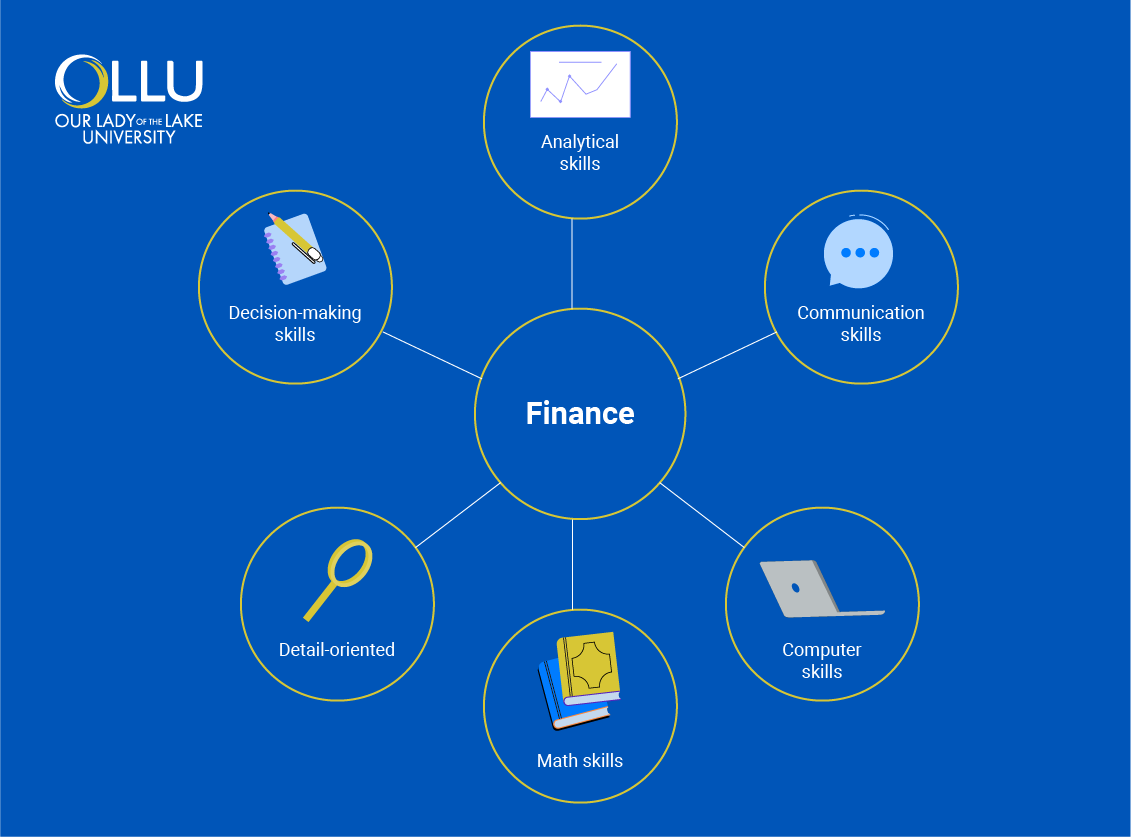
Today’s finance students are no longer just learning how to read a balance sheet; they are learning how to model that data using Python and leverage artificial intelligence to identify market inefficiencies. This shift has made the degree more robust but also more demanding. Employers in 2026 expect a "bilingual" graduate—someone who understands both the intricacies of a discounted cash flow (DCF) analysis and the technical requirements of the software used to automate it.
Career Path Diversity and Compensation
One of the primary reasons students flock to finance is the high ceiling for compensation. However, the degree is far from a monolith; it serves as a gateway to several distinct sectors, each with its own lifestyle and earning trajectory.
Investment Banking and Private Equity
This remains the most prestigious and lucrative path for finance graduates. In 2026, entry-level analyst roles at major firms often see total compensation packages reaching well into the six-figure range, though this comes at the cost of extreme work hours. The degree is essentially a prerequisite here, as these firms rely on the rigorous quantitative screening provided by top-tier finance programs.
Corporate Finance
For those seeking more work-life balance, corporate finance involves managing the internal finances of a company—budgeting, forecasting, and treasury management. While starting salaries may be lower than in investment banking, the path to Chief Financial Officer (CFO) is well-defined and highly stable.
Fintech and Quantitative Analysis
The rise of decentralized finance and AI-driven trading has created a massive demand for finance majors who can bridge the gap between traditional banking and technology. These roles often offer the most flexibility, with many firms adopting permanent hybrid or remote structures by 2026.
Wealth Management and Financial Planning
As the "Great Wealth Transfer" continues, there is a heightened need for personal financial advisors. This path is less about complex modeling and more about relationship management, tax strategy, and estate planning.
Comparing Finance with Related Degrees
To determine if finance is the right choice, it is helpful to compare it against other common business and quantitative majors.
| Major | Primary Focus | Math Rigor | Top Career Path | 2026 Salary Potential |
|---|---|---|---|---|
| Finance | Capital allocation & risk | High | Investment Banking / PE | Very High |
| Accounting | Reporting & compliance | Moderate | CPA / Auditor / Controller | High/Stable |
| Economics | Theoretical market behavior | Very High | Researcher / Policy Analyst | Moderate to High |
| Business Admin | General management | Low | Operations / Sales | Moderate |
| Data Science | Predictive modeling | Very High | Quant Analyst / Data Eng | Very High |
The ROI Calculation: Tuition vs. Lifetime Earnings
The "worth" of a degree is fundamentally a calculation of Return on Investment (ROI). According to the National Center for Education Statistics, the average cost of attendance at a four-year institution has continued to rise, making the choice of school just as important as the choice of major.
The Target School Advantage
In finance, more than in almost any other field, the institution's brand matters. "Target schools"—often Ivy League or top-tier public universities—have direct pipelines to Wall Street. For a student at a target school, the high tuition is often easily justified by the high probability of landing a $100k+ job immediately upon graduation.
The Non-Target Strategy
For students at non-target or local state schools, the ROI calculation is different. Without the benefit of "on-campus recruiting," these students must work twice as hard to network and secure internships. However, by keeping tuition costs low (often under $15,000 per year for in-state public schools), the ROI can actually be higher in the long run because the debt burden is significantly lower.
Breaking Even
Most finance graduates in 2026 can expect to "break even" on their educational investment within 5 to 7 years. This is significantly faster than graduates in the humanities or social sciences, primarily due to the higher starting salaries and the availability of performance-based bonuses in the financial sector.
The Impact of Artificial Intelligence on Finance Careers
A common concern in 2026 is whether AI will make finance degrees obsolete. The reality is the opposite: AI is making the human element of finance more valuable, but it is changing the tasks involved.
Automation has largely taken over basic data entry, simple auditing, and foundational spreadsheeting. This means a finance degree is only "worth it" if the student learns to use these tools to perform higher-level strategic analysis. The value of a finance professional today lies in their ability to interpret AI-generated insights, manage ethical considerations in algorithmic trading, and provide the human judgment that machines still lack.
Students who ignore the technical aspects of the field may find their degrees have a lower shelf-life. Conversely, those who combine financial theory with technical proficiency are seeing record-breaking demand for their skills.
Necessary Certifications and Post-Graduate Options
Often, the degree is just the first step. To maximize the value of a finance education, many professionals pursue additional credentials.
- Chartered Financial Analyst (CFA): Widely considered the "gold standard" for investment management. It is a grueling three-level examination process that many argue is more valuable than an MBA for those staying in portfolio management. More information can be found at the CFA Institute.
- Certified Financial Planner (CFP): The essential credential for those entering the personal wealth management space.
- MBA: While the finance degree handles entry-level roles, a Master of Business Administration from a top-tier school is still a powerful tool for "career pivoting" or reaching executive-level management in mid-career.
Common Mistakes When Pursuing a Finance Degree
- Ignoring Internships: In 2026, a 3.9 GPA with no internship experience is often less valuable than a 3.2 GPA with two internships at recognized firms. Experience is the primary currency of the finance hiring market.
- Underestimating the Math: Finance is not "business lite." It involves statistics, calculus, and complex algebra. Students who struggle with math often find the upper-level coursework overwhelming.
- Over-Leveraging with Debt: Taking on $200,000 in debt for a finance degree from a school with no industry connections is a recipe for financial stress. The salary, while high, may not comfortably cover the monthly payments of a massive private loan.
- Neglecting Soft Skills: You can be a genius at modeling, but if you cannot explain your findings to a client or a board of directors, your career will plateau. Finance is a service industry that requires high emotional intelligence.
Professional Advice Limitation
This article is for educational and informational purposes only and does not constitute financial or career advice. Educational investments involve risk, and individual results vary based on school choice, geographic location, and market conditions. Consult with a qualified career counselor or financial advisor before making significant educational or debt-related decisions.
Frequently Asked Questions
Can I get a job in finance without a degree?
While it is technically possible to work in sales or basic clerical roles, a bachelor's degree is a firm requirement for nearly all analyst, associate, and management positions in 2026. Licensing bodies like FINRA also require specific educational and exam benchmarks for many roles.
Is finance better than accounting?
"Better" depends on your personality. Accounting is generally more stable and follows strict rules (GAAP/IFRS), making it ideal for those who like precision and compliance. Finance is more about forecasting and risk, offering higher potential rewards but with greater volatility and market-driven pressure.
How much do finance majors make in their first year?
In 2026, the average starting salary for a finance major ranges from $65,000 to $85,000 for corporate roles. For high-finance roles like investment banking at major hubs, total compensation (including bonuses) can exceed $120,000 for first-year analysts.
Will AI replace financial analysts by 2030?
AI is expected to augment, not replace, financial analysts. The US Bureau of Labor Statistics continues to project steady growth for financial analysts, noting that as the economy grows, more expertise is needed to evaluate investment opportunities across increasingly complex global markets.
Does the prestige of the university matter for a finance degree?
Yes, prestige matters more in finance than in fields like engineering or nursing. Top-tier firms focus their recruiting efforts on a specific list of schools. If you attend a non-target school, you must be more proactive in networking via platforms like LinkedIn to secure the same opportunities.
Is an MBA necessary if I already have a finance degree?
An MBA is not strictly necessary for those already working in the field, but it serves as a powerful "reset button" for those who want to jump into a different sector of finance or who graduated from a lower-ranked undergraduate program and want a "prestige" name on their resume.
Final Recommendation: Is It Worth It?
A finance degree is emphatically worth it for individuals who are quantitatively minded, interested in the mechanics of the global economy, and willing to put in the work required for networking and internships.
To maximize your investment in 2026:
- Prioritize the "Technical-Plus" skill set: Learn financial modeling and a programming language like Python or SQL.
- Be Debt-Conscious: Opt for the best school that you can afford without crippling debt, or ensure you are at a "Target School" if you are taking on significant loans.
- Start Early: High-finance recruiting for 2026 and 2027 graduates often begins as early as the sophomore year.
The degree is not a guaranteed ticket to wealth, but it provides one of the most reliable and high-ceiling foundations available in the modern higher education system.