Burial insurance is not a separate entity from life insurance; rather, it is a specialized type of whole life insurance designed to cover end-of-life expenses. While standard life insurance focuses on income replacement and long-term financial legacy, burial insurance provides a smaller death benefit specifically intended for funeral costs, medical bills, and small debts.
The confusion between burial insurance and life insurance often stems from how these products are marketed. In the insurance industry, burial insurance is frequently referred to as "final expense insurance" or "funeral insurance." To understand which product suits your financial strategy in 2026, it is essential to look beyond the names and analyze the underlying structure, underwriting requirements, and intended utility of each.
Defining the Core Differences
To distinguish between the two, one must first recognize that "life insurance" is a broad umbrella term. This category includes term life, whole life, universal life, and variable life insurance. Burial insurance is a niche product that sits under the "whole life" category.
Standard life insurance policies are typically purchased by younger individuals or middle-aged adults who need to protect their families from the loss of a primary income. These policies often carry death benefits ranging from $100,000 to several million dollars. The goal is to pay off mortgages, fund college educations, and maintain the household's standard of living for years after the policyholder passes away.
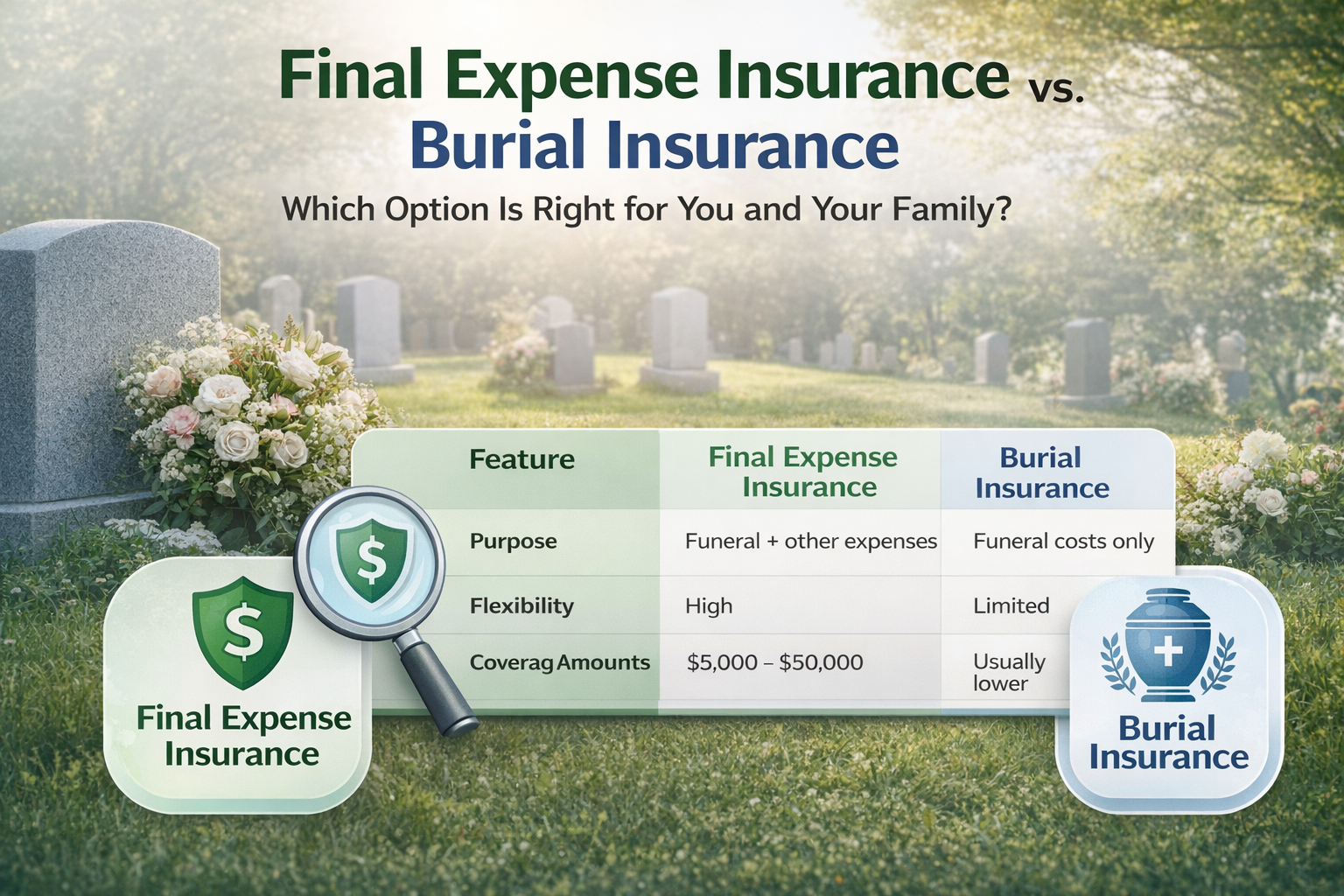
In contrast, burial insurance is tailored for seniors or individuals with health concerns who may not qualify for larger policies. The death benefits are significantly lower, usually ranging from $5,000 to $50,000. These policies are permanent, meaning they do not expire as long as premiums are paid, and they accumulate a small amount of cash value over time.
Underwriting and Eligibility Requirements
One of the most significant distinctions lies in the underwriting process—the method insurance companies use to determine your risk and set your premiums.
Standard Life Insurance Underwriting
When applying for a standard term or whole life policy, the process is often rigorous. As of 2026, while digital "accelerated underwriting" has become more common, many high-value policies still require:
- Medical Examinations: A paramedical professional may visit your home to collect blood and urine samples and record your height, weight, and blood pressure.
- Attending Physician Statements (APS): The insurer may request detailed records from your primary care doctor.
- Lifestyle Assessment: Insurers look at your driving record, criminal history, and high-risk hobbies like scuba diving or piloting private aircraft.
- Prescription History Checks: Companies use databases to see which medications you have been prescribed over the last decade.
Burial Insurance Underwriting
Burial insurance is designed for accessibility. Because the death benefit is lower, the insurance company takes on less risk, allowing for more relaxed eligibility criteria. There are generally two types of burial insurance underwriting:
- Simplified Issue: There is no medical exam. You answer a few health questions on the application. If you can answer "no" to questions about terminal illness or being in a nursing home, you are likely to be approved.
- Guaranteed Issue: There are no health questions and no medical exam. Acceptance is guaranteed regardless of your health status. These policies are often the last resort for individuals with severe chronic illnesses.
The Financial Mechanics: Premiums and Payouts
The cost-to-benefit ratio differs wildly between these two products. Standard life insurance policies, particularly term life, offer the lowest cost per dollar of coverage. A healthy 35-year-old might pay a small monthly premium for a $500,000 death benefit.
Burial insurance, however, is more expensive on a per-thousand-dollar basis. Because the insurer is often covering older individuals or those with health issues, the premiums are higher relative to the payout. For example, a 70-year-old might pay the same monthly premium for a $15,000 burial policy that a 30-year-old pays for a $250,000 term policy.
The Waiting Period (Graded Death Benefit)
A critical feature unique to many burial insurance policies—specifically "guaranteed issue" policies—is the mandatory waiting period. If the insured individual passes away from natural causes within the first two or three years of the policy, the beneficiaries do not receive the full death benefit. Instead, they typically receive a refund of all premiums paid plus a small amount of interest (often 10%). Standard life insurance policies generally do not have this waiting period, paying the full benefit from day one, provided the death is not a result of suicide within the initial contestability period (usually two years).
Comparison of Features and Benefits
The following table outlines the technical specifications and operational differences between standard life insurance and burial insurance as they stand in 2026.
| Feature | Standard Life Insurance (Term/Whole) | Burial Insurance (Final Expense) |
|---|---|---|
| Primary Purpose | Income replacement, debt payoff, legacy | Funeral costs, legal fees, small debts |
| Death Benefit Range | $100,000 to $1,000,000+ | $2,000 to $50,000 |
| Underwriting | Medical exam and full history check | Simplified health questions or none |
| Approval Time | Days to weeks (if not accelerated) | Minutes to 48 hours |
| Premium Cost | Low per $1,000 of coverage | High per $1,000 of coverage |
| Cash Value | Yes (Whole Life) / No (Term) | Yes, but minimal |
| Age Limitations | Usually up to age 65 or 70 | Usually ages 50 to 85 |
| Policy Duration | Fixed term (10-30 years) or Lifetime | Lifetime (Permanent) |
Intended Use and Flexibility
A major point of clarity is how the money can be used. Legally, the death benefit from either a standard life insurance policy or a burial insurance policy is paid out as a tax-free lump sum to the designated beneficiary.
In a standard life insurance scenario, the beneficiary might use the funds to pay off a mortgage or invest for future income. There are no restrictions from the insurance company on how that money is spent.
In burial insurance, while the money is still technically a "cash payout" to the beneficiary, it is specifically marketed and sized for "final expenses." In 2026, the average cost of a traditional funeral with a viewing and burial ranges between $8,500 and $13,000, while cremation services range from $2,000 to $7,000. A burial insurance policy of $15,000 to $20,000 is calculated to cover these specific costs without leaving a significant surplus.
Burial Insurance vs. Pre-need Funeral Contracts
It is important not to confuse burial insurance with "pre-need" contracts. A pre-need contract is an agreement made directly with a specific funeral home. You choose the casket, the service, and the burial plot, and you pay the funeral home directly (often in installments).
Burial insurance is more flexible. Since the benefit goes to a beneficiary, they can use any funeral home and apply any leftover funds to other pressing needs, such as the deceased's final utility bills or medical co-pays.
Who Should Choose Which?
Choosing between these products depends on your stage in life and your health status.
Choose Standard Life Insurance if:
- You have dependents (spouse, children, aging parents) who rely on your income.
- You have significant long-term debt, such as a mortgage or business loans.
- You are in relatively good health and can qualify for lower premium rates.
- You want to leave a substantial financial legacy or "charitable gift."
Choose Burial Insurance if:
- You are between the ages of 50 and 85.
- Your primary concern is not leaving a financial burden on your children for your funeral.
- You have health issues (diabetes, heart disease, high blood pressure) that make standard life insurance too expensive or impossible to obtain.
- You no longer have a mortgage or dependents and only need a small amount of "cleanup" money.
Common Pitfalls and Considerations
When shopping for these products in 2026, consumers must be aware of certain industry practices that can lead to confusion.
- Term Life Marketed as Burial Insurance: Some companies market "term" policies to seniors as "burial coverage." These are dangerous because they expire at a certain age (e.g., age 80). If you live past the term, you lose the coverage and have nothing for burial costs. Always ensure a burial policy is "Whole Life" or "Permanent."
- Inflation Risk: While a $10,000 policy might cover a funeral today, inflation in the funeral industry (which has historically outpaced the general Consumer Price Index) might make that amount insufficient in 15 or 20 years. It is often wise to purchase slightly more coverage than today's costs suggest.
- The "Guaranteed" Premium Trap: Ensure that your policy has "level premiums." This means the cost will never increase as you get older. Some low-quality policies start cheap but increase in price every five years, eventually becoming unaffordable for those on a fixed income.
Frequently Asked Questions
Can I have both burial insurance and a standard life insurance policy?
Yes. Many individuals maintain a large term life insurance policy during their working years and a smaller burial insurance policy to ensure their final expenses are covered regardless of when they pass away. As long as you can afford the premiums, there is no legal limit to how many policies you can hold.
Is burial insurance the same as "Final Expense" insurance?
Yes, these terms are interchangeable. "Final Expense" is the industry-standard term, while "Burial Insurance" is the consumer-facing term used for marketing. Both refer to a small whole life policy with simplified or guaranteed underwriting.
Does burial insurance pay out immediately upon death?
The payout happens after the beneficiary files a claim and provides a death certificate. This process usually takes between 24 hours and two weeks. However, if the policy is within the initial two-year "contestability period," the insurance company may take longer to investigate the cause of death.
Are the death benefits from burial insurance taxable?
In the United States and many other jurisdictions as of 2026, life insurance death benefits (including burial insurance) are generally not subject to federal income tax. However, if the death benefit is paid to your estate rather than a named beneficiary, it may be subject to estate taxes if your total estate exceeds certain thresholds.
What happens if I stop paying the premiums?
Because burial insurance is a form of whole life insurance, it may have a "cash value" component. If you stop paying, the policy will lapse. However, depending on how long you have held the policy, you might be entitled to the accumulated cash value, or you may be able to convert it into a "reduced paid-up" policy with a smaller death benefit that requires no further premiums.
Practical Recommendation
Before purchasing either product, conduct a "final expense audit." Calculate the current cost of the funeral services you desire, add 20% for future inflation, and list any small debts that would need immediate liquidation upon your death.
If you are healthy and under age 60, seek a standard whole life or term life policy first, as the cost-benefit ratio is superior. If you are over 60 or have chronic health conditions, a simplified-issue burial insurance policy is the most effective way to secure peace of mind without the hassle of a medical exam. Always verify that the policy is "level premium" and "permanent whole life" to ensure the coverage is there when your family needs it most.