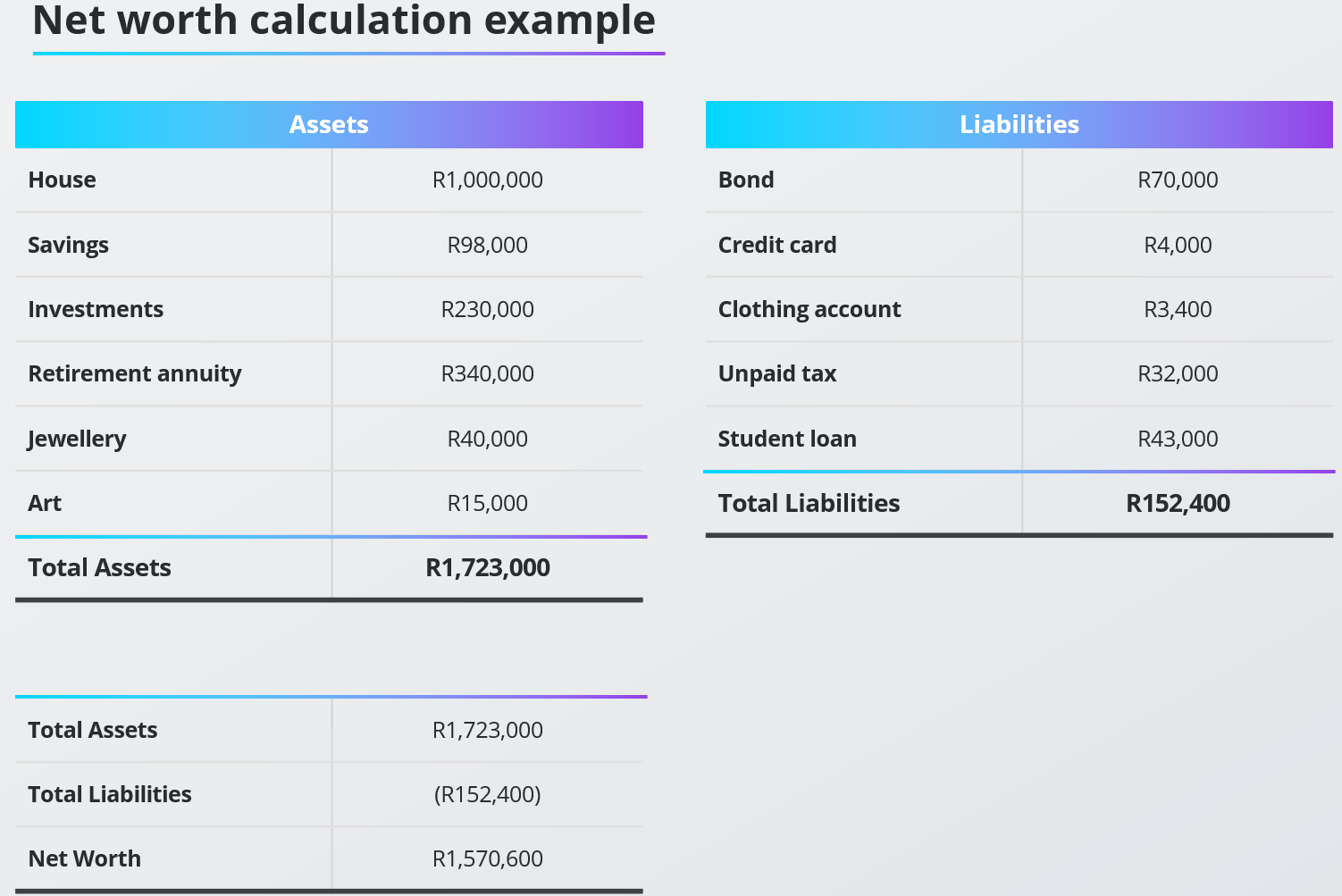
Most apartment complexes and private landlords do consider net worth and liquid assets when screening retired applicants. Since retirees often lack a traditional recurring salary, landlords typically verify financial stability by applying an "asset-to-income" formula, weighing Social Security, pensions, and the total value of brokerage or retirement accounts to ensure the tenant can cover the full term of the lease.
The transition from a career to retirement often brings a significant shift in how one interacts with the credit and rental markets. During your working years, a W-2 and a few recent pay stubs were usually sufficient to secure a lease. However, in 2026, the rental landscape for retirees has evolved. Landlords are increasingly sophisticated in how they evaluate "non-traditional" income. If you are retired and looking to move into a market-rate apartment, understanding how your net worth—specifically your liquid and semi-liquid assets—is weighted against traditional income requirements is essential for a successful application.
The Shift from Income to Assets in Rental Screening
The traditional benchmark for rental approval has long been the "3x monthly rent" rule, where a tenant's gross monthly income must be at least three times the cost of the rent. For a retiree, a monthly Social Security check or a modest pension might not meet this threshold on its own, even if the individual has a seven-figure brokerage account.
To accommodate the growing demographic of "asset-rich, income-poor" retirees, property management companies have standardized asset-based qualification criteria. Rather than looking for a recurring paycheck, they look for "liquidity." Liquidity refers to how quickly an asset can be converted into cash to pay bills. While your net worth might include your primary residence or a collection of vintage automobiles, a landlord will primarily focus on your "accessible net worth"—the funds available in savings, money markets, and qualified retirement accounts.
Why Landlords Care About Net Worth
From a landlord’s perspective, the primary risk is "non-payment of rent leading to eviction." A working professional can lose their job, but a retiree with a substantial net worth is often viewed as a lower-risk tenant. The assets represent a "buffer" that can sustain the lease even if inflation rises or medical expenses increase. In 2026, many corporate landlords use automated screening software that allows them to input asset totals as a substitute for annual salary, often using a "multiplier" to determine eligibility.
How Landlords Calculate Asset Eligibility
There is no single universal formula, but most major property management firms in the United States use one of three common methods to convert your net worth into a "monthly income equivalent."
1. The Total Lease Value Method
In this scenario, the landlord looks at the total cost of the lease for the initial term (usually 12 months). If the rent is $2,500, the total lease value is $30,000. The landlord may require you to show liquid assets equal to 2.5x to 3x the total lease value. Under this 3x rule, you would need $90,000 in accessible accounts to qualify, regardless of your monthly income.
2. The 80% (or 70%) Liquidity Rule
When considering retirement accounts like a 401(k) or a Traditional IRA, landlords often "haircut" the value. Because withdrawing money from these accounts may trigger tax liabilities or (if under age 59½) penalties, a landlord might only credit you with 70% to 80% of the balance toward your qualification total. For example, a $100,000 IRA might be counted as $70,000 in "effective assets" during the screening process.
3. The Monthly Distribution Method
If you have a predictable draw from your portfolio, landlords may treat those distributions as traditional income. If you provide documentation (such as a 1099-R or a letter from a financial advisor) showing a consistent monthly withdrawal of $5,000, that is treated exactly like a salary.
Types of Assets Considered (and Those That Are Not)
Not all components of your net worth carry the same weight in a rental application. Landlords prioritize assets that can be liquidated within 30 days.
Accepted Liquid Assets
- Checking and Savings Accounts: These are the gold standard. They are verified via bank statements (usually the last three to six months) or through digital verification services like Plaid.
- Money Market Accounts and CDs: Since these are cash-equivalent, they are typically counted at 100% of their value.
- Brokerage Accounts (Stocks/Bonds): These are highly valued but may be subject to a slight "volatility haircut" if the market is particularly unstable.
- Qualified Retirement Accounts (IRA/401k/403b): These are accepted, provided you are of an age where you can make withdrawals without significant legal hurdles.
Assets Generally Excluded
- Real Estate Equity: The equity in a home you are currently selling is often ignored until the sale is finalized and the cash is in your bank account. Landlords cannot "spend" your home equity if you fail to pay rent.
- Personal Property: Jewelry, art, and vehicles are almost never considered part of the qualifying net worth for a standard apartment lease.
- Future Inheritances: Until the probate process is complete and funds are distributed, these are considered speculative.
Essential Documentation for the Retired Applicant
To use your net worth as your primary qualifying factor, you must be prepared to provide a more robust paper trail than a typical employee. In 2026, digital transparency is expected, but physical or PDF documentation remains the backup.
- Social Security Award Letter: This confirms your baseline "guaranteed" income. Even if it is small, it provides a floor for your financial stability. You can obtain this from the Social Security Administration.
- Pension Statements: Documentation from former employers or the Pension Benefit Guaranty Corporation (PBGC) if your pension is federally insured.
- Investment Statements: The most recent quarterly statements for all brokerage and retirement accounts. Ensure your name and the account's liquidity are clearly visible.
- Tax Returns: Typically, the last two years of Form 1040s are required to show the consistency of your financial status.
- CPA Letter: A notarized letter from a Certified Public Accountant (CPA) or a certified financial planner can be a powerful tool. The letter should state your total net worth and confirm that your current asset draw is sustainable for the duration of the lease.
Asset Verification vs. Income Verification
| Factor | Income Verification (Working) | Asset Verification (Retired) |
|---|---|---|
| Primary Document | Pay stubs / W-2 | Bank/Brokerage Statements / 1099-R |
| Standard Multiplier | 3x monthly rent | 3x - 5x annual rent (total assets) |
| Verification Method | Employer contact | Third-party asset verification (e.g., Plaid) |
| Stability Metric | Job history (2+ years) | Asset longevity / Drawdown rate |
| Haircuts Applied | Rarely (Gross vs. Net) | Yes (often 20-30% on retirement funds) |
Navigating Legal Protections and Source of Income Laws
It is vital to know your rights as a retiree. In many jurisdictions, "Source of Income" (SOI) protection laws prevent landlords from discriminating against applicants based on where their money comes from, provided it is legal.
Source of Income Protections
As of 2026, a growing number of states and municipalities have passed laws that require landlords to accept Social Security, disability payments, and vouchers as valid income. While these laws don't always force a landlord to accept net worth as a substitute for income, they do prevent them from rejecting you simply because you don't have a "job." If a landlord refuses to count your pension as income, they may be in violation of local fair housing regulations.
The Role of the Fair Housing Act
The U.S. Department of Housing and Urban Development (HUD) enforces the Fair Housing Act, which prohibits discrimination based on age (in certain contexts) and disability. While landlords can set financial standards, those standards must be applied consistently. If a landlord accepts a "liquid asset" qualification for a 30-year-old entrepreneur, they must also accept it for a 70-year-old retiree.
Strategies to Strengthen Your Application
If you find a landlord who is hesitant to approve an application based purely on net worth, several strategies can bridge the gap.
Offer a Larger Security Deposit (Where Legal)
In some states, you can offer a higher security deposit to offset the perceived risk of not having a monthly salary. However, be aware that many states (such as California and New York) have strict caps on security deposits (often limited to one month's rent). Check your local tenant-landlord laws before making this offer.
Prepaying Rent
Some retirees choose to offer six months or a full year of rent upfront. While this is attractive to private landlords, corporate property managers often refuse prepayments due to accounting complexities and legal "right to cure" issues during potential evictions. Furthermore, in some jurisdictions, it is illegal for a landlord to accept more than a certain amount of rent in advance.
Utilizing a Lease Guarantor
If your assets are significant but "locked" in ways a landlord doesn't like (e.g., heavily in real estate or restricted trusts), you can use a guarantor. This is a third party—often an adult child or a professional guarantor service—who signs the lease and agrees to pay if you default. Professional services like The Guarantors or Insurent specialize in these scenarios, often for a fee of 5% to 10% of the annual rent.
Common Mistakes Retirees Make When Applying
- Underestimating the "Haircut": Assuming that $500,000 in a traditional IRA is the same as $500,000 in a savings account. Landlords account for the taxes you will owe when you withdraw that money.
- Privacy Over-Correction: Some retirees are hesitant to show full bank statements for privacy reasons. In the 2026 rental market, "redacting" too much information often leads to an automatic rejection by automated screening bots.
- Ignoring Credit Scores: Even with a $5 million net worth, a poor credit score can result in a denial. Landlords view credit scores as a "character reference" for how you treat your financial obligations, regardless of how much cash you have.
- Applying to the Wrong Properties: Large corporate "Class A" buildings often have rigid, algorithm-based approval systems. Small-scale "mom and pop" landlords are often more flexible and willing to look at the "whole picture" of a retiree's net worth.
Specialized Retirement and 55+ Communities
If market-rate apartments are proving too difficult to navigate with an asset-based application, specialized senior living or 55+ communities are an excellent alternative. These properties are specifically designed for the financial profiles of retirees.
These communities almost always have a standardized "Asset Qualification Path." They are accustomed to seeing Social Security award letters and brokerage statements. In many cases, these communities are more interested in your "debt-to-asset" ratio than your monthly cash flow. Because they cater exclusively to seniors, their underwriting departments are trained to understand the nuances of RMDs (Required Minimum Distributions) and trust income.
FAQs
Can a landlord refuse to count my retirement savings as income?
Generally, no, if they have a policy of accepting alternative financial data. However, they can set the "multiplier" higher for assets than for income. For example, they might require income to be 3x the rent but require liquid assets to be 40x the monthly rent (the "40x Rule"). As long as they apply this rule consistently to all applicants, it is usually legal.
How do I prove my net worth without giving the landlord my login credentials?
Use third-party verification services like Finicity or Plaid, which are integrated into most 2026 rental applications (like Zillow or Apartments.com). These services provide a "read-only" snapshot of your balances to the landlord without sharing your actual passwords or full account numbers. Alternatively, you can provide a signed letter from your financial institution on their official letterhead.
Does owning a home outright help my apartment application?
Indirectly, yes, but not as much as cash. Owning a home shows a history of financial responsibility and adds to your total net worth. However, unless you are selling the home to fund your rent, most landlords will not count the home's value toward your monthly rent qualification because they cannot easily access that equity if you stop paying rent.
What if my net worth is in a Trust?
If you are the beneficiary of a trust, you will need a letter from the Trustee. The letter should specify the frequency and amount of distributions you are entitled to receive. If the trust is "discretionary" (meaning the trustee decides when to give you money), a landlord may be less likely to count it as guaranteed income.
Is my Social Security considered "protected" income?
Yes. Under various state and federal guidelines, Social Security is a valid and legal source of income. Landlords cannot refuse to rent to you simply because your income comes from the government rather than an employer.
Final Recommendations for Retired Renters
When applying for an apartment using your net worth in 2026, transparency and preparation are your most effective tools. Begin by consolidating your financial statements and obtaining a formal "verification of assets" letter from your bank or financial advisor. If you are targeting a corporate-owned complex, ask specifically for their "Asset-to-Income" ratio requirements before paying an application fee.
If your liquid assets are lower than the required 3x annual rent threshold but your total net worth is high, focus your search on private landlords or smaller management companies. These entities often have the latitude to look beyond the software-generated "Pass/Fail" score and consider the reality of your financial strength. Always ensure your credit report is frozen or unfrozen as needed, and be prepared to explain any large one-time withdrawals from your accounts that might appear as "instability" to an automated system.