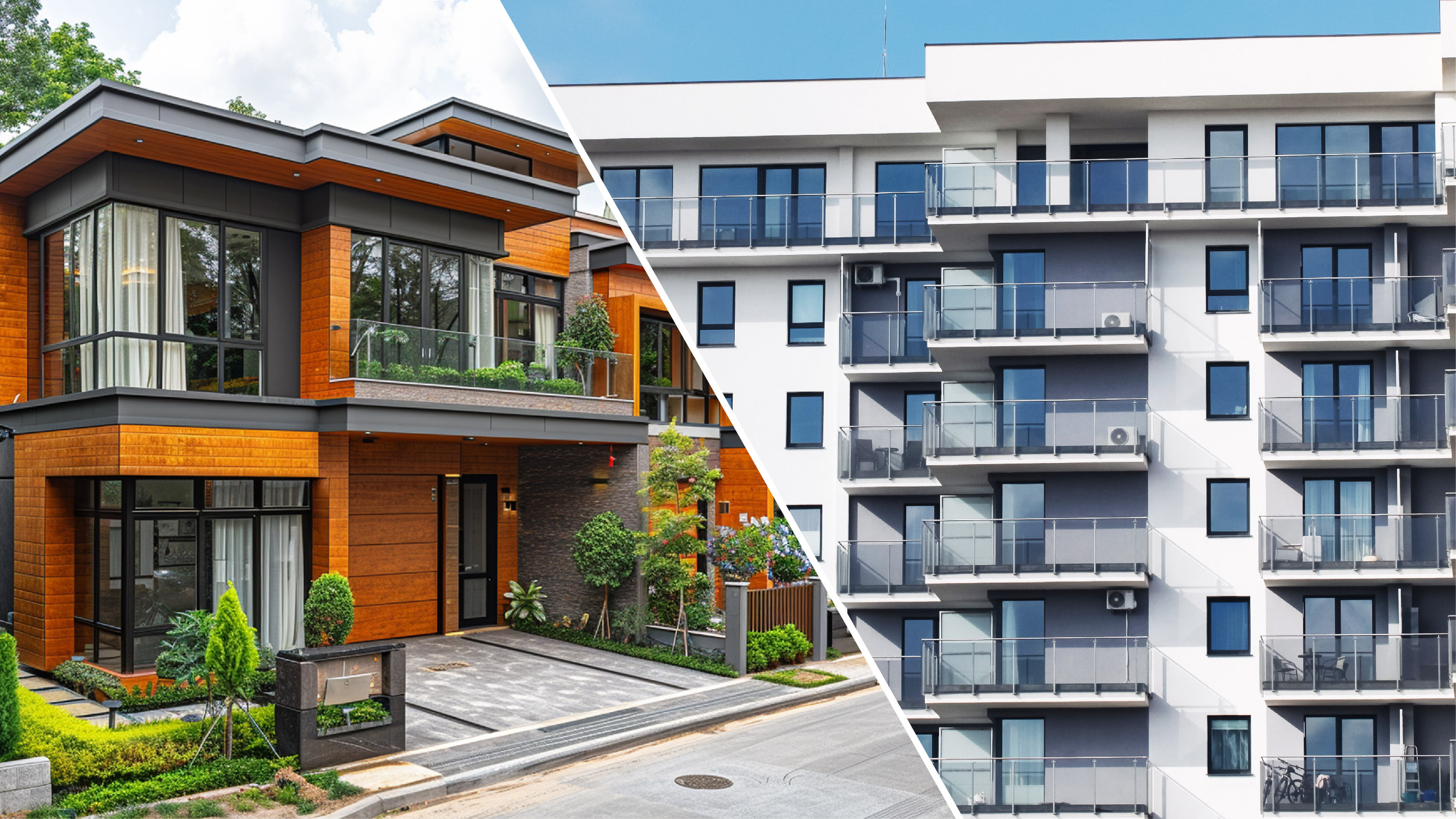
Choosing between an apartment and a home depends on your financial stability, long-term goals, and desired level of daily responsibility. Apartments typically offer lower maintenance and urban proximity, while houses provide greater privacy, square footage, and equity-building potential. For most individuals in 2026, the decision hinges on balancing immediate flexibility against long-term asset growth.
The choice between an apartment and a single-family home is rarely a simple matter of cost. It is a fundamental lifestyle decision that dictates how you spend your weekends, how much control you have over your environment, and how your wealth grows over time. In 2026, the real estate market continues to reflect a complex interplay between high interest rates, remote work requirements, and a shifting preference for sustainable, efficient living spaces.
To determine which path is right for you, it is necessary to look beyond the monthly payment and examine the systemic differences in maintenance, privacy, community dynamics, and long-term financial health.
The Financial Landscape: Upfront Costs and Long-term Equity
The financial implications of choosing an apartment (typically as a renter) versus a home (typically as a buyer) are the most significant factors for most households. Each path carries unique risks and rewards that change depending on the duration of your stay.
Initial Capital Requirements
When opting for an apartment, the barrier to entry is generally lower. Most landlords require a security deposit—often equivalent to one or two months of rent—along with the first month’s payment. In some competitive urban markets in 2026, you may also encounter broker fees. This allows for high liquidity, as your savings are not tied up in the physical structure of the building.
Conversely, purchasing a home requires substantial upfront capital. Even with low-down-payment programs like FHA loans (which may require as little as 3.5%), buyers must still account for closing costs, which typically range from 2% to 5% of the purchase price. In 2026, with the average home price stabilized but high, a 20% down payment remains the gold standard for avoiding Private Mortgage Insurance (PMI) and securing the best possible interest rates.
Monthly Cash Flow and Hidden Costs
Renters often enjoy a more predictable monthly budget. Your rent covers the shelter, and in many cases, certain utilities or amenities. While rent prices can increase annually depending on local rent control laws or market demand, the figure is generally static for the duration of the lease.
Homeowners face a more volatile monthly expenditure. While a fixed-rate mortgage provides a stable base, property taxes and homeowners insurance premiums are subject to annual adjustments. Furthermore, the homeowner is responsible for all "unplanned" expenses. Financial experts often recommend the "1% rule," which suggests setting aside 1% of the home's value annually for maintenance and repairs. On a $400,000 home, this equates to an additional $333 per month that a renter simply does not have to factor into their baseline survival costs.
Equity and Wealth Accumulation
The most compelling argument for a home is equity. Each mortgage payment is a step toward full ownership, and historically, real estate has been a reliable hedge against inflation. By 2026, data from the National Association of Realtors continues to show that the net worth of the average homeowner significantly outpaces that of the average renter, primarily due to forced savings through mortgage amortization and property appreciation.
Apartment living, particularly for renters, offers no such return on investment. Rent is a sunk cost. However, if the difference between a high mortgage and a lower rent is invested in the stock market or other liquid assets, a renter can still build significant wealth. The "opportunity cost" of the down payment is a critical calculation that prospective buyers must perform.
Maintenance and Daily Responsibility: Convenience vs. Control
The "lifestyle" component of the apartment vs. home debate often centers on how much work you are willing to do to maintain your living space.
The "Lock and Leave" Apartment Lifestyle
Apartments are designed for convenience. If a water heater fails at 2:00 AM or a HVAC unit stops working in mid-July, the tenant’s primary responsibility is to file a maintenance request. The cost and logistical burden of the repair fall entirely on the landlord or property management company. This "lock and leave" lifestyle is ideal for professionals who travel frequently or individuals who prefer to spend their weekends on leisure rather than landscaping.
Furthermore, many modern apartment complexes in 2026 include integrated smart-home features, centralized trash pickup, and professional security. These "fractionalized" services are managed by the building, meaning the resident enjoys the benefits without the administrative headache.
The Autonomy and Labor of Homeownership
A house offers a level of control that an apartment cannot match. Want to knock out a wall to create an open-concept kitchen? Want to install a solar array or plant a vegetable garden? In a home, you are the ultimate authority (subject to local zoning and HOA rules).
However, this autonomy comes at the price of labor. Homeowners are the "Chief Operating Officers" of their properties. You are responsible for gutter cleaning, lawn care, snow removal, and the long-term integrity of the roof and foundation. In 2026, as labor costs for skilled trades remain high, the "DIY" skill set has become increasingly valuable for homeowners looking to mitigate the rising costs of property upkeep.
Space, Privacy, and Environment
The physical configuration of the living space creates a fundamentally different daily experience.
- Noise and Proximity: Apartments, by definition, involve shared walls, floors, and ceilings. Even with modern soundproofing standards, the sounds of neighbors are an inevitable part of the experience. Houses provide a "buffer zone" of land, offering significantly more acoustic privacy.
- Outdoor Living: While some apartments offer balconies or shared courtyards, they rarely compare to the private backyard of a single-family home. For families with children or pets, the dedicated outdoor space of a home is often the deciding factor.
- Storage and Expansion: Homes typically offer more "transitional" space, such as garages, basements, and attics. Apartments are often optimized for square-foot efficiency, which can feel restrictive for hobbyists or those with significant storage needs.
Apartment vs. Home Comparison Table
The following table compares key metrics for apartments (rentals) and single-family homes (owned) to help visualize the trade-offs.
| Feature | Apartment (Rental) | Single-Family Home (Owned) |
|---|---|---|
| Maintenance | Handled by landlord/management | 100% owner responsibility |
| Upfront Cost | Low (Security deposit + 1st month) | High (Down payment + Closing costs) |
| Equity Building | None (Rent is a sunk cost) | High (Amortization + Appreciation) |
| Predictability | High (Fixed rent for lease term) | Moderate (Repair costs vary) |
| Privacy | Shared walls/common areas | Private yard and detached structure |
| Customization | Very limited (Painting/decor only) | High (Renovations/additions) |
| Location | Often urban/walkable | Often suburban/residential |
| Flexibility | High (Easy to move after lease) | Low (Costly/slow to sell) |
The Role of Location and Amenities
Where you want to live often dictates what you live in. In 2026, the "15-minute city" concept—where all necessities are within a 15-minute walk or bike ride—has gained significant traction in urban planning.
Apartments are typically clustered in high-density areas. This provides residents with immediate access to public transit, restaurants, nightlife, and cultural institutions. For many, the "amenity" isn't the gym in the basement; it's the city itself. If you value a car-free or car-light lifestyle, an apartment in a metropolitan core is often the only viable option.
Homes, while increasingly appearing in "New Urbanist" developments, are still primarily located in suburban or rural areas. This usually necessitates car ownership and longer commutes but offers quieter streets and, often, access to higher-rated public school districts. The "amenities" of a home are internal—a home theater, a private pool, or a dedicated home office—rather than external.
Addressing the 2026 Housing Context
As of 2026, two major factors are influencing the apartment vs. home decision: the evolution of remote work and the push for energy efficiency.
Remote Work and "Flex" Space
The permanent shift toward hybrid and remote work has changed how we value square footage. Renters in small apartments often find it difficult to maintain a healthy work-life balance when their desk is two feet from their bed. Homeowners, or those renting larger homes, can dedicate specific rooms to professional use. If your career requires a quiet, permanent home office, the larger footprint of a house becomes a professional necessity rather than a luxury.
Energy Efficiency and Sustainability
In 2026, energy costs are a significant portion of a household budget. Apartments are naturally more energy-efficient than houses because they have less exposed exterior surface area; they benefit from the "thermal mass" of the surrounding units. Homeowners, however, have the advantage of being able to invest in long-term upgrades like heat pumps, high-efficiency windows, and solar panels, which can eventually bring their utility costs below those of a standard apartment.
Frequently Asked Questions
Is it cheaper to rent an apartment or buy a home in 2026?
In the short term (1–3 years), renting an apartment is almost always cheaper because it avoids the high transaction costs of buying and selling real estate. However, over a 7-to-10-year horizon, buying a home often becomes the more cost-effective choice as the mortgage is paid down and the property value appreciates, whereas rent prices typically continue to rise with inflation.
What are the "hidden" costs of living in an apartment?
While maintenance is covered, renters often face "fee creep." This can include monthly charges for trash valet, pet rent, parking spaces, and mandatory technology packages (internet/cable). Additionally, renters must carry renters insurance to protect their personal belongings, as the landlord's insurance only covers the building structure.
How does an HOA impact a home compared to an apartment?
Many modern homes are part of a Homeowners Association (HOA), which can make the experience feel more like an apartment. HOAs collect monthly fees to maintain common areas and can dictate everything from your lawn height to the color of your front door. If you want a home specifically for "freedom," you must look for properties without restrictive covenants or HOAs.
Can I build equity in an apartment?
Yes, if you purchase a condominium or a co-op. In these cases, you "own" the apartment unit while sharing the costs of the building's exterior and common areas. This provides a middle ground: you build equity and can customize your interior, but you still pay a monthly "condo fee" for maintenance and lack a private yard.
Which is better for my credit score?
A mortgage is a "secured loan" and is one of the most effective ways to build a high credit score, provided payments are made on time. Renting does not traditionally report to credit bureaus, although in 2026, more landlords are using services like RentTrack or Esusu to report on-time rent payments to help tenants build credit.
Making Your Decision: The Next Steps
The "better" choice is the one that aligns with your five-year plan. If you anticipate a career move, a change in family size, or if you value your free time above all else, an apartment offers the flexibility and low-maintenance lifestyle you need. The ability to move at the end of a lease without selling a physical asset is a powerful tool for geographic and professional mobility.
If you are looking to plant roots, desire total control over your living environment, and want to leverage your monthly housing payment into a long-term investment, a home is the superior choice.
To take the next step:
- Run a Buy vs. Rent Calculator: Use current 2026 interest rates and local tax data to see the "breakeven" point for your specific city.
- Audit Your Time: Honestly assess if you enjoy home improvement and yard work, or if those tasks would feel like a burden.
- Review Your "Must-Haves": If a private garden or a three-car garage is a non-negotiable, focus your search on single-family homes. If walkability and a 5-minute commute are priorities, prioritize high-density apartments.