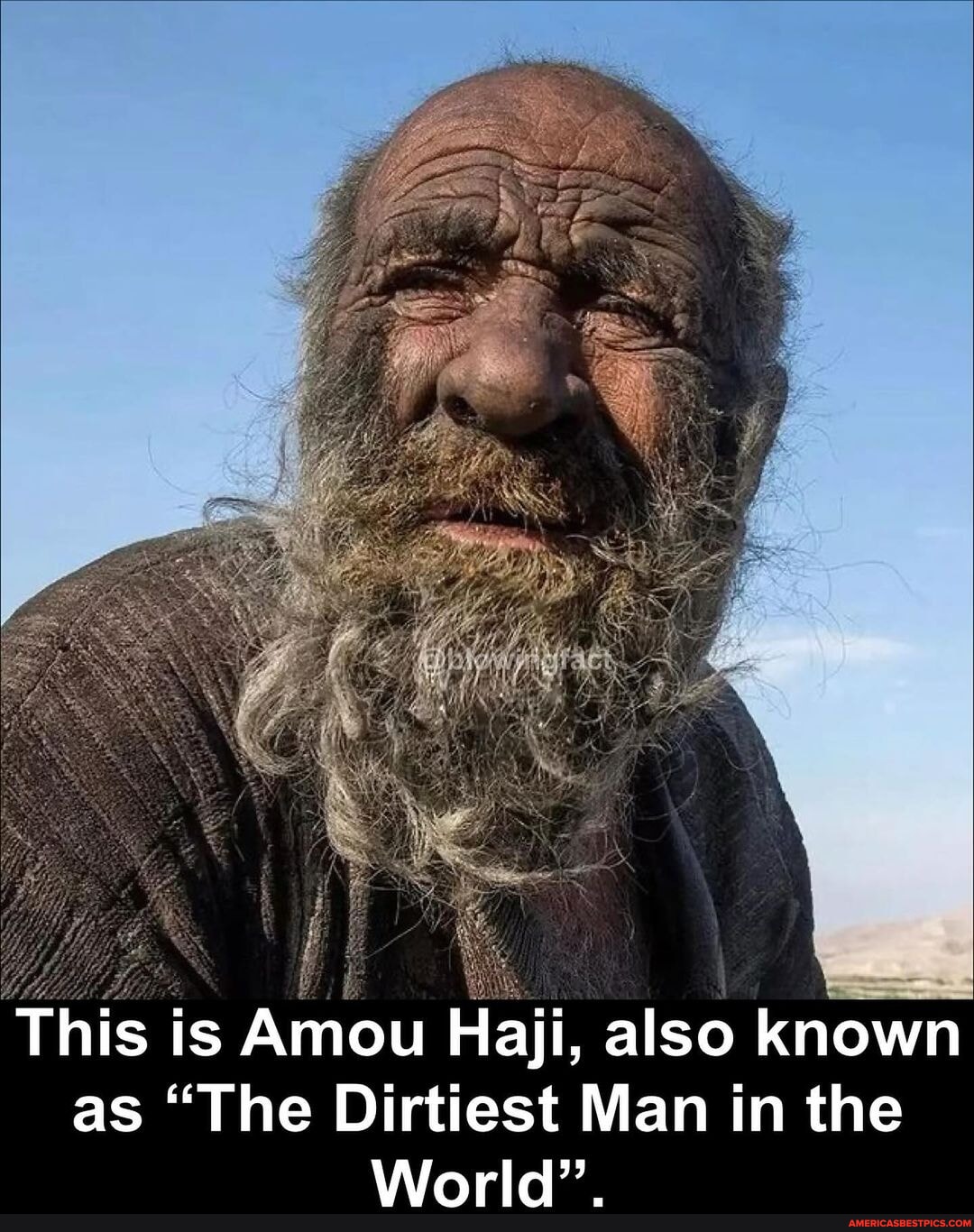
Amou Haji, widely dubbed by international media as the "world's dirtiest man," captured global attention not for what he did, but for what he steadfastly refused to do: wash with water. When news broke in late 2022 that the Iranian hermit had finally taken a bath after decades of avoiding soap and water—prompted by villagers concerned for his health—it triggered a wave of viral headlines regarding what happened to Amou Haji after shower.
Below is a detailed examination of Amou Haji’s life, his decades-long avoidance of hygiene, the circumstances surrounding his rare bath, the subsequent medical observations, and the cultural legacy of this extraordinary individual.
Who Was Amou Haji? The Origin of a Reclusive Lifestyle
Amou Haji lived in the rural outskirts of Degah, a village in the Fars province of southern Iran. For over half a century, he resided outside conventional society, choosing a nomadic or semi-sedentary existence characterized by extreme isolation.
His lifestyle became a subject of intense public curiosity due to several distinct behavioral patterns:
- Extreme Aversion to Cleanliness: Haji did not wash his body or hair for over 60 years, resulting in a thick, protective crust of dirt, soot, and hardened skin.
- Unconventional Diet: Far from modern nutritional standards, his diet notoriously included the rotting carcasses of porcupines, roadkill, and unclean water scavenged from rusty cans. He reportedly preferred smoking animal dung out of an old pipe rather than traditional tobacco.
- Shelter and Clothing: He lived primarily in an open brick shack built by local villagers or in holes dug into the earth. His clothing was often stiff with grime and patches of accumulated filth.
- The Psychology of Isolation: Local reports suggest that early emotional setbacks in his youth contributed to his decision to withdraw completely from human society and adopt his austere, unhygienic lifestyle.
Despite these harsh conditions, Haji lived to an advanced age, defying conventional medical assumptions about the absolute necessity of daily modern hygiene for survival.
The Turning Point: Why Did He Finally Shower?
For decades, attempts by well-meaning villagers and local officials to convince Haji to wash were met with fierce resistance. He viewed water and soap as harbingers of sickness, believing that cleanliness would weaken his constitution and bring about his demise.
However, the situation changed in late 2022. According to reports from the Islamic Republic News Agency (IRNA) and other regional outlets, a group of local villagers intervened out of growing concern for his physical well-being as he advanced deeper into old age. Recognizing that his isolated lifestyle was becoming increasingly unsustainable, the villagers gently persuaded him to allow them to wash him.
In October 2022, for the first time in more than six decades, Amou Haji was brought to a bathroom and given a thorough wash with water and soap.
Medical Observations and the Immediate Aftermath
The immediate aftermath of Amou Haji's shower became a focal point for medical curiosity. Observers and health professionals naturally wondered how a body accustomed to decades of accumulated protective layers would react to sudden, intensive cleansing.
A team of medical professionals from the School of Public Health in Tehran subsequently conducted various tests on Haji to understand how his unique immune system coped with his extreme lifestyle. Astonishingly, despite his lack of basic sanitation and consumption of unhygienic food, tests revealed that Haji did not suffer from major chronic bacterial or parasitic infections, save for a mild case of trichinosis, a parasitic infection commonly acquired from eating undercooked meat (such as wild carnivores).
Researchers concluded that his remarkable resilience was likely due to a robust immune system that had adapted over decades to a high load of pathogens, creating a unique biological equilibrium. However, the relief brought by the bath was short-lived; shortly after being washed for the first time in his life, Haji fell ill and passed away on October 23, 2022, at the age of 94.
Examining the Claims: Myth Versus Reality
The intense media coverage surrounding Amou Haji often blurred the lines between documented journalism and urban legend. Evaluating these claims requires separating verified facts from sensationalized internet lore.
| Claim | Status | Reality and Context |
|---|---|---|
| Oldest Man Alive Without Washing | Confirmed | Local records and long-term observation by villagers verified he avoided bathing for over 60 years. |
| Immune to All Diseases | Disproved | While remarkably resilient, medical tests confirmed he carried parasites like trichinosis. |
| Died Immediately Because of the Shower | Debunked | Though he passed away shortly after bathing, medical experts attributed his death to old age (94) rather than the shower itself. |
| Smoked Animal Dung Exclusively | Confirmed | Local accounts and photographs verified his unconventional smoking habits, including pipes packed with dung. |
Cultural Impact and the Legacy of the "World's Dirtiest Man"
Amou Haji's life challenges modern Western conceptions of hygiene, longevity, and health. While his lifestyle is certainly not a recommended model for human wellness, it serves as a fascinating anthropological case study in human adaptability.
His story drew parallels to other reclusive figures around the world, such as Singh Mouo, an Indian man who similarly refused to wash or cut his hair for decades for spiritual reasons. Haji's reluctance to engage with modernity, coupled with the genuine affection shown to him by the residents of Degah—who ultimately built him a cinder-block shelter and looked out for his safety—highlights a complex relationship between a marginalized individual and his community.
Frequently Asked Questions
How long did Amou Haji go without showering?
Amou Haji went without washing with water or soap for more than 60 years, earning him widespread media attention as a famous Iranian hermit.
Did taking a shower cause Amou Haji's death?
No medical evidence supports the claim that the shower caused his death. He passed away at the advanced age of 94 from natural causes associated with old age, shortly after his first bath in decades.
Why did Amou Haji refuse to wash?
Haji held a deep-seated psychological fear that water and soap would make him sick. He believed that avoiding cleanliness was the secret to his long life and immune resilience.
Did he suffer from health issues due to his lack of hygiene?
Aside from a dormant or asymptomatic case of trichinosis acquired from eating wild animal carcasses, comprehensive medical tests revealed he possessed a surprisingly strong immune system capable of handling extreme environmental pathogens.
Where did Amou Haji live?
He lived primarily in the village of Degah in the Fars province of Iran, residing in open desert spaces, hand-dug holes, and a small brick hut built by local residents.
Conclusion and Final Perspective
The brief chapter of what happened to Amou Haji after shower closes a unique chapter of human folklore and medical anomaly. While the viral nature of his story focused heavily on shock value, his life ultimately highlights the extraordinary adaptability of the human body and the quiet compassion of a rural Iranian community that cared for a deeply eccentric neighbor for decades.