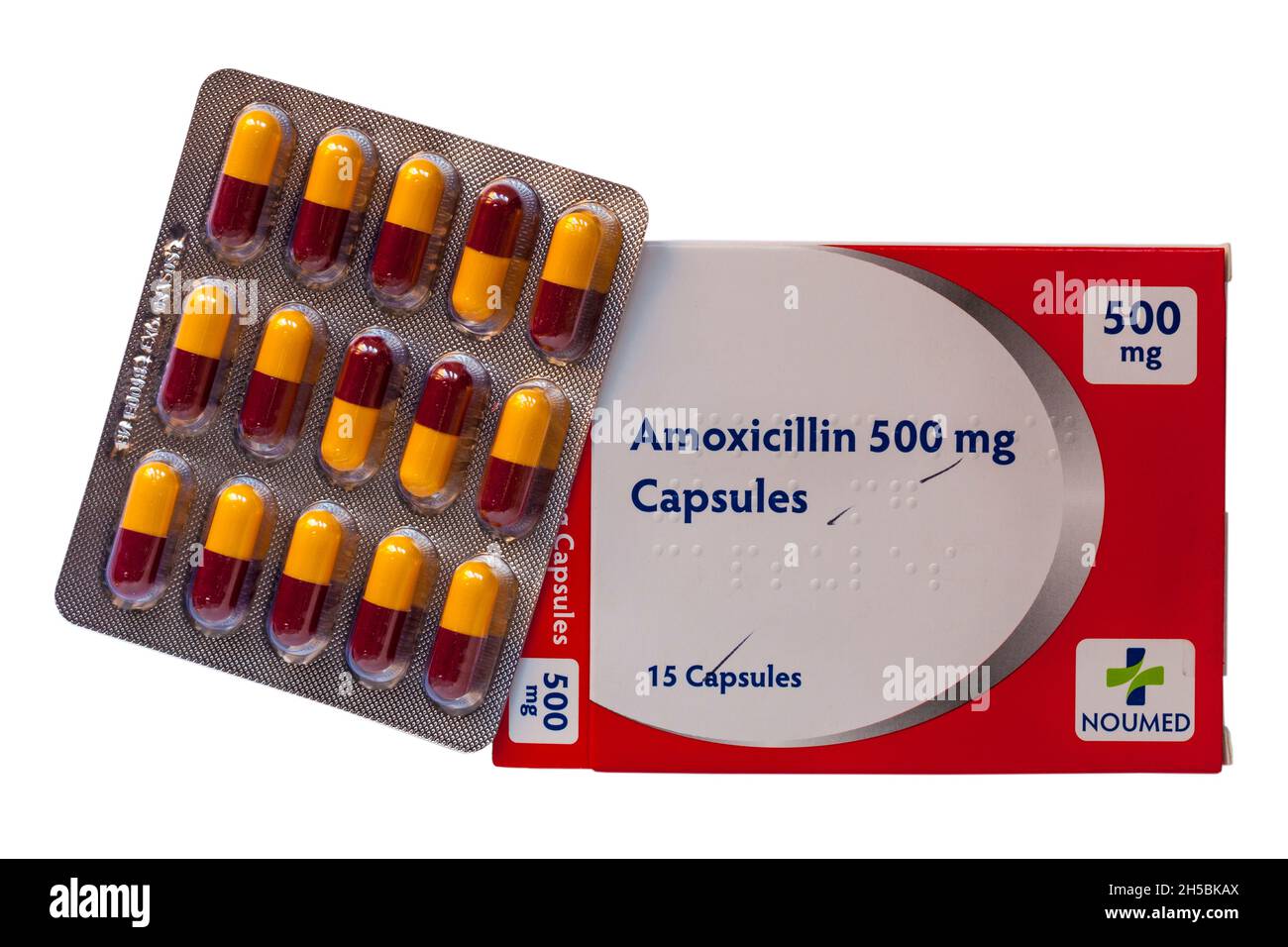
Amoxicillin capsules 500mg are a prescription antibiotic frequently prescribed by dental professionals to help manage bacterial infections stemming from dental abscesses, preventing the spread of infection while patients await definitive dental procedures.
Dental infections can escalate quickly from a localized toothache to a systemic medical emergency if left untreated. Among the various pharmacological tools available to modern dental and medical practitioners, amoxicillin capsules 500mg remain a foundational treatment. However, antibiotics alone do not cure a dental abscess; they serve as an adjunctive measure to control bacterial proliferation while root canal therapy, tooth extractions, or surgical drainage are performed. Understanding how this medication works, its proper dosage, potential side effects, and why it must be used strictly under professional supervision is vital for anyone dealing with severe dental pain and infection.
The Nature of Dental Abscesses and Why Antibiotics Are Prescribed
A dental abscess is a localized collection of pus that develops in different parts of a tooth or the surrounding bone and gum tissue, typically caused by a bacterial infection. These infections generally originate from deep tooth decay, cracked teeth, or advanced periodontal disease, which allows bacteria to breach the protective enamel and dentin layers, entering the dental pulp and eventually traveling down to the root tip.
There are three primary classifications of dental abscesses:
- Periapical Abscess: Occurs at the very tip of the tooth root, usually resulting from dead or infected pulp.
- Periodontal Abscess: Forms in the gums and supporting bone structure adjacent to the tooth root, often caused by gum disease.
- Gingival Abscess: Confined strictly to the gum tissue, typically triggered by a foreign object becoming lodged in the gums.
When these infections occur, the body mounts an inflammatory response, leading to pain, swelling, pus accumulation, and occasionally systemic symptoms like fever and malaise. While dental abscesses require mechanical intervention—such as draining the abscess or treating the source via root canal or extraction—antibiotics like amoxicillin capsules 500mg are prescribed when there is clinical evidence of spreading infection, systemic involvement, or significant swelling that compromises surrounding anatomical spaces.
Pharmacology of Amoxicillin 500mg
Amoxicillin belongs to the aminopenicillin class of beta-lactam antibiotics. It is a semisynthetic derivative of penicillin designed to combat a wide spectrum of gram-positive and certain gram-negative bacteria commonly responsible for odontogenic infections, including various streptococci and anaerobic strains inhabiting the oral cavity.
The drug exerts its bactericidal effect by interfering with the synthesis of the bacterial cell wall. Specifically, amoxicillin binds to penicillin-binding proteins (PBPs) located inside the bacterial cell wall, inhibiting the cross-linking of peptidoglycan chains. Peptidoglycan is critical for providing structural strength and rigidity to the cell wall. Without it, the bacterial cell wall weakens, leading to cell lysis (bursting) and the death of the bacteria.
Amoxicillin is chosen frequently for dental infections because it is rapidly and well-absorbed after oral administration, achieves high concentrations in blood and bodily tissues, and features a favorable safety profile compared to broader-spectrum alternatives. A 500mg capsule represents a standard therapeutic dose for moderate to severe oral infections, designed to maintain adequate minimum inhibitory concentration (MIC) levels in the bloodstream when taken at regular intervals.
Dosage, Administration, and Treatment Duration
The administration of amoxicillin capsules 500mg must strictly follow the directions provided by a prescribing dentist or physician. Self-prescribing, altering dosages, or sharing antibiotics poses serious health risks, including promoting antibiotic resistance and failing to clear the infection.
Standard dosing regimens for adult patients with moderate dental infections typically involve taking one 500mg capsule every eight hours (three times a day) or, in certain clinical scenarios, a higher dose of 875mg twice daily, depending on the severity of the infection and patient-specific factors. The standard course of treatment usually spans between five and seven days.
| Parameter | Standard Clinical Guidance |
|---|---|
| Typical Dosage | 500mg orally every 8 hours |
| Standard Duration | 5 to 7 days (as prescribed) |
| Administration | Can be taken with or without food |
| Missed Dose | Take as soon as remembered, but skip if close to the next scheduled time |
| Completion | Must finish the entire prescribed course |
Patients must complete the entire prescribed course of amoxicillin capsules 500mg, even if physical symptoms such as pain and swelling disappear within the first 48 to 72 hours. Stopping treatment prematurely allows surviving bacteria to multiply, potentially causing a recurrence of the infection that is more difficult to treat due to acquired antibiotic resistance.
The Crucial Distinction: Antibiotics vs. Definitive Dental Treatment
A widespread misconception among patients is that taking a course of amoxicillin clears the dental abscess permanently. Antibiotics are strictly a temporary measure designed to halt the spread of bacteria; they do not resolve the underlying structural problem causing the abscess.
Inside a dental abscess, dead tissue, bacteria, and purulent exudate form an environment where blood circulation is poor. Consequently, systemic antibiotics struggle to penetrate the core of the abscess effectively. Furthermore, antibiotics cannot repair decayed enamel, seal a fractured root, or clear necrotic pulp tissue.
Definitive dental treatment is mandatory. Depending on the clinical assessment, this involves:
- Incision and Drainage: Physically opening the abscess to drain accumulated pus and relieve pressure.
- Root Canal Therapy: Removing infected pulp tissue, cleaning and shaping the root canals, and sealing the interior of the tooth.
- Tooth Extraction: Removing the affected tooth entirely if the structural damage is too severe to support restorative procedures.
Failing to seek definitive dental care after completing a course of amoxicillin almost invariably leads to a relapse of the abscess, increased tissue destruction, and heightened risk of systemic complications.
Potential Side Effects and Adverse Reactions
Like all medications, amoxicillin capsules 500mg carry potential side effects. Most side effects are mild and transient, but others require immediate medical attention.
Common, mild side effects include:
- Gastrointestinal upset, nausea, or mild diarrhea
- Oral or vaginal candidiasis (yeast infections) resulting from the disruption of normal flora
- Mild skin rashes
Serious adverse reactions require prompt intervention:
- Severe Allergic Reactions (Anaphylaxis): Individuals with known allergies to penicillin, cephalosporins, or other beta-lactam antibiotics must not take amoxicillin. Anaphylaxis is a medical emergency characterized by hives, difficulty breathing, swelling of the face, lips, tongue, or throat, and a rapid pulse.
- Clostridioides difficile-Associated Diarrhea (CDAD): Severe, persistent watery diarrhea, abdominal cramps, and fever occurring during or after antibiotic treatment can indicate antibiotic-associated colitis.
- Severe Skin Reactions: Conditions such as Stevens-Johnson syndrome or toxic epidermal necrolysis, though rare, require immediate emergency care if blistering, peeling, or severe skin reddening occurs.
Special Considerations: Resistance and Medical History
Antimicrobial resistance is a growing global health concern driven in part by the overuse and misuse of broad-spectrum and narrow-spectrum antibiotics. Taking amoxicillin when it is not clinically indicated—such as for viral toothaches or minor inflammation without spreading infection—contributes to resistant bacterial strains.
Before prescribing amoxicillin capsules 500mg, dental professionals conduct a thorough medical history review. Critical factors include:
- Allergy History: Documented history of reactions to penicillins or cephalosporins. Alternative antibiotics, such as clindamycin or azithromycin, may be selected for penicillin-allergic patients.
- Kidney Function: Amoxicillin is primarily excreted by the kidneys. Patients with renal impairment may require dosage adjustments.
- Oral Contraceptives: Antibiotics can theoretically reduce the efficacy of hormonal contraceptives. Patients should consult their healthcare provider regarding backup contraceptive methods during antibiotic therapy.
- Pregnancy and Breastfeeding: Amoxicillin is generally considered safe during pregnancy (classified as FDA Pregnancy Category B), but all medications must be evaluated by a treating physician or dentist.
Frequently Asked Questions
Can I stop taking amoxicillin capsules 500mg once my tooth stops hurting?
No. You must finish the entire prescribed course of antibiotics, even if pain and swelling subside completely. Stopping early leaves resistant bacteria alive, which can cause the infection to return stronger and harder to treat.
Do amoxicillin capsules 500mg cure a dental abscess on their own?
No. Amoxicillin only controls bacterial spread and reduces acute symptoms. A dental abscess requires physical intervention by a dentist, such as a root canal, extraction, or surgical drainage, to resolve the underlying cause.
What should I do if I miss a dose of amoxicillin?
Take the missed dose as soon as you remember. However, if it is almost time for your next scheduled dose, skip the missed dose and resume your regular dosing schedule. Never double up on capsules to make up for a missed dose.
Can I drink alcohol while taking amoxicillin for a dental infection?
Moderate alcohol consumption does not directly interfere with the chemical efficacy of amoxicillin. However, alcohol can exacerbate side effects like dizziness and stomach upset, and it places added stress on the body while it is trying to fight an infection and recover.
What are the signs that a dental abscess is spreading to a dangerous level?
Warning signs of a spreading infection include difficulty breathing, difficulty swallowing, swelling that spreads to the neck or eye, a high fever, severe facial swelling, and a rapid heart rate. These symptoms require immediate emergency medical evaluation at a hospital.
Next Actions and Professional Consultation
If you suspect you have a dental abscess, the most important step is to schedule an appointment with a licensed dentist immediately. Dental abscesses do not heal on their own, and delaying treatment can allow the infection to spread to surrounding jawbone tissues, sinuses, or systemic circulation, resulting in severe health complications. When amoxicillin capsules 500mg are prescribed, follow the dosage schedule precisely, complete the entire course, and ensure you attend all follow-up dental appointments required to treat the root cause of the infection.