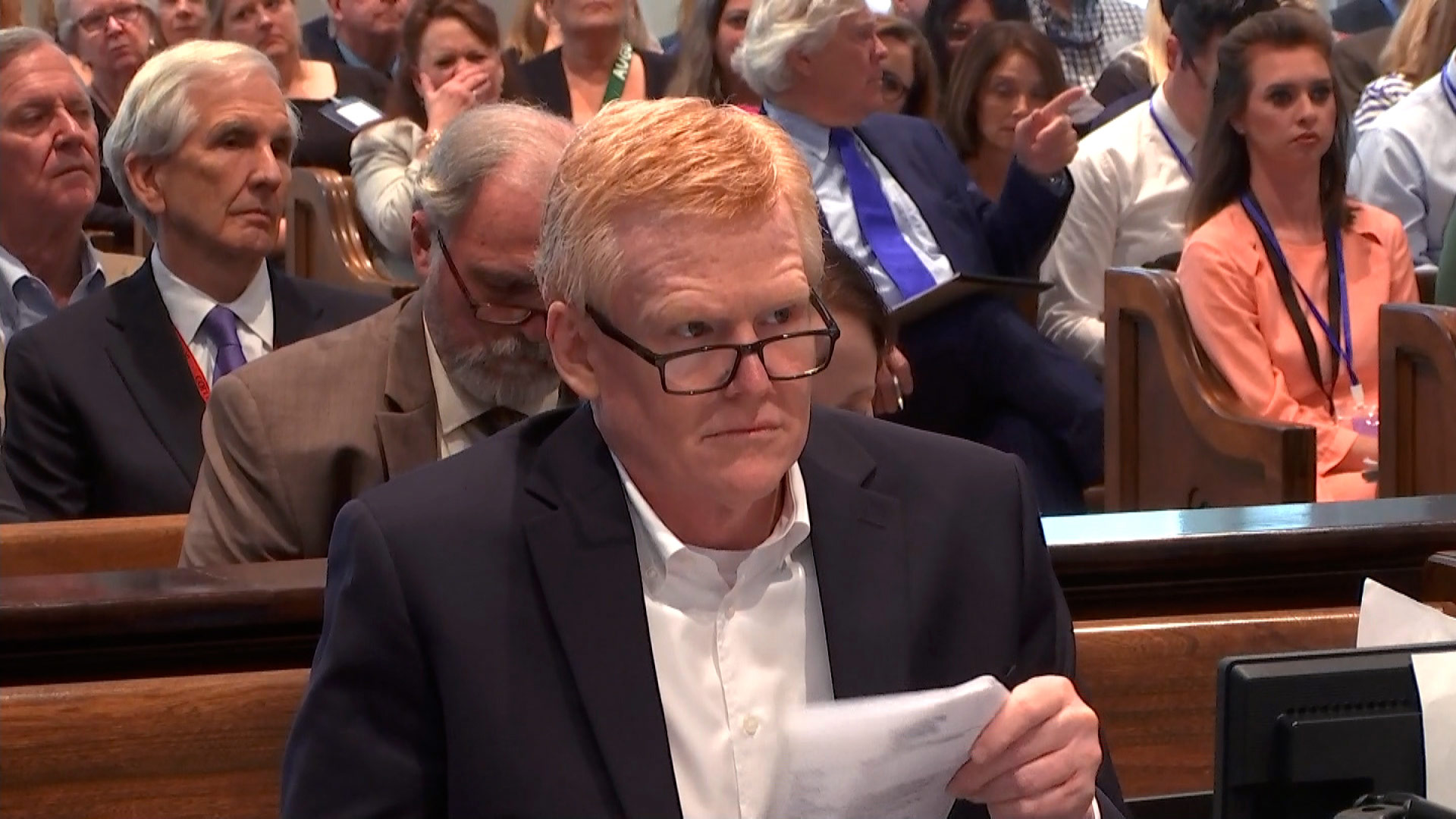
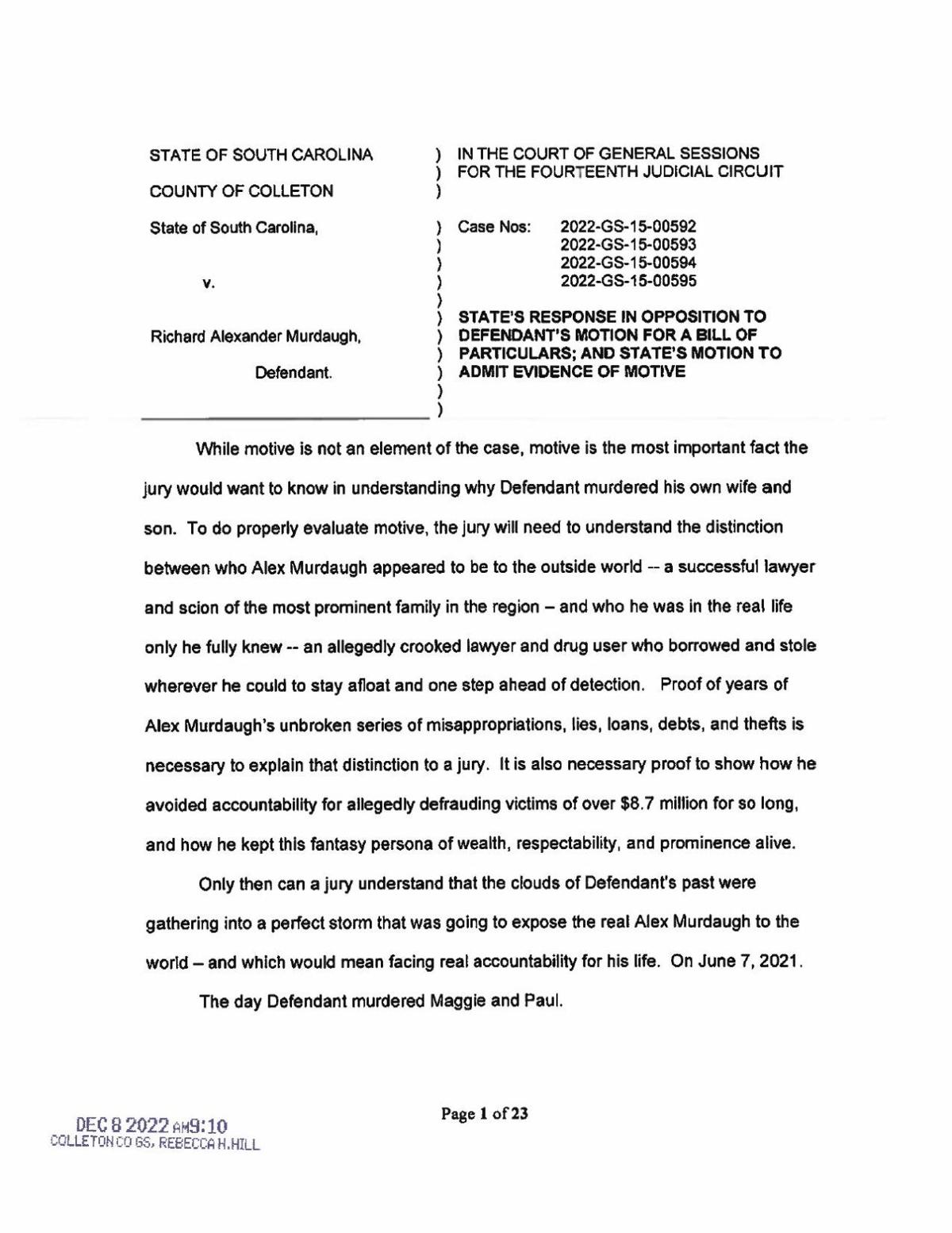
The prosecution’s central theory regarding the Alex Murdaugh motive posits that he murdered his wife, Maggie, and son, Paul, to create a "sympathy buffer" and delay the imminent exposure of his multi-million dollar financial crimes. By orchestrating a family tragedy, Murdaugh sought to transform himself from a suspected thief into a grieving victim.
The Prosecution’s Central Theory: The "Pressure Cooker"
To understand the motive behind the June 7, 2021, murders at the Moselle estate, one must look at the collapsing world of Alex Murdaugh. Lead prosecutor Creighton Waters argued throughout the 2023 trial—and in subsequent legal filings—that Murdaugh was a "man under pressure" who had spent decades living a double life. For years, Murdaugh had allegedly siphoned millions of dollars from his law firm (then PMPED) and his clients to fund an opioid addiction and a lifestyle he could no longer afford.
The day of the murders was not a random choice. On the morning of June 7, 2021, a staff member at his law firm confronted Murdaugh about missing legal fees totaling $792,000. This confrontation represented the first crack in a dam that was about to burst. The prosecution contended that Murdaugh knew he could not explain the missing money and that a full audit of his accounts was inevitable. By killing Maggie and Paul, he effectively halted that internal investigation. No colleague or friend would dare press a man about missing money while he was mourning the brutal execution of his wife and child.
This "sympathy motive" is often difficult for the public to grasp because it involves a trade-off that seems inherently irrational: killing those you love to avoid professional and social disgrace. However, the prosecution argued that for a man like Murdaugh, whose identity was entirely tied to his family’s multi-generational legal dynasty in the South Carolina Lowcountry, the prospect of being exposed as a fraud was a "fate worse than death."
The Financial House of Cards: A Decades-Long Deception
The sheer scale of Murdaugh’s financial misconduct provided the "Why" that many felt was missing from the case. As of 2026, the full scope of his theft is well-documented through his guilty pleas in state and federal courts. Murdaugh admitted to stealing over $12 million from clients, including the estate of his late housekeeper, Gloria Satterfield, and vulnerable individuals like Hakeem Pinckney, a young man left paralyzed by a car accident.
Murdaugh’s financial crimes were not merely a side project; they were a necessary engine to maintain his status. He was a partner at a prestigious firm founded by his great-grandfather, yet he was constantly overdrawn at Palmetto State Bank. He relied on the cooperation of bank executives, such as Russell Laffitte, to move money around and cover his tracks.
The legal pressure reached a boiling point due to the 2019 boat crash involving his son, Paul. The crash resulted in the death of 19-year-old Mallory Beach and led to a high-stakes wrongful death lawsuit against Alex Murdaugh. The attorney representing the Beach family, Mark Tinsley, had filed a motion to compel Murdaugh to disclose his personal financial records. A hearing for this motion was scheduled for June 10, 2021—just three days after the murders. Had that hearing occurred, Murdaugh’s insolvency and his theft from the law firm would have been laid bare under oath. The murders caused an immediate stay of these proceedings, buying Murdaugh months of time.
The Role of Paul Murdaugh and the Mallory Beach Incident
Paul Murdaugh was not just a victim in the prosecution’s eyes; he was also a source of immense social and legal stress for Alex. The 2019 boat crash had brought unwanted scrutiny to the Murdaugh family name, which for a century had been synonymous with the law in the 14th Circuit. Paul was facing three felony counts of boating under the influence causing death and great bodily harm at the time of his death.
The prosecution suggested a dual motive regarding Paul. First, Paul was the "catalyst" for the financial exposure through the civil lawsuit. Second, Paul’s legal troubles were a stain on the family legacy that Alex felt he could no longer manage. While the defense argued that Alex "adored" Paul—referring to him as "Little Detective" in texts—the prosecution pointed to the clinical way Paul was killed with a shotgun at close range as evidence of a calculated decision rather than a crime of passion.
Maggie Murdaugh’s motive was categorized more as "collateral necessity." Maggie was reportedly living separately from Alex at their Edisto Beach home and had grown suspicious of his finances. On the night of the murders, Alex had lured her to Moselle under the guise of visiting his dying father, Randolph Murdaugh III. The prosecution argued that Maggie had to be killed because she was present at the kennels and would have been a witness to Paul's murder, or because her death would further amplify the tragedy and the subsequent sympathy Alex received.
Psychological Profiling: Narcissism and Desperation
A significant portion of the discourse surrounding the Alex Murdaugh motive involves psychological analysis. While Murdaugh was never formally diagnosed with a specific personality disorder in a way that impacted his legal sanity, experts have frequently pointed to traits of narcissism and sociopathy.
In a "family annihilator" scenario, the perpetrator often views their family members not as independent human beings, but as extensions of themselves. If the perpetrator’s world is ending, they may feel entitled to end the lives of those within that world. For Murdaugh, the "end" was the loss of his reputation, his law license, and his freedom.
The defense, led by Dick Harpootlian and Jim Griffin, consistently argued that the motive made no sense. They posited that a man who loved his family as much as Alex did would never "blow Paul's head off" to cover up a white-collar crime. They argued that the "sympathy" gained would be fleeting and that the risk of being caught for murder far outweighed the risk of being caught for theft. However, the jury in 2023 ultimately found the "pressure cooker" theory more compelling, concluding that a man backed into a corner will take desperate, even unthinkable, measures to survive.
Analyzing the Timeline of June 7, 2021
The timeline of the day of the murders is perhaps the most critical evidence supporting the financial motive. Each event on this day increased the "heat" on Alex Murdaugh until he reached a breaking point.
| Time of Day | Event | Impact on Motive |
|---|---|---|
| Morning | Jeanne Seckinger (PMPED CFO) confronts Alex about $792k. | Imminent threat of internal firm exposure. |
| Afternoon | Alex receives news that his father's health is failing rapidly. | Increased emotional instability and a convenient excuse to lure Maggie to Moselle. |
| Early Evening | Alex calls Maggie and insists she meets him at the Moselle estate. | Maggie expresses concern to her sister about Alex's "fishy" behavior. |
| 8:44 PM | Paul records the "Kennel Video" featuring Alex’s voice in the background. | Places Alex at the scene minutes before the murders, despite his alibi. |
| 8:50 PM | Paul and Maggie’s phone activity ceases forever. | The estimated window of the murders. |
| 9:06 PM | Alex’s SUV starts; he begins a series of "alibi" movements. | The attempt to establish a timeline of being elsewhere (at his mother's house). |
| 10:06 PM | Alex calls 911 to report finding the bodies. | The "sympathy buffer" begins as law enforcement arrives. |
The Defense’s Counter-Arguments: The "Third Party" Theory
The defense did not just sit back; they offered alternative motives involving third parties. They suggested that Paul was targeted by someone seeking revenge for the boat crash or that drug dealers were involved. Paul had reportedly received threats following Mallory Beach's death.
The defense argued that the South Carolina Law Enforcement Division (SLED) suffered from "tunnel vision," focusing on Alex from the start and ignoring evidence of other potential killers. They pointed to the lack of direct physical evidence—no murder weapons were ever found, and no blood-soaked clothing was recovered. However, the prosecution countered this by highlighting the "missing" blue raincoat and the fact that Alex, as a seasoned trial lawyer, would know exactly how to clean a crime scene or dispose of evidence.
By 2026, the "third party" theory has largely been dismissed by the courts. The kennel video, which Alex admitted to lying about during his testimony, proved to be the "smoking gun" that invalidated his alibi and reinforced the prosecution's timeline.
Summary of Motive Components
The Alex Murdaugh motive is best understood as a "perfect storm" of three distinct pressures.
- Financial Ruin: The need to stop the PMPED audit and the Mark Tinsley disclosure regarding the boat crash lawsuit.
- Social Disgrace: The fear of losing the "Murdaugh Dynasty" status and being known as a thief in a small, tight-knit community.
- Addiction and Paranoia: The influence of a long-term oxycodone addiction which may have impaired his judgment and increased his sense of desperation.
Frequently Asked Questions
Did Alex Murdaugh ever confess to the murders?
No. As of 2026, Alex Murdaugh continues to maintain his innocence regarding the murders of Maggie and Paul, even though he has admitted to nearly 100 financial crimes and a roadside "suicide-for-hire" plot intended to get insurance money for his surviving son, Buster.
What was the "sympathy buffer" exactly?
The "sympathy buffer" is a term used by the prosecution to describe the period of time after the murders when no one would question Alex's finances. It worked for several months; the law firm didn't resume its investigation into the missing $792,000 until September 2021, after Alex's failed roadside shooting incident.
Was the money the only reason he killed them?
While money was the primary driver, the prosecution argued that Paul’s involvement in the boat crash was the specific trigger that made the financial exposure inevitable. The motive was a combination of needing to hide the theft and needing to "solve" the problem that Paul’s legal case had created for the family’s assets.
How did the kennel video affect the motive?
The kennel video didn't prove a motive, but it destroyed Alex's alibi. By proving he was there at 8:44 PM, it showed he had the opportunity. When combined with the financial pressure he faced that morning, the jury was able to connect his presence at the scene with his desperate need for a distraction.
What happened to the law firm PMPED?
Following the exposure of Alex’s crimes, the firm rebranded as Parker Law Group, LLP. They settled numerous claims with the victims of Alex’s thefts and cooperated extensively with law enforcement to untangle the decades of financial fraud.
Final Practical Assessment of the Case
In analyzing the Alex Murdaugh motive, it is essential to look at the case through the lens of premeditation versus desperation. The evidence suggests that while the financial collapse had been building for years, the specific events of June 7, 2021, acted as the final trigger. For those following the legal updates in 2026, the takeaway remains that motive is not a required legal element for a murder conviction in South Carolina, yet it was the narrative glue that allowed a jury to believe a father could kill his own family.
The most practical "next action" for those interested in the technicalities of this case is to review the unsealed financial audit records from the Parker Law Group (formerly PMPED) and the federal sentencing memorandums. These documents provide the most granular look at the "pressure" that the prosecution claimed led to the tragedy at Moselle.