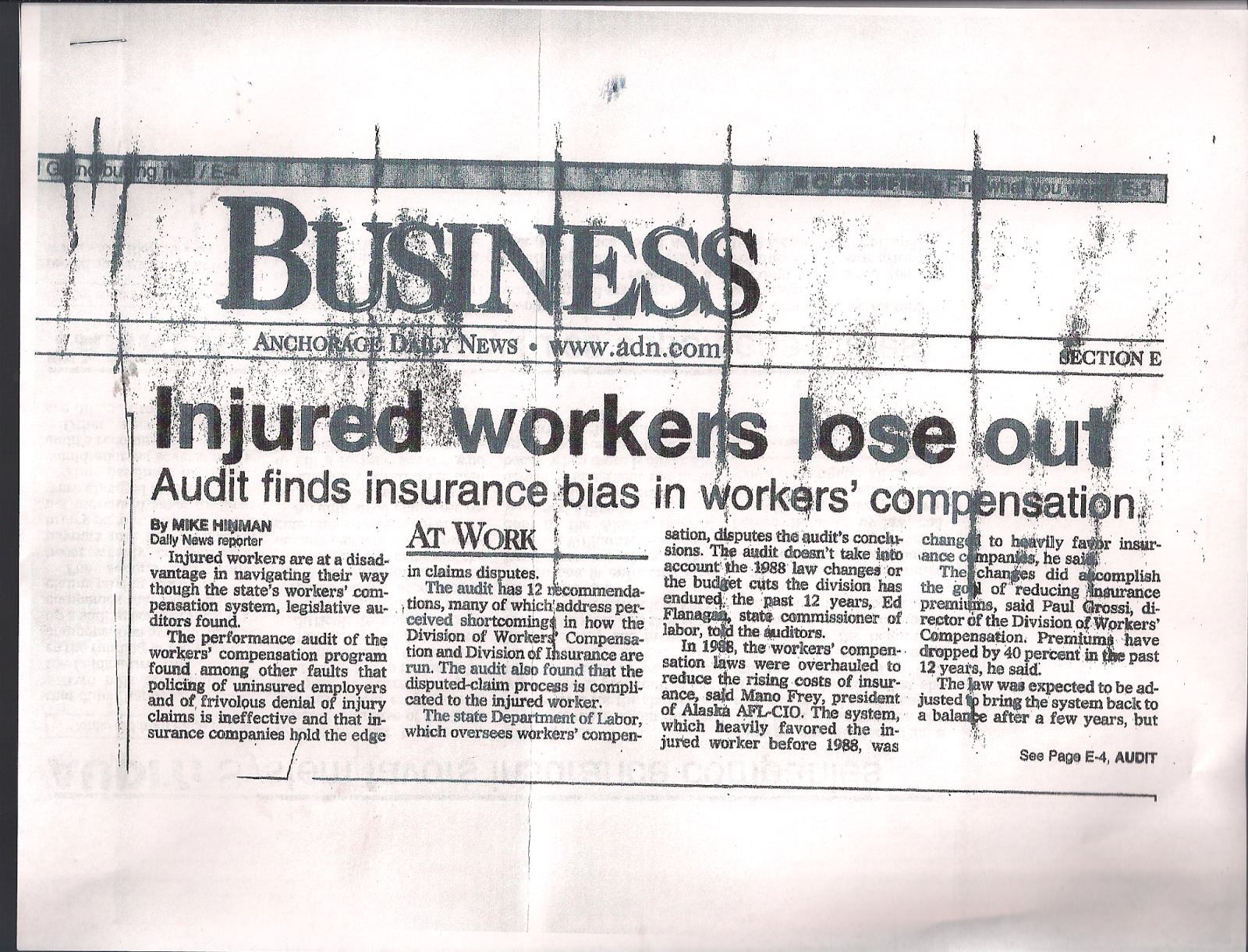
While the Alaska workers’ compensation system is designed to provide "sure and certain relief" for injured employees regardless of fault, the administrative complexity, frequent benefit denials, and rigid medical evaluation processes often make the system feel like an insurmountable burden. For minor injuries, the time investment required to navigate state-mandated filings often outweighs the eventual financial recovery.
The Administrative Friction of the Alaska Workers’ Compensation Act
The perception that Alaska workers' compensation is "not worth the hassle" often stems from the high barrier to entry regarding paperwork and strict statutory timelines. Under the Alaska Workers’ Compensation Act (AS 23.30), the process begins the moment an injury occurs, but many workers find themselves disqualified or delayed due to technicalities before their medical treatment even begins.
The primary hurdle is the Report of Occupational Injury or Illness. An employee must notify their employer in writing within 30 days of the injury. Failure to meet this deadline can result in a complete forfeiture of benefits unless the worker can prove the employer had "knowledge" of the injury or that the failure to notify was excusable. For a worker dealing with pain and medical appointments, managing these legal notice requirements feels like a secondary job.
Furthermore, the system relies heavily on the "controversion" process. In Alaska, an insurance carrier can issue a Notice of Controversion (Form 07-6105) to deny all or part of a claim. Once a claim is controverted, the burden of proof shifts significantly toward the employee. To fight a controversion, the worker must file a formal Claim for Adjustment of Compensation, which initiates a quasi-judicial process involving discovery, depositions, and hearings before the Alaska Workers' Compensation Board. For a claim involving only a few weeks of missed work, the legal and emotional cost of this litigation often exceeds the value of the checks being disputed.
The Medical Labyrinth and the SIME Process
Medical care is the cornerstone of any workers' compensation claim, yet in Alaska, it is frequently a source of extreme frustration. While workers theoretically have the right to choose their initial attending physician, insurance carriers often exert influence through Employer’s Medical Examinations (EME). These are evaluations performed by doctors hired by the insurance company, and they are notorious for concluding that an injury is "pre-existing" or that the worker has reached Maximum Medical Improvement (MMI) prematurely.
When the worker's doctor and the insurance company's doctor disagree—which happens in a majority of complex cases—the state triggers the Second Independent Medical Evaluation (SIME) process. This is a state-appointed evaluation intended to be neutral. However, the SIME adds months to the resolution of a claim. During this period, the worker may be left without disability payments or authorized medical procedures, creating a "limbo" state that leads many to abandon their claims out of financial desperation.
The "hassle" here is not just administrative; it is clinical. Workers find their medical history scrutinized and their credibility questioned by physicians they have never met. This adversarial nature of medical care in the Alaska system often leaves injured Alaskans feeling like they are being treated as fraudsters rather than patients.
The Financial Reality: Why the Payouts May Seem Low
One of the most common reasons workers feel the system isn't worth the effort is the gap between their actual lost income and the benefits provided by the state. In 2026, as in previous years, Alaska calculates Temporary Total Disability (TTD) benefits based on 80% of the worker’s "spendable weekly wage."
This calculation is not as straightforward as taking 80% of a gross paycheck. The "spendable" wage is the gross wage minus estimated payroll taxes and social security. Additionally, there are statutory caps on the maximum weekly compensation rate. For high earners, particularly those in the petroleum, maritime, or specialized construction industries common in Alaska, the gap between their regular salary and the workers' comp cap can be devastating.
The calculation of Permanent Partial Disability (PPD), or "impairment benefits," is another area where the ROI (Return on Investment) of a worker's time is often low. Alaska uses the AMA Guides to the Evaluation of Permanent Impairment. These guides often assign low percentage ratings to injuries that have a high impact on a person's life. For example, a chronic back injury that prevents a worker from returning to a labor-intensive job might only result in a 5% or 10% whole-person impairment rating. Under the Alaska formula, which multiplies the impairment percentage against a statutory base amount (currently $177,000 for a 100% rating as of the most recent adjustments), the resulting lump sum may feel like a pittance compared to the permanent loss of career pathing and physical comfort.
The "Exclusive Remedy" Trap
A significant source of frustration for workers is the Exclusive Remedy doctrine. Under AS 23.30.055, workers' compensation is generally the only way an employee can get money from their employer for a work injury. Even if the employer was clearly negligent—such as failing to maintain equipment or ignoring safety protocols—the worker cannot sue them for "pain and suffering" in civil court.
This legal barrier is why the system feels like a "hassle" with no real reward. In a personal injury lawsuit (like a car accident), a victim can seek damages for emotional distress, loss of enjoyment of life, and full wage replacement. In the Alaska workers' comp system, these "human" elements of a loss are entirely excluded. The worker is limited to medical coverage and a portion of lost wages. When a worker realizes they are giving up their right to a full legal recovery in exchange for a highly regulated, bureaucratic, and often adversarial process, the "hassle" becomes a point of deep resentment.
When the Hassle is Mandatory: Navigating Serious Injuries
While minor claims may not feel worth the effort, the calculus changes significantly for catastrophic injuries or occupational diseases. In these cases, the "hassle" is the only path to securing long-term survival. Alaska provides for Reemployment Benefits for workers who cannot return to their previous trade due to their injury.
The reemployment process involves a specialized evaluation by a rehabilitation specialist. If eligible, the worker may receive a vocational retraining plan funded by the insurance carrier. This can include tuition, books, and a stipend. However, the eligibility requirements are incredibly narrow. The worker must have a permanent impairment and meet specific "earnability" criteria. Navigating this path requires a level of diligence and legal expertise that most workers do not possess, further reinforcing the sentiment that the system is designed to discourage all but the most persistent claimants.
Comparing Claim Types: Effort vs. Recovery
| Feature | Minor Injury (e.g., Sprain) | Moderate Injury (e.g., Fracture) | Major/Catastrophic Injury |
|---|---|---|---|
| Initial Filing Effort | High (same forms as major) | High | Extremely High |
| Medical Dispute Likelihood | Low | Moderate | Very High |
| Average Benefit Duration | 2–4 Weeks | 3–6 Months | Permanent or Multi-Year |
| Legal Representation | Usually not cost-effective | Highly Recommended | Essential |
| Reemployment Potential | None | Low | High |
| ROI of the "Hassle" | Poor | Variable | High (Necessary) |
The Role of Attorney Fees in Alaska
In many states, attorney fees are taken out of the worker's check (the contingency fee model). Alaska is somewhat unique because it has a "fee-shifting" provision in some circumstances. Under AS 23.30.145, if an attorney successfully resists a controversion or wins a claim for a worker, the Board can order the insurance company to pay the attorney’s fees on top of the worker's benefits.
This sounds like a benefit, but it contributes to the "hassle" factor. Because insurance companies don't want to pay extra for a worker's lawyer, they often fight even harder to prevent a lawyer from becoming involved. Furthermore, if a case is settled via a Compromise and Release (C&R) agreement, the attorney's fees are typically negotiated as part of the lump sum, which can lead to confusion for the worker regarding how much they are actually netting.
Frequently Asked Questions
Can I just use my regular health insurance for a work injury instead?
While it is tempting to avoid the workers' comp system by using private health insurance, most health insurance policies have specific exclusions for work-related injuries. If the health insurer discovers the injury happened at work, they may deny coverage or seek reimbursement (subrogation) from any future workers' comp settlement. This often forces the worker back into the "hassle" they were trying to avoid.
How long does an Alaska workers' compensation case usually take?
For an uncontested claim, medical bills and TTD checks should start within 14 to 21 days of the employer receiving notice. However, if a claim is controverted, it can take 9 to 12 months—or longer—to reach a hearing before the Alaska Workers' Compensation Board. The administrative backlog and the time required for SIME appointments are the primary drivers of these delays.
Do I have to settle my case?
No. In Alaska, you cannot be forced to settle your claim. You can choose to keep the "medical tail" open, meaning the insurance company must pay for related medical care for the rest of your life. However, insurance companies often offer a lump sum settlement (Compromise and Release) to close the file forever. Settling is often the only way to end the "hassle" of the system, but it requires giving up all future rights to benefits for that injury.
What if my injury was my own fault?
Alaska is a no-fault system. This is the trade-off for the "hassle." You are eligible for benefits even if you were clumsy or made a mistake, provided you were not intoxicated or intentionally trying to hurt yourself. This is one of the few areas where the system is actually simpler than a standard civil lawsuit, where proving "fault" is a major legal hurdle.
Can my employer fire me for filing a claim?
Alaska law prohibits employers from discriminating or retaliating against an employee for filing a workers' compensation claim. However, Alaska is also an "at-will" employment state. An employer can fire a worker for other reasons, such as an inability to perform the job duties with or without accommodation. Proving that a termination was retaliatory is a separate, difficult legal battle.
Practical Recommendation for Injured Alaskans
If you have suffered a minor injury that requires only a few doctor visits and no significant time off work, the "hassle" of the Alaska workers’ compensation system may indeed feel disproportionate to the benefit. In these cases, focus on clear communication with your employer and ensuring your medical provider files the correct paperwork (Form 07-6102) to ensure the bills are paid.
However, if your injury involves surgery, more than two weeks of lost wages, or a permanent change in your physical abilities, you should not let the "hassle" deter you. The long-term costs of medical care and lost earning capacity are too high to ignore. In these instances, the best way to manage the hassle is to delegate it to a professional. Consulting with an attorney who specializes in the Alaska Division of Workers' Compensation regulations can move the administrative burden off your shoulders and ensure that you do not miss the strict statutory deadlines that often sink unrepresented claims.